


No products in the cart.


Free Shipping Australia-Wide

5 star customer service

Quality Tested Products

When you start digging into the best trekking backpack brands, a few names pop up again and again for good reason: Osprey, Deuter, and Gregory. These guys are the heavy hitters, known for their incredible quality, comfortable designs, and packs that just refuse to quit. They've earned their reputation by building gear with smart suspension systems and tough-as-nails materials, making them a go-to for everyone from weekend warriors to serious mountaineers.
Let’s be honest, picking a trekking backpack is probably the single most important gear choice you'll make. This isn't just a bag. It's your home on your back, your support system, and the one thing that can turn a dream trip into a miserable slog. A bad pack means back pain, raw shoulders, and a shifting load that makes every step a chore.
Get it right, though, and the pack practically disappears. It becomes a part of you, distributing the weight so well you can focus on the trail, not the ache in your shoulders. This guide is here to help you cut through the marketing fluff and see what really makes a great backpack brand tick. We're not just going to list names; we’re going to give you the tools to judge any pack for yourself.
Here’s the secret: the best pack is the one that fits you and your adventure. It's just like buying a pair of hiking boots—your friend’s favorite pair might be torture chambers for your feet. The brands that truly get this are the ones that lead the industry.
They've built their entire reputations on a few key things:
The goal isn't to find a single "best" backpack brand for everyone. It's to find the brand whose design philosophy, fit, and feature set align perfectly with your unique trekking needs, whether you're planning a weekend escape or a month-long expedition.
This guide will give you that confidence. By the time you're done reading, you’ll be able to walk into any gear shop and know exactly what you’re looking at. You’ll understand the subtle differences between a premium brand like Osprey and a value-focused workhorse like Gregory, and how to match a pack’s size and features to the trip you’re dreaming about.
Let's get you dialed in.
To kick things off, here’s a quick overview of the brands that consistently deliver. This table gives you a bird's-eye view of who they are, what they do best, and who their gear is for.
| Brand | Specialty | Price Range | Best For |
|---|---|---|---|
| Osprey | Unbeatable fit customization, innovative features, and a legendary lifetime warranty. | $180 - $380 | Hikers who prioritize a perfect, dialed-in fit and comprehensive features for any type of trek. |
| Deuter | Exceptional ventilation systems, robust construction, and women's-specific SL fit. | $160 - $350 | Trekkers in hot climates or anyone who runs warm and values durability. |
| Gregory | Supreme comfort and load-carrying suspension systems that feel like a hug for your back. | $170 - $360 | Backpackers carrying heavier loads who demand top-tier comfort over long distances. |
| Arc'teryx | Premium, weatherproof materials and minimalist designs built for harsh alpine environments. | $250 - $600+ | Serious mountaineers and alpinists who need bombproof gear and are willing to invest in it. |
| Hyperlite | Ultralight and ultra-tough packs made from Dyneema fabric for minimalist adventurers. | $300 - $450 | Thru-hikers and ultralight backpackers who count every single gram. |
| REI Co-op | High-value, feature-rich packs that offer excellent performance without the premium price tag. | $150 - $280 | Beginners and budget-conscious hikers looking for a reliable, do-it-all backpack. |
Think of this as your starting point. Each of these brands brings something special to the table, and the "best" one is simply the one that aligns with your back, your budget, and your trail ambitions.
Before we dive into specific brands, we need to get under the hood and understand what separates a top-tier pack from the rest. A great backpack isn't just a sack with straps; it's a finely-tuned system where every piece has a purpose. Think of this as your personal checklist for judging any pack you pick up.
Let's start with the most obvious feature, but one that trips up a lot of people: capacity.
Backpack capacity is measured in liters (L), which is just a fancy way of saying how much stuff it can hold. This number is your direct line to figuring out if a pack fits your adventure style. It’s a real Goldilocks situation—go too big, and you'll inevitably fill the extra space with heavy things you don't need. Go too small, and you'll be strapping crucial gear to the outside or leaving it at home.
Here’s a quick breakdown of what those numbers actually mean out on the trail:
Nailing the right volume means you carry everything you need and nothing you don't. No floppy, half-empty packs, and no seams straining to hold it all together.
If capacity is the size of the trunk, the suspension system is the engine and chassis. It does all the real work. This is without a doubt the most important part of any pack and where the best brands pour their engineering magic. Its main job is to transfer up to 80% of the load off your delicate shoulders and onto your powerful hips and legs.
A killer suspension system is a team effort between a few key parts:
A pack with a poor suspension system will feel twice as heavy as one with an excellent system, even if they're carrying the exact same load. Comfort over many miles comes from effective weight distribution, not just padding.
A pack's fabric is a constant tug-of-war between durability, weight, and weather resistance. Brands like Osprey, Deuter, and Gregory often use high-performance nylons with names like ripstop or Cordura. The toughness of these fabrics is measured in denier (D). A higher number like 420D means a thicker, more rugged thread compared to a lighter 210D fabric.
Beyond the main material, a few practical features can make or break your experience on the trail. While most packs have a water-resistant coating, a built-in rain cover is an absolute lifesaver when a storm rolls in unexpectedly. If you're often out in wet environments, you might want to check out our guide to the best waterproof backpacks for models that take water protection to the next level.
Finally, think about how you get to your gear. A simple top-loading pack works, but one with a big J-zip on the front lets you grab something from the bottom without having to explode your neatly packed bag. Smartly placed pockets—like stretchy mesh ones for water bottles, hip belt pockets for snacks, and a sleeve for a hydration reservoir—aren't just nice-to-haves. They’re essential for staying efficient, hydrated, and happy on the move.
When you're ready to get serious about your gear, you’ll inevitably find yourself looking at packs from Osprey and Deuter. These aren't just brands; they're institutions in the backpacking world. They've earned their reputations the hard way—through decades of trail-tested performance, relentless innovation, and a deep-seated focus on the person carrying the pack.
Buying an Osprey or a Deuter is more than just a purchase; it's an investment. For anyone planning multi-day treks or tackling gnarly terrain, the difference in engineering is something you can feel. A premium pack moves with you, becoming an extension of your body rather than a burden on your back. It can be the one thing that separates a trip of a lifetime from a miserable slog. Let's break down what makes these two giants tick.
Osprey has become a legend in the trekking community, and for good reason: they are absolutely obsessed with fit. They operate on the principle that a pack’s comfort is all about how it syncs with your body's movements, and their suspension systems are a testament to that philosophy.
What sets them apart is their incredibly adjustable harnesses and hip belts. You can micro-tune them to your exact torso length and hip shape, which is crucial for getting the weight off your shoulders and onto your hips where it belongs. This meticulous attention to ergonomics is what makes long miles feel shorter and heavy loads feel lighter.
The guts of any good pack come down to its capacity, suspension, and materials. These three elements have to work in perfect harmony for the pack to perform well on the trail.
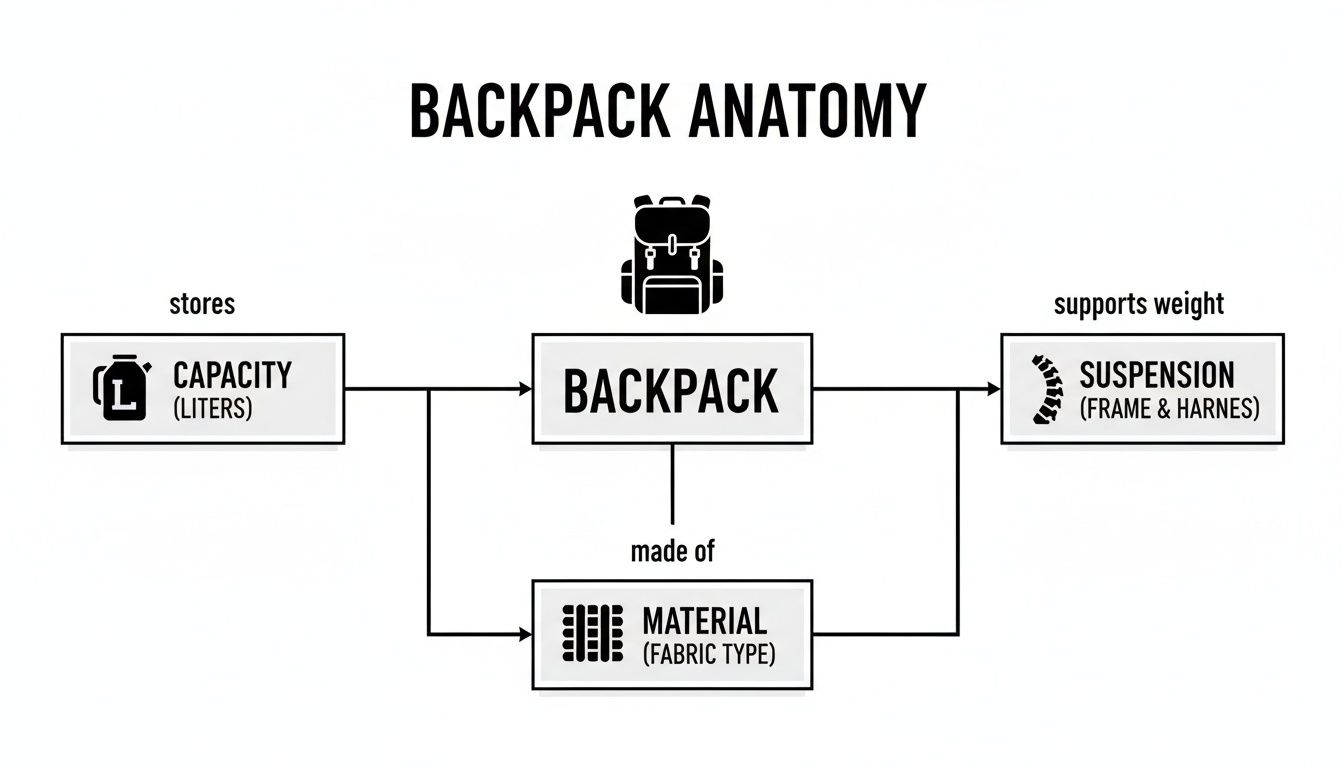
Nailing the balance between these three pillars is what separates an okay pack from a great one.
A pack's promise is only as good as its warranty. Osprey’s legendary "All Mighty Guarantee" is a lifetime commitment to repair any damage or defect for any reason, free of charge. This isn't just a policy; it's a testament to the confidence they have in their craftsmanship.
This commitment has been core to Osprey's DNA since its founding in 1974. They were pioneers in the 1980s, introducing adjustable suspension systems that changed how packs fit. By 2023, their 'All Mighty Guarantee' was servicing over 100,000 packs a year. And since 2018, they’ve leaned into sustainability, building many models with 100% recycled fabrics. You can dig deeper into their impact with these insightful backpacking statistics.
If Osprey is the master of fit, Deuter is the champion of ventilation and ruggedness. With over a century of German engineering behind them, their packs are built with a precision you can feel. They offer a unique combination of bombproof durability and trail-proven comfort that’s tough to beat.
Deuter’s secret weapon is the Aircontact suspension system. It's a brilliant design that uses special hollow-chamber foam pads. As you walk, your own movement pumps air through channels in the back panel, creating a chimney effect that can dramatically reduce sweat. If you’ve ever peeled off a soaked-through shirt at the top of a climb, you know what a game-changer this is.
But all that airflow doesn't mean you sacrifice stability. Deuter packs are famous for their ability to handle heavy loads without swaying or shifting, all while keeping your back as cool as possible. This makes them a fantastic choice for trekking in hot climates or for anyone who just runs warm.
Deuter is also a leader in sustainable manufacturing, with a heavy focus on using bluesign®-approved materials. This certification is a big deal—it guarantees that the fabrics are made in an environmentally and socially responsible way, from start to finish.
So, how do you choose between these two powerhouses? It really boils down to your personal priorities:
No matter which you pick, you're getting a pack from the very top tier of the industry. An investment in either is an investment in years of comfortable, reliable miles on the trail.
While top-shelf brands like Osprey and Deuter are fantastic, you absolutely don't need to spend a fortune to get a great pack. This is where the high-performance value brands come in, and they've become a go-to for countless experienced hikers.
These packs deliver 80-90% of the performance of the most expensive options, but at a price that's much easier to swallow. Think of them as the workhorses of the trail—dependable, comfortable, and packed with smart features. For most trekkers, this is the real sweet spot.
Leading the charge here are Gregory and Thule. Both have built a rock-solid reputation by focusing on what actually matters when you're miles from anywhere: a suspension that doesn't quit, materials that can take a beating, and features that just make sense.
If there's one word that defines Gregory, it's comfort. Since Wayne Gregory started the company back in 1977, the entire design philosophy has been about making packs that work with your body, not against it. They have an almost obsessive focus on creating suspension systems that make a heavy load feel surprisingly manageable.
Gregory packs feel like they’re giving you a supportive hug rather than just hanging off your shoulders. They accomplish this by diving deep into ergonomics. Their hip belts are often pre-curved and made from multiple foam densities to wrap perfectly around your hips. The shoulder harnesses are shaped to avoid pinching, and the internal frames are engineered to transfer weight so effectively that a 40-pound load feels much lighter than it has any right to.
Gregory proves you don't have to sacrifice a top-tier suspension system just to save some money. Many of their mid-range packs have adjustability and load-transfer tech that goes head-to-head with packs costing hundreds more.
This dedication to carrying comfort makes a Gregory pack a brilliant choice if you know you'll be hauling heavier loads, whether that’s for a long trip between towns or because you're carrying climbing gear or a hefty camera setup.
You probably know Thule from their legendary vehicle racks, and they bring that same tough, smart Swedish engineering to their backpacks. Thule packs stand out with their clean, modern look, incredibly tough materials, and a do-it-all versatility that’s hard to beat.
Thule's approach is all about durability and intuitive design. They use beefy fabrics and hardware that are clearly built to last. While their suspension systems might not have the same microscopic level of adjustment as some others, they are dead simple, incredibly effective, and comfortable enough for long days on the trail.
Where Thule really shines is in its clever features. You can tell these packs were designed by people who actually travel and hike:
This blend of rugged outdoor performance and modern travel smarts makes Thule a fantastic choice for the adventurer who does a bit of everything. If you need one pack for a week in the mountains and a flight to another country, Thule delivers outstanding value with style and function.
Knowing the specs of a backpack is great, but the real trick is matching that gear to the adventure you have planned. The best trekking backpack brands aren't just selling you a bag; they're offering a specific tool for a specific job. Let's walk through a few real-world scenarios to see how this plays out.
Think of it like picking a vehicle. You wouldn't take a slick sports car down a muddy, rock-strewn backroad, right? And a giant pickup truck is overkill for a quick trip to the grocery store. Your backpack is the same—it needs to be the right fit for the journey ahead.
This is the hiker who lives for Friday afternoon, squeezing every drop of adventure out of a 1 to 3-night trip. They're all about moving fast, covering serious ground, and packing light. A big, heavy pack would just get in the way. Efficiency is the name of the game.
For these quick getaways, the 30-50 liter range is your sweet spot. It's just enough room for a compact tent, sleeping bag, and a few days of food, but it’s still small enough to feel agile and responsive on the trail.
Now we're talking about the long-haulers—the folks spending weeks or even months living out of their pack. For them, comfort and sheer durability are everything. This pack is their mobile home, and it absolutely cannot fail them hundreds of miles from anywhere.
A serious trek like this calls for a 50-70 liter workhorse. These packs are engineered with robust suspension systems designed to shift heavy loads onto your hips, saving your shoulders and back from misery day after day.
For anyone going the distance, the suspension system is the single most important feature. A pack that feels fine for a day can become an instrument of torture after a week if it doesn't distribute weight properly. This is where you see the difference between good and great engineering.
One of the top brands in this category has to be Deuter. A German company that’s been at it since 1898, they have a rock-solid reputation for long-haul comfort. A standout feature is their Aircontact system, which uses a special 3D-mesh that can cut down on back sweat by an incredible 50%.
For this hiker, every single gram matters. The philosophy is simple: a lighter pack means you can move faster, go farther, and put less strain on your body. These are the masters of minimalism, carrying only what's absolutely necessary and often using gear that serves multiple purposes.
Ultralight packs often sit in the 40-60 liter range but achieve their feather-light status by stripping away non-essential features. Many have no frame at all, relying on a sleeping pad for structure, and are built from space-age materials like Dyneema. You can get more detail on these specialized designs by reading up on how to choose a backpack.
To help you visualize which pack might be right for you, here’s a quick-glance table breaking down recommendations by the type of trekking you do.
| Trekking Style | Ideal Capacity | Key Features To Prioritize | Example Models |
|---|---|---|---|
| Day Hiking | 15-30 Liters | Hydration reservoir sleeve, ventilated back panel, multiple small pockets | Osprey Talon 22, Deuter Speed Lite 21 |
| Weekend Trips (1-3 Nights) | 30-50 Liters | Lightweight frame, comfortable hip belt, external attachment points | Gregory Zulu 40, Osprey Exos 48 |
| Multi-Day Treks (3-5+ Nights) | 50-70 Liters | Adjustable suspension, load-lifter straps, durable fabric, multiple access points | Gregory Baltoro 65, Deuter Aircontact Lite |
| Ultralight Thru-Hiking | 40-60 Liters | Low base weight, frameless or minimal frame, large mesh pockets | Hyperlite 3400 Southwest, Zpacks Arc Blast |
| Expedition/Winter Trekking | 70+ Liters | Heavy-duty suspension, oversized pockets, crampon/ice axe loops | Osprey Aether Pro 70, Gregory Denali 100 |
This table should give you a solid starting point for narrowing down your options. Remember, the "best" pack is always the one that best fits your body and your specific adventure plans.
Of course, once you have the perfect pack, the real fun begins. If you need some inspiration, check out resources for finding amazing hiking trails and get ready to put your new gear to the test.
It’s one thing to read about specs and compare brands, but it’s another thing entirely to have those lingering, practical questions answered. Even after you’ve narrowed down your choices, a few key details can make all the difference between a great pack and one you regret buying.
Think of this section as a chat with a seasoned trail guide. We're here to tackle those common "what ifs" and "how-tos" so you can choose your next pack with total confidence.
This is, without a doubt, the most critical step. A perfect fit is everything, and it all hinges on your torso length. Get this right, and the pack will feel like a part of you; get it wrong, and you'll feel every single ounce.
Grab a soft tape measure and a friend to help you out. First, tilt your chin to your chest and feel for the big, bony bump at the base of your neck. That's your C7 vertebra, and it's your starting line.
Next, slide your hands down your sides to the top of your hip bones (what's technically called the iliac crest). Imagine you're putting your hands on your hips, then point your thumbs inward toward your spine. The distance from your C7 vertebra down to that imaginary line between your thumbs is your torso length.
This number is your golden ticket. It's what allows you to choose the correct pack size (usually Small, Medium, or Large) and ensures the suspension system works as designed, shifting the load off your delicate shoulders and onto your powerful hips.
A fantastic question, and the answer goes way beyond the color palette. The differences are all about anatomy and ergonomics, designed to match different body shapes for a more comfortable, stable carry.
Women-specific packs aren't just scaled-down men's packs. They usually have a few key tweaks:
Of course, the best pack is always the one that fits your body best, regardless of the label. But for many women, a gender-specific design provides a night-and-day improvement in comfort on long treks.
Taking care of your pack is the secret to making it last for thousands of miles. The number one rule: never, ever put your pack in a washing machine or dryer. The harsh agitation and high heat will wreck the fabric's water-resistant coatings and destroy the foam padding in the straps.
After each trip, empty it out completely. Shake out all the dirt, sand, and granola bar crumbs. For a real cleaning, grab a soft sponge, some lukewarm water, and a bit of mild soap (think Dr. Bronner's, not laundry detergent). Gently scrub any grimy spots.
Rinse it thoroughly, making sure you get all the soap out. Then, hang it up to air dry somewhere out of direct sunlight, as UV rays can weaken the fabric over time. Store it in a cool, dry place with the straps loosely buckled, and it'll be ready for your next adventure.
For the most part, yes—but how "worth it" it is really depends on you. A higher price tag from a top-tier brand isn't just for the name. It reflects real-world upgrades in materials, suspension design, overall weight, and warranty.
Premium packs use lighter, more durable fabrics and feature incredibly engineered suspension systems that make 30 pounds feel a lot more manageable. The quality of the stitching is better, the buckles are tougher, and the features are more thoughtfully designed. Knowing what to bring is half the battle; our complete backpacking essentials list can help you figure out what you actually need to carry.
If you’re a thru-hiker or out on the trail every other weekend, that investment pays off big time in comfort and reliability. But for the casual trekker who enjoys a few trips a year? A fantastic mid-range pack from a brand like Gregory or Thule offers incredible value and performance that's more than enough to get the job done.
At FindTopTrends, we're dedicated to helping you find the gear that fits your adventure and your budget. Explore our curated collections of outdoor and travel essentials to get ready for your next journey. Discover trending products and smart deals at https://findtoptrends.com.




