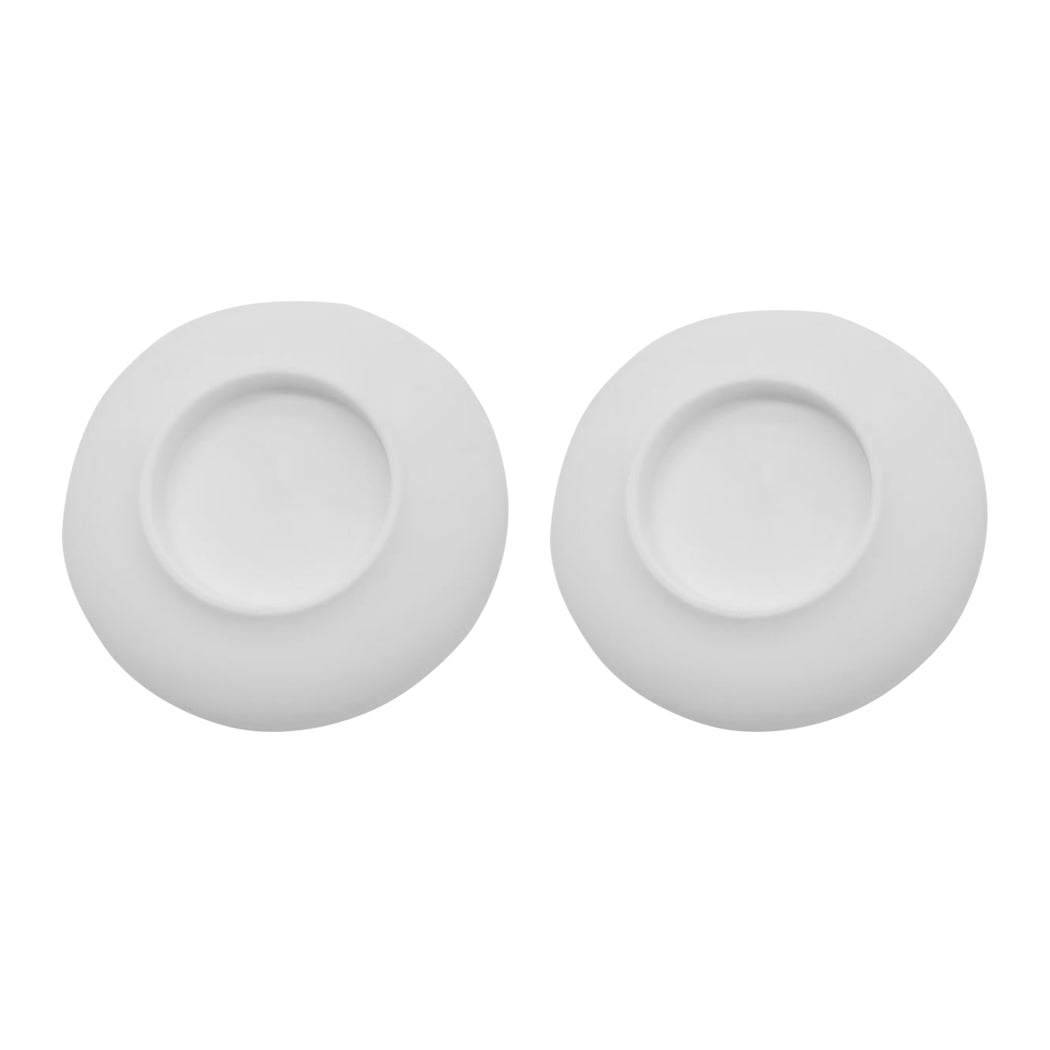
Description
These Baby Gate Wall Bumpers are a pair of pads that sit between a pressure-fit safety gate and the wall, priced at $17.99 for two. They spread the gate's clamping force over a wider area so the small metal cups do not press dents into paint, plaster or plasterboard.
A pressure gate works by pushing hard against two surfaces, and all of that force lands on four small pads. On solid brick that is fine. On painted plasterboard, over months, it leaves four permanent circular dents - and on a rental wall that is a bond deduction waiting to happen.
Specifications
| Purpose |
Protecting walls from pressure gate mounting cups |
| Quantity |
2 bumpers |
| Fitting |
Sits between the gate cup and the wall |
| Gate |
Not included |
Note on dimensions and fit: the supplier has not provided measurements or a brand compatibility list. These are supplied as an accessory to our adjustable safety gate range. Contact us before ordering if you are fitting another brand's gate and we will measure stock on hand.
What's in the Box
| Wall bumpers |
2 |
| Safety gate |
Not included |
| Adhesive or fixings |
Not included |
Why Two Rather Than Four
-
Two protects the wall side - the side that actually marks, since the other is often a doorframe
-
Spreads the clamping load over a wider footprint than the bare cup
-
Saves the paintwork - the difference between a clean wall and four permanent dents
-
Reusable - they move with the gate to the next doorway or the next house
-
Cheap insurance - far less than repainting a hallway
Why Do Pressure Gates Mark Walls?
Because the whole design depends on force. To hold a toddler pushing against it, the gate must be tensioned hard, and that tension is transmitted through four small contact points. Plasterboard is soft, and paint over plasterboard is softer still, so over weeks the cups compress the surface and leave a ring. Heat, humidity and repeated re-tightening all accelerate it. Spreading the same force over a larger pad is the only real fix short of a hardware-mounted gate.
Do Bumpers Reduce the Gate's Grip?
They should not, if fitted correctly - the bumper transmits the same force through a bigger footprint rather than absorbing it. What does matter is that the bumper sits flat and square against the wall and that the gate cup is centred on it. A bumper fitted at an angle, or one that has slipped, gives the gate a rocking surface to push against, which will reduce tension. Check it whenever you check the gate.
Where Exactly Do They Go?
Between the gate's pressure cup and the wall, one at the top fixing point and one at the bottom on the wall side. Position the gate first, mark where the cups land, then set the bumpers on those marks and re-tension. If your gate has cups on both sides and both faces are vulnerable, you will want two packs.
Buyers are protecting rental walls, fitting gates onto plasterboard or freshly painted surfaces, and replacing bumpers lost from an existing gate.
Our safety gates, spindle adaptors and support ramps are in Children and Home & Garden. See also Kid's Supplies.
Frequently Asked Questions
How many do I get?
Two.
Is a gate included?
No, accessory only.
Will four fit a gate with cups on both sides?
Order two packs for four bumpers.
What size are they?
The supplier has not provided measurements. Contact us and we will measure stock on hand.
Do they stick to the wall?
They sit between the cup and the wall, held by the gate's own pressure. No adhesive is supplied.
Will they work with another brand's gate?
They are supplied as an accessory to our own range. Check with us first for other brands.
Do they stop the gate marking completely?
They spread the load and greatly reduce marking, but no pressure gate is entirely mark-free on soft paint.
Fast Australian Shipping
Dispatched from Australia to Sydney, Melbourne, Brisbane, Perth, Adelaide, Hobart, Canberra and Darwin, with regional and remote addresses handled through the standard Australia Post network.
Screen colours vary between devices. SAFETY: a stair gate is only as safe as its installation. Follow the gate manufacturer's instructions, check the tension regularly, and never rely on a gate as a substitute for supervision. Pressure-mounted gates are not recommended at the top of stairs by many safety authorities - a hardware-mounted gate is the safer choice there.