


No products in the cart.

Free Shipping Australia-Wide

5 star customer service

Quality Tested Products

Welcome to parenthood! That exciting, sometimes terrifying, moment when your little one starts to move on their own is a huge milestone. Suddenly, your home—a place you know like the back of your hand—looks completely different through their curious eyes.
The best baby proofing products are the unsung heroes of this stage. Think of items like furniture anchors, cabinet locks, and outlet covers. They’re designed to quietly neutralize hazards so your child can explore safely. This guide is here to help you cut through the clutter and choose the right gear for your family.
The second your baby is on the move, your world shifts. That low coffee table now has dangerously sharp corners, and that simple electrical outlet is a fascinating new toy. It can feel overwhelming, but baby proofing is just a series of small, manageable steps.
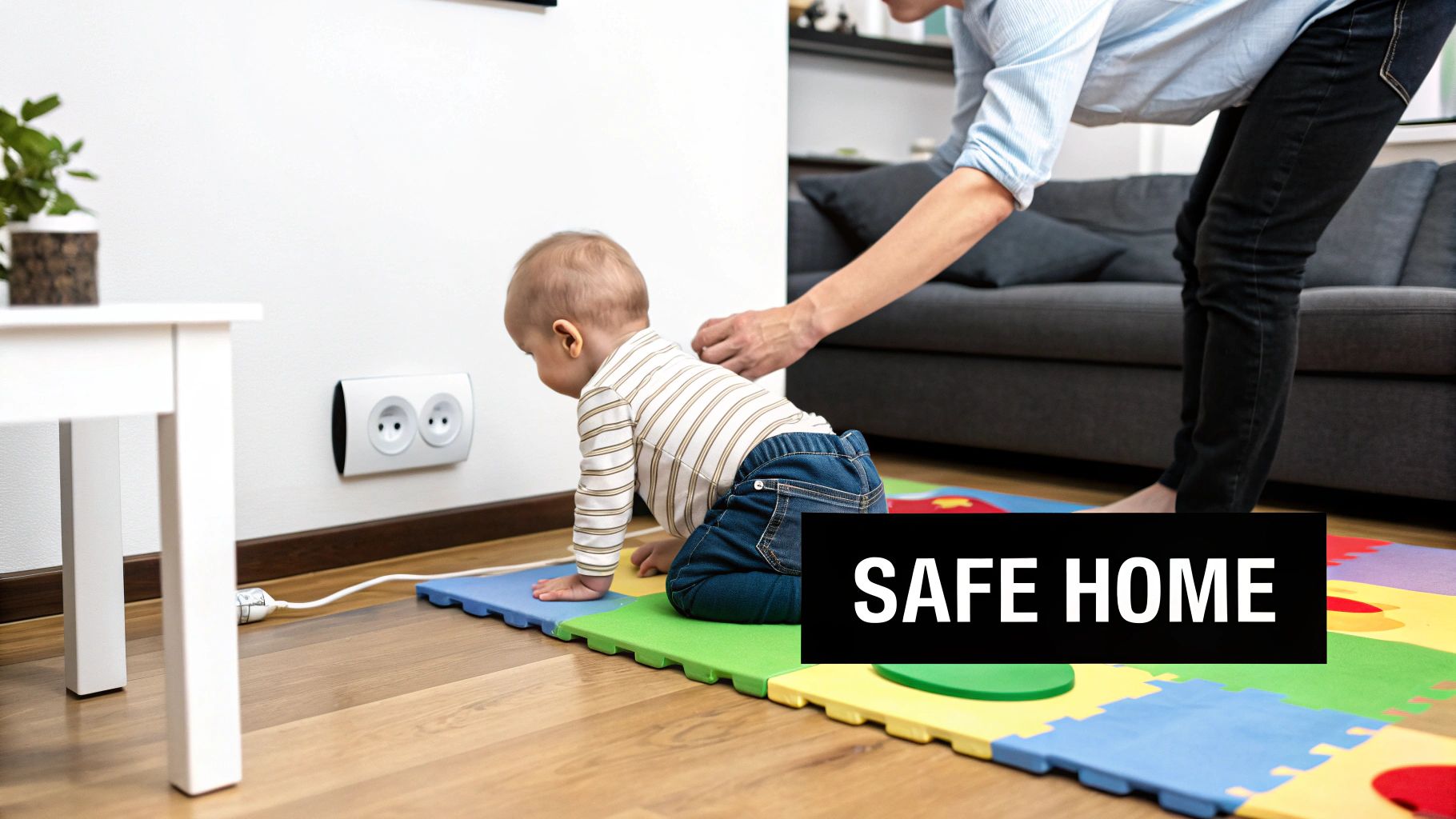
We'll walk through the must-have product categories, demystify safety standards, and give you a room-by-room playbook to create a truly secure space. This isn't about wrapping your home in bubble wrap; it's about building a safe haven where your child can explore, learn, and grow with confidence.
Every parent wants to keep their child safe—it's instinct. This universal drive is why the child safety market is so massive. The global baby safety products market was valued at $255.83 billion in 2024 and is expected to soar to $431.64 billion by 2034. You can read more about the baby safety products market growth on Precedence Research.
But this is about more than just statistics. It's about your peace of mind. When your home is properly proofed, you can relax a little. It gives your child the freedom to explore independently without you hovering over their every move, which is fantastic for their development.
By addressing potential dangers before they become problems, you’re not just installing products; you’re building a foundation of safety that supports your child's natural curiosity and development.
Getting started can feel like a huge task, so let's break it down. Understanding the main product categories is the perfect first step. These five are the foundation of any solid baby proofing plan.
| Product Category | Primary Function | Why It's a Must-Have |
|---|---|---|
| Furniture Anchors | Secures heavy furniture like dressers and bookshelves to the wall. | Prevents dangerous and potentially fatal tip-over accidents as children begin to climb. |
| Outlet Covers | Blocks access to electrical sockets. | Protects curious toddlers from electrical shocks by covering unused outlets. |
| Cabinet & Drawer Locks | Keeps cabinets and drawers securely closed. | Prevents access to cleaning supplies, sharp objects, and other household dangers. |
| Safety Gates | Creates a physical barrier to block off unsafe areas. | Essential for restricting access to stairs, kitchens, and other hazardous zones. |
| Corner & Edge Guards | Softens sharp corners on tables, counters, and furniture. | Cushions impacts and reduces injuries from falls against hard edges. |
Think of these categories as your starting lineup. Once you have these basics covered, you can move on to more specific needs for your home and family.
Walking into the baby proofing aisle for the first time can be completely overwhelming. It feels like a sea of gadgets and gizmos, all claiming to be the one thing you absolutely need. So, how do you sort through it all?
Let's cut through the noise. I find it’s much easier to think about baby proofing in terms of what you're trying to accomplish. Most products fall into one of three main categories: securing big stuff, locking up small stuff, and blocking off entire areas. Thinking this way helps you tackle the most critical hazards first as your little one starts exploring the world on their own two feet.
Your first job is to neutralize the biggest, most obvious dangers in every room—things like heavy furniture and those deceptively sharp corners. You might not even notice them now, but they become major hazards the second your baby starts pulling up and toddling around.
Furniture Anchors and Straps: Think of these as seatbelts for your bookcases, dressers, and flat-screen TVs. The moment babies can pull themselves up, they’ll use whatever is nearby for support. Anchoring heavy furniture to the wall is a non-negotiable step to prevent a tip-over accident. It's a simple fix for a truly terrifying risk.
Corner and Edge Guards: Suddenly, your coffee table, TV stand, and countertops are at the perfect height to meet a wobbly toddler’s head. Soft guards made of foam or silicone cushion these sharp points. They can turn a trip to the emergency room into just a minor bump and a few tears.
Tackling these foundational items first creates a much safer baseline before you move on to the smaller, more fiddly hazards.
With the big furniture secured, it's time to manage access. Babies are born explorers, and their mission is to open every cabinet and drawer they can reach. This is where you likely store things you definitely don't want them getting into.
This is why locks and latches are absolutely essential. In fact, cabinet and drawer locks are the undisputed champs of the baby proofing world, making up a massive 35% of all sales in the global market. Why? Because they solve a universal problem: keeping curious kids away from cleaning supplies, sharp utensils, and other dangers. They’re cheap, effective, and relatively easy to install. You can get a deeper look at the global market for these safety products here.
When you're picking out locks, really think about how your family lives. A lock that's a breeze for one person might be a constant source of frustration for another.
Here are the main types you'll come across:
Magnetic Locks: These are my personal favorite for aesthetics because they're totally hidden. You use a magnetic "key" to open the cabinet. They’re fantastic for keeping clever toddlers stumped, but you have to be disciplined about keeping track of that key!
Spring-Loaded Latches: Another option that stays hidden inside the drawer. You just press down on a little spring latch as you pull the door open. They work well but can be a bit tricky to manage one-handed when you're holding a baby.
Adhesive Strap Locks: These external locks are the utility players of baby proofing. They stick on almost anything—refrigerators, toilets, trash cans, you name it. They’re a breeze to install but aren't as discreet as the internal options.
The final piece of the puzzle is creating clear boundaries. This means blocking off entire danger zones, like stairs, and neutralizing specific hazards, like electrical outlets.
Safety Gates are probably the most well-known baby proofing item, and for good reason. They are absolutely critical for preventing falls down stairs and for keeping kids out of rooms that are just too risky, like the kitchen when the oven is on or a home office full of cords.
Outlet Covers are a cheap and simple fix for a very serious danger. Kids are fascinated by those little slots and will try to stick anything into them. From simple plastic plugs to sliding plate covers that automatically snap shut, there’s no excuse for leaving an outlet exposed.
By thinking in terms of these three core categories—anchors, locks, and barriers—you can turn the overwhelming task of baby proofing into a straightforward plan. You’ll know exactly what you need to create a home where your little one can explore safely.
Once your baby starts moving, you suddenly see your home in a completely new light. It's a real game-changer. All those familiar spaces? Now they look like a minefield of potential dangers. But don't get overwhelmed. The trick is to think of baby proofing as a mission you can tackle one room at a time. It turns a massive, intimidating project into a series of small, manageable wins.
Every room presents its own unique challenges. The hazards lurking in a kitchen are worlds apart from what you'll find in the living room or nursery. By focusing on one area at a time, you can pick the best baby proofing products for each specific environment and make sure no corner is overlooked.
To get started, it helps to think about the main categories of products you'll be using throughout your home.
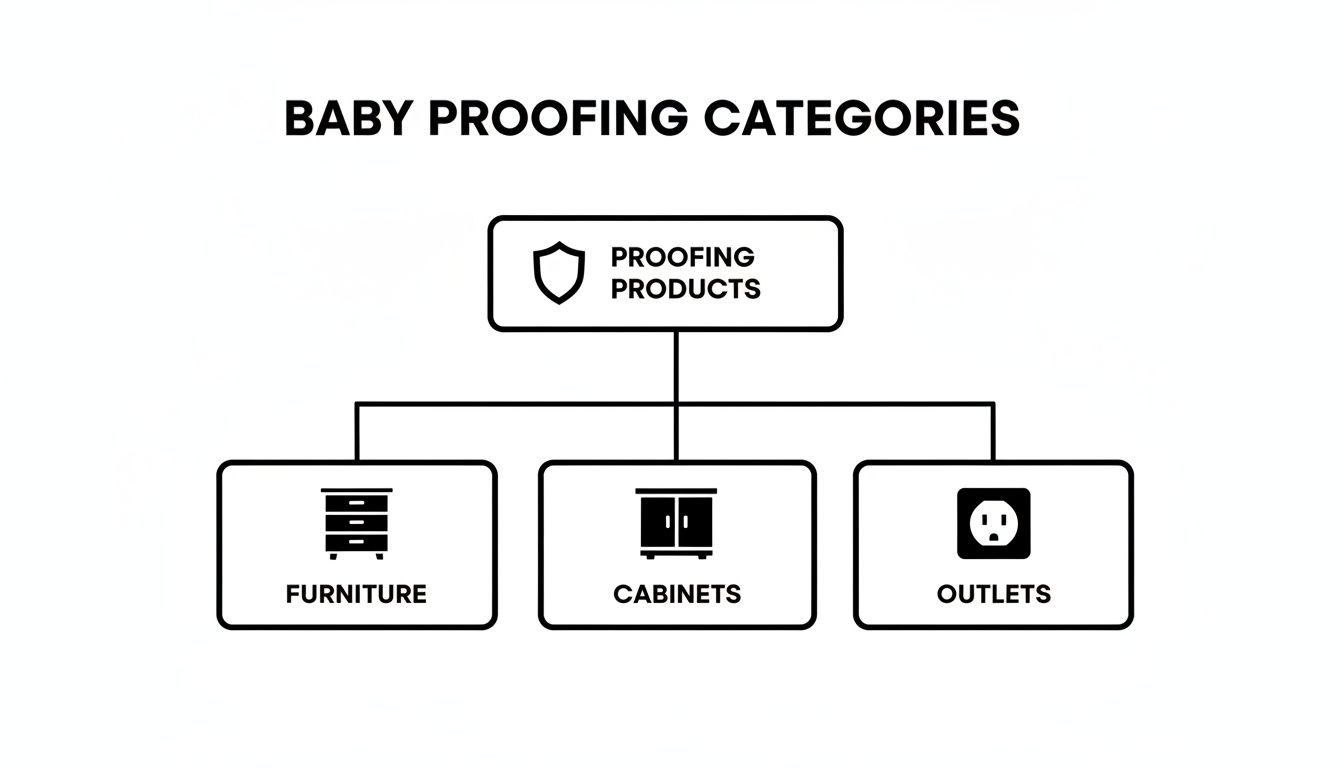
As you can see, most baby proofing boils down to securing these three main risk areas: big furniture that can tip, cabinets that can be opened, and electrical outlets that are just too tempting for tiny fingers.
The kitchen is the heart of the home, no doubt. But for a curious crawler or toddler, it's more like an obstacle course. You've got hot surfaces, sharp objects, and cleaning chemicals all within surprisingly easy reach. This room demands your full attention.
Your main goal here is controlling access. The easiest place to start is with all those low cabinets and drawers. This is where products like Munchkin Xtraguard Dual Action Multi Use Latches become your best friend—they're incredibly versatile and a breeze to install on almost anything.
Here’s a quick checklist to make your kitchen safer:
The living room is where everyone hangs out and relaxes, but it’s also ground zero for climbable furniture and pullable cords. Your focus in this space should be on stability and organization.
Anchoring heavy furniture is absolutely non-negotiable. It's shockingly easy for a small child to pull a TV or bookcase over on themselves just by trying to pull up. Furniture anchors are inexpensive, easy to install, and are one of the most important safety devices you'll ever own.
A common mistake is underestimating a child's strength. Even small children can exert enough force to topple unsecured furniture, making anchors an essential, life-saving investment.
Put these tasks at the top of your living room to-do list:
When comparing rooms, it's clear that while the goal—safety—is the same, the specific dangers are very different. The kitchen is full of immediate-contact hazards like heat and chemicals, while the living room's risks are more about gravity and electricity.
| Hazard Area | Common Kitchen Dangers | Recommended Kitchen Products | Common Living Room Dangers | Recommended Living Room Products |
|---|---|---|---|---|
| Appliances & Furniture | Hot ovens, heavy refrigerators, accessible dishwashers with sharp items. | Oven locks, appliance latches, stove knob covers. | Heavy, unstable furniture (bookcases, TVs), sharp-cornered tables. | Furniture anchors, anti-tip straps, TV straps, corner guards. |
| Storage | Low cabinets/drawers with cleaning supplies, knives, glassware. | Magnetic locks, adhesive latches, childproof drawer locks. | Low shelves with breakable decor, accessible media cabinets. | Anchoring for shelving units, cabinet locks if needed. |
| Electrical & Cords | Small appliance cords (mixers, toasters) on countertops. | Cord shorteners, unplugging items when not in use. | Long lamp cords, power strips, accessible wall outlets. | Outlet covers, cord concealers, power strip covers. |
| General Hazards | Open trash cans, potential for slips on wet floors. | Locking trash cans, keeping floors dry. | Fireplace hearths, large glass windows or doors. | Hearth guards/gates, window film for safety. |
This comparison really highlights why a one-size-fits-all approach doesn't work. You have to tailor your baby proofing strategy to the specific function and contents of each room.
The nursery should feel like the safest room in the house, but it still has its own set of risks. Beyond following safe sleep guidelines for the crib, remember that nursery furniture like changing tables and dressers absolutely must be anchored to the wall. As your child gets older and accumulates more things, the sheer volume of toys can become a tripping hazard, making good organization a safety strategy. For some great tips on keeping everything in its place, check out our guide on how to organize kids' toys.
The bathroom is a whole other beast, with water being the biggest danger. A toilet lock is essential to prevent a serious drowning hazard, and cabinet locks are a must for keeping medicines and toiletries out of reach. Also, don't forget a non-slip mat for the tub and a soft cover for the spout to prevent bumps and bruises during bathtime.
If you're looking for a more structured way to tackle every area of your house, this guide on how to childproof your home offers a fantastic room-by-room breakdown. By following these kinds of checklists, you can methodically create a secure environment where your little one has the freedom to explore safely.
When you start scrolling through page after page of baby proofing gear, it’s easy to feel stuck. Instead of grabbing the cheapest outlet cover you spot, think of safety like picking a car seat with a five-star crash rating—you want reassurance that it’s been rigorously tested.
Safety certifications act as that expert nod of approval. These seals aren’t decorative labels; they show a product has survived independent labs’ toughest tests, mimicking everything from a toddler’s stubborn pull to a full-on climb.
Without those standards, you’re guessing. A bargain-bin latch might crack on day one, giving you a false sense of security. Real peace of mind comes when each gate, corner guard, and cabinet lock holds firm exactly when you need it most.
JPMA Certified is one of the most respected safety marks in the United States. When you see this seal, it means the Juvenile Products Manufacturers Association has verified that a product meets or exceeds its strict guidelines.
The JPMA program is entirely voluntary, so a brand displaying that logo has chosen to go the extra mile. For high-stakes items like safety gates and cribs, this certification is your first clue that experts have already vetted the design and durability.
Even certified products vary in quality. Use this checklist to separate winners from pretenders:
Don’t forget the products you use around your child. A safe environment relies on gentle cleaning solutions, too. For guidance, check out the best baby-safe cleaning products.
Stars can be misleading—dig into the one- and two-star feedback. Watch for patterns: do multiple parents report the same adhesive failure after a week? Has a clever toddler cracked the “childproof” lock in minutes? Those are red flags.
On the flip side, look for reviews that praise long-term performance. Comments like “held steady through two years of daily use” or “never loosened, even after repeated openings” highlight gear you can trust. That’s how you spend your money on products that deliver real, lasting safety.
So, you’ve anchored the big furniture and locked down the low-lying cabinets. What’s next? You might want to look into adding a layer of smart technology to your setup. Today's tech goes way beyond simple plastic latches, offering real-time alerts and a whole new level of peace of mind.
Think of it this way: a traditional cabinet lock is a passive barrier. A smart lock, on the other hand, can send an alert straight to your phone if someone is trying to open it. It’s this move from just blocking access to actively monitoring it that really sets high-tech baby proofing apart.
Modern baby monitors are worlds away from the grainy, static-filled screens of the past. They've evolved into sophisticated wellness hubs that do so much more than just show you if your baby is awake.
The market has noticed, too. As of 2024, smart monitors account for a whopping 40.2% share of all baby safety product sales. It's easy to see why parents are drawn to features like crystal-clear night vision, two-way talk, and even AI that can tell you why your baby is crying. You can see more details on the booming baby safety products market on Market.us.
A few key features to look for are:
These advanced monitors don't replace your supervision, but they are an incredible extra set of eyes and ears. They provide data-driven reassurance that can genuinely help you sleep a little sounder.
Smart tech isn't just for the nursery; it can help secure your entire home. While a good old-fashioned lock certainly works, smart locks give you an added layer of information and control that many parents now swear by.
Imagine a magnetic lock on the cabinet with the cleaning supplies. It not only keeps it firmly shut but also pings your phone the moment it’s opened. This is fantastic for when you have a particularly clever toddler or when a babysitter is watching the kids. You can put similar sensors on doors to rooms that are off-limits or even on windows.
Many of these devices can connect to a central hub, creating a connected safety net around your home. For anyone wanting to take this a step further, diving into the world of smart home security systems shows how all these individual gadgets can work together seamlessly. This lets you build a system that can adapt and grow right alongside your child as they become more mobile and curious.
Securing your home with top-rated baby proofing gear is only half the battle. Imagine building a bookshelf but skipping a few screws—it might look done, yet wobble at the slightest touch. That’s why installation matters just as much as the product itself.
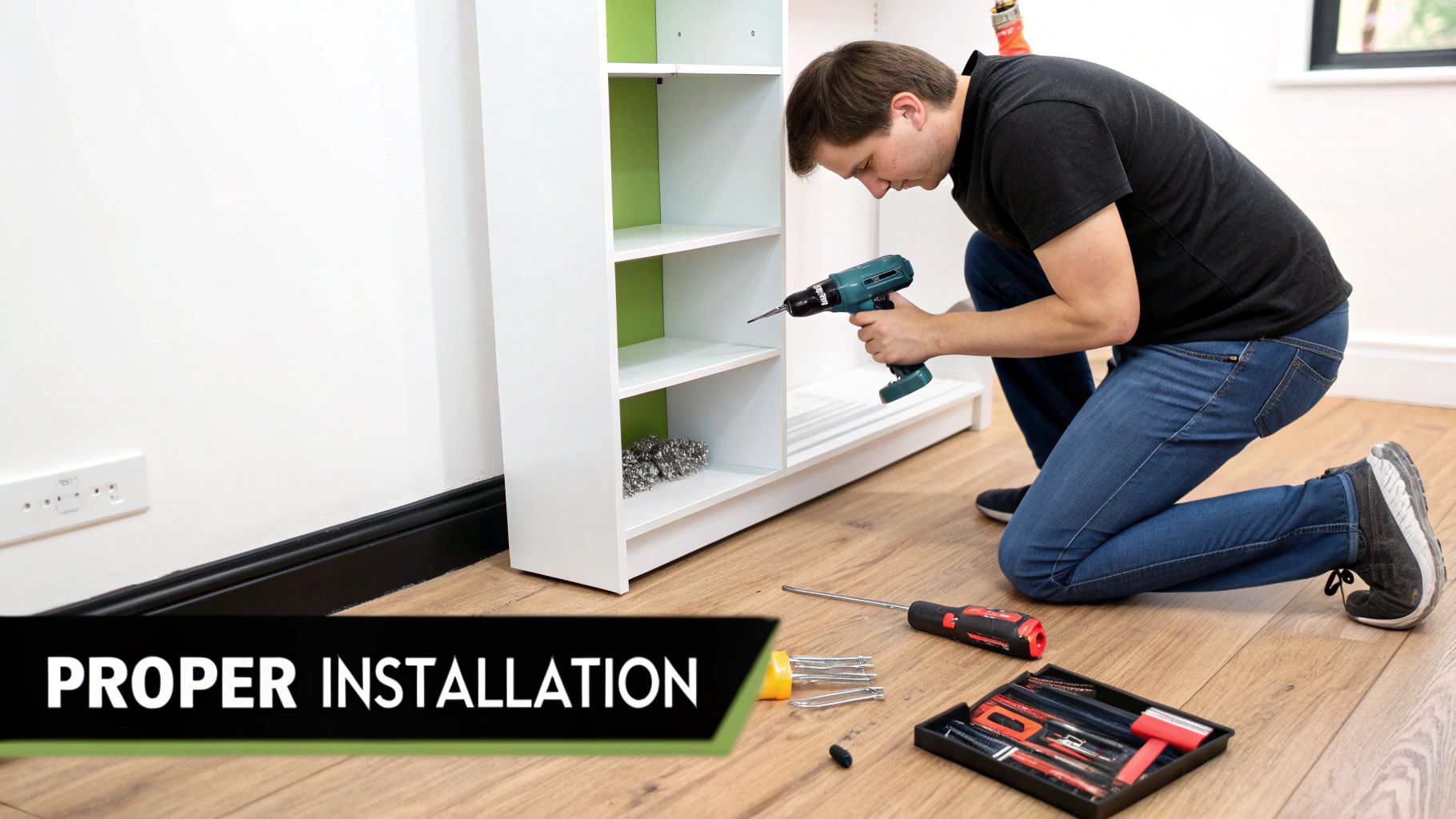
A gate that’s not mounted securely or an anchor that’s loosely attached can lull you into a false sense of security—possibly more dangerous than having no protection at all. By taking the time to follow each detail in the manual, you turn a clever gadget into a reliable shield.
Getting things right from the start saves you headaches down the road. Every product has its quirks, so begin by reading the manufacturer’s directions front to back.
A baby’s curiosity and strength grow by the day—your proofing should keep pace. Carve out a few minutes every week or two to catch loose parts before they become hazards.
Just like checking the batteries in your smoke detector, testing your baby proofing gear on a schedule catches small issues before they turn into accidents.
Create a simple checklist to run through every couple of weeks:
Accidents can happen in the blink of an eye, so it’s wise to complement your baby proofing with a stocked first aid kit. For a step-by-step list of essential first aid kit supplies, check our detailed guide. This blend of prevention and preparation keeps your little explorer safe and lets you sleep a bit easier.
Once you get into the weeds of baby proofing, questions are bound to pop up. It's totally normal. You might wonder if you're starting too early (or too late), or if one type of lock is really better than another. We get it.
Let's clear up some of the most common questions we hear from parents. Think of this as your go-to spot for quick, straightforward advice to help you feel confident you're making the right calls for your little one.
The sweet spot for starting is usually before your baby is mobile, somewhere around the 4 to 6-month mark. The minute you see them rolling over or trying to scoot, that's your cue. Crawling is just around the corner.
Getting a head start gives you plenty of time to look into the best baby proofing products, get them shipped, and install everything properly without feeling rushed. If you wait until they're already zipping across the floor, you'll be in a frantic race against time, which creates stress and a potential window of risk. Be proactive, and your home will be ready the moment their adventure begins.
The biggest mistake we see? Waiting for that first official crawl. By that point, you're already behind. Your goal should be to tackle the biggest hazards before your baby can get from one side of the room to the other on their own.
That's a fantastic question, and honestly, it depends entirely on what you're securing. High-quality adhesive products can be incredibly strong. They're a great solution for renters or anyone who doesn't want to drill holes in their furniture, especially for things like cabinet locks or soft corner guards.
But when it comes to high-stakes areas, hardware-mounted gear is the only way to go. No exceptions.
You absolutely do not need to buy every single gadget out there to make your home safe. It’s all about smart, prioritized spending. Start by walking through your home and identifying the highest-risk areas—for most families, that’s the kitchen and any stairways.
Put your budget toward the non-negotiables first. You can get great value from multi-packs of simple outlet covers and basic cabinet latches. For everything else, get creative! You can implement no-cost solutions like moving all the cleaning chemicals to a high, out-of-reach shelf or using a couple of heavy boxes to block off an unused fireplace. Spend your money where the risk is highest: a top-quality safety gate and solid furniture anchors.
At FindTopTrends, we're all about helping you find those high-quality essentials that make parenting a little bit easier and a whole lot safer. Come explore our curated collections of the best baby care and home safety products out there.
Discover more at https://findtoptrends.com




