


No products in the cart.


Free Shipping Australia-Wide

5 star customer service

Quality Tested Products

Picking the best camping chairs really comes down to one simple thing: the perfect chair is the one that fits your kind of adventure. If you're a car camper with plenty of trunk space, that might mean a beefy, feature-loaded quad chair. But for a backpacker counting every ounce, an ultralight, packable design is the only thing that makes sense. This guide will walk you through finding the perfect seat for your outdoor style.
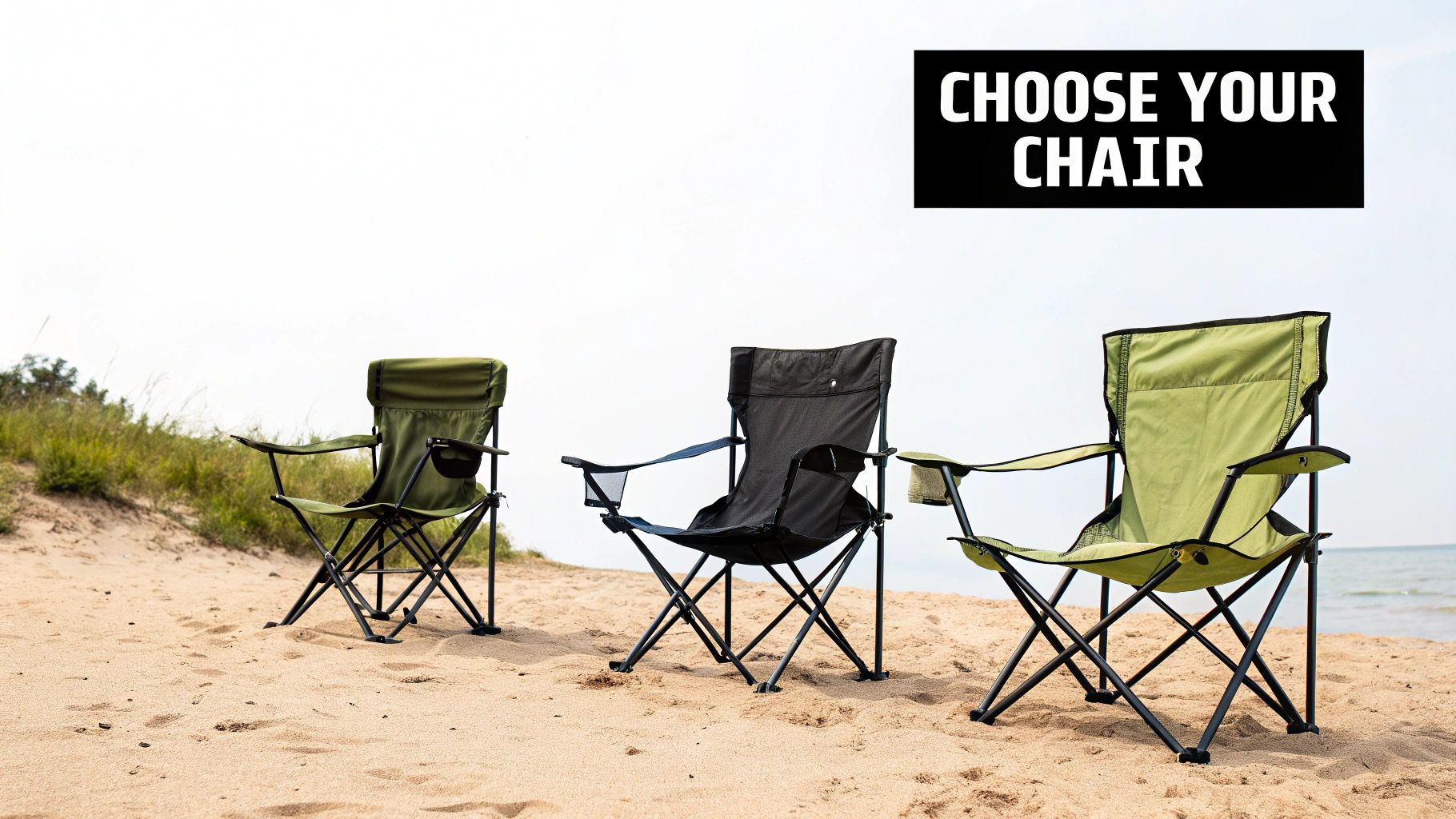
Choosing a camping chair is a lot like picking out a good pair of hiking boots. The most expensive one with all the bells and whistles isn't automatically the best. What truly matters is how it performs for what you need it to do. A flimsy chair that has you constantly shifting around can ruin a perfect evening under the stars, turning what should be relaxation into a real pain.
Don't think of it as just another piece of gear; it's an investment in your comfort. The right chair feels like a well-deserved reward after a long day of hiking, setting up the tent, or wrestling with a tangled fishing line. Think of this guide as your map to finding that perfect throne.
We’re going to break this down into simple, practical steps. Instead of getting overwhelmed by a sea of online listings, you’ll learn how to figure out what you actually need first. This way, you’ll end up with a chair that becomes a reliable, go-to part of your camping setup for years.
It's clear that more and more people are seeing the value in good outdoor gear. The global camping chair market was valued at USD 154.45 million and is expected to climb to USD 248.21 million by 2032. That's a lot of people wanting a comfy place to sit! This boom is driven by a huge interest in the outdoors, with folks like budget-savvy families and travel adventurers looking for gear that’s both portable and comfortable. You can discover more insights about this growing market trend.
The Core Idea: There's no single "best" camping chair. The best one is the chair that nails the balance of comfort, portability, and features for how you get outside.
To get the ball rolling, let’s quickly match up common adventure styles with the types of chairs that suit them best. Whether you're loading up the station wagon for a family weekend, hiking deep into the backcountry, or just kicking back on the sand, there’s a chair made for the job.
We’ll dig into:
By the time you're done here, you won't just know which chair to buy—you'll understand exactly why it's the right one for all your adventures to come.
To find a truly great camping chair, you have to look beyond the color and the cupholder. The real-world comfort and how long a chair lasts come down to its guts—the frame and the fabric that decide how it holds up out in the wild. Learning about these core parts is a lot like learning what's under the hood of a car; it helps you make a smarter choice based on performance, not just what it looks like on the shelf.
Think of the frame as the chair's skeleton. It's the source of its strength, stability, and, of course, a big chunk of its weight. You'll mostly run into two materials: steel and aluminum. Each one presents a classic trade-off between being heavy-duty and easy to haul.
Once you get a feel for these fundamentals, you'll be able to size up any chair and know exactly what you’re paying for.
Durability starts with the frame. A weak frame makes for a wobbly, unreliable seat, but a solid one gives you a stable spot to relax. Your choice here is a direct line to how portable and how sturdy your chair will be.
The Bottom Line: Go with steel for maximum stability and a rock-solid feel if you're camping right next to your vehicle. Grab an aluminum chair when you need something light and easy to carry for festivals, beach days, or kid's soccer games.
The fabric is the chair's skin. It dictates how comfortable it is to sit in and how well it stands up to sun, dirt, and stray campfire embers. Since it’s the part you'll be in contact with the most, the material really matters.
Most camping chairs are made from some kind of polyester, and its toughness is often measured in denier (D). The higher the number, the better. A chair with 600D polyester, for instance, has a thick, durable fabric that can handle a lot of abrasion and general outdoor abuse. It's a fantastic all-around choice.
But the way the fabric is put together also makes a huge difference in how it feels.
Materials are only half the story. A few key measurements will tell you how a chair will actually feel and where it will work best. Paying attention to these specs helps you find a chair that fits your body and your plans.
Seat Height is simply the distance from the seat to the ground, but it completely changes where and how you'll use the chair.
By understanding how the frame, fabric, and dimensions all work together, you’re not just buying a chair anymore. You're picking out a piece of gear that’s been designed for a purpose, ensuring you get the perfect seat for your next adventure.
The secret to choosing the right camping chair isn't about finding the one with the longest feature list. It's about picturing where you'll actually be using it. A chair that’s a dream at a family campsite can be a nightmare on a backpacking trip.
Think of it like picking out a pair of shoes. You wouldn't wear hiking boots to the beach or flip-flops on a mountain trail. The same idea applies here—you need the right gear for the adventure. Once you start thinking this way, the whole process gets a lot easier and, frankly, more fun.
This practical mindset is why camping furniture is so popular. In fact, chairs and stools are essential pieces of gear, historically capturing over half the market revenue. Today, they still hold a 47.90% market share, proving they are must-haves for anyone who values comfort and convenience outdoors. You can discover more about the camping furniture market.
When your campsite is just a few feet from your car, weight and packability don't really matter. It’s all about comfort and durability. Car camping is your chance to set up a true home away from home, and your chair should feel just as cozy.
This is where those classic, quad-style folding chairs with steel frames are king. The tough steel frame gives you a rock-solid feel, even on lumpy ground, and can usually support over 300 lbs. It’s the perfect, reliable seat for everyone. Plus, you can find them loaded with all the little extras that make camp life better.
These chairs are the undisputed champs when you can afford the space. They pop open in seconds, are built to handle years of use, and have all the features that make a campsite feel organized and truly relaxing.
For a backpacker, every single ounce counts. The whole game is finding a chair that delivers a decent dose of comfort without weighing you down or hogging space in your pack. In this world, the best camping chairs are tiny marvels of engineering, often packing down to the size of a Nalgene bottle.
These stripped-down chairs almost always use lightweight aluminum frames and tough, high-tech fabrics to hit a trail weight of just one or two pounds. They trade cushy padding and extra pockets for an incredibly small packed size.
A backpacker's chair is a calculated luxury. It's a small weight penalty that pays huge dividends in comfort at the end of a long day on the trail, allowing you to rest and recover properly.
You’ll have to assemble them, but it’s usually a quick process of snapping together shock-corded poles, much like a modern tent. Sure, they sit lower to the ground and aren't as plush as a car camping throne, but the simple act of getting off the cold, damp ground is an incredible morale booster deep in the backcountry.
This flowchart breaks down the first big decision you'll make—whether you need a heavy-duty steel frame or a feather-light aluminum one.
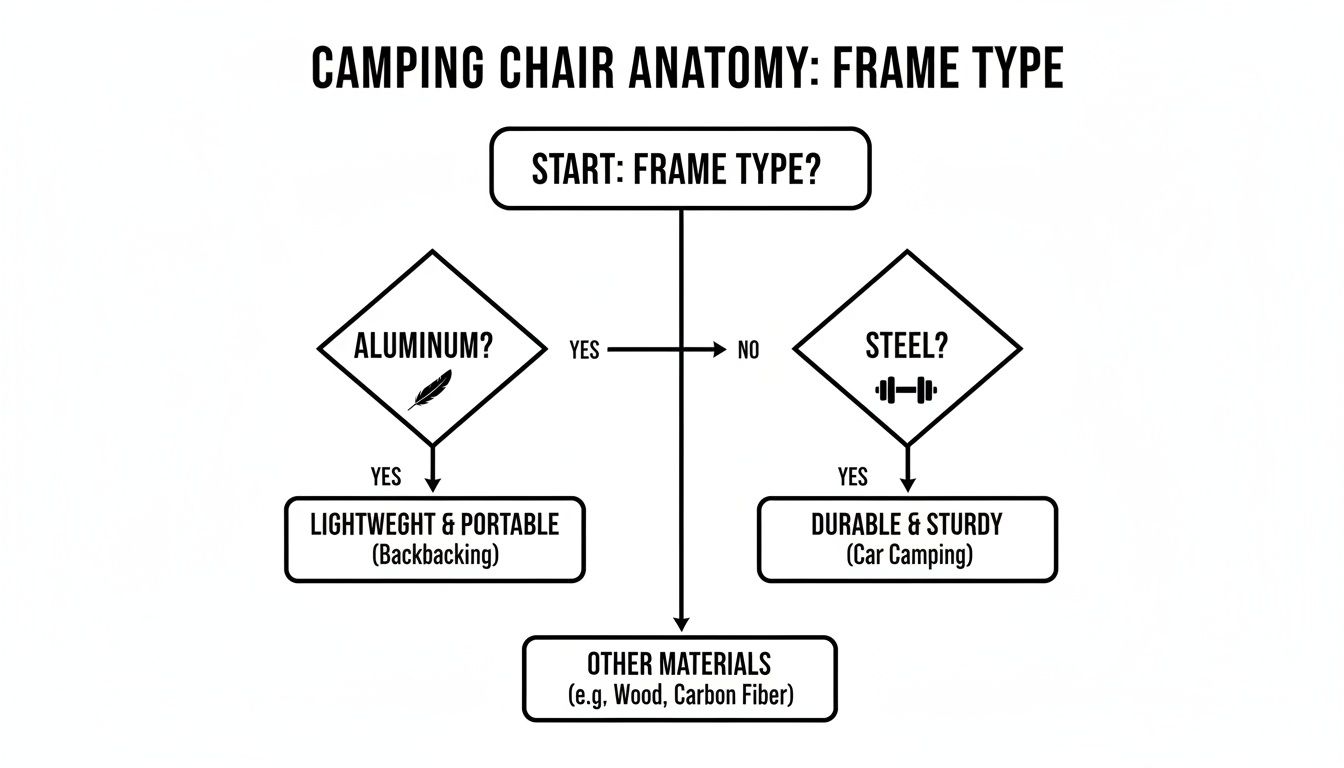
As you can see, the type of adventure you're planning points you directly to the right frame material, helping you balance strength with portability.
Sand and standard camping chairs are sworn enemies. The narrow feet on a typical chair sink right in, leaving you with a wobbly, frustrating mess. If you're heading to the coast, you absolutely need a chair designed to handle soft ground.
The one non-negotiable feature for a beach chair is wide feet. Whether they are splayed out, connected by a bar, or shaped like little discs, the goal is to spread the weight over a larger area. This lets the chair "float" on top of the sand instead of digging in.
You'll also want to look for these beach-friendly perks:
What if you don't fit neatly into one box? Many of us need a chair that can do a little bit of everything—from a tailgate party to a kid's soccer game to a picnic in the park. For the versatile weekender, the name of the game is balance.
You're looking for a chair that's reasonably light and easy to carry but doesn't completely give up on comfort. An aluminum-frame chair is often the perfect middle ground. It's light enough to sling over your shoulder without a second thought but still offers essentials like a solid cup holder and a comfortable seat. This is your go-to, jack-of-all-trades chair, always ready for a spontaneous outdoor outing.
To make it even clearer, let's look at how the importance of key features shifts depending on what you're doing. A feature that's a "must-have" for one activity might be completely unnecessary for another.
| Feature | Backpacking | Car Camping | Beach Trips | Festivals |
|---|---|---|---|---|
| Weight | Critical | Low Priority | Important | Very Important |
| Packed Size | Critical | Low Priority | Important | Very Important |
| Comfort | Nice to Have | Critical | Very Important | Important |
| Durability | Important | Very Important | Important | Nice to Have |
| Features | Minimal | Maximum | Moderate (e.g., cooler) | Minimal (e.g., strap) |
| Setup Speed | Nice to Have | Very Important | Very Important | Critical |
This table helps you see at a glance why a single "best" chair doesn't exist. The best chair is the one that nails the priorities for your adventures.
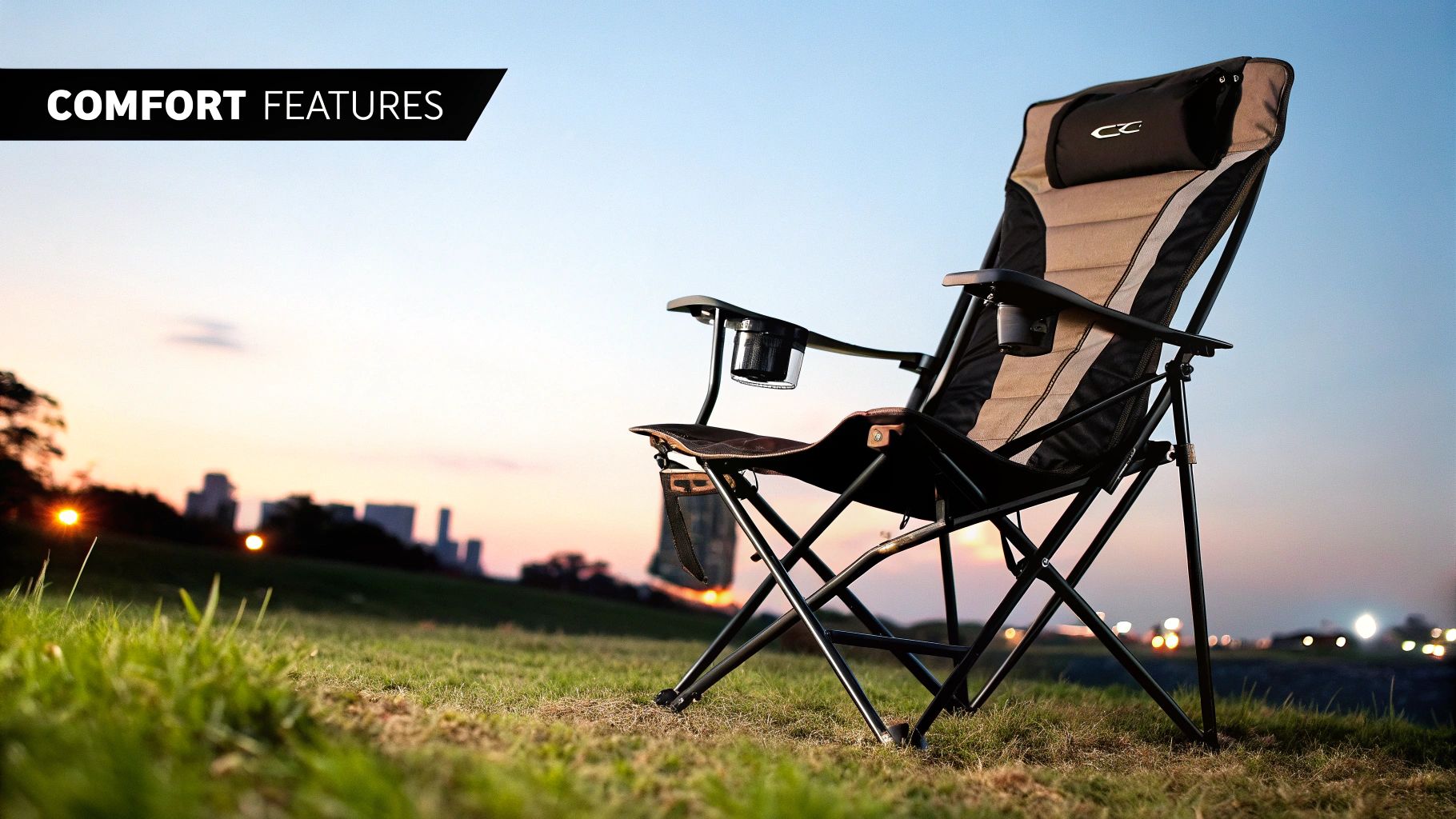
Sure, the frame and fabric are the bones of any good camping chair, but it’s the thoughtful extras that really make you want to sink in and stay awhile. These are the “creature comforts” that turn a simple seat into your personal outdoor throne. They might seem like minor details, but trust me, they can make or break your relaxation time.
Think about how you really use a chair when you're outside. Are you the type to lean back and watch the stars? Do you need a reliable spot for your morning coffee? Or maybe you just want some solid back support after a long day on the trail. Matching these features to your personal style is how you find a chair that feels like it was made just for you.
This is where a truly great camping chair pulls away from the pack. Investing in a few key upgrades can transform your campsite into a comfortable outdoor living room, making every moment you spend outside that much better.
One of the most popular comfort upgrades is a reclining back. It's the difference between sitting up straight for dinner and then kicking back for a post-meal nap or some serious stargazing. Some chairs have a few set positions, while others give you a more free-form recline to find that perfect angle.
Adjustable armrests are another feature that you don't realize you need until you have them. They let you set the height that feels most natural, which helps get rid of that annoying shoulder strain. It’s a small tweak that adds up to a huge difference over a few hours.
Beyond adjustability, the little things that keep your gear handy are absolute game-changers. The classic cup holder is a must, of course, but modern chairs have taken storage to a whole new level. These clever additions keep your little corner of the campsite organized and clutter-free.
Look for chairs with storage solutions that actually fit how you camp. Having a designated spot for your phone, book, and a cold drink means you can truly settle in without constantly having to get up and down.
The most practical features are the ones you use without thinking. Integrated storage turns your chair into a command center, keeping everything you need for a relaxing afternoon right at your fingertips.
Here are a few popular add-ons to look for:
If you deal with back pain or just appreciate a more ergonomic design, keep an eye out for chairs with dedicated support features. A chair that actually supports your body will leave you feeling refreshed, not stiff, even after hours of lounging.
Lumbar support is a huge one for many people. Sometimes it's a simple taut strap across the lower back, while other chairs offer adjustable pillows you can slide into the perfect spot. Likewise, a high back with a padded headrest is a blessing for your neck and head, especially if you plan on dozing off.
These supportive features are what separate a "sit for ten minutes" chair from a true all-day lounger. By making things like a headrest or lumbar pillow a priority, you're making sure your outdoor throne really delivers on its promise of comfort.
A good camping chair is an investment in your comfort outdoors. And like any piece of gear you rely on, a little bit of care goes a long way. We're talking the difference between a chair that lasts for a single season and one that becomes a trusty companion on countless adventures for years to come. It all starts with knowing what to look for and having a simple maintenance routine.
The best chairs are built to handle the rough and tumble of the outdoors, but that doesn't mean they're indestructible. You can spot a durable chair by looking for details like reinforced stitching, especially where the fabric meets the frame—these are the high-stress points. Also, keep an eye out for high-denier fabrics like 600D ripstop polyester. That "ripstop" isn't just a marketing buzzword; it means the fabric has a special weave designed to stop small tears from turning into huge rips.
Proper care is surprisingly simple and takes almost no time, but it's your best defense against common killers like rust and mildew. If you remember only one thing, make it this: never, ever store your chair when it’s wet or dirty.
After each trip, just give it a quick once-over. A damp cloth with a little bit of mild soap is usually enough to handle dirt, mud, or the remnants of a spilled soda. If you've got a stubborn spot, a soft-bristled brush will help lift the grime without being too harsh on the fabric.
Honestly, the most important thing you can do for your chair is to make sure it is 100% dry before you put it away. Storing a damp chair is a one-way ticket to mildew city, which leaves ugly stains and a funky smell that you’ll never get rid of.
Here’s the simple routine I follow after every trip to keep my chairs looking and working like new:
Even the sturdiest chairs can act up sometimes. The good news is that most common issues are an easy fix.
Follow these tips, and you can be sure your favorite camp chair will be ready to go whenever adventure calls.
You’ve learned what makes a great camping chair tick and how to match one to your adventures. But even after all that, a few nagging questions usually pop up right before you hit "buy." It's totally normal.
Think of this as the final chat around the campfire before you make your decision. We'll tackle those common "what ifs" and "should Is" to clear up any last-minute doubts and get you ready to pick the perfect chair with confidence.
This is the big one, and the answer is simpler than you think: it completely depends on what you're doing. There's no single "best" feature that applies to everyone. The most important feature is the one that solves the biggest headache for your kind of trip.
Let's put it this way. If you're a backpacker about to hike 15 miles into the wilderness, low weight and a tiny packed size are everything. A chair that weighs just one pound and disappears into your pack is a godsend. A five-pound monster? You wouldn't even consider it. Cup holders and reclining features don't matter when every ounce counts.
But what if you're a car camper setting up a deluxe basecamp for a long weekend? Now, comfort and stability are king. The most important features shift to a high weight capacity and a rock-solid steel frame that won't tip on bumpy ground. Why would you trade comfort for a few saved pounds when your car is parked ten feet away?
The Takeaway: Stop looking for a universal "best" feature. Instead, ask yourself: "What's the main problem this chair needs to solve for me?" The answer to that question reveals your most important feature.
Ah, the budget question. You can spend a little or a lot, and thankfully, you don't need to break the bank to get something good. The price tag on a camping chair really just reflects the quality of the materials and how specialized its design is.
Here’s a realistic breakdown of what your money gets you:
It’s tempting, I know. You've got that metal folding chair in the garage, and it seems good enough. But trust me, it's a bad idea for most campsites. A chair designed for your patio and one designed for the outdoors are built for completely different worlds.
First off, there's the stability problem. Those skinny little legs on a regular folding chair are made for flat, hard floors. On the soft, lumpy ground of a campsite, they'll sink right into the dirt, leaving you wobbling and crooked all weekend. Good camping chairs have wide, pivoting feet that spread your weight out and keep you steady.
Then there's the weather. Camping chairs are made with weather-resistant materials—powder-coated frames to prevent rust and fabrics that can handle morning dew and UV rays. Your indoor chair isn't. Leave it outside for a day or two, and you’re asking for rust spots and mildew.
And finally, have you ever tried to carry one of those things for more than 50 feet? They’re surprisingly heavy and clunky. A real camping chair packs down neatly into a carry bag you can sling over your shoulder, making the trip from the car to the fire pit a breeze.
A little bit of care goes a long way in making your chair last for years. It only takes a few minutes after each trip, but it's the secret to keeping your gear in great shape. The two biggest enemies you're fighting are mildew from moisture and fabric breakdown from the sun.
The golden rule? Never, ever store it wet. Make sure it is 100% dry before you pack it away. Storing it damp is a one-way ticket to a smelly, mildew-stained mess that’s almost impossible to fix.
Just follow these four simple steps:
This quick routine will keep your chair fresh, clean, and ready for action whenever adventure calls.
Ready to find the perfect seating for your next outdoor adventure? The extensive collection at FindTopTrends offers a wide variety of camping chairs designed to meet every need and budget. Whether you're a family car camper or an ultralight backpacker, you’ll find high-quality, durable options to elevate your comfort. Explore our curated selection of top-rated camping chairs today at FindTopTrends and get ready to relax in style.




