


No products in the cart.


Free Shipping Australia-Wide

5 star customer service

Quality Tested Products

Let's be honest, finding a truly great deal online often feels more like dumb luck than a repeatable skill. We've all been there—endlessly scrolling, hoping to stumble upon that perfect item at an unbelievable price. This guide is here to change that. We're moving past random chance and into a smart, strategic approach anyone can master.
It's time to shop smarter, not just harder.
There's no denying the thrill of unearthing a hidden gem or snagging a legitimate bargain online. But relying on serendipity in today's massive digital marketplace is a slow and often frustrating way to shop. The real secret is to shift your mindset from passive browsing to an active, strategic hunt for value.
This means you need to start thinking like a professional deal hunter—someone who can spot the opportunities that most people completely miss. It's about more than just typing a product name into a search bar; it’s about really understanding the online ecosystem where the best deals live and breathe.
To consistently uncover the best online finds, you need a system. Don't worry, this doesn't have to be complicated. It can be as simple as knowing which tools to use, which platforms to trust, and how to quickly tell if a so-called "deal" is actually a good value.
The online marketplace is incredibly crowded. Think about it: by 2025, the global e-commerce world will be home to a staggering 2.77 billion online shoppers. That’s roughly 33% of the entire world's population. With that much competition, developing smart shopping habits gives you a serious edge.
The core idea is simple: stop letting the algorithms feed you random products and start telling them exactly what you want to find. A proactive shopper always finds better deals than a reactive one.
This guide will break down the essential strategies that turn the overwhelming digital world into your personal treasure map. You'll learn how to look beyond the big-name retailers and discover unique items from sources you may have never even considered.
To get started, I've put together a quick overview of the core strategies we'll be diving into. Think of this as your new toolkit for mastering the art of the online deal.
| Strategy | Key Benefit | Best For |
|---|---|---|
| Price Tracking & Alerts | Automates the process of finding the lowest price over time, saving you from constant checking. | Big-ticket items like electronics, appliances, and furniture where price drops make a huge difference. |
| Coupon & Promo Code Hunting | Layering discounts at checkout can lead to significant savings on your final purchase price. | Everyday shopping, from clothing and groceries to subscription services and software. |
| Following Niche Deal Sites | Accessing curated deals from experts who vet offers and find hidden gems you'd otherwise miss. | Hobbyists, enthusiasts, and anyone looking for specific products (e.g., tech gadgets, outdoor gear). |
| Social Media Sleuthing | Discovering flash sales, influencer codes, and brand promotions that aren't advertised elsewhere. | Fashion, beauty, and lifestyle products where trends and influencer marketing are common. |
By mastering a few of these techniques, you'll start spotting trends and saving money almost immediately. For instance, if you're into fashion, it's essential to learn how to shop for clothes online like a pro. And if you just want to see what's hot right now, you might find our guide on what are people buying a great place to start.

If you really want to lock down the best online finds, you have to get smarter than just typing "cool gadgets" into a search bar. Today's shopping game is all about active discovery, not just passive searching. The real trick is using digital tools to cut through the clutter and zero in on what you actually want.
This means shifting your mindset from a casual browser to a strategic hunter. Instead of stumbling across a good deal by chance, you're setting up a system that brings the best finds straight to you. It all starts with the tool we use every day: the search engine.
Let's be honest, a basic Google search can feel like trying to drink from a firehose. You get hit with a flood of irrelevant pages and sponsored fluff. This is where advanced search operators come in—they’re your secret weapon for taming that flow.
These simple commands act as powerful filters. Here are a few I use all the time:
"solid oak coffee table", Google will only show you pages with that exact phrase. Suddenly, all the flimsy particleboard options disappear.leather jacket -vegan -faux instantly clears out all the imitation stuff you don't want.site:slickdeals.net "smart thermostat".By stringing these operators together, you're essentially telling the search algorithm what to do. It’s a simple change, but it makes a massive difference in the quality of your results.
Your TikTok, Pinterest, and Instagram feeds are way more than just a place to kill time. They're incredibly powerful, visually-driven discovery engines. The key is to stop scrolling passively and start actively training their algorithms to serve you.
Think of these platforms as a personal research assistant. Start by following very specific hashtags, like #founditonamazon or #tiktokmademebuyit. Even better, find and follow creators who share your specific style and interests, especially those who post "shop my favorites" lists or have their own curated storefronts.
The real magic happens when you teach the algorithm what you value. By engaging with specific types of content, you transform your feed from a random assortment of trends into a personalized catalog of potential best online finds.
Over time, the platforms learn what you're into and start showing you products you’ll genuinely love before they even hit the mainstream. To take this strategy a step further, you can learn about the benefits of setting up price drop alerts for the cool stuff you discover. That way, the moment an item you've been eyeing goes on sale, you get notified instantly. It's the final piece of the puzzle for strategic, proactive shopping.

Let’s be honest, the most unique and memorable products aren't usually plastered on the front page of major retailers. To find the really special stuff, you have to step off the beaten path and explore the marketplaces where craftsmanship and passion are the main event. This is where you'll uncover some of the best online finds that most shoppers completely miss.
Instead of just defaulting to Amazon, think about platforms built specifically for independent creators and small businesses. A marketplace like Etsy is a treasure trove for bespoke goods, from handmade leather wallets to custom-painted portraits. Likewise, sites like Uncommon Goods have built their entire brand on offering a hand-picked selection of creative and often quirky items you won't find anywhere else.
What I love about these platforms is the direct connection to the makers. You’re not just buying a product; you’re often supporting a small business owner's dream and getting something truly one-of-a-kind in return.
Beyond dedicated storefronts, some of the best discoveries I've ever made came from passionate communities. These are the places where real people—not paid influencers—are sharing their honest, tried-and-true favorites. They are absolute goldmines for unfiltered recommendations.
Product discovery communities work so well because they’re built on trust and shared interests. A few of my go-to's include:
Shopping from independent creators requires a slightly different way of thinking. You can't always rely on brand recognition, so you need to get good at spotting the signs of quality and reliability yourself.
The key is to look for passion and transparency. A great independent seller is proud of their work and wants you to be happy with your purchase. Their store page and communication style often tell you everything you need to know.
First, dive deep into the seller's reviews. Don't just glance at the star rating; actually read what people are saying. Are buyers raving about the product quality, the shipping speed, and the seller’s communication? I always look for reviews that include customer photos—they give you an unfiltered look at the item in a real-world setting.
Also, pay attention to the little details on their shop page. How long have they been on the platform? How many sales have they made? These metrics can give you a quick read on their experience and reliability.
Finally, never hesitate to reach out to the seller with a question. A prompt, helpful, and friendly response is one of the best indicators of a trustworthy and professional creator. Taking that extra minute to connect can build your confidence and ensure your niche marketplace purchase is a fantastic one.
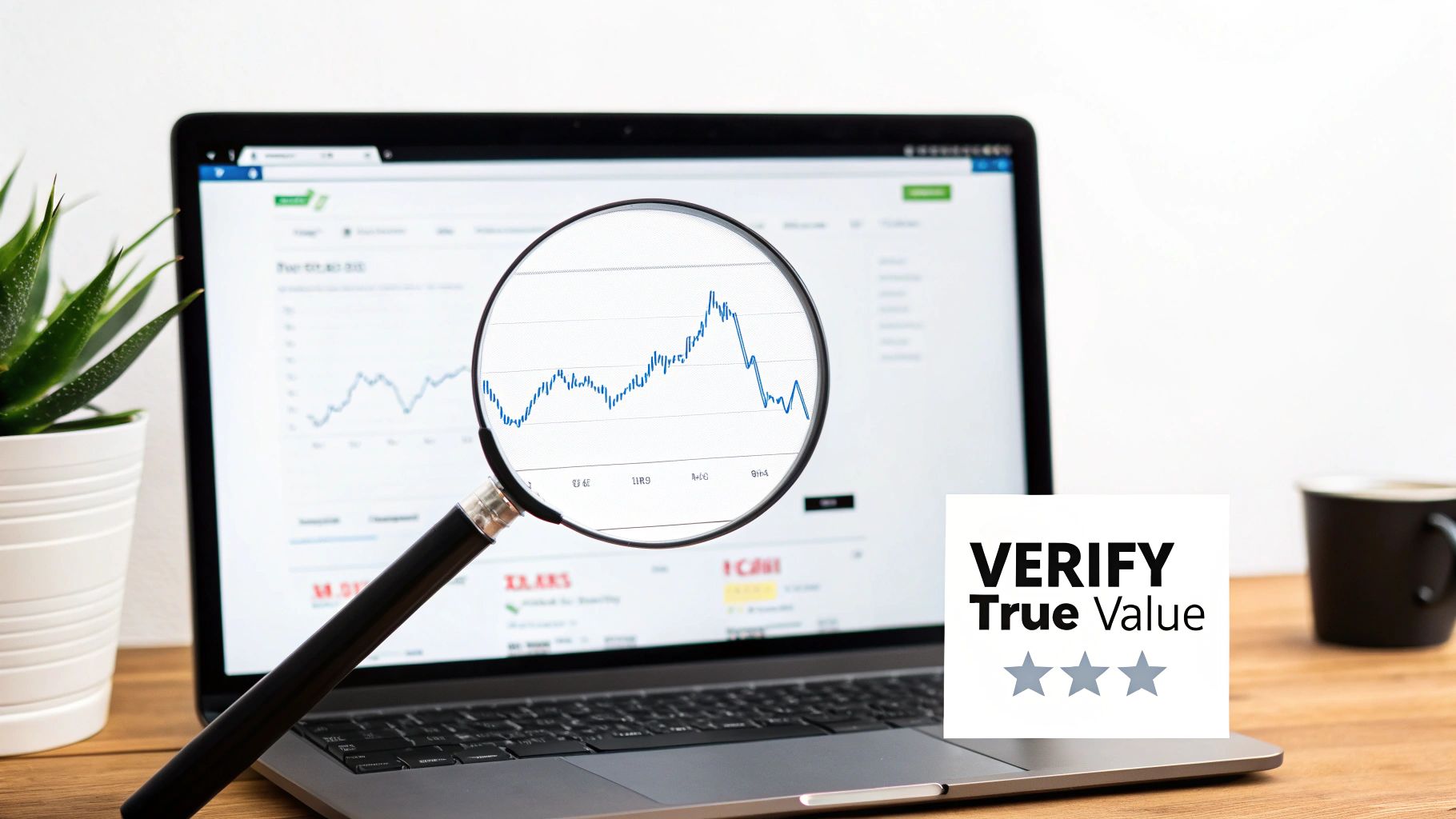
It’s easy to get drawn in by a flashy "50% Off" banner, but experienced shoppers know that many of these are more marketing fluff than actual savings. The real secret to landing the best online finds isn’t just stumbling upon a sale—it's about confirming that the deal holds genuine, lasting value. This means learning to look past the hype and evaluate an offer's true worth.
This skill is more important than ever. By 2025, global e-commerce sales are projected to hit somewhere between $6.42 trillion and $8.3 trillion. That massive figure will account for over 20.5% of all retail sales worldwide, with mobile shopping alone making up about $2.51 trillion of that. You can dig into more insights on the global e-commerce explosion if you're curious.
With that much money flying around online, developing a critical eye is the only way to make sure your purchases are smart investments, not just impulse buys.
One of the oldest tricks in the retail book is inflating a product's "original" price just before a sale to make the discount look bigger than it is. A price history tracker is your best defense against this. These tools pull back the curtain and show you exactly what a product has sold for over weeks, months, or even years.
For anyone who shops on Amazon, a browser extension like CamelCamelCamel is an absolute game-changer. It gives you a simple chart showing every price dip and spike for an item. In a few seconds, you can see if that "deal" is a genuine all-time low or just a return to its standard price. It’s a quick check that can save you from buyer’s remorse.
Don’t just trust the sale tag. A quick check of an item’s price history is the single best way to know if you're looking at a legitimate bargain or just clever advertising.
Reviews are basically word-of-mouth for the digital age, but you have to know how to read them. Not all feedback is created equal, and learning to read between the lines is a skill that will serve you well.
When I’m vetting a product, I usually skip right past the five-star and one-star ratings at first. The real gold is often in the two-, three-, and four-star reviews. These buyers tend to give a much more balanced take, pointing out both the good and the bad without the extreme emotions you see at either end of the spectrum.
Here are a few other things I always look for:
Getting good at sniffing out disingenuous feedback is a crucial skill. If you want to go deeper, we have a whole guide on how to spot fake reviews. By pairing smart review analysis with price history checks, you’ll have everything you need to make sure your best online finds are purchases you can truly feel great about.
https://www.youtube.com/embed/TV8-r8_PKb0
Finding a great deal online is one thing, but finding the perfect item that feels like it was made just for you? That's the real win. This is where we stop chasing broad, generic sales and start fine-tuning the shopping experience to our own tastes. Instead of letting retailers dictate what's hot, you take control and curate your own feed of potential best online finds.
This whole shift is driven by how we, as consumers, are changing. Millennials, for instance, are 14.3% more likely to do the bulk of their shopping online. And with more than half of all shoppers now expecting some level of customization, retailers are in a race to use data to deliver. If you're curious about the numbers, you can dig deeper into the rise of personalized e-commerce and see just how big this trend has become.
Why wait for a sale to happen when you can have it sent directly to your inbox? Setting up custom alerts is probably the single most powerful move you can make. It’s a simple strategy that automates the hunt for specific products or brands you're after.
Platforms like Slickdeals or DealNews are brilliant for this. They let you create alerts based on keywords, and I highly recommend getting specific. Don't just set an alert for "sneakers." Instead, create one for "Nike Air Max 90 size 11" or "Anker PowerCore 20000".
By doing this, you'll get a notification the moment a deal matching your exact criteria goes live. It’s a proactive approach that puts you first in line for price drops on things you actually want to buy.
The goal is to build a system where the perfect items find you. A well-tuned set of alerts acts like a personal shopper who works 24/7, tirelessly scanning the internet for deals that match your unique tastes and needs.
Beyond simple keyword alerts, AI-powered shopping assistants are getting scarily good at learning your personal style. Think of them as browser extensions or apps that quietly observe your browsing habits—what you click on, what you add to your cart, and even the stuff you scroll right past.
After a little while, these tools build a remarkably accurate profile of your preferences. What you get in return is a shopping feed where the recommendations are genuinely useful. Instead of a jumble of random trending products, you start seeing items you’ll actually love, from brands that fit your aesthetic to gadgets that solve a real problem for you.
This transforms aimless browsing into an efficient discovery process, helping you sidestep those tempting impulse buys and focus only on the true gems.
Jumping into the world of independent sellers and niche marketplaces is exciting, but let's be real—it can also bring up a few tricky situations. It’s one thing to read about smart shopping strategies, and another to put them into practice when you're faced with a complicated return or a brand-new store you're not sure you can trust.
Think of this as your go-to guide for those "what do I do now?" moments. I'll walk you through some of the most common questions I hear, drawing from years of experience navigating the ins and outs of online deal hunting.
You've just stumbled upon a cool new online boutique—awesome! But before you get too click-happy and pull out your credit card, it’s smart to do a quick gut check. A few minutes of detective work upfront can save you a massive headache later.
First, look for real-world contact info. A physical address and a phone number on the contact page are solid gold. At the very least, make sure the website address in your browser starts with "https://." That "s" is a small but mighty detail that means the connection is secure.
Next, scroll all the way down to the website's footer. This is where the good stuff is usually hidden. I always look for a detailed return policy and links to their social media. If their Instagram or Facebook pages are active and have real engagement, it's a great sign that you're dealing with a legitimate, active business.
It’s happened to all of us. You order what looks like the perfect item, but what arrives is... well, not quite right. This is especially common with smaller sellers who might not have the budget for professional product photography.
The absolute first thing to do is take a deep breath and grab your phone. Snap a few clear pictures of the item, making sure to highlight exactly where it differs from the product description or photos online.
Then, reach out to the seller directly, preferably through the platform's official messaging system. Keep your tone friendly and professional. Clearly explain the issue and attach your photos. Most small business owners are incredibly passionate about their products and will want to make things right, whether that's by sending a replacement or issuing a refund.
A respectful message is your best tool. I've found that framing the conversation as "let's solve this together" instead of making accusations gets a much faster, friendlier resolution almost every time.
Unlike big-box retailers with their generous, no-questions-asked returns, independent sellers often have much more specific policies. The single most important thing you can do is read the return policy before you buy.
Here's what I always look for:
Knowing these details ahead of time means no nasty surprises. If a policy is confusing, don't be shy—shoot the seller a quick message to clarify. Taking that extra minute can make all the difference and let you shop with total confidence.
At FindTopTrends, we do the heavy lifting for you. We curate the best trending products and give you all the info upfront, so you can skip the guesswork and shop with peace of mind. Find your next favorite thing today at https://findtoptrends.com.




