


No products in the cart.


Free Shipping Australia-Wide

5 star customer service

Quality Tested Products

When you're hunting for the best phone cases for drop protection, you have to look past the flashy colors and slim profiles. What really matters is the engineering—things like military-grade certifications, smart material choices, and thoughtful design. The best performers almost always combine a tough, rigid outer shell with a softer, shock-absorbing interior, beefed-up corners, and raised edges that keep your screen and camera lenses off the ground. Nail these fundamentals, and you've got a case that can actually survive a real-world drop.
Let’s be honest, choosing a case is a big deal. It's an investment in keeping your phone—which was a much bigger investment—in one piece. The best protective cases aren't just plastic shells; they're specifically engineered to take the force of a fall and spread it out, directing it away from the fragile glass and electronics inside your device.
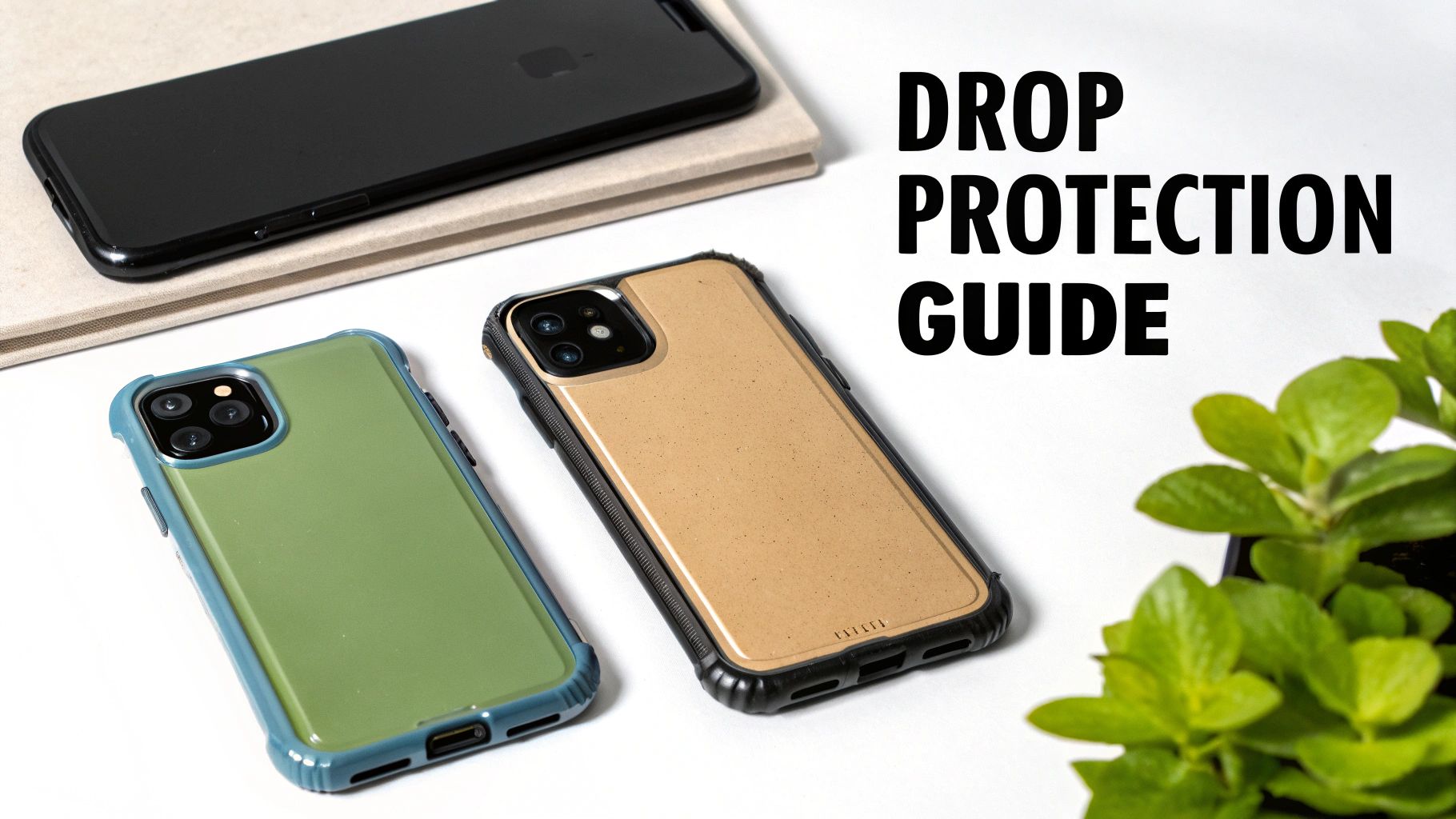
Think of this as your no-nonsense guide to what really works. We'll cut through the marketing fluff and focus on what separates a genuinely tough case from one that just looks the part. We’ll cover everything from ultra-rugged monsters to surprisingly slim shock-absorbers and break down why a certification like MIL-STD-810G is a benchmark you can actually trust.
Knowing what to look for is half the battle. Not all cases are built the same, and it's easy to get swayed by impressive-sounding claims. The trick is to focus on the tangible design elements that have been proven time and again to prevent your screen from shattering.
These features all work together like a team. A case might have incredible shock absorption, but if the edges are flush with the screen, one bad landing face-down is all it takes. You're looking for a complete system.
The ideal case finds that sweet spot—giving you robust, balanced protection without turning your sleek phone into an absolute brick.
Key Takeaway: Real drop protection comes from a mix of certified standards, quality materials, and smart design. I always tell people to look for cases that are upfront about their drop-test ratings and have obvious protective features like reinforced corners and raised bezels.
To make it even easier to spot a winner, I've put together a quick checklist of the most important features. Use this to quickly size up any case you're considering.
This table breaks down the non-negotiable features you should be looking for. If a case is missing one of these, it's probably not going to cut it when it matters most.
| Core Feature | Function and Purpose | Why It's Critical for Drop Protection |
|---|---|---|
| MIL-STD-810G Certification | A U.S. military standard that verifies durability against drops, shock, and vibration. | This is third-party proof. It confirms the case survived repeated drops from a specific height (usually 4-10 feet), so you're not just taking the company's word for it. |
| Shock-Absorbing Materials | Uses flexible materials like TPU or silicone to soak up and scatter impact energy. | It stops the raw force of a fall from transferring directly to your phone, preventing both screen cracks and internal damage. It's the "cushion" your phone needs. |
| Reinforced Corners | Extra padding, air pockets, or thicker material built directly into the corners. | Physics is a cruel master. Phones almost always land on a corner, where the impact is most concentrated. This is your first line of defense against a shattered screen. |
| Raised Screen & Camera Bezels | A small, raised lip that extends just past the screen and camera lenses. | It creates a critical buffer zone. When your phone falls flat, this tiny lip ensures the glass never actually touches the ground. It’s a simple feature that saves countless screens. |
These core elements are what separate a truly protective case from a purely decorative one. When you see them all working in harmony, you can feel confident that your phone is genuinely safe.
Let's face it, smartphones have become serious investments, with many costing as much as a high-end laptop. This simple fact has completely changed the game for accessories. What used to be a fun add-on is now a critical piece of gear for protecting that investment from the inevitable bumps and drops of daily life.
The days of picking a phone case based on looks alone are long gone. Screen repairs can easily run you several hundred dollars, meaning a single clumsy moment can have a surprisingly steep price tag. That economic reality has forced us all to think more practically, pushing durability and real-world drop protection to the top of the list.
You can see the shift everywhere. Features like impact resistance, which used to be found only on bulky, specialized cases, are now standard expectations. We've all learned the hard way that a good protective case is a small price to pay to avoid a much bigger bill later on and keep our devices running longer.
This isn't just a gut feeling; the market data backs it up. The global market for protective phone cases was valued at USD 25.97 billion in 2024 and is expected to hit USD 39.26 billion by 2033. This surge is almost entirely fueled by shockproof models. In fact, over 82% of us buy a case right when we get a new phone, and a whopping 67% of consumers aged 18–34 say drop protection is the main thing they look for. You can find more stats on this trend over at MarketGrowthReports.com.
Think of a protective case as insurance for your digital life. It’s not just about stopping a few scratches—it's about protecting the device that connects you to everything and everyone.
It helps to start thinking of a case as part of the phone itself. You wouldn't drive a car without seatbelts, right? Carrying a thousand-dollar smartphone without a case designed to handle a real drop is just as risky. The best phone cases for drop protection are specifically engineered to absorb and redirect the force of an impact, pulling it away from the fragile screen and delicate electronics inside.
That engineering is the real difference between a truly protective case and a flimsy piece of plastic. Here’s what separates the good from the bad:
Ultimately, choosing a case with solid drop protection is a proactive move to protect your phone's functionality and its resale value. It’s a simple, practical decision that helps ensure your tech stays a useful tool, not a ticking time bomb waiting for an accident.
A phone case’s real-world performance boils down to two things: the materials it's made from and the smarts behind its construction. The raw material is what determines how it handles shock, fends off scratches, and even how it feels in your hand. Getting to know the differences is the first step in finding the best phone cases for drop protection.
Every material comes with its own set of trade-offs. What’s perfect for a rugged case you'd take hiking might feel like a brick in your pocket for daily use. Let's dig into the most common materials and see how they actually protect your phone.
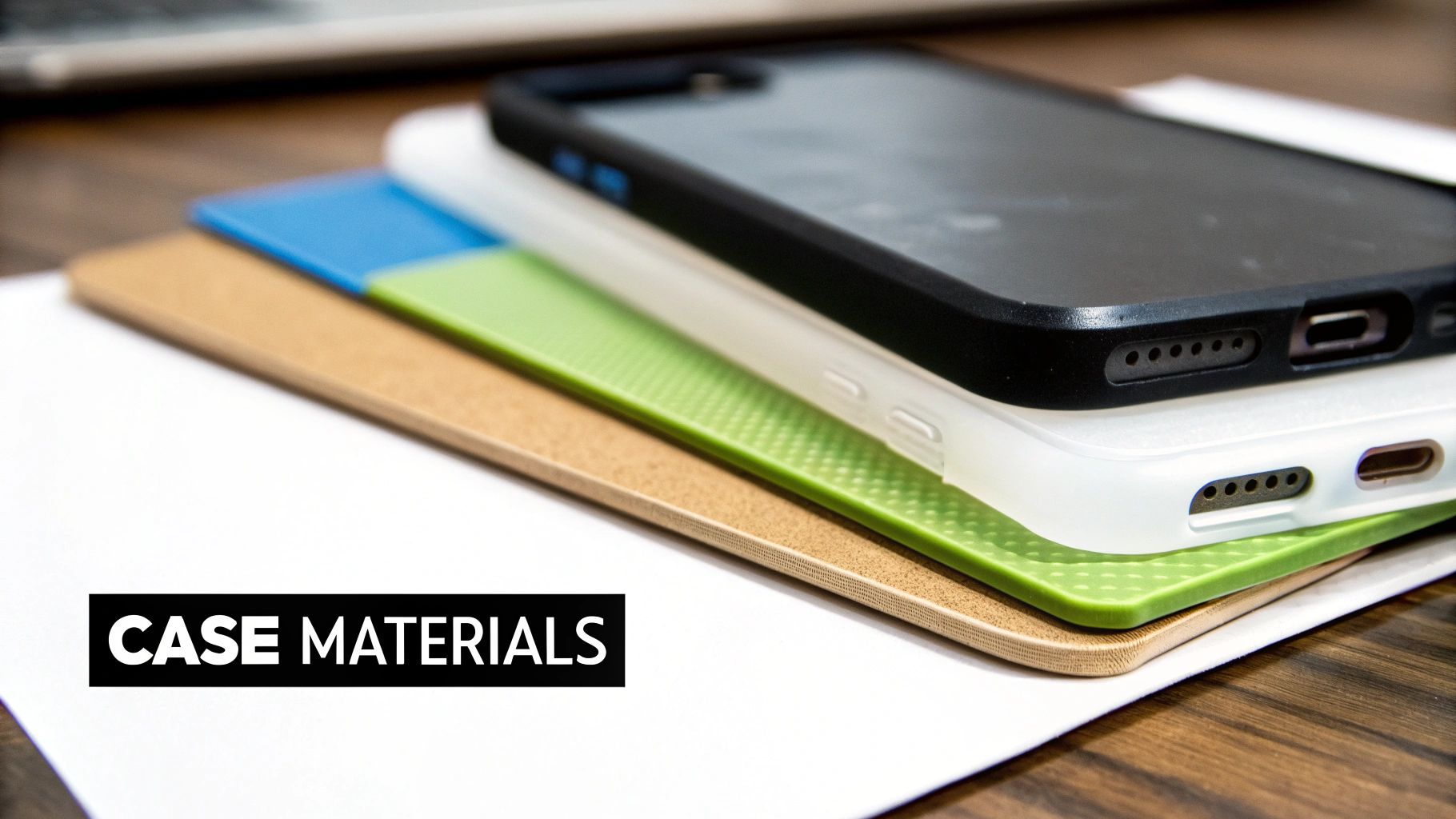
When your phone takes a tumble, the case has one critical job: absorb and redirect that sudden impact energy. This is where flexible polymers shine. They act like a cushion, deforming just enough to soak up the force before it can rattle the delicate electronics inside your phone.
Thermoplastic Polyurethane (TPU) is the go-to material here. Think of it as a hybrid—it blends the soft, rubbery feel of silicone with the toughness of hard plastic. This gives it fantastic shock absorption and elasticity. In fact, some formulas can stretch up to 500% before breaking.
For drop protection, TPU brings a few key things to the table:
Silicone is another popular choice, loved for its soft touch and great shock absorption. It’s incredibly flexible and can stretch up to 700% before tearing, but it's not without its faults. Its surface is a magnet for dust and lint, and it can get surprisingly slippery with sweat or oils from your hands, which kind of defeats the purpose of a grippy case.
While flexible materials are great for absorbing shock, rigid materials provide a hard, unyielding shield against direct hits and punctures. They act as a suit of armor, stopping sharp objects or concentrated force from damaging your phone’s frame.
Polycarbonate (PC) is the undisputed king of rigid case materials. This is the same tough thermoplastic you’ll find in bulletproof glass and riot shields. With an impact resistance 20 times greater than standard plastic, it provides a serious defense against hard drops and even crushing force.
Expert Insight: The most protective cases never rely on just one material. The secret is a dual-layer or hybrid design that combines the shock-absorbing cushion of TPU with the rigid strength of polycarbonate. This tag-team approach creates a truly comprehensive defense system.
Without a doubt, the best phone cases for drop protection almost always feature a multi-layer, hybrid construction. This strategy plays to the strengths of different materials, creating a protective system that’s far more effective than any single layer could ever be.
A typical hybrid design looks something like this:
This dual-compound engineering is often bolstered with other design elements. Many top-tier rugged cases incorporate materials like aerospace-grade aluminum or carbon fiber composites to add incredible strength without packing on the weight.
By understanding how these materials work in tandem, you can look past the marketing hype and judge a case’s true protective capabilities. A simple, single-layer silicone case might feel nice, but it just can’t offer the same engineered protection as a thoughtfully designed hybrid. That combination of a flexible interior and a rigid exterior truly is the gold standard for keeping your device safe.
A case’s material is the foundation, but its design is what really saves your phone when it hits the ground. It’s the smart engineering choices that separate a basic plastic shell from a case that offers serious drop protection. If you know what to look for, you can see past the marketing hype and find what actually keeps your device safe.
These seemingly small details—from cushioned corners to the height of the screen lip—all work together to absorb and redirect the force of an impact. That's what stands between you and a costly repair bill.
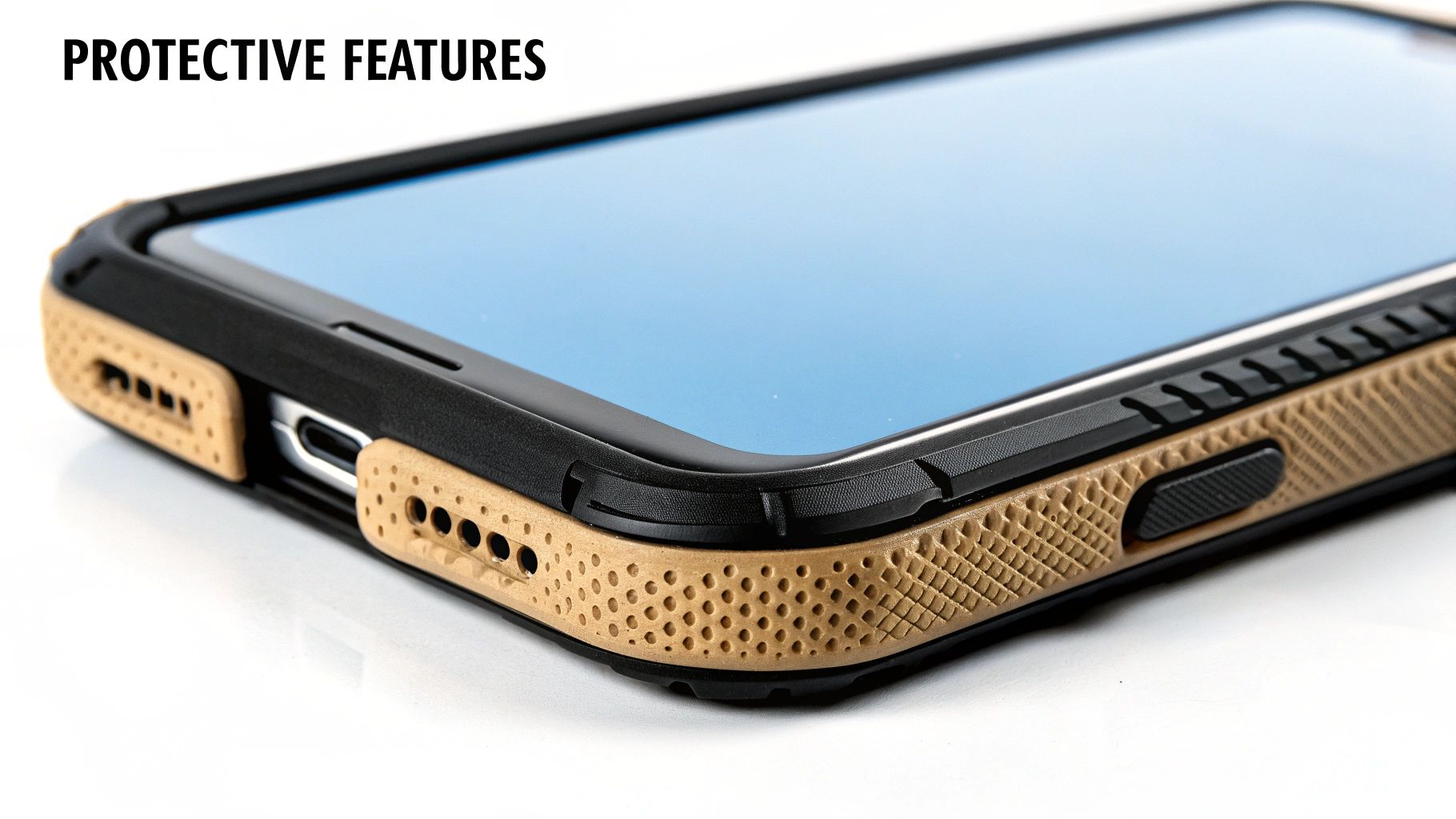
Think about how a phone falls. It almost always lands on a corner. That tiny point of impact takes the full force of the drop, making it the most vulnerable spot. The best cases are designed specifically to handle this reality.
Many of the top designs use air cushion technology, which is a fancy way of saying they leave small air pockets in the corners. These act like tiny airbags, compressing on impact to soak up the shock before it can crack your screen or damage the phone’s frame.
Another clever feature is a shock-dispersing pattern on the inside of the case. You might see honeycomb, spiderweb, or wavy patterns etched into the material. These aren't just for decoration; they create channels that help spread the impact energy over a wider area, dramatically reducing the force at any single point.
One of the simplest and most effective protective features is a raised bezel, or "lip." This is just the small edge that extends a millimeter or two above your phone's screen and around the camera lenses.
Even a tiny lip of just 1-2 millimeters creates a crucial buffer. If your phone falls flat on its face or back, the bezel hits the ground first, keeping the glass from ever touching the surface. It’s a beautifully simple solution that prevents countless screen shatters and camera scratches.
Pro Tip: Here’s a quick test. Put the case on your phone and lay it on a flat table. There should be a noticeable gap between the table and your phone’s screen and camera. If there isn't, the bezel is too low to do its job.
You've probably seen cases advertised with "military-grade drop protection." What does that actually mean? Usually, it's a reference to a standard called MIL-STD-810G, Method 516.6. This is a series of drop tests created by the U.S. military to see how durable a product is.
Here’s what that certification really tells you:
A MIL-STD-810G rating is a good benchmark for durability. But make sure you check the height it was tested for. A case certified for a 4-foot drop is fine for fumbles out of your pocket, but if you're in a more demanding environment, look for one rated for 10 feet or more.
Let's be honest: the best way to protect your phone from a drop is to not drop it in the first place. This is where a case's texture and feel—its ergonomics—come into play. A slippery, glossy case is just asking for trouble.
Look for features that help you keep a firm hold on your phone:
A case's grip is an often-overlooked but absolutely vital part of its protective design. By looking at all these engineering details, you can make a much smarter choice and pick a case that offers proven, real-world security.
The "best" phone case is the one that fits your life, not the other way around. A rugged case built for a construction site would be ridiculous in a boardroom, and a slim fashion case won't last five minutes on a hiking trail. The real secret to finding great drop protection is matching the case's engineering to your actual day-to-day risks.
Think of it like choosing the right tool for the job. You have to understand your own habits and environment to find that perfect balance between solid protection and usability. Let's break down a few common scenarios to see what features really matter.
If your phone lives on a hiking trail, a construction site, or a campsite, it needs more than just basic protection. You're dealing with high drops onto unpredictable surfaces like rock and concrete, not to mention constant exposure to dust, dirt, and water.
For this kind of use, maximum protection is the only way to go. You need a multi-layer, rugged case that acts like a complete defense system.
A lot of people just look at the drop height rating, but that's a mistake. For harsh environments, ingress protection against dust and water is just as crucial for keeping your phone alive long-term.
When you have kids, your phone is always in the line of fire. It gets dropped, thrown, and covered in sticky fingerprints. The drops might not be from ten feet up, but they happen all the time. The perfect case here needs to be both tough and practical.
You’re looking for something that can handle repeated, low-to-mid-height tumbles and stand up to the general chaos of family life.
A parent's phone case is a workhorse. It has to be tough enough to survive a toddler's tantrum but simple enough to clean up after a juice box explosion. The goal is consistent, no-fuss protection.
If your phone’s journey is mostly from your pocket to your desk to your car, a bulky, military-style case is just overkill. Your biggest risk is an accidental fumble—dropping it while getting out of the car or juggling a coffee and a laptop.
The challenge here is finding a case that offers real drop defense without looking like a brick.
You can absolutely get serious protection without sacrificing style. The trick is to find cases that rely on smart engineering and modern materials for their drop defense, not just sheer mass. That way, you get peace of mind without ruining the clean look of your phone.
Diving into the sea of protective phone cases can get confusing fast. To cut through the noise, it's best to have a simple checklist handy. Think of this as your final quality check before you commit, making sure you're focusing on features that actually prevent damage, not just marketing hype.
First things first, check for a real drop-test certification. A genuine MIL-STD-810G rating is the gold standard for durability. But don't just stop at the logo—look for the specific height it was tested from. For everyday bumps and fumbles, 4-6 feet is a solid baseline. If you're frequently outdoors or in more hazardous environments, you'll want something rated for 10+ feet. A case without any certification? That's a pretty big red flag.
Next, get your hands on the case if you can, or at least scrutinize the design online. Put your phone in it and see how it feels.
You can tell a lot about a case just by looking at it and feeling it. You want to feel the quality of the materials and make sure the design genuinely protects your phone where it counts. Here’s what to zero in on:
Before you make the final call, ask yourself one simple question: "Does this case actually feel secure in my hand?" A glossy, slippery case is just asking for a drop, no matter how high its rating. A good, textured grip is always your best first line of defense.
This decision tree is a great way to map your lifestyle—whether you're an Adventurer, a Parent, or a Professional—to the right kind of protection.
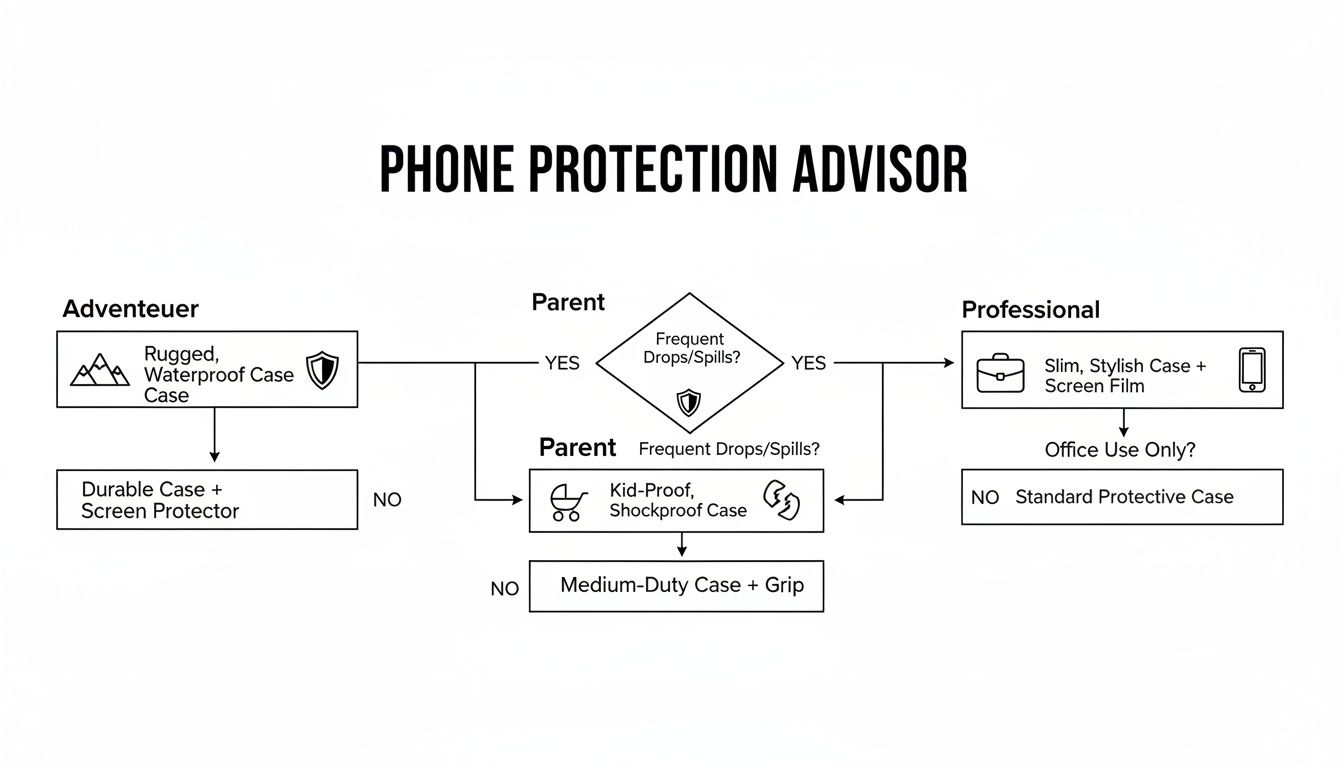
As the chart shows, what you do every day is the biggest factor in finding the best phone case for drop protection. It helps you find that sweet spot between ruggedness and practicality. By running through this quick checklist, you can pick a case with confidence, knowing it's built to handle your life.
Shopping for a truly protective phone case can feel like you're trying to crack a code. Let's clear up a few of the most common questions that pop up so you can pick the right case with total confidence.
Not at all. It's a common myth that a big, bulky case is the only way to get serious protection. While rugged cases are great, advances in material science mean some incredibly slim cases can absorb a shocking amount of impact. The secret isn't thickness—it's smart design and high-quality materials.
Things like reinforced corners with air pockets, honeycomb patterns inside the case to spread out the force of a fall, and advanced polymers are what really count. A thoughtfully engineered slim case will almost always beat a cheap, bulky one made from basic plastic.
Don't just equate bulk with safety. Look for signs of clever engineering, like a dual-layer design that pairs a soft, shock-absorbing inner layer with a tough, rigid outer shell. That's how you get top-tier protection without the pocket-stretching bulk.
By focusing on these features, you can find a case that offers serious defense without making your phone feel like a brick.
When you see MIL-STD-810G on a case's packaging, it’s more than just marketing fluff. It’s a set of durability standards developed by the U.S. military. For phone cases, this almost always refers to a specific drop test (Method 516.6) that serves as a reliable, independent benchmark for toughness.
A "military-grade certified" case has been dropped multiple times from a specific height—usually between 4 and 10 feet—onto a hard surface without the phone inside taking any damage. This certification is third-party validation that the case performs under pressure, so you're not just taking the manufacturer's word for it. It gives you a consistent way to compare how different brands stack up.
They’re a massive deal. In fact, raised edges (or bezels) are one of the simplest yet most effective features for preventing screen and camera damage. This is the little lip that protrudes just past the glass on the front and around the camera housing on the back.
Those raised bezels are your first line of defense. When your phone tumbles and lands flat on its face, that edge hits the ground first.
This creates a vital buffer, keeping your screen or camera lenses from making direct, catastrophic contact with the surface. A lip of just 1.5 to 2 millimeters can be the difference between a scary moment and a trip to the repair shop. It’s a small detail that provides an outsized amount of protection for your phone's most fragile parts.
At FindTopTrends, we curate the best in tech accessories and lifestyle essentials to help you shop smarter. Explore our collection of high-quality products designed to keep you ahead of the curve. Discover the latest trends at FindTopTrends.




