


No products in the cart.


Free Shipping Australia-Wide

5 star customer service

Quality Tested Products

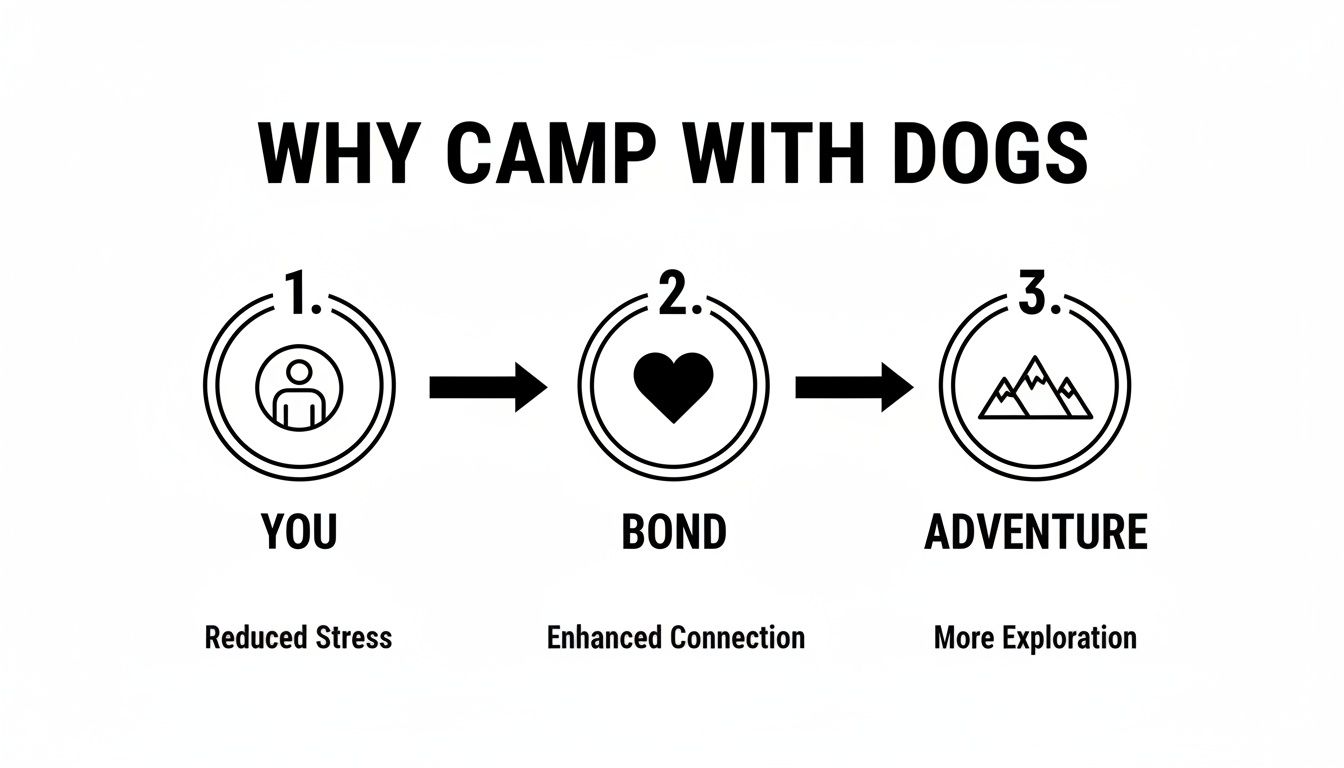
Picture this: you unzip your tent on a crisp morning, and the first thing you see is your dog’s tail thumping with excitement, ready for whatever the day holds. That feeling—that shared joy—is exactly why camping with your dog is so much more than just a trip. It's about making memories and strengthening your bond in the wild. This guide is your complete roadmap to making that experience safe, fun, and totally unforgettable.
Bringing your dog along completely changes the dynamic of a camping trip, turning it into a real, shared adventure. It’s a chance to break free from the daily grind and let your best friend explore a world of new sights, smells, and sounds that a walk around the neighborhood just can't offer. For you, it means sharing a quiet sunrise or a cozy campfire with the most loyal and enthusiastic partner you could ask for.
And it’s not just a niche thing anymore. According to a 2025 trend report, dogs are now the number one camping companion. A whopping 53% of campers bring their dogs along for most or all of their trips. That's way more than people who camp with other family members (21%) or even their siblings (13%). It’s clear our dogs have become central to how we enjoy the outdoors. If you're curious, you can learn more about these camping trends and see what they mean for the future of getting outside.
At its heart, camping with your dog is all about making your connection stronger. When you’re out there relying on each other—whether you're navigating a new trail, fumbling with tent poles, or just snuggling up for warmth—you’re building a level of trust that carries right back into your everyday life. You get to see the world through their eyes for a bit, full of pure, unfiltered excitement.
A successful camping trip with your dog is less about the destination and more about the shared experience. It’s about mutual trust, clear communication, and the simple joy of exploring together.
This guide will walk you through everything you need to know to get there. We’ll cover:
With this roadmap, you'll be ready to create some incredible memories and make sure every moment is as much fun for your dog as it is for you.
A great camping trip with your dog doesn't just happen. It doesn’t start when you pull into the campsite or hit the trail; it really begins weeks, or even months, beforehand at home. Getting your dog truly ready is the secret sauce that separates a chaotic, stressful trip from an amazing adventure you’ll both remember.
Think of it as building a foundation. You’re slowly introducing new things and building your dog's confidence so that when you get out there, they're as excited and prepared as you are. It's all about turning the strange and new into the familiar and fun.
Putting in this prep work pays off big time, strengthening your bond and making the whole experience richer for both of you.
Before you even touch a sleeping bag, let's talk training. Key commands are non-negotiable in the outdoors. These aren’t party tricks; they're your dog’s most important safety gear. A rock-solid recall or a snappy "leave it" can be the only thing standing between your dog and a dangerous encounter with wildlife or something toxic on the trail.
These commands are your safety net. They give you the control you need to keep your dog safe when you're far from home.
Imagine your dog’s perspective: a weird, crinkly new house (the tent), strange night noises, and sleeping on the ground. It can be a lot to take in all at once. That's why a backyard campout is the perfect dress rehearsal.
A few days before your trip, pop the tent up in the yard. Let your dog sniff around and explore it on their own terms. Toss some of their favorite treats inside, maybe even feed them dinner in there. The goal is to make the tent the coolest new den they’ve ever seen. Then, try spending a full night out there together. You’ll quickly learn how they handle the new sounds and sensations.
This trial run is your chance to troubleshoot in a low-stakes setting. If your dog gets anxious or restless, your warm bed is just a few steps away.
This simple test can mean the difference between a dog who is stressed out in the tent and one who can't wait to curl up inside.
First things first, schedule a pre-trip visit with your vet. Make sure all vaccinations are current, especially for things like rabies and leptospirosis, which they could encounter in the wild. This is also the perfect time to talk about a robust flea, tick, and heartworm prevention plan that’s suited for the specific area you'll be exploring.
Finally, do your homework on the campground itself. Don't just see "dog-friendly" online and assume you're good to go. Dig a little deeper.
Finding a genuinely dog-welcoming spot sets the stage for a relaxing trip. For example, some places like Mohawk Trail State Forest are fantastic for leashed dogs but require you to have a copy of their rabies certificate on hand. A little research upfront saves you from showing up to a bunch of rules you weren't expecting.
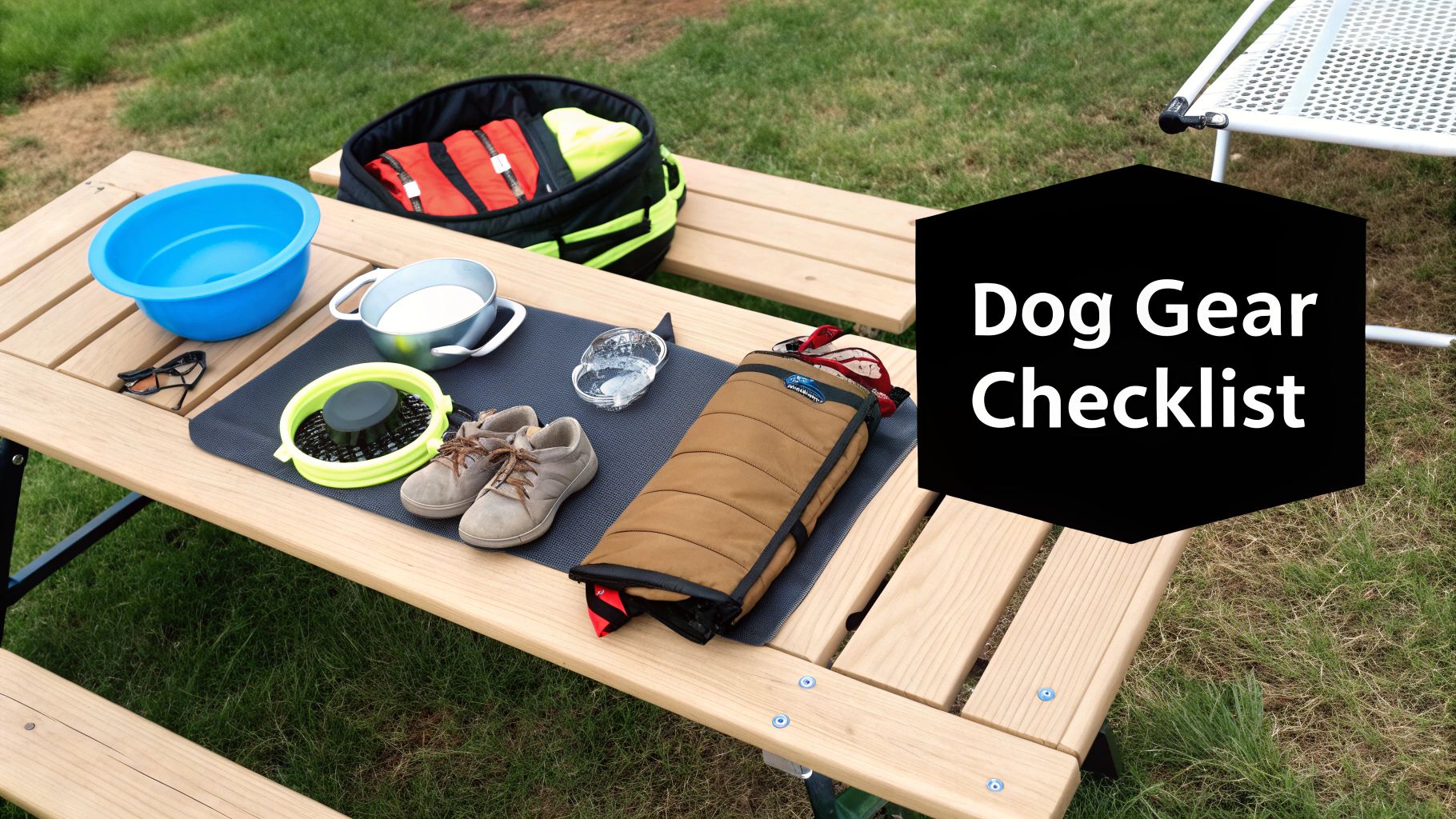
Packing for a camping trip with your dog is about more than just tossing their food bowl and a squeaky toy in the car. To do it right, you have to anticipate their needs in a totally new environment. Think of it less as packing accessories and more like assembling their essential toolkit for a safe and happy adventure.
A solid checklist is your best friend here. It’s what stands between a peaceful night under the stars and that sinking feeling you get when you realize you forgot something critical miles from the nearest town. It’s not just about what you pack, but understanding why each item earns its spot in your gear bin.
By breaking down your dog’s gear into a few key categories, packing becomes a strategic part of the fun instead of a last-minute chore. You can hit the road with confidence, knowing you’re ready for anything from mealtime to a minor emergency.
Use this categorized checklist to ensure you have all the essential gear for your dog's safety, comfort, and fun on your next camping trip.
| Category | Essential Item | Why It's a Must-Have |
|---|---|---|
| Campsite Comfort & Containment | Elevated Bed or Insulated Pad | Keeps them off the cold, damp ground for a warmer, comfier sleep. |
| Campsite Comfort & Containment | Long Leash or Tether (15-30 ft) | Gives them freedom to roam the campsite without wandering off. |
| Campsite Comfort & Containment | Portable Pen or Crate | A familiar, secure "den" reduces anxiety and keeps them safe. |
| Campsite Comfort & Containment | Collapsible Food & Water Bowls | Lightweight, space-saving, and perfect for both camp and trail. |
| Campsite Comfort & Containment | Familiar Blanket or Toy | A scent from home provides comfort and helps them settle in. |
| Health & Safety | Pet-Specific First-Aid Kit | Essential for treating minor cuts, scrapes, and removing ticks. |
| Health & Safety | Proof of Rabies Vaccination | Required by many campgrounds; keep a photo on your phone. |
| Health & Safety | Reflective Collar or LED Light | Crucial for visibility at night to prevent them from getting lost. |
| Health & Safety | Paw Balm or Booties | Protects sensitive paw pads from rough, hot, or rocky terrain. |
| On-Trail & Activity | Dog Backpack | Lets them carry their own water and snacks on longer hikes. |
| On-Trail & Activity | Durable Harness | Offers better control and distributes pressure safely on the trail. |
| On-Trail & Activity | Extra Water & Water Filter | Prevents dehydration and protects against waterborne parasites. |
| On-Trail & Activity | High-Calorie Treats | Keeps their energy levels up while they're burning extra calories. |
| On-Trail & Activity | Poop Bags | Pack it in, pack it out. Leave No Trace applies to our dogs, too. |
This list might seem long, but once you have your "go-kit" assembled, packing for future trips becomes a breeze.
The first step to a great trip is setting up a comfortable and secure "home base" for your pup at the campsite. When your dog feels safe and has their own spot, they’re way less likely to get anxious, bark at every little sound, or get into mischief. This space becomes their sanctuary after a big day of exploring.
Containment is just as critical. Let’s be honest, even the most well-behaved dog can be tempted by the scent of a squirrel or the sight of a deer. A reliable tether or a portable pen gives them the freedom to relax without giving you the constant worry of them wandering off. It's all about their safety and your peace of mind.
When you're out in the wild, your dog's health and safety are completely non-negotiable. The outdoors comes with its own set of risks—ticks, scrapes, unexpected critters, and more. A well-stocked, pet-specific first-aid kit isn't just a nice-to-have item; it's a foundational piece of your camping gear.
Being ready for the little things stops them from becoming big problems. Knowing you can properly clean a cut paw, remove a tick, or soothe an upset stomach means you can actually relax and enjoy your trip.
A pet first-aid kit should be your first purchase after a good leash. It's the one piece of gear you hope you never need, but will be incredibly grateful to have if you do.
Make sure your safety stash includes these items:
Once you venture away from the campsite, your gear needs to shift for life on the move. Hiking with your dog means carrying equipment that supports their energy, safety, and comfort on the trail. It’s all about being self-sufficient.
The right gear makes the hike more fun for both of you. A good harness, for example, prevents strain on your dog's neck and gives you a "handle" to help them over obstacles. And a doggy backpack lets them feel like part of the team by carrying their own water and snacks.
For any hikes or excursions away from camp, be sure to have these:
Once you’ve arrived, creating a peaceful campsite is the key to a great trip for you, your dog, and your neighbors. The goal here is to build a secure, comfortable space that feels like a home away from home. This lets your dog relax and prevents any unexpected escapades, setting the foundation for a good time for everyone.
Think of it as creating a temporary, safe backyard for your pup. It's their home base where they can unwind after a long day of hiking without you having to be on high alert every second. A little planning as soon as you pull in sets the stage for a stress-free adventure.
First things first: establish a secure "dog zone." This isn't about restricting your dog; it's about giving them freedom within safe boundaries. A long tether or a portable pen is perfect for this. It gives your dog enough room to sniff around and explore without wandering into the next campsite or getting into a standoff with a raccoon.
This zone is your dog’s personal slice of the outdoors. Make sure it includes their bed, a full water bowl, and a favorite chew toy. Having this designated space helps them understand their boundaries and gives them a familiar spot to retreat to when the new sights and sounds get a little overwhelming.
Here are a few solid options to make it happen:
When you're camping with a dog, being a considerate neighbor is non-negotiable. What might seem like a few harmless barks at a squirrel to you can be a major disturbance for someone else trying to enjoy the peace and quiet of nature. Your goal is to be the kind of camper everyone is happy to have next door.
This just means being hyper-aware of your dog's behavior and how it affects the people and environment around you. It's about proactive management, not just reacting when something goes wrong. A little foresight goes a long way in making sure everyone coexists peacefully.
The golden rule of campsite etiquette is simple: leave the space—and the experience for others—better than you found it. This applies to noise, cleanliness, and interactions.
Here’s how to handle some common challenges:
The "Leave No Trace" philosophy is even more important when you have a four-legged companion with you. It’s not just about packing out your own trash; it's about actively minimizing your dog's impact on the delicate ecosystem you're there to enjoy. Following these principles ensures that these beautiful natural areas stay pristine for future generations of campers.
This vigilance is more critical than ever. With research showing that 60% of pet owners now take their pets on vacation—and a huge number of them choose camping—our collective impact really adds up. You can find more data on the rise of pet travel to see why these practices are so important.
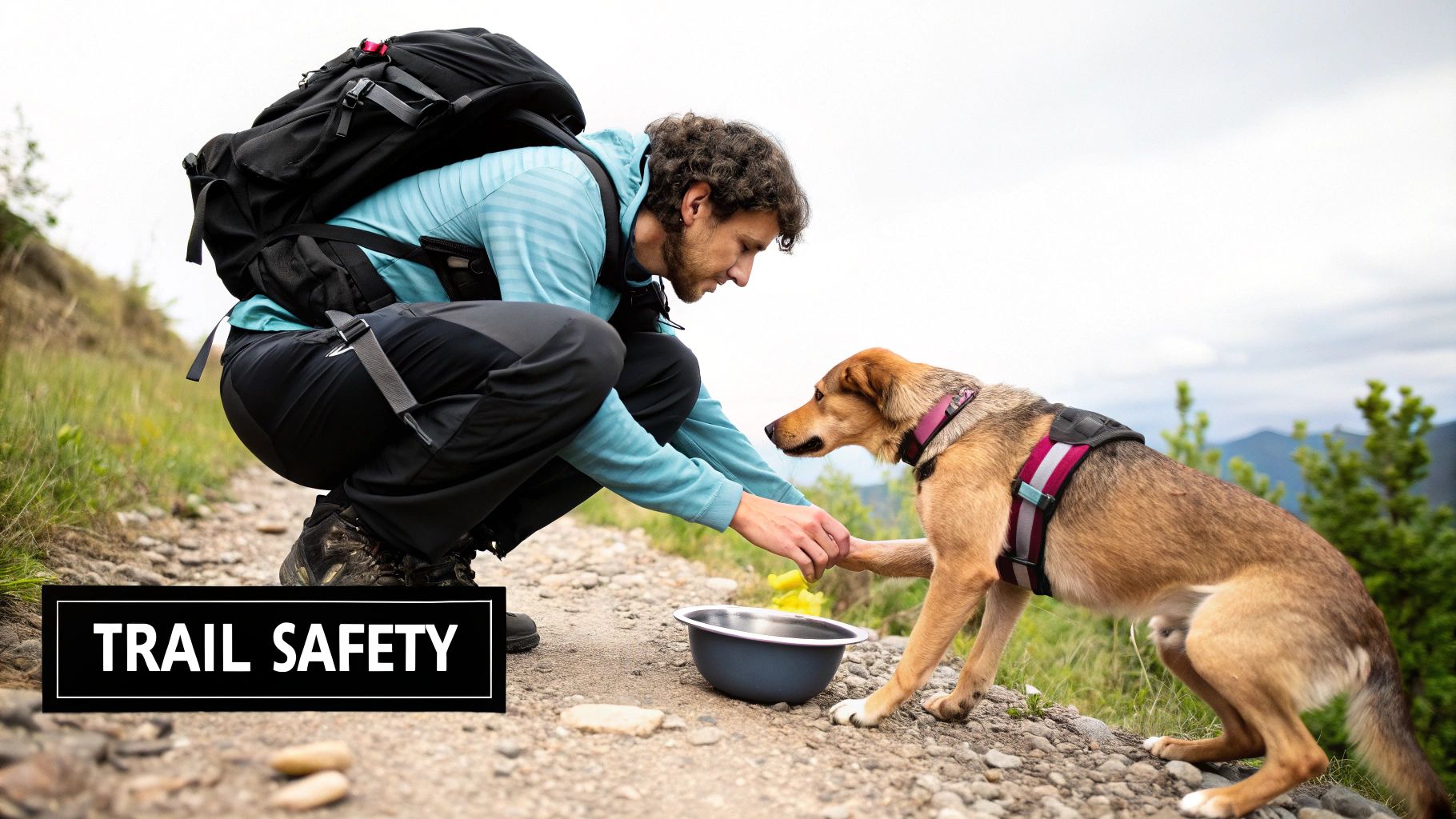
Hitting the trail is the real heart of any camping trip with your dog, but it’s also where your most important job kicks in: protector. Out here, you are their only line of defense against dehydration, paw injuries, and run-ins with wildlife. A few key safety skills can transform you from a worried owner into a confident trail leader.
Think of yourself as your dog's personal medic and wilderness guide. Your role is to anticipate what they need before it becomes a problem—offering water before they're panting desperately, checking paws before they start to limp, and steering clear of hazards before you're on top of them. This proactive mindset is what keeps the adventure fun and safe for everyone.
Your dog can't just tell you they're overheating or exhausted. Instead, they show you through their body language, and learning to read those signals is one of the most vital skills you can have. It’s all about catching the small signs before they blow up into a real emergency.
Take heatstroke, for instance. It’s a lot more than just heavy panting. The early warning signs can be surprisingly subtle.
If you even suspect heatstroke, you have to act fast. Get your dog into the shade immediately, douse them with cool (never icy) water, and offer small sips to drink. Your top priority is getting them to a vet as quickly as possible.
Your dog's paws are their hiking boots, and they take a serious beating on rough terrain. Hot ground, sharp rocks, and thorny branches can quickly lead to painful cuts, scrapes, and burns. A little proactive paw care goes a long way. Think about applying a protective wax-based balm before your hike or, for really rugged trails, investing in a solid set of dog booties.
After every single hike, a thorough tick check is non-negotiable. Seriously, every time. These nasty pests can hide anywhere, so you need to be methodical.
If you find a tick, use a proper tick-remover tool to grab it right at the skin and pull straight out. This simple routine is your best defense against serious illnesses and keeps your dog ready for the next adventure.
That crystal-clear stream might look refreshing, but it can be teeming with nasty parasites like Giardia that can make your dog incredibly sick. Never let your dog drink from standing water, streams, or lakes unless you treat it first. Your safest bet is to just carry all the water your dog will need. If you can't, use a reliable water filter designed to screen out harmful bacteria and protozoa.
Wildlife encounters are also a very real possibility. Your best strategy is simply avoidance. Keep your dog leashed and close to you, especially in areas known for having snakes, bears, or porcupines. It also helps to make a little noise as you hike—talk, sing, or just clap your hands every so often. This alerts animals to your presence and gives them plenty of time to move on.
This kind of vigilance is becoming more important every year. Camping in the United States is booming, with revenue expected to hit $27 billion by 2025. As more of us bring our pets along for the ride, the demand for safe, pet-friendly outdoor spaces is growing—a full 27% of travelers now say they want more dog-welcoming options. You can discover more about these campground trends for 2025 and what they mean for us. By keeping your dog safe and respecting wildlife, you’re doing your part to make sure these beautiful places stay welcoming for everyone.
Of course, even the most seasoned campers run into questions when their dog is along for the ride. Knowing how to handle the common curveballs can be the difference between a trip-ruining disaster and a minor bump in the road.
Let's walk through some of the most frequent questions I hear from fellow dog-loving campers. Think of this as your troubleshooting guide for a smoother, happier trip.
First, you have to play detective. Why is the barking happening? Is your dog just bored out of their mind? Are they on high alert because of all the new sights and sounds? Or are they getting a little too territorial about "their" new spot?
More often than not, a good long hike or a vigorous game of fetch is the best medicine. A tired dog is a quiet dog, as the saying goes.
If they're still yapping after being properly tuckered out, it's time to engage their brain.
This is a big one, especially for dogs with short fur. Even on a mild summer night, the ground can get surprisingly cold and suck the warmth right out of them. The absolute golden rule is to never let your dog sleep directly on the floor of the tent.
Think of the tent floor as a heat magnet, constantly pulling warmth away from your dog's body. Your job is to create a barrier that stops that from happening. An insulated pad is that barrier.
A dedicated insulated dog bed is fantastic, but even a simple closed-cell foam sleeping pad (like the kind you'd use yourself) makes a world of difference. For an extra layer of coziness, pack their favorite blanket from home or look into a dog-specific sleeping bag or fleece jacket.
When you're in an established campground, the answer is almost always a hard no. Leash rules aren't just for show; they're there to protect your dog, other people, and the local wildlife. Your dog might be the friendliest pooch on the planet, but you can't predict how another dog will react, or how your own will respond if a deer suddenly dashes across the path.
Even if you're deep in the backcountry where off-leash is technically allowed, you have to be honest with yourself. Does your dog have a 100% bombproof recall? I'm talking "will come back instantly even when a squirrel is chattering right in front of them" reliable. If there's even a shadow of a doubt, the leash or a long training lead is the only safe call.
An ounce of prevention is worth a pound of cure here. Before you even pack the car, make sure your dog is up-to-date on a vet-recommended tick preventative. That's your first and best line of defense.
After every single outing—whether it's a long hike or just a quick stroll around the campground—get in the habit of doing a thorough tick check. Slowly run your hands over their entire body, feeling for any new bumps. Pay close attention to the sneaky spots: in and around their ears, between their paw pads, and in their "armpits."
If you do find one of the little critters, grab a proper tick removal tool. You want to get it as close to the skin as you can and pull straight up with slow, steady pressure. Afterward, clean the spot with an antiseptic wipe and just keep an eye on it for a few days to make sure it doesn't get red or irritated.
At FindTopTrends, we know that the right gear makes every adventure better. From durable outdoor equipment to the latest tech for your travels, we've curated the best products to help you and your furry friend explore with confidence. Check out our collection and get ready for your next trip at FindTopTrends.




