


No products in the cart.


Free Shipping Australia-Wide

5 star customer service

Quality Tested Products

Staying warm when the mercury drops isn’t about finding the single thickest, puffiest jacket you can. The real secret, the one that seasoned outdoors-people and chilly city-dwellers swear by, is strategic layering. This simple system is your key to staying comfortable, letting you adapt on the fly to changing weather or how much you're moving.
Think of your clothing as a personal, wearable thermostat. A single, heavy parka is like a heater stuck on one setting: "blast." It might feel great at first, but the moment you start walking fast or the sun peeks out, you're sweating. A proper layering system, on the other hand, gives you fine-tuned control.
Each piece has a job, and together they create a powerful defense against the cold that no single garment can match. The magic lies in a simple principle: multiple thin layers trap air between them. Your body warms that trapped air, creating an incredibly efficient insulating barrier. It's this modular approach that lets you add or subtract warmth as your day changes.
A truly effective layering system has three distinct parts. Get these right, and you’ll master the art of staying warm.
The Base Layer: Your Second Skin This is the foundation, sitting right against your skin. Its most important job isn't to provide warmth—it’s moisture management. Its sole purpose is to pull sweat away from your body so you stay dry. If your base layer gets soaked, you'll get cold, no matter how many other layers you pile on. Merino wool and high-quality synthetics (like polyester) are the go-to choices here.
The Mid-Layer: The Furnace This is your primary insulator. The mid-layer's job is to trap and hold onto your body heat, creating that cozy pocket of warm air that keeps the chill at bay. The material and thickness you choose will depend entirely on how cold it is and what you're doing. This could be anything from a classic fleece jacket or a puffy down vest to a thick wool sweater.
The Outer Layer: The Shield Think of this as your armor against the elements. Its mission is to protect you from wind, rain, and snow. It keeps your insulating layers from getting wet and stops the wind from stealing all that precious warm air you've built up. The best shells are both waterproof (or at least highly water-resistant) and breathable, which is crucial for letting sweat vapor escape so you don't get clammy inside.
Let's walk through a real-world example. Say you're heading out for a brisk winter hike.
You start with a synthetic long-sleeve shirt as your base layer to handle any sweat. Over that, you pull on a warm fleece jacket for your mid-layer. To top it all off, you grab a waterproof, windproof shell for your outer layer.
As you start climbing a steep hill, your body starts working hard and you heat up. No problem. You just unzip or take off your shell, letting excess heat and moisture vent out instantly. When you get to the windy summit and stop for a snack, you pop the shell back on to block the wind and keep from getting chilled while you're inactive. That's the genius of the system: total adaptability.
Remember, the real goal is to avoid getting sweaty in the first place. The classic mistake is to start out too warm, sweat through your clothes, and then get dangerously cold the second you stop moving. Layering gives you the control to prevent that from ever happening.
And this isn't just for epic mountain expeditions. The same logic applies just as well to running errands around town, watching a fall football game from the bleachers, or just a chilly walk in the park. By simply mixing and matching the right pieces for each of the three layers, you can build the perfect outfit for virtually any cold-weather scenario.
If the layering system is the strategy for staying warm, then the insulation and fabrics in your gear are the engine making it all happen. Getting a handle on what makes your cold-weather clothes actually work is the difference between blindly buying a jacket and confidently choosing the right tool for the job.
It all boils down to a simple concept: trapping air.
Think of insulation not as a tiny heater, but as a brilliant air-trapper. Its only job is to capture the heat your body naturally gives off and hold it in thousands of tiny air pockets. The more air a material can trap for its weight, the warmer you'll be. This is where you meet the two titans of the insulation world: down and synthetic.
Choosing between down and synthetic insulation is probably the biggest decision you'll make when buying a puffy jacket or other insulated gear. There’s no single "best" choice—they just shine in different scenarios.
Down insulation is the undisputed champion of lightweight warmth. Sourced from the fluffy under-plumage of ducks and geese, its incredibly complex, 3D structure is second to none when it comes to trapping air. Think of it as a cloud of warmth. It offers amazing insulation for very little weight and packs down to almost nothing, making it a backpacker's dream.
But it has an Achilles' heel: moisture. When down gets wet, those delicate plumes collapse and stick together, losing their loft and all their insulating power.
Synthetic insulation, on the other hand, is the reliable workhorse. It’s made from fine polyester fibers engineered to mimic down's lofty structure. It's not quite as light or compressible as high-quality down, but it’s tough, and most importantly, it’s moisture-resistant. It keeps you warm even when it’s damp and dries out much faster, making it the go-to for wet climates or intense activities where you’re going to sweat.
Making the right choice here is more important than ever. The global winter wear market is huge, valued at around USD 363 billion in 2025, and it’s growing fast. With so many options out there, and with 68% of people prioritizing down and fleece for performance, knowing the difference helps you spend your money wisely. You can read the full research about winter wear market trends to see how the industry is shifting.
To make it simple, here's a quick side-by-side look at how these two materials stack up.
| Feature | Down Insulation | Synthetic Insulation |
|---|---|---|
| Warmth-to-Weight Ratio | Excellent. Unbeatable warmth for its weight. | Good. Getting better, but still heavier than down. |
| Performance When Wet | Poor. Loses all insulating ability when wet. | Excellent. Insulates even when damp, dries quickly. |
| Compressibility | Excellent. Packs down very small. | Good. Bulkier than down. |
| Durability | Very durable with proper care. Can last for decades. | Good. Can lose some loft after repeated compression. |
| Cost | Generally more expensive. | More affordable and budget-friendly. |
| Best For | Cold, dry conditions. Lightweight pursuits like climbing. | Wet, damp climates. High-sweat activities like skiing. |
Ultimately, your choice depends on where you're going and what you'll be doing.
Beyond the puffy insulation inside your jacket, the fabrics used for each specific layer are just as critical. Different materials are built for different jobs, from pulling sweat off your skin to blocking gale-force winds.
Wool (Especially Merino): This is nature's original performance fiber. Wool is a fantastic insulator that, like synthetic, stays warm even when it gets wet. Merino wool is the all-star version—its fibers are so fine and soft they don’t itch, making it the perfect material for base layers that wick moisture and naturally resist odor.
Fleece: The classic mid-layer material, and for good reason. This synthetic fabric is light, breathes incredibly well, and dries in a flash. Fleece is great at trapping air, giving you a solid dose of warmth without the high price tag or moisture worries of down.
Technical Shell Fabrics: Materials like Gore-Tex are pure magic. They are engineered to be both waterproof and breathable at the same time. The secret is a membrane filled with microscopic pores—they’re big enough to let tiny water vapor molecules (your sweat) out, but way too small for larger liquid water droplets (rain and snow) to get in. This keeps you dry from the inside and the outside.
This simple diagram shows how these different materials come together to create a functional system.
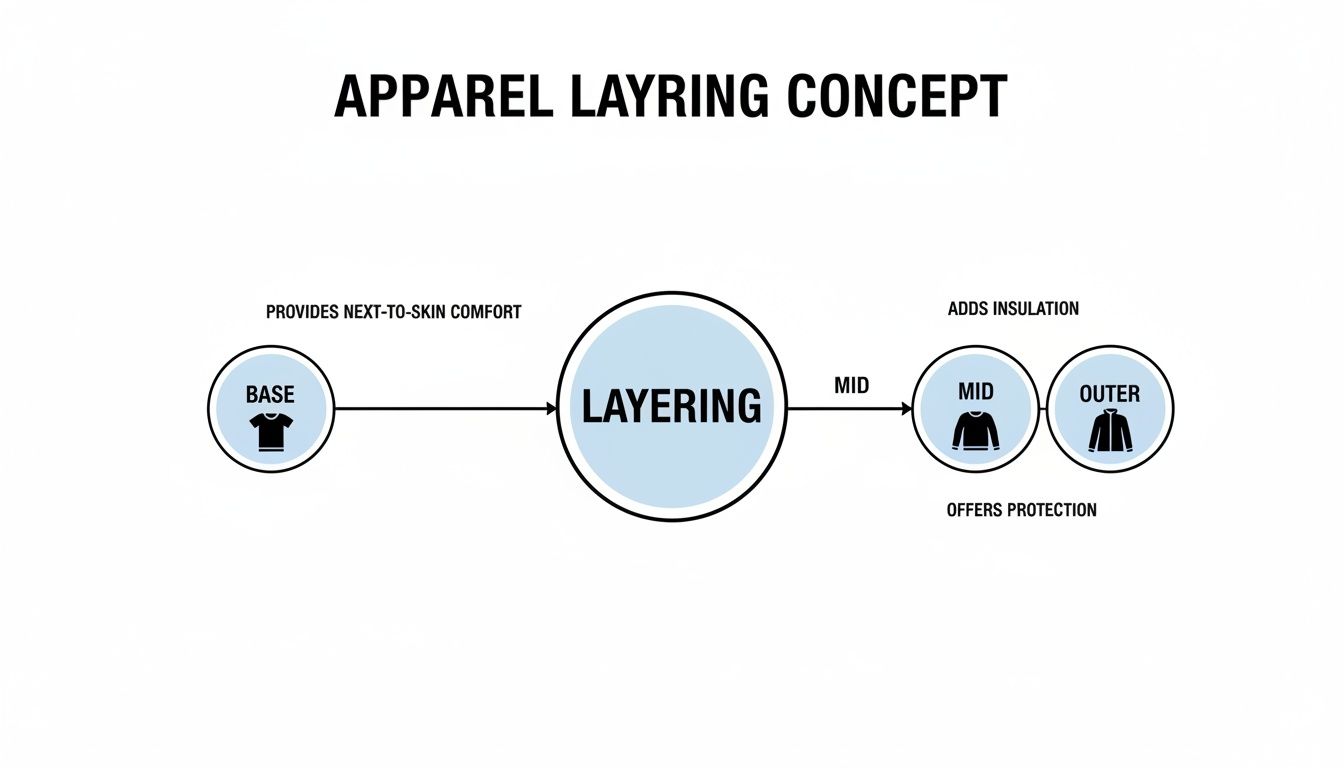
You can see how each layer has a distinct role, from the moisture-managing base layer right next to your skin to the protective outer shell that shields you from the elements.
The Takeaway: The "best" fabric or insulation is all about context. For a cold, dry day of light walking, you can’t beat the cozy, lightweight warmth of a down jacket. But for a damp, chilly hike where you’re working up a sweat, a synthetic jacket and a fleece mid-layer will keep you much safer and more comfortable.
Once you get a feel for these core technologies, you can start to see right through the marketing hype on product tags. You’re no longer just buying "a warm coat"—you're selecting a piece of technical equipment designed to perform a specific job, making sure your gear works for you, no matter what the weather throws at you.
Your outer layer is the hero of your cold-weather arsenal. It’s your personal shield against wind, rain, and snow—and it’s usually the biggest investment you’ll make in your winter gear. Picking the right jacket is about so much more than just style; it’s about choosing the perfect defense for whatever the weather throws at you, whether that’s a damp city commute or a full-blown blizzard on the mountain.
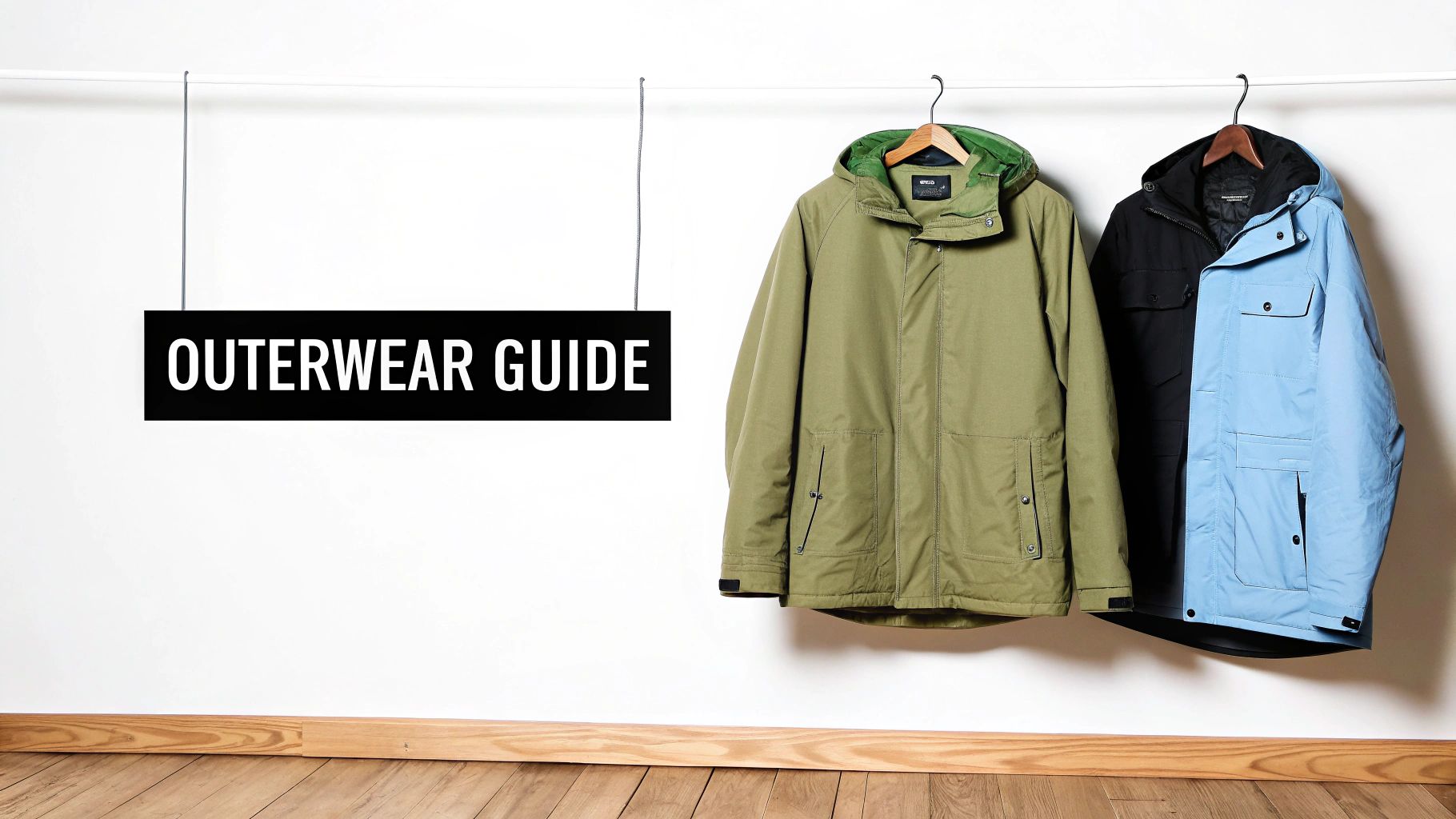
It helps to think of outerwear not as one single category but as a toolbox full of specialized tools. You wouldn’t use a hammer to drive a screw, right? In the same way, you can't expect a lightweight rain shell to keep you warm in a deep freeze. Getting familiar with the different types of jackets is the first step toward making a smart, lasting choice.
What you're doing and where you're doing it are the two biggest factors here. A jacket designed for standing still in arctic temperatures is a world away from one built for high-energy activities like skiing or snowshoeing.
Let’s break down the main players.
Insulated Parkas: These are the heavy hitters, your personal fortress against the cold. They’re built for maximum warmth when you're not moving much, which is why they're often longer and packed with high-loft down or thick synthetic fill. When the mercury really plummets, this is your go-to.
3-in-1 Jackets: The Swiss Army knife of outerwear. A 3-in-1 system combines a waterproof outer shell with a zip-in insulating layer, usually a fleece or a light puffy jacket. Wear the shell alone on a rainy spring day, the liner by itself on a cool, crisp autumn afternoon, or zip them together for full-on winter protection. Their versatility makes them a fantastic value, especially for climates with unpredictable weather.
Shell Jackets: Shells are your minimalist armor, focused purely on blocking wind and water without adding much insulation. A hardshell is your best bet for truly foul weather, offering total waterproof and windproof protection. On the other hand, a softshell prioritizes breathability and stretch, making it perfect for active pursuits in less extreme conditions.
So, how does this play out in the real world? The "best" jacket is completely relative to your specific plans.
For a rainy day in the city, a stylish waterproof shell or a classic trench coat is all you need. It keeps you dry without making you overheat on a crowded bus or in a warm shop. An insulated parka would be serious overkill, leaving you feeling swampy and uncomfortable.
Now, picture a snowboarding trip. You need a jacket that’s both waterproof (to keep you dry when you take a tumble) and breathable (to let sweat escape while you're carving down the mountain). The ideal setup is a hardshell with pit zips for ventilation, worn over a cozy fleece mid-layer. This combo keeps the elements out while letting your body breathe.
It's no surprise that jackets are the cornerstone of the winter wear market, commanding a dominant 41.6% market share in 2025. From puffy parkas in the Yukon to sleek wool coats in London, they blend function with fashion. Especially in regions with harsh winters—like North America, where 70% of Canadians prioritize serious thermal performance—the right jacket is essential. You can discover more insights about these global winter wear trends to see how technology and consumer demands are evolving.
Beyond the basic type, it’s the little details that separate a good jacket from a great one. When you're shopping, look past the price tag and check for these functional features.
A great jacket should feel like a partner in your adventure, not a burden. It works with your body and the environment to keep you comfortable, letting you focus on the experience instead of the weather.
Here’s what to keep an eye out for:
Sealed Seams: A waterproof fabric won't do you any good if water can seep in through the tiny holes from the stitching. Fully taped seams create an impenetrable barrier, a non-negotiable feature for any jacket you plan to wear in heavy rain or wet snow.
Adjustable Hood: A well-designed hood is a game-changer. It should cinch down snugly around your face and turn with your head, so you don't lose your peripheral vision every time you look left or right. A stiff brim to keep rain out of your eyes is a huge plus.
Storm Flaps: This is a simple strip of fabric covering the front zipper, but it’s incredibly important. Zippers are a common weak point, and a storm flap prevents wind and rain from driving right through the teeth.
Pit Zips: Found under the armpits, these zippers are your personal climate control. For high-energy activities, they are absolutely essential, allowing you to dump a ton of heat and moisture fast without having to stop and take your jacket off.
By understanding these different styles and features, you can confidently pick the perfect piece of outerwear—one that not only fits your style but also delivers the performance you truly need.
Your layering system is the fortress that protects your core, but even the strongest fortress has weak points. For your body, those are your head, hands, and feet. Think of them as open windows where precious heat can escape at an alarming rate. Nailing your cold-weather comfort isn't just about the jacket and pants; it's about strategically plugging those gaps.
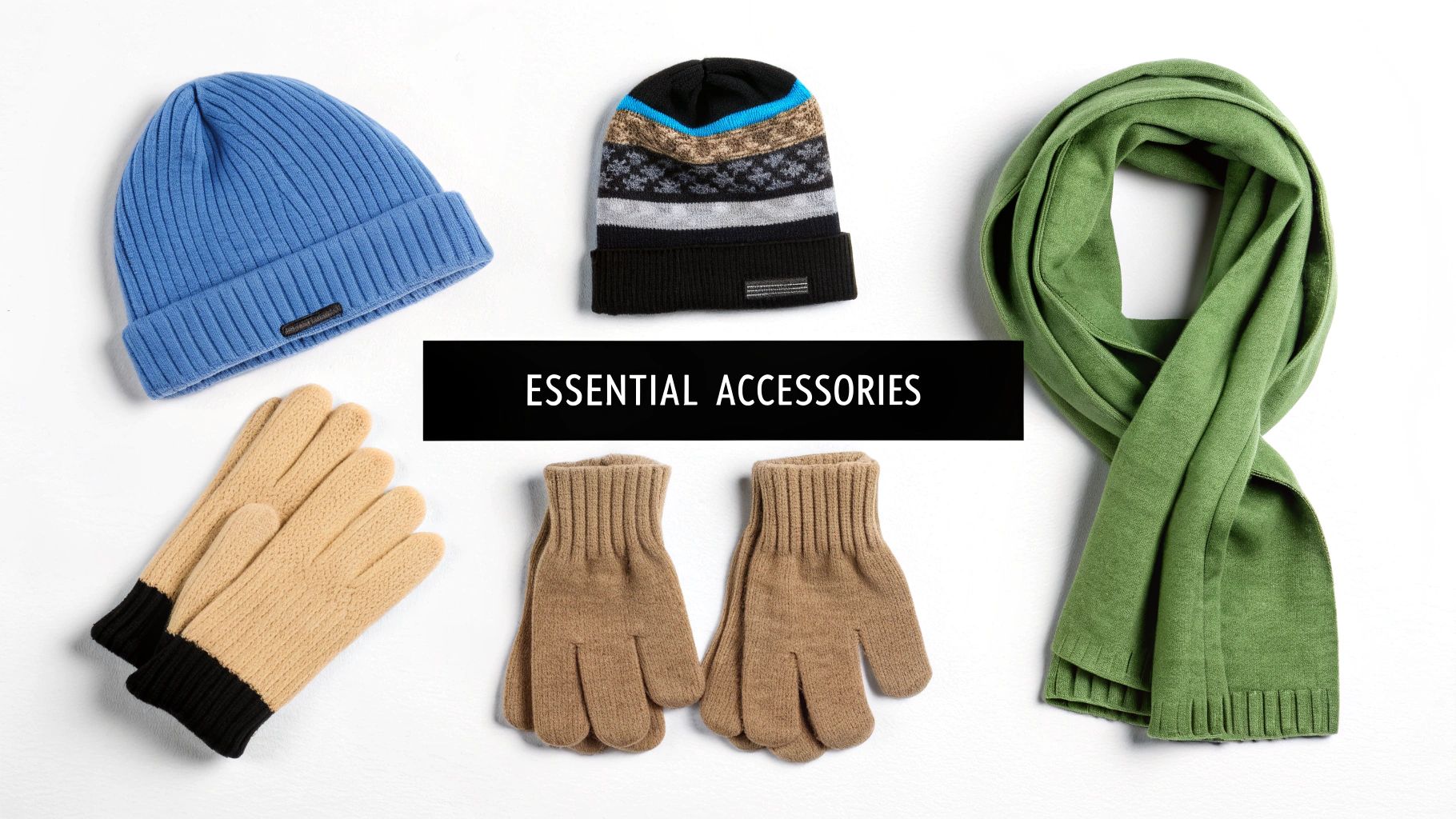
There's a reason your fingers and toes are the first to cry uncle in the cold. When your body senses a chill, it goes into survival mode, pulling warm blood away from your extremities to protect your vital organs. This is a brilliant biological design, but it leaves your digits painfully cold. That’s why the right accessories aren't just a nice-to-have; they're non-negotiable for staying out there longer and safer.
You lose a surprising amount of heat through an uncovered head, making a good hat one of the most pound-for-pound effective pieces of gear you can own. A simple fleece or wool beanie can make a world of difference in your overall warmth. It's a small change with a massive impact.
When the wind really starts to bite, a neck gaiter becomes your best friend. It’s a far more practical piece of gear than a traditional scarf, offering seamless coverage that you can easily pull up over your face without any fuss or bulk.
Pro Tip: Go for a merino wool neck gaiter. If you pull it over your mouth to block the wind, the moisture from your breath can turn a fleece gaiter into a damp, icy mess. Merino wool, on the other hand, will manage that moisture and stay warm.
It's an age-old question in the world of winter gear: gloves or mittens? The truth is, there's no single right answer. It all comes down to what you're doing.
Want the best of both worlds? Try a modular approach. A thin pair of liner gloves inside a waterproof shell mitten gives you ultimate flexibility. You can wear the full combo for max warmth, shed the mitten when you need your fingers free, or just use the shell in milder, wet weather.
Nothing will end a day of winter fun faster than cold, miserable feet. The secret to keeping your toes happy follows the same principle as your base layer: it's all about moisture management. This is why cotton socks are the absolute enemy. They act like a sponge, soaking up sweat and holding it against your skin, which is a surefire recipe for getting cold.
Do yourself a huge favor and invest in a few pairs of quality socks made from the right stuff.
Whatever you choose, make sure your socks are tall enough to bridge the gap between your pants and your boots. Sealing that little opening prevents cold air from sneaking in and undoing all your hard work. Paying attention to these small details is what turns a potentially chilly day into a truly comfortable adventure.
Knowing the difference between down and synthetic is one thing, but actually putting together a functional outfit is where the real skill comes in. It’s a bit like cooking—you have all the right ingredients, but you need the right recipe to make a great meal.
The core principles of layering hold true whether you’re navigating a windy city street or a snowy mountainside. The specific pieces you choose, however, will change dramatically. Let's walk through a few real-world scenarios to see how to build a smart system from the skin out.
Navigating the city in winter is a game of contrasts. You’re battling the cold one minute, then packed into a sweltering subway car or a stuffy office the next. The secret here is discreet performance that blends in. You need gear that blocks wind and a light drizzle without making you look like you just climbed Everest.
When you hit the trail, the mission changes completely. It's all about performance and adaptability. Your clothing has to pull double duty: managing sweat when you’re climbing a steep hill and keeping you warm the second you stop for a water break. This is where the classic three-layer system truly proves its worth.
The golden rule for any active outdoor adventure is to start cold. If you’re perfectly warm and cozy the moment you step out of the car, you're going to be a sweaty mess in ten minutes flat.
Dressing for a day on the slopes, especially with kids in tow, is a whole different ballgame. The priorities are serious waterproofing, durability, and maximum warmth. You're dealing with constant contact with snow and long periods of sitting still on a cold, windy chairlift.
It’s also getting easier to dress warmly without breaking your eco-conscious values. The market for sustainable winter wear is projected to grow by 6.1% annually through 2035 as more people turn away from fast fashion. Today, over 30% of new winter clothing lines feature recycled materials, making it easier than ever to find gear that's both high-performing and easier on the planet. You can learn more about these sustainable winter wear findings and see how the industry is shifting.
You’ve invested good money in your cold-weather gear, and the last thing you want is for it to fail you when you need it most. Proper care isn't just about cleaning; it's about protecting that investment and ensuring your jackets and layers keep performing for years to come. Think of it as routine maintenance for your most important equipment.
Every fabric has its own quirks. Take wool, for instance. That merino base layer is amazing, but it hates high heat. Always wash it on a gentle, cool cycle with a mild soap, and then lay it flat to dry. Tossing it in a hot dryer is the fastest way to turn your favorite shirt into a doll-sized sweater.
Your high-tech pieces—like waterproof shells and puffy down jackets—are a different beast altogether. They rely on special coatings and delicate materials to work their magic, and your standard laundry detergent can actually strip them of their powers.
When your waterproof jacket starts looking a little soggy, it's time for a refresh. Use a technical wash made specifically for these fabrics. After a wash, you might need to bring its water repellency back to life. Sometimes, a simple tumble dry on low heat is all it takes to reactivate the factory DWR (Durable Water Repellent) coating. If water still isn’t beading up and rolling off, it's time to re-apply a DWR treatment, which you can find in either spray-on or wash-in formulas.
Restoring a jacket's DWR is like waxing your car. It creates an invisible shield that forces water to bead up and slide away, which is crucial for keeping the fabric from getting waterlogged and losing its breathability.
Down jackets need a gentle hand, too. Use a down-specific wash, and then get ready for a long, slow drying process on the lowest heat setting.
Finally, don't just shove everything in a bin when winter ends. Make sure every single piece is completely clean and dry before you store it. A cool, dry closet is perfect. Use breathable storage bags instead of airtight plastic containers, which can trap sneaky moisture and lead to mildew. A little effort now means your gear will be ready to go the moment the temperature drops again.
Even when you've got the basics of layering down, a few common questions always seem to pop up. Let's tackle some of the most frequent ones I hear, so you can make the best choices when gearing up.
In a word: yes. I can't stress this enough. There's a well-known saying among outdoor enthusiasts for a reason: "cotton kills."
Cotton is basically a sponge. The moment you start to sweat, it soaks up that moisture and holds it right against your skin. All its insulating properties vanish, and it actively starts pulling heat away from your body, leaving you wet, clammy, and dangerously cold. It's a recipe for hypothermia.
So, what should you wear instead?
Always, always choose one of these for any layer touching your skin.
This is a big one, and getting it wrong can ruin your day. The distinction is actually pretty simple if you think about it in practical terms.
Water-resistant gear is designed to shrug off light moisture. Think a brief drizzle on your way to the car or a few dry snowflakes. It'll buy you some time, but under any kind of real, sustained precipitation, water will eventually soak through.
Waterproof gear is your fortress against the storm. It's built with membranes (like the famous Gore-Tex) and has sealed or taped seams to create a complete barrier. This is what you need for a rainy hike, a wet-snow ski day, or any situation where staying dry is non-negotiable.
You'll notice most reputable brands don't slap a specific temperature rating on their jackets. Why? Because warmth is incredibly personal.
Your metabolism, how hard you're working, and what you’re wearing underneath all play a massive role. The person standing still at a bus stop needs a totally different jacket than the person cross-country skiing in the exact same temperature.
Instead of looking for a magic number, learn to read the jacket's specs like an expert. A description that highlights "800-fill down" and a "windproof shell for arctic expeditions" tells a much more useful story than a simple "-10°F" rating ever could.
Here’s what to look for instead:
Ready to put this knowledge to use? At FindTopTrends, we've done the hard work of sorting through the options to bring you stylish, high-performance gear that actually works. Head over to https://findtoptrends.com to check out our handpicked collection of top-rated jackets, base layers, and winter accessories.




