


No products in the cart.


Free Shipping Australia-Wide

5 star customer service

Quality Tested Products

Accessories are what truly make an outfit your own. They’re the secret weapon for breathing new life into your wardrobe, turning a simple look into a real statement with just a few thoughtful additions. Learning how to accessorize an outfit is really about mastering the details that show off your personality and make your style feel polished and complete.
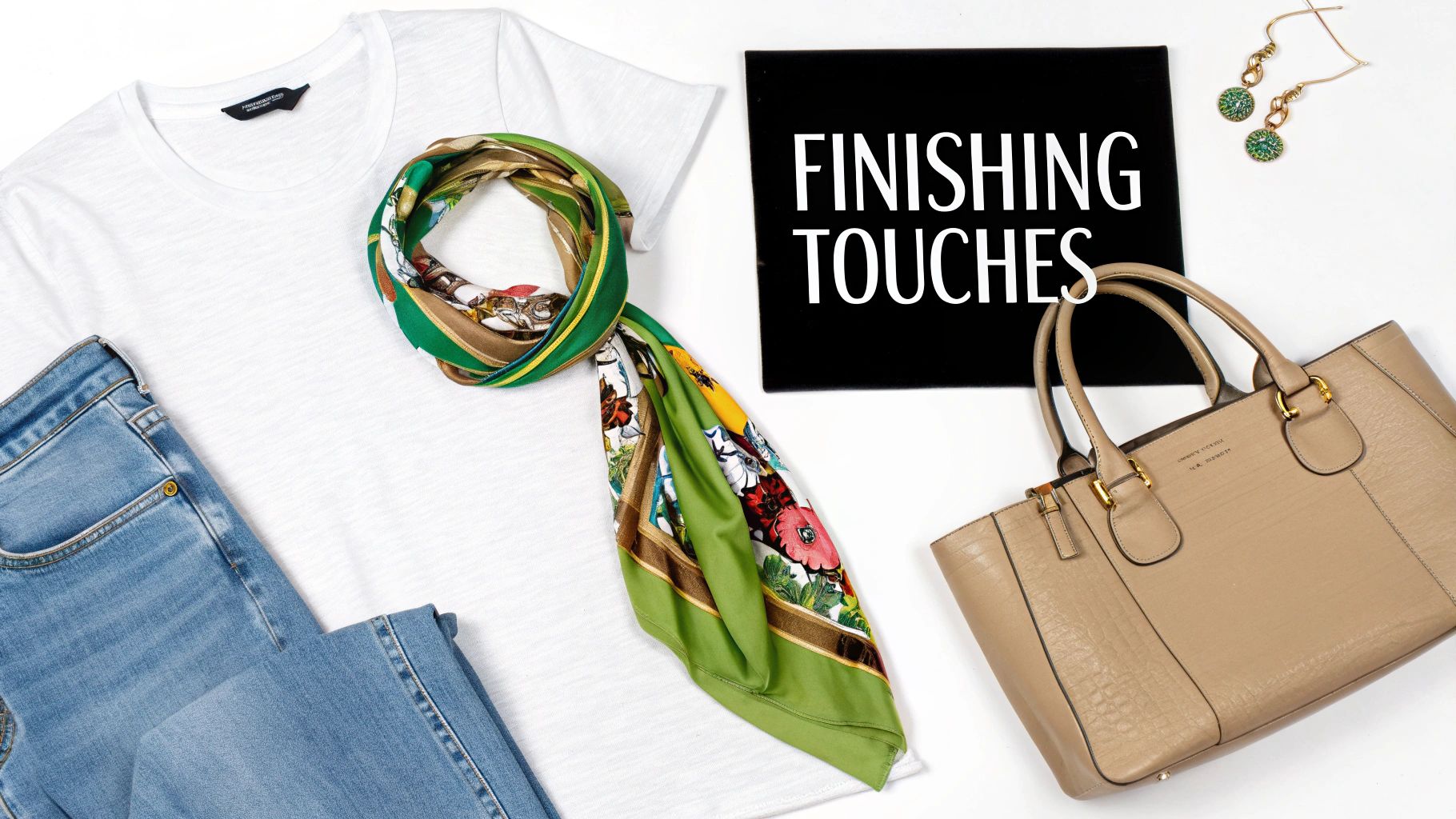
Think of your clothes as the canvas and your accessories as the brushstrokes that bring the art to life. The right handbag, a perfectly tied scarf, or a pair of standout earrings can completely shift the entire mood. They have the power to take a basic t-shirt and jeans from just "fine" to "effortlessly chic" in seconds.
This isn't just about piling on more stuff. It's about making smart choices that inject texture, color, and a point of interest. The global love for these finishing touches is massive—the fashion accessories market hit a staggering USD 1,079.60 billion in 2024. That number alone shows just how essential these pieces are to defining personal style across the globe.
To start building your collection, it helps to think in terms of two distinct categories.
The real magic happens when you learn to balance both. Your anchor pieces ground the look, while your accents provide the spark and personality.
Learning this skill is a game-changer. It lets you reinvent the clothes you already have, creating endless new combinations without a shopping spree. To really dive deep, you can find some fantastic expert guidance on how to style your outfit with jewelry.
To help you visualize this, here’s a quick rundown of how different accessories can elevate your look.
| Accessory Type | Primary Role | Best For Adding |
|---|---|---|
| Handbag | Functional Anchor | Structure, a pop of color, or texture. |
| Jewelry | Accent & Anchor | Personality, elegance, a focal point. |
| Scarf | Versatile Accent | Color, pattern, and a touch of sophistication. |
| Belt | Functional Anchor | Definition to the waist, breaking up a look. |
| Sunglasses | Functional Accent | An air of cool, face-framing polish. |
As you can see, each piece serves a purpose, and combining them thoughtfully is what pulls everything together.
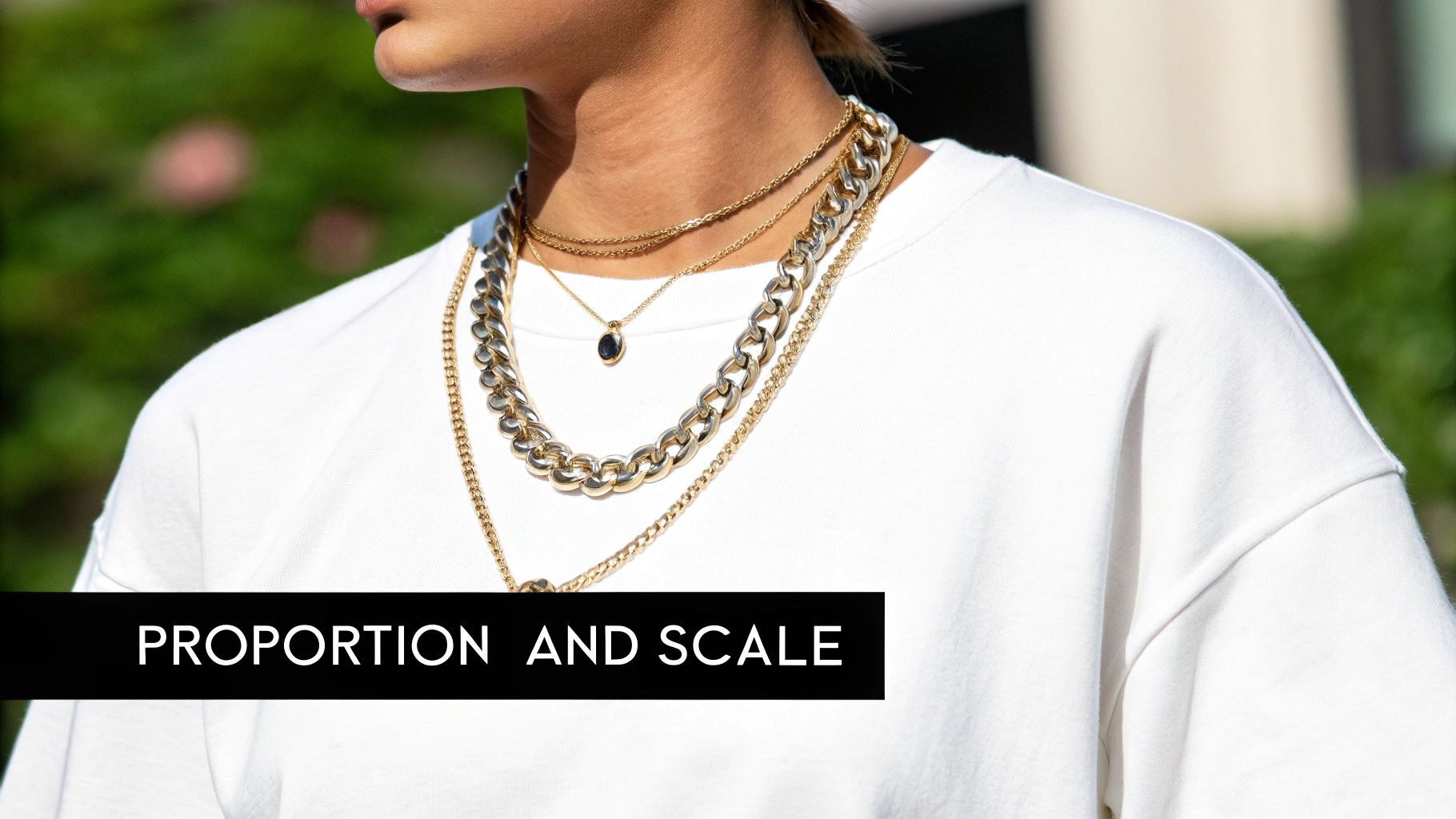
The secret to a look that just works? It’s all about balance. Accessorizing isn't about following a strict set of rules, but more about developing an eye for what feels right. Think of proportion and scale as your guides to creating that visual harmony.
For example, a big, chunky statement necklace can look incredible against a simple crewneck sweater. The clean canvas of the top really lets the accessory shine. But, if you try to pair that same necklace with a fussy, high-ruffled collar, the two will just compete, making your whole look feel cluttered and chaotic.
The size of your accessories should always complement the scale of your outfit's patterns and its overall shape. If you’re wearing a dress with a loud, busy print, it probably doesn’t need a huge, intricate necklace fighting for the spotlight.
Here's how to think about it:
The real goal here is to create one clear focal point. Always ask yourself: "What do I want people to notice first?" If your outfit and your accessories are both screaming for attention, your style message just gets muddled.
This idea of balance also applies to how your accessories work with your own body. A wide belt can do wonders for defining a waist, but on a shorter torso, it might visually cut you in half. Knowing your own silhouette is a game-changer. If you’re not sure where to start, getting familiar with how to dress for your body type makes these decisions so much easier.
Ultimately, mastering proportion is about creating a cohesive look where every single piece feels like it belongs. To really nail the finishing touches, it's worth diving into some expert tips on how to style jewelry for a perfect look. It's all about making your accessories feel like a deliberate, integrated part of your personal style story.
Context is everything when it comes to style. That amazing, chunky necklace that gets all the compliments at brunch? It probably isn't going to have the same effect in a Monday morning budget meeting. Mastering the art of accessorizing means knowing that where you're going is just as critical as what you're wearing.
Think of the occasion as the roadmap for your outfit. Your accessories are the finishing touches that show you know how to navigate it, all without losing your personal flair.
In a professional setting, the goal is always to look polished and put-together. Your accessories should enhance your outfit and signal competence, not become a distraction. We're talking understated elegance.
This is where you get to play. Coffee runs, weekend hangouts, and casual get-togethers are the perfect backdrop to let your personality shine through your accessories.
Now's the time to experiment with more expressive pieces. Try stacking a few bracelets for a relaxed, bohemian feel, or grab a brightly colored crossbody bag to make a simple jeans-and-tee combo pop. A great hat can also completely change the vibe of a laid-back outfit.
A Quick Tip: Casual doesn't mean careless. Even when you're relaxed, make sure your accessory choices look intentional and work together with the rest of your outfit.
Formal events like weddings, galas, or elegant dinners are your green light for glamour. This is when you can pull out those high-impact, show-stopping pieces that take an outfit to the next level.
The trick is to choose one or two key pieces to be the star. A stunning pair of chandelier earrings, for instance, or a sophisticated metallic clutch can provide all the sparkle you need. These high-end choices are a huge driver behind the North American fashion accessories market, which is projected to hit USD 554.28 billion by 2033. Discover more insights about the fashion accessories market on Renub Research.
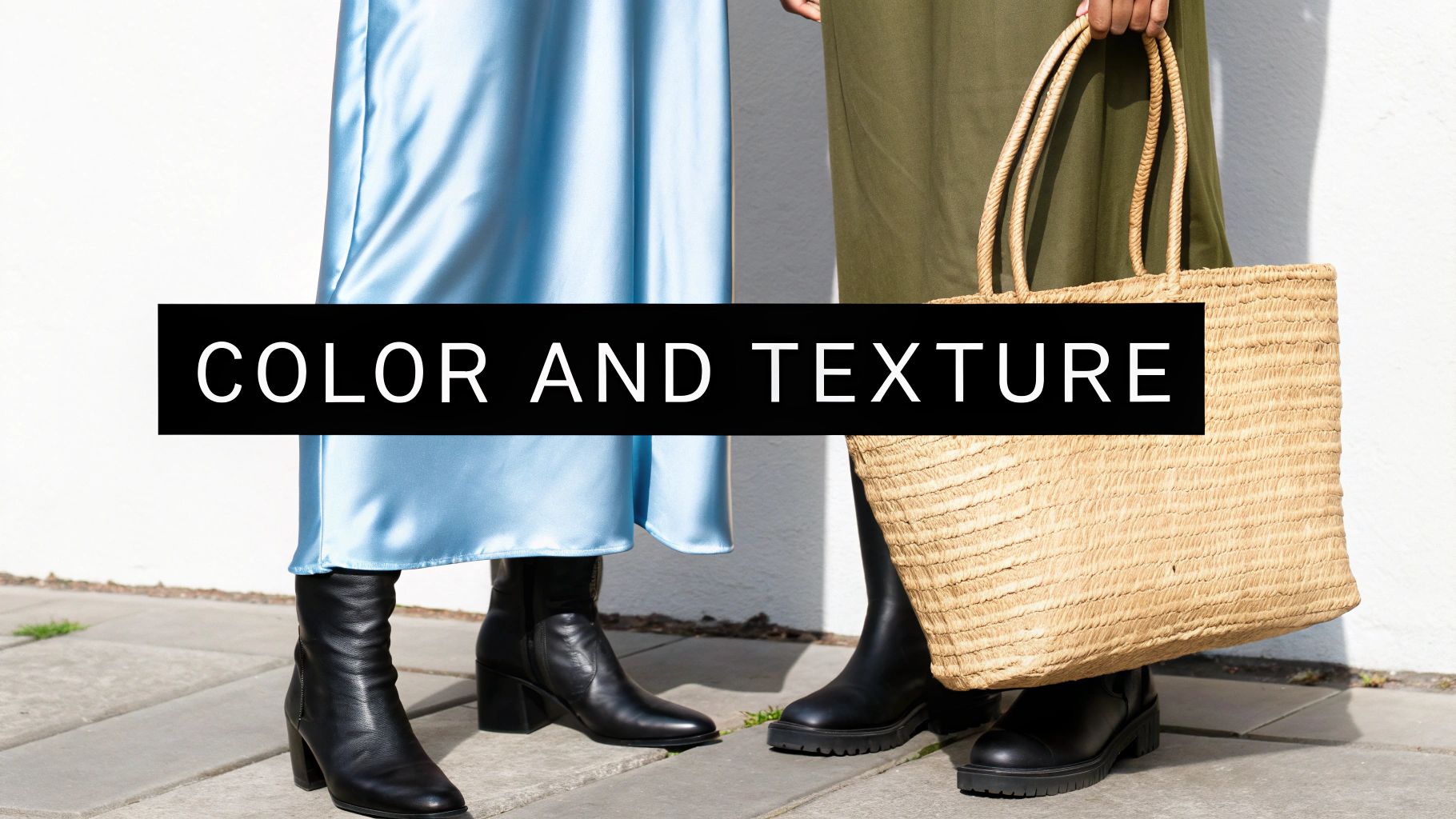
This is where the real fun begins. Once you've got the basics of shape and size down, playing with color and texture is what truly elevates an outfit from just "clothes" to a "look." It’s how you inject personality and make a statement without saying a word.
Color is your secret weapon for setting a mood. A little color theory goes a long way here. Think about how warm gold jewelry paired with a deep emerald green dress creates this incredibly rich, earthy vibe that feels instantly put-together. It just works.
On the other hand, crisp silver accessories against a cool blue shirt can give you a clean, modern aesthetic. It’s all about the feeling you're trying to capture. If you want to dive deeper, this guide on how to match clothes colors is a fantastic resource for mastering those perfect combinations.
Now, let's talk texture. This is the element that adds a tangible, touchable quality to your style. Color draws the eye, but texture makes people take a second look. It’s what makes an outfit feel dynamic and thoughtfully curated, and mixing materials is a pro move that’s surprisingly easy to pull off.
Here are a couple of my favorite go-to pairings:
By layering different textures—think lace with leather or velvet with denim—you keep an outfit from feeling one-dimensional. This interplay between surfaces is what really catches the eye and makes your style unforgettable.
Once you get comfortable combining these elements, you’ll be creating looks that aren't just visually interesting, but feel incredibly polished and intentional.
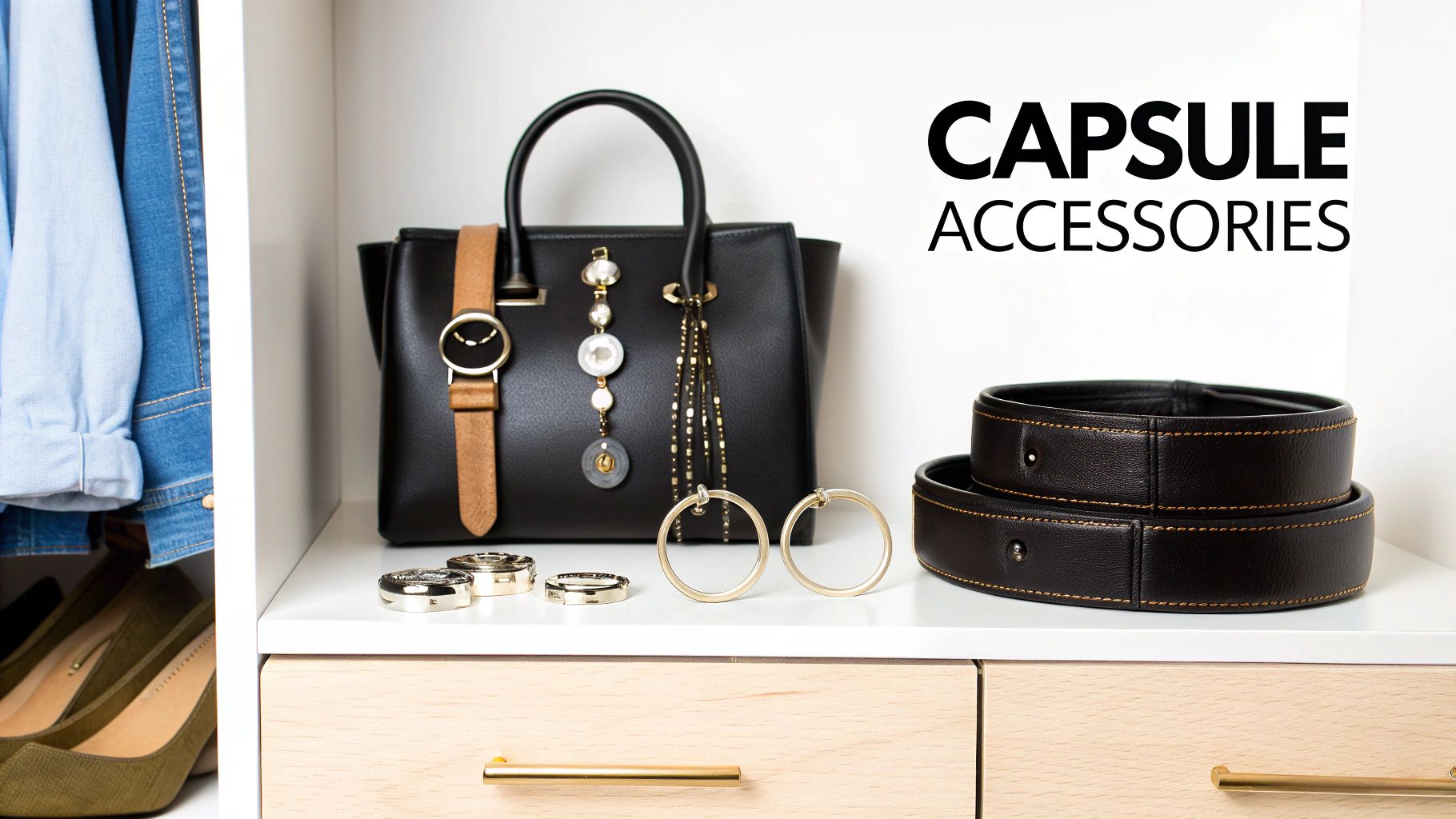
A fantastic accessory collection doesn't happen by accident. It's built with purpose. Instead of grabbing random pieces that catch your eye, a more strategic approach ensures you always have that perfect finishing touch, no matter where you're headed. This is all about curating a versatile foundation that genuinely speaks to your personal style.
The easiest way to get started is to adopt a "capsule" mindset. Focus on a core group of timeless essentials that will form the backbone of your collection. Think of these as the reliable workhorses you’ll reach for over and over, making those daily styling decisions a whole lot simpler.
Before you’re tempted by the next trend, take a quick inventory. Do you have these foundational pieces covered? They're the building blocks for countless outfits.
Investing in these quality essentials gives you an incredibly strong foundation to build upon. This method is at the heart of creating a functional, stylish collection, and it mirrors the principles found in a well-planned capsule wardrobe guide.
Okay, once your core foundation is set, it's time for the fun part: injecting your personality. This is where you can play with trend-driven items or unique, eye-catching pieces that make your style truly yours. Maybe it's a bold, sculptural necklace, a vibrant silk scarf, or a pair of artistic, oversized earrings.
The key here is to be intentional. Choose pieces that genuinely excite you and feel like a true reflection of who you are. This thoughtful approach to curating accessories isn't just a personal preference; it's a growing global trend. For example, the Asia Pacific region has become the fastest-growing market for fashion accessories, and it's projected to hold a 35.23% global market share by 2025 as more people mindfully build their collections online. You can discover more insights about fashion accessory trends from Cognitive Market Research.
Even the most stylish among us can get it wrong sometimes when it comes to accessorizing. It's rarely about the accessory itself, but more about how it's being worn. Let's walk through some of the most common stumbles I see.
One classic mistake is going overboard with the matching. You know the look: the bag, the shoes, and the belt are all the exact same shade of red. While it might feel safe, it often comes across as dated and a bit rigid. A truly stylish look feels effortless, not like it came straight out of a pre-packaged box.
Another easy trap to fall into is piling on too many "look at me" pieces. A dramatic necklace, huge chandelier earrings, and a wrist full of chunky bangles all scream for attention at the same time. The result? Visual noise that drowns out you and your outfit. Your accessories should create a focal point, not a five-car pileup.
The good news is that these issues are incredibly easy to fix. It just takes a slight shift in your approach.
Think 'Complement,' Not 'Match': Instead of trying to find the exact same shade, look for colors that play well together. Got a great navy dress? Instead of navy shoes and a navy bag, try pairing it with a rich tan belt and cognac-colored loafers. The whole look becomes instantly more sophisticated.
Choose Your 'Hero' Piece: Let one accessory be the star of the show. If you're wearing a truly spectacular necklace, keep your earrings simple—maybe just a classic stud or a small hoop. If your earrings are the main event, consider skipping a necklace altogether.
Dress for the Day: This one sounds obvious, but it's a frequent misstep. Those stunning (but painful) stilettos might look amazing, but they're a terrible choice for a day spent running errands or exploring a new city on foot. Always think about function as much as form.
There's a timeless piece of advice, often credited to the legendary Coco Chanel, that I always come back to: "Before you leave the house, look in the mirror and take one thing off." It’s the ultimate style editor's trick. That one simple act forces you to be deliberate, ensuring every piece you're wearing has a real purpose.
Even with the best advice, some styling situations can leave you stumped. Knowing the theory is one thing, but applying it to a specific outfit is another. Let's tackle some of those tricky questions that pop up when you're getting dressed.
Yes, absolutely! The old rule about sticking to one metal is long gone. Mixing metals looks modern and intentional when you get the balance right.
The easiest way to pull it off is to pick a dominant metal and use the other as an accent. Think about layering your favorite gold watch with a single, delicate silver chain bracelet. The contrast is subtle but stylish.
Another great trick is to find a "bridge" piece. This is an item that already features both metals, like a two-toned watch or a ring with intertwined gold and silver bands. This one piece ties everything together, making your mixed-metal look feel cohesive and deliberate, not like you got dressed in the dark.
At the end of the day, you're aiming for harmony, not a jumbled mess. Just keep the vibe of the pieces similar—delicate with delicate, chunky with chunky—and you'll nail that layered look.
A great statement necklace deserves to be the star of the show, and your neckline is its stage. The best tops are the ones that give it space to shine without competing for attention.
Simple, clean necklines are your best friend here.
Try to avoid pairing a bold necklace with busy patterns, high-ruffled collars, or other flashy accessories around your face. If the necklace is the main event, let it be. Keep your earrings small and simple—a pair of classic studs is usually the perfect companion. This creates one strong, confident focal point.
It definitely is. Coco Chanel famously advised, "Before you leave the house, look in the mirror and take one thing off." That's still some of the best advice out there for avoiding that overdone look. As a general rule, I stick to three to four main accessory "points."
Think of it like this: your earrings are one point, a stack of bracelets is another, and your sunglasses are a third. Your handbag is usually a necessity, so it often gets a pass.
If you’ve decided to wear one particularly eye-catching piece—like a huge cocktail ring or a brightly patterned scarf—it’s smart to pull back on everything else. Let that hero item have its moment.
Ready to find that perfect hero piece? At FindTopTrends, we've done the searching for you, curating the best trending accessories to make elevating your style easy. Explore our collection and discover the finishing touches your wardrobe has been missing.




