


No products in the cart.


Free Shipping Australia-Wide

5 star customer service

Quality Tested Products

Ever stare into a closet packed with clothes and feel like you have absolutely nothing to wear? It’s a frustratingly common problem. That feeling usually signals a major disconnect between the clothes you own and the clothes you actually need for your life.
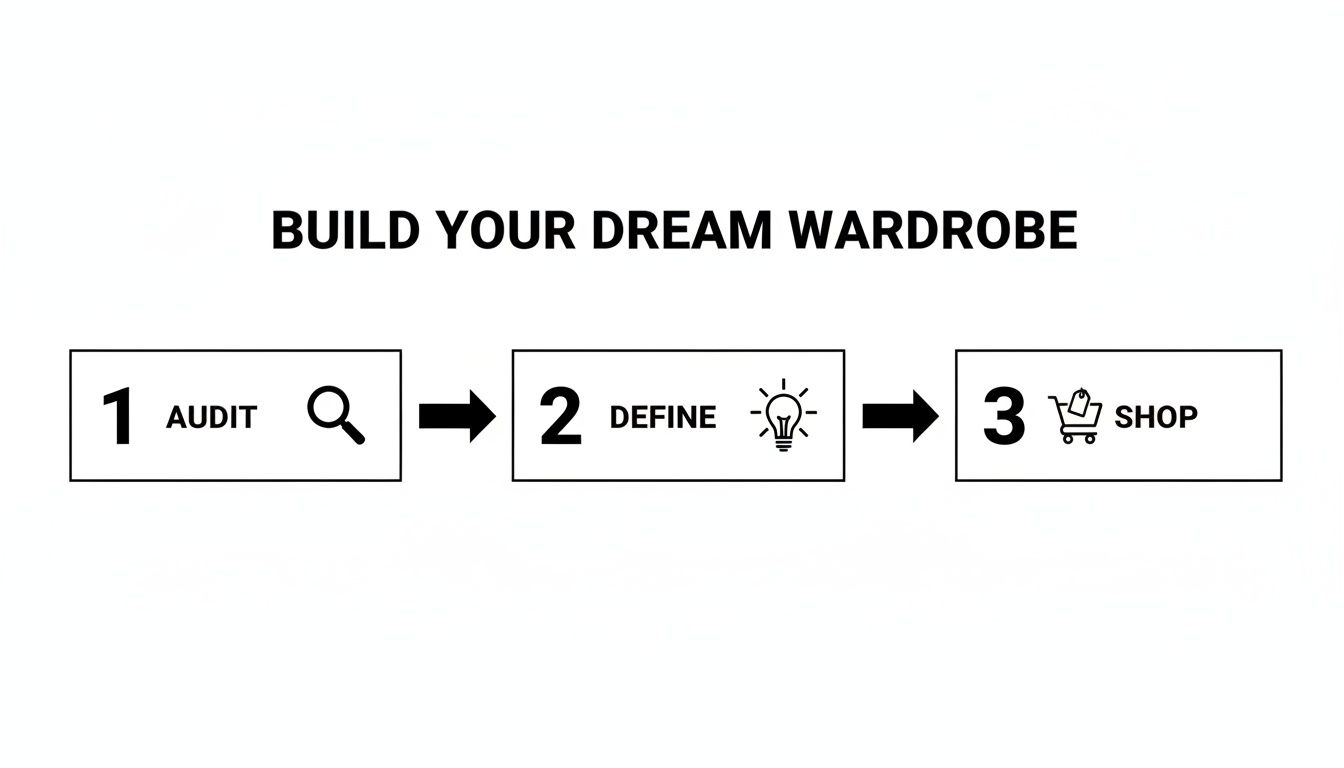
The solution isn't to just buy more stuff. The secret to a wardrobe that works is a simple, three-part process: audit what you have, define what you need, and then shop with a purpose. It’s about building a smart, cohesive system that ends closet chaos for good.
Let's ditch the idea of a massive, expensive overhaul. Building a functional wardrobe is less about a total replacement and more about creating a strategic blueprint. Think of it as a plan that brings clarity and gets rid of the clutter.
This whole process boils down to three core activities:
This approach is all about being thoughtful. As you can see below, shopping is the last thing you do, not the first.
You wouldn't start buying couches and coffee tables before you even had the blueprints for a house, right? The same logic applies here. Your wardrobe needs a solid foundation before you start adding in all the fun, decorative pieces.
This framework is your roadmap. Following it ensures you're building a wardrobe that's not just stylish but also incredibly practical. A popular way to apply this is to build a practical capsule wardrobe, which really helps maximize what you own.
A balanced wardrobe isn't about having more clothes; it's about having more options. By focusing on versatile basics and understanding your needs, you can create dozens of outfits from a relatively small number of items.
Figuring out your personal style can feel like the trickiest part of this whole journey. If you're struggling to nail down your signature look, our guide on how to find your fashion style has some great exercises to help you get unstuck.
To make this even clearer, here's a quick-start summary of the entire process.
Wardrobe Building Quick-Start Framework
This table breaks down the entire process into a simple, actionable framework.
| Phase | Objective | Key Action |
|---|---|---|
| Audit & Assess | Gain clarity on your current inventory and identify what you truly wear. | Sort every clothing item into "Keep," "Donate," and "Maybe" piles. |
| Define & Plan | Create a clear vision for your style based on your lifestyle, preferences, and color palette. | Create a mood board and a prioritized shopping list based on wardrobe gaps. |
| Shop & Curate | Intentionally purchase items that align with your plan and budget. | Focus on acquiring versatile, high-quality essentials before trendy pieces. |
Think of this as your game plan. Following these phases in order is the key to building a collection of clothes you’ll not only love but actually wear.
Before you can build a wardrobe that actually works for you, you have to get brutally honest about what you already own. This is where a closet audit comes in. It’s not just about decluttering—it’s a fact-finding mission to figure out what you have, what you love, and what’s just taking up space. This is the foundation for making smarter, more intentional choices down the road.
Think of your closet as a collection of stories. Some pieces are old favorites, some were impulse buys you regret, and others simply don't fit the life you live today. The goal of this audit is to read those stories and decide which ones are still worth telling.
First things first, block out a few hours of uninterrupted time. You’re going to need it. The most effective way to do this is to take absolutely everything out of your closet, your drawers, everywhere. Pile it all on your bed or the floor so you can see every last item.
Next, create four distinct zones. You can use bins, laundry baskets, or just sections of your floor. Label them:
Physically sorting your clothes like this is a game-changer. It forces you to pick up and evaluate each item individually, which is far more effective than just skimming through hangers in a dimly lit closet. This is step one in creating a wardrobe that truly feels like you.
As you handle each garment, it's time for some tough love. Don't just ask yourself, "Do I like this?" Go deeper with more direct questions that cut through the emotional clutter.
Let's say you're holding a sweater. Ask yourself:
Answering these questions honestly makes the process surprisingly simple. A dress might be beautiful, but if it's been hanging unworn for two years because it’s scratchy or you have nowhere to wear it, it doesn’t belong in your "Keep" pile. This is how you start breaking the habit of holding onto clothes out of guilt.
A closet audit isn't about getting rid of clothes; it's about making space for the right clothes. The goal is to create a collection where every single item earns its place.
Once you’re done with the initial sort, bag up the "Donate/Sell" pile immediately and get it out of the room. Don't give yourself time for second thoughts! Then, make a plan for the "Mend" pile—either fix the items this week or take them to a tailor.
Now for the fun part. Turn your full attention to that beautiful "Keep" pile. This is where the real magic happens. Spread these items out and look for patterns. What colors, fabrics, and silhouettes do you see over and over? Is it packed with casual weekend wear or mostly office-appropriate attire?
This analysis uncovers your true personal style—not the one you aspire to, but the one you actually live in. You might discover you own ten black sweaters but not a single decent coat, or that you instinctively reach for soft, natural fabrics. These are the clues that will guide every purchase you make from now on.
Finally, it's time to face the "Maybe" box. Try on every single piece. Ask yourself why you were hesitant. Usually, it's because the fit is slightly off or you have nothing to wear it with. If you can't build an outfit you love using pieces from your "Keep" pile, that’s a huge red flag. Be ruthless here; the "Maybe" box can easily become a procrastination trap.
After getting a clear picture of your inventory, you can explore some great master closet organization ideas to arrange everything beautifully. Putting your "Keep" items back into a clean, organized space is the final, satisfying step that sets the stage for building your new wardrobe with confidence.
Okay, you’ve done the hard work of auditing your closet. Now for the fun part: building the foundation. This is where we’ll pinpoint the essential, hard-working pieces that will form the backbone of your wardrobe, making that daily "what to wear" question feel effortless instead of overwhelming.
This isn't about blindly following some generic checklist you found online. It's about hand-picking versatile, high-quality items that genuinely fit your life—your job, your local climate, and your personal color palette. The mantra here is, and always will be, quality over quantity.
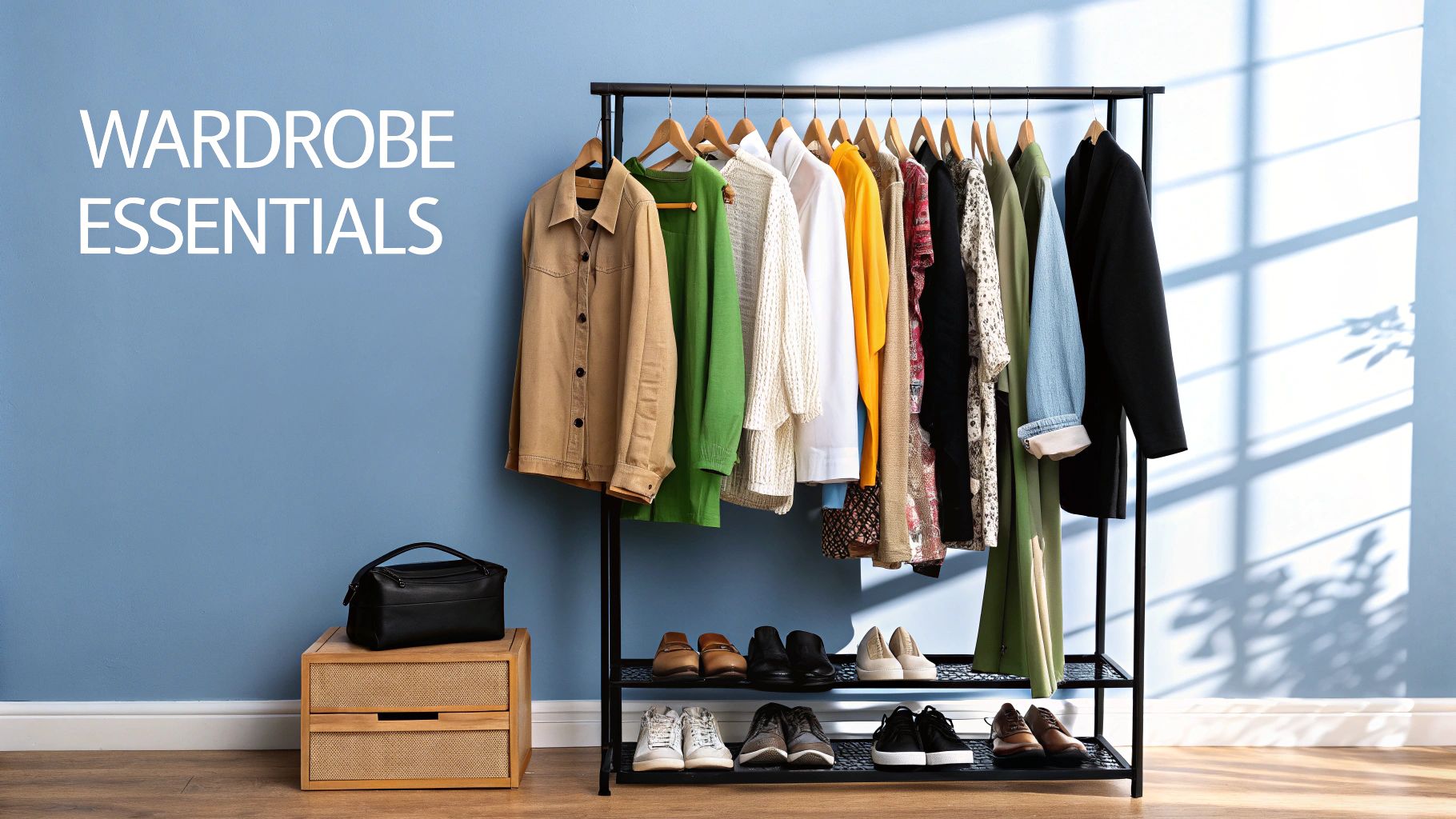
There's real power in owning fewer, better things. For most of us, a carefully chosen collection of around 30–40 versatile items—tops, bottoms, jackets, shoes, and a few key accessories—can easily handle 80–90% of our day-to-day needs. This just makes sense when you look at the data. Research consistently shows that we only wear a tiny fraction of our clothes, typically just 20–30% of what's in our closets.
When you focus on a core set of essentials, you immediately cut down on that morning decision fatigue. Every single piece has a purpose and works hard for you. This is the whole idea behind a capsule wardrobe, a concept we dive into deeper in our capsule wardrobe guide.
Tops are usually the first thing people notice, so it's a great place to start building. The secret is to anchor your collection with timeless styles in your best neutral colors—think black, white, grey, navy, or beige. These are the pieces you can layer, dress up, or dress down without a second thought.
Your list needs to be practical for your life. A graphic designer in a casual studio will get more mileage out of great-quality t-shirts and relaxed button-downs. A corporate lawyer, on the other hand, will need a solid base of silk blouses and shells to wear under blazers.
Think about these core categories for your tops:
The right pair of pants or a perfectly fitting skirt can instantly make you feel polished and confident. With bottoms, fit is everything. It's absolutely worth your time—and even a small investment in tailoring—to get it just right.
Let your daily routine be your guide. Are you always on the go and need comfort, or do you need more structured, professional pieces for the office?
Here’s where to focus:
Remember, the goal isn't to own one of everything. It's to own the right one of everything for your life. A perfectly tailored pair of black trousers you wear weekly is a better investment than five pairs of trendy jeans that sit in your closet.
Outerwear and shoes are the pieces that pull your look together while also serving a critical, practical purpose. These items often have the highest cost, but they also get the most wear, so choosing them wisely is key.
For outerwear, look for silhouettes that can work across multiple seasons and occasions.
When it comes to your shoes, always put comfort and versatility first.
By thoughtfully selecting pieces from each of these categories, you're doing more than just buying clothes—you're building a smart, stylish system that makes getting dressed a genuinely enjoyable part of your day.
Okay, let's get to the fun part: shopping. But we're not just buying stuff. Building a quality wardrobe is all about strategy, not a blank check. With your shopping list in hand from the closet audit, you can finally start filling those gaps with purpose.
Think of it less like a frantic shopping spree and more like a thoughtful curation. This isn't a race. It's the process of intentionally acquiring pieces you'll genuinely love and wear for years.
The trick is to prioritize. Look at your list and pinpoint the one or two "powerhouse" items that would make the biggest difference for you right now. For a lot of people, this is a truly versatile jacket, a great-fitting pair of non-distressed jeans, or maybe some classic leather sneakers. You know, the kind of things you can wear multiple times a week in a dozen different ways.
Zeroing in on these items first gives you an immediate return on your investment—more outfit options, a little confidence boost, and the motivation to keep going.
Having a budget and a priority list transforms shopping from a reactive habit into a proactive mission. Instead of grabbing things on a whim, you're now on the hunt for specific pieces that you know will elevate what you already own. That’s how you build a wardrobe that works.
Here are a few of my favorite ways to find quality pieces without overspending:
The most sustainable piece of clothing you can own is the one you wear over and over again. Investing in one high-quality, versatile piece you'll love for years is always a smarter move than buying five trendy items that fall apart.
This mindset is the perfect antidote to the modern churn of fast fashion. Consumer data shows that while people are buying way more clothing now than they did two decades ago, many of those low-cost items have a useful life of less than a year. In stark contrast, a well-made basic can easily last 3–5 years or more, which completely changes its cost-per-wear value.
Learning to tell the difference between quality and junk is a skill that will save you so much money and frustration. It doesn't matter if you're in a high-end boutique or a thrift store—the signs of good construction are universal. You have to look past the price tag and get into the details.
Before you even think about buying, give the item a quick quality check:
Once you know what to look for, you can make smarter choices no matter where you're shopping. If you're looking for brands that already hit that sweet spot, you might like our guide on the best quality affordable clothing brands that deliver great value. Building a wardrobe you love is totally possible on any budget—it just takes a little knowledge and a lot of intention.
Alright, so you’ve got the right pieces. That's a huge step, but it's only half the story. The real magic happens when you know how to combine those pieces into great outfits without a second thought. This is where you shift from just owning clothes to truly having a functional, stylish wardrobe.
We’ll wrap up by focusing on two crucial areas: creating some simple “outfit formulas” to kill the morning guesswork, and mastering the kind of long-term care that keeps your clothes looking fantastic. These are the final touches that make sure the wardrobe you’ve so carefully built actually works for you for years to come.
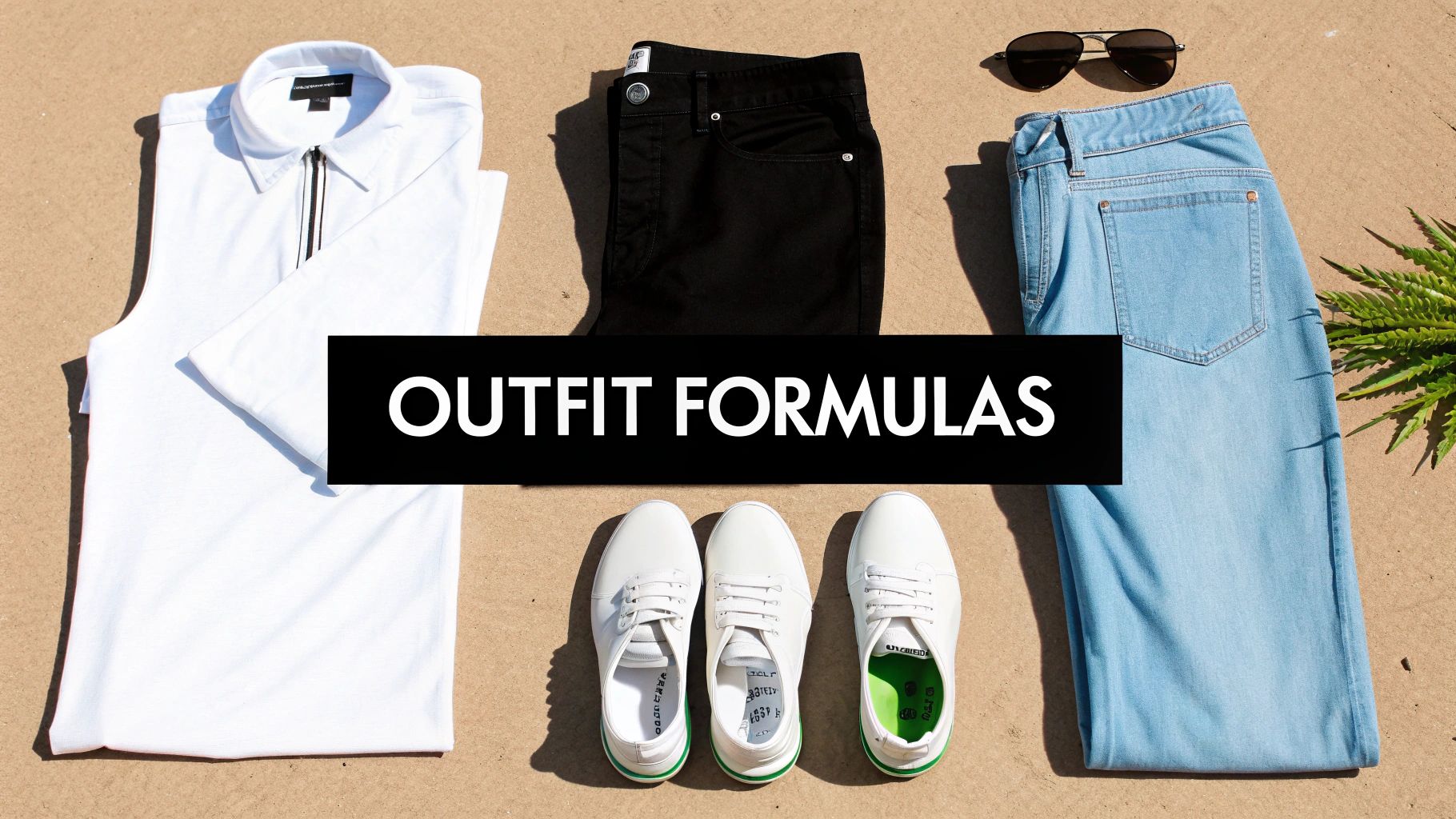
An outfit formula is just a simple, repeatable template for getting dressed. Forget about restrictive rules; this is all about creating reliable combinations you know look good, which you can then adapt with different pieces. It’s the ultimate cure for decision fatigue.
Think of it like a recipe. You have your base ingredients, and you can swap things in and out depending on your mood or the occasion.
Here are a few classic formulas to get you started:
Once you get comfortable with these basic structures, you can start riffing on them. That single pair of dark-wash jeans can anchor dozens of distinct looks once you start plugging in your different core tops, shoes, and outerwear. This is how a limited number of items can suddenly feel like an expansive, endless wardrobe.
You've spent your time and hard-earned money finding quality pieces, so now it’s time to protect that investment. Proper maintenance isn't just about cleaning; it’s about extending the life of your clothes, keeping their shape and color, and making sure they look sharp every single time you put them on.
Proper clothing care is the most overlooked aspect of personal style. A well-maintained $50 sweater will always look better than a poorly cared-for $500 one.
Start with one simple habit: actually read the care labels. They aren't just suggestions. The manufacturer knows the fabric and construction best, and they’re giving you the exact instructions to keep it from getting ruined.
You don't need a professional-grade laundry room to take great care of your clothes. Integrating a few simple habits into your routine will have a massive impact on the longevity of everything in your closet.
Wash and Dry Smarter
Store Everything Properly
These small practices are what ensure the foundation of your wardrobe stays in prime condition, saving you money in the long run and keeping you looking put-together for years.
Starting a wardrobe overhaul is a fantastic goal, but let's be real—it can bring up a lot of questions. It's easy to get stuck or lose steam. To keep you on track, I've gathered some of the most common questions I hear and answered them with some hard-won experience.
Building a wardrobe you genuinely love is a marathon, not a sprint. You can probably knock out the initial closet clean-out and style planning over a dedicated weekend. But finding the right pieces? That takes time.
Honestly, expect the process of sourcing your core items to take anywhere from a few months to a full year. This is especially true if you’re being mindful—waiting for the right sale, searching for a specific secondhand gem, or saving up for a quality piece.
Your wardrobe should evolve with you. It's not a race. A handful of thoughtful, well-chosen items added over a year will serve you infinitely better than a frantic shopping spree that just fills your closet with more "meh."
Shopping first. That's it. So many people get excited and jump straight to buying new things without doing the foundational work first.
They skip the closet audit and don't take the time to figure out what their style actually is. Instead, they buy clothes for a fantasy life or based on a trend that will be gone in six months. This is exactly how you end up with a closet full of clothes and that all-too-familiar feeling of having nothing to wear. Always, always start with what you have before you even think about adding something new.
This is such a common and completely valid challenge. The trick is to focus on pieces that are built to be flexible and forgiving.
Look for items that can adapt with your body, not work against it:
For more structured pieces like jeans, maybe just buy one or two affordable pairs that fit you perfectly right now instead of over-investing. A good tailor can also be your secret weapon, making tiny tweaks that make a huge difference in how you feel. The goal is to feel confident and comfortable today.
Not at all! A capsule wardrobe is just the foundation—it's not the whole house. The point is to create a reliable, mix-and-match base that takes the guesswork out of getting dressed. This actually frees you up to be more creative.
Think of your neutral basics as the canvas. You paint your personality on top of it with:
Your core pieces do the heavy lifting so your personality-filled items can really shine.
Ready to discover the pieces that will complete your new wardrobe? At FindTopTrends, we curate the best in stylish clothing, quality accessories, and everyday essentials to make your shopping journey simple and successful. Explore our collections today at https://findtoptrends.com and find exactly what you need to build a wardrobe you'll love.




