


No products in the cart.


Free Shipping Australia-Wide

5 star customer service

Quality Tested Products

A good balloon pump is one that matches both the balloon type you are using and the size of the job, not just the one with the lowest price tag. Blowing up balloons by mouth works fine for a dozen or so, but once you hit 50 or more for a party or shop display, you are looking at sore cheeks, light-headedness, and a good hour of your afternoon gone. Hand-inflating also makes it hard to get even sizing across a batch, which shows up fast in garlands and balloon arches where consistency matters.
Different jobs call for different pumps. Twisting balloons for animal shapes need a narrow nozzle and gentle, controlled airflow so the latex does not pop mid-twist, while standard latex rounds for garlands or bunches need something that can push out a lot of air fast without wearing your arm out. A pump built for fine work on twisting balloons will feel too slow for filling 100 round balloons before a wedding, and a high-volume pump can easily overinflate a long thin balloon meant for shaping dogs or swords.
Three main pump styles cover almost every party job in Australia right now: manual hand pumps, electric pumps, and dual-action pumps. Each one trades off speed, cost, and control differently, so the right pick depends on what you are inflating and how many you need done.
| Pump type | Best for | Speed | Typical cost |
|---|---|---|---|
| Manual hand pump | Twisting balloons, small batches | Slow, one at a time | Low, often under $10 |
| Electric pump | Garlands, arches, bulk rounds | Dozens per minute | Mid to high |
| Dual-action pump | Medium batches without power | Fast, no motor needed | Mid range |
Manual hand pumps suit anyone doing small jobs by hand, including twisting balloons into animals or flowers, since the nozzle lets you control airflow precisely. They are cheap, fit in a party bag, and need no power source, which matters for outdoor events or pet birthday parties held in the backyard.
Electric pumps are built for volume, pushing out enough air to fill dozens of round balloons in minutes rather than the hour hand-inflating can take. Wedding coordinators and small business owners setting up arches or garlands rely on these for consistent sizing across a large batch.
Dual-action pumps inflate on both the push and the pull stroke, so you get speed without plugging anything in. They sit between the other two options, useful for homemakers or event planners doing medium-sized jobs where an outlet is not handy, as explained in this comparison of balloon pumps for businesses.
A manual hand pump with a narrow nozzle is the right choice for twisting balloons, because wide latex nozzles made for round balloons tend to tear the thin walls of long balloons. Look for a nozzle under 2cm so it fits snugly into the neck without stretching it out of shape. A loose fit lets air escape mid-twist, which means more wasted balloons and more trips back to the packet.
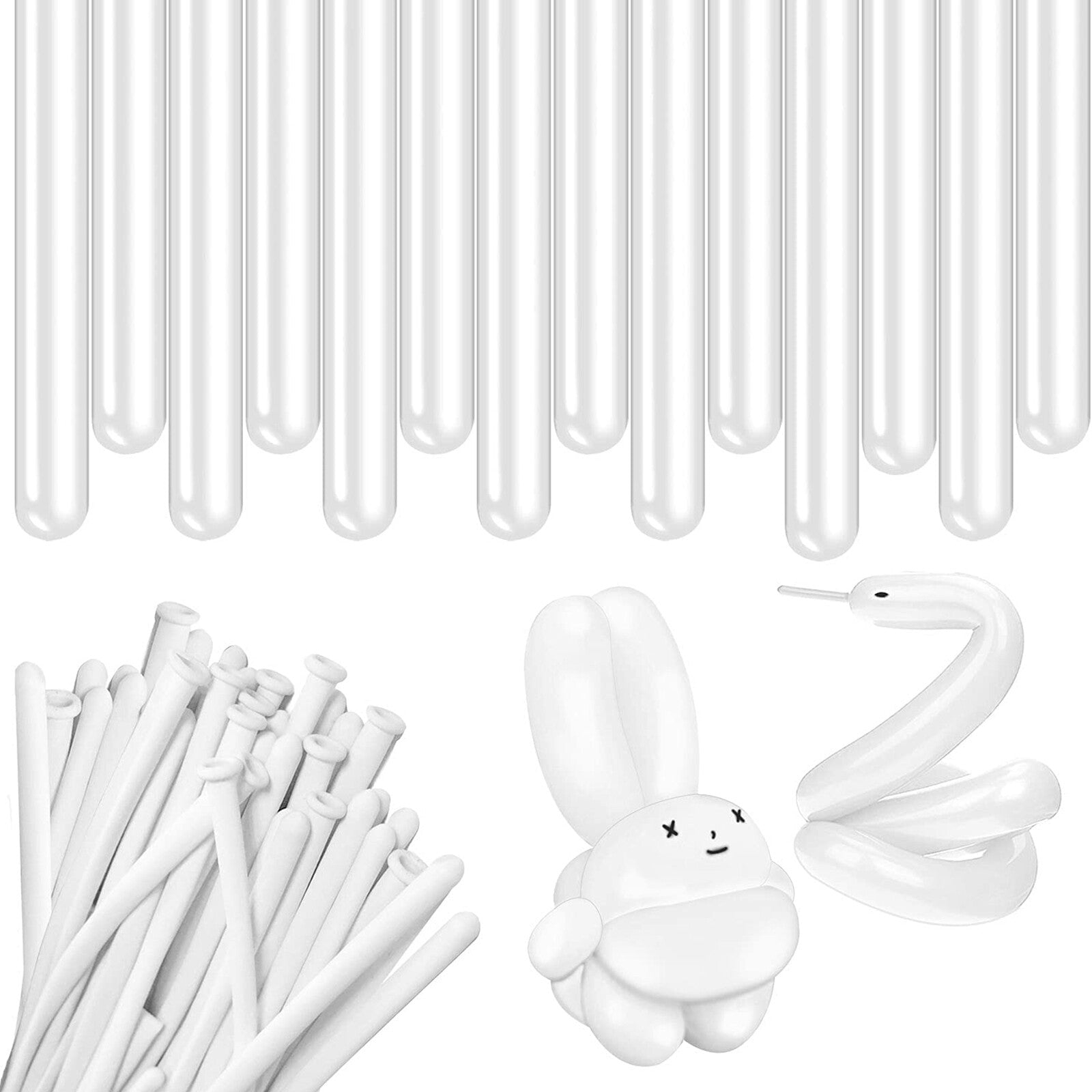
300PCS Long Twisting Balloons Latex Modelling Balloons for Animal Party Decorations
Pair a hand pump like this with the 300PCS Long Twisting Balloons for animal party bookings, magic shows, or a school fete stall, since the slow controlled airflow gives you time to leave the tip soft for twisting. That soft tip is what stops the first twist from popping the whole balloon. For pet birthday parties or backyard magic tricks, this combo needs no power point and no setup beyond a chair and a bag of balloons.
Pros: cheap, quiet, fits in a party bag, works anywhere. Cons: one balloon at a time, so a birthday party with 40 kids waiting for dogs and giraffes will take longer than an electric pump would.
Electric pumps are built for volume jobs like garlands and arches, where you need the same size balloon repeated dozens of times. A decent electric pump fills 50 to 100 balloons in a few minutes, which turns a job that would take an hour of hand-inflating into something you can finish before the venue opens.
Dual nozzle models let two people work the same pump at once, cutting setup time roughly in half for a wedding coordinator or event planner racing a tight bump-in window. Battery-powered electric pumps matter for outdoor weddings, farmers markets, or marquee setups where there is no power point nearby. Price sits roughly between 40 and 120 AUD depending on motor strength, so a stronger motor costs more but saves more time on a 10-metre garland.
Small business owners doing weekly balloon decor jobs usually recoup the cost of an electric pump within a few bookings, since it frees up staff hours that would otherwise go into hand-inflating.
Make it a celebration
From balloons and decorations to costumes and party lights, discover everything you need to bring the fun together for your next celebration.
Dual-action pumps push air in on both the push and pull stroke, which roughly doubles the speed of a standard single-action hand pump. This makes them a solid middle option for a homemaker or parent who needs 20 to 40 balloons for a birthday party but does not want to buy an electric unit for occasional use.
A stable base or foot strap matters on tiled or timber floors, since the pump can slide forward on the downstroke and waste half your effort. Some models come with a bracket that bolts to a board, which is worth the extra few dollars if you are setting up on a slippery kitchen floor.
For a one-off birthday party with 30 balloons, a dual-action pump gets the job done in well under half the time a single-action hand pump would take, without the cost of an electric model sitting unused in a cupboard afterwards.
Nozzle size has to match balloon neck width, or you risk tearing the latex or leaving a gap that leaks air during setup. Twisting balloons need a slim nozzle under 2cm, standard round latex balloons need a wider nozzle to fill the larger neck quickly, and foil balloons usually need a one-way valve nozzle rather than a standard pump nozzle at all.
Checking nozzle diameter against the balloon neck before buying saves wasted stock, since a nozzle that is too wide can stretch and split the opening before you even start pumping. This matters most with bulk packs, where a single wrong nozzle can ruin a dozen balloons before you notice the pattern.
| Balloon type | Recommended nozzle width | Pump style |
|---|---|---|
| Twisting balloons | Under 2cm | Manual hand pump |
| Standard round latex | 2.5cm to 3.5cm | Electric or dual-action |
| Large latex rounds (45cm plus) | 3.5cm to 4.5cm | Electric pump |
| Foil balloons | One-way valve, no pump nozzle | Hand or straw inflation |
How often you throw a party matters more than the sticker price when picking between a manual and an electric pump. A manual pump costing 10 to 20 AUD covers an occasional home party with under 30 balloons, since the extra few minutes of pumping does not matter when you are only doing it four or five times a year.
An electric pump pays for itself fast once bookings become weekly work rather than a once-off. A small business filling balloons every week recovers the higher purchase price within a handful of jobs, because the time saved on staff hours adds up quickly across repeat bookings.
The time difference per 100 balloons is the clearest way to judge the gap: roughly 40 minutes by manual pump against roughly 8 minutes by electric pump, a figure confirmed in this review of electric balloon pumps. That 32-minute difference only matters if you are filling 100 or more balloons on a regular basis.
| Situation | Right pump | Time per 100 balloons |
|---|---|---|
| Occasional home party, under 30 balloons | Manual pump, 10-20 AUD | Around 40 minutes |
| Weekly small business bookings | Electric pump, 40-120 AUD | Around 8 minutes |
| Twisting balloon animals only | Manual pump with narrow nozzle | Not relevant, one at a time by design |
Spending more on an electric pump makes no sense if twisting balloon animals is all you ever do. The narrow nozzle and controlled airflow a manual pump gives is exactly what shaping needs, and an electric motor pushes air too fast for that kind of fine work anyway.
Pick the pump by looking at what's in your shopping cart, not the other way round. Booked for animal shapes at a kid's birthday or a market stall? Grab a manual pump with a narrow nozzle. Setting up a garland or arch for a wedding, or filling bulk orders every week? Go electric. If you're stocking up for twisting work, order the pump alongside the 300PCS Long Twisting Balloons from letsparty.com.au, since a mismatched nozzle on bulk stock wastes money before you've twisted a single dog or flower. Check the nozzle width against your balloon packet at checkout, not after it arrives.
No single pump does both jobs well. A narrow nozzle for twisting balloons will take forever on round latex balloons, and a wide electric nozzle will split or overstretch a long thin twisting balloon. Most people who do both jobs regularly, like a party entertainer who also sets up arches, keep a cheap manual pump for shapes and an electric or dual-action pump for bulk rounds.
An electric pump will keep pushing air until you release the trigger or the balloon pops, so walking away mid-fill risks a burst balloon and a startled toddler nearby. Most models need your hand on the trigger the whole time, which forces you to stay close. Keep a spare balloon on hand for the odd one that pops, since even careful operators lose a few per hundred.
A decent manual hand pump should get through several hundred uses before the seal or plastic hinge starts to fail, which covers years of occasional birthday parties for most homemakers. Heavy weekly use, like a small business doing balloon decor every weekend, wears the seal faster and may need a replacement within a year. Rinsing out dust and grit after outdoor jobs extends the life of the seal.
Hand and electric pumps built for air do not work with helium, since helium needs a proper regulator and tank setup to control flow and pressure safely. Air pumps are for latex shapes like the 300PCS Long Twisting Balloons and standard rounds, not helium-filled balloons meant to float. For floating balloons, a helium tank hire or a pre-filled service is the usual route for parties and weddings.




