


No products in the cart.


Free Shipping Australia-Wide

5 star customer service

Quality Tested Products

Picking the right bike isn't about the flashiest features or the biggest price tag. It all comes down to a single, fundamental question: where are you actually going to ride it? Answering that honestly is the first and most important step. It’s the difference between buying a bike you love and one that ends up just taking up space.
Before we dive into the nitty-gritty of gearsets and frame materials, let's take a step back. I want you to really think about what your riding will look like. Are you picturing yourself zipping through traffic on your way to work? Maybe you're dreaming of long, peaceful rides on country roads, or perhaps the thrill of a dusty, technical trail is calling your name.
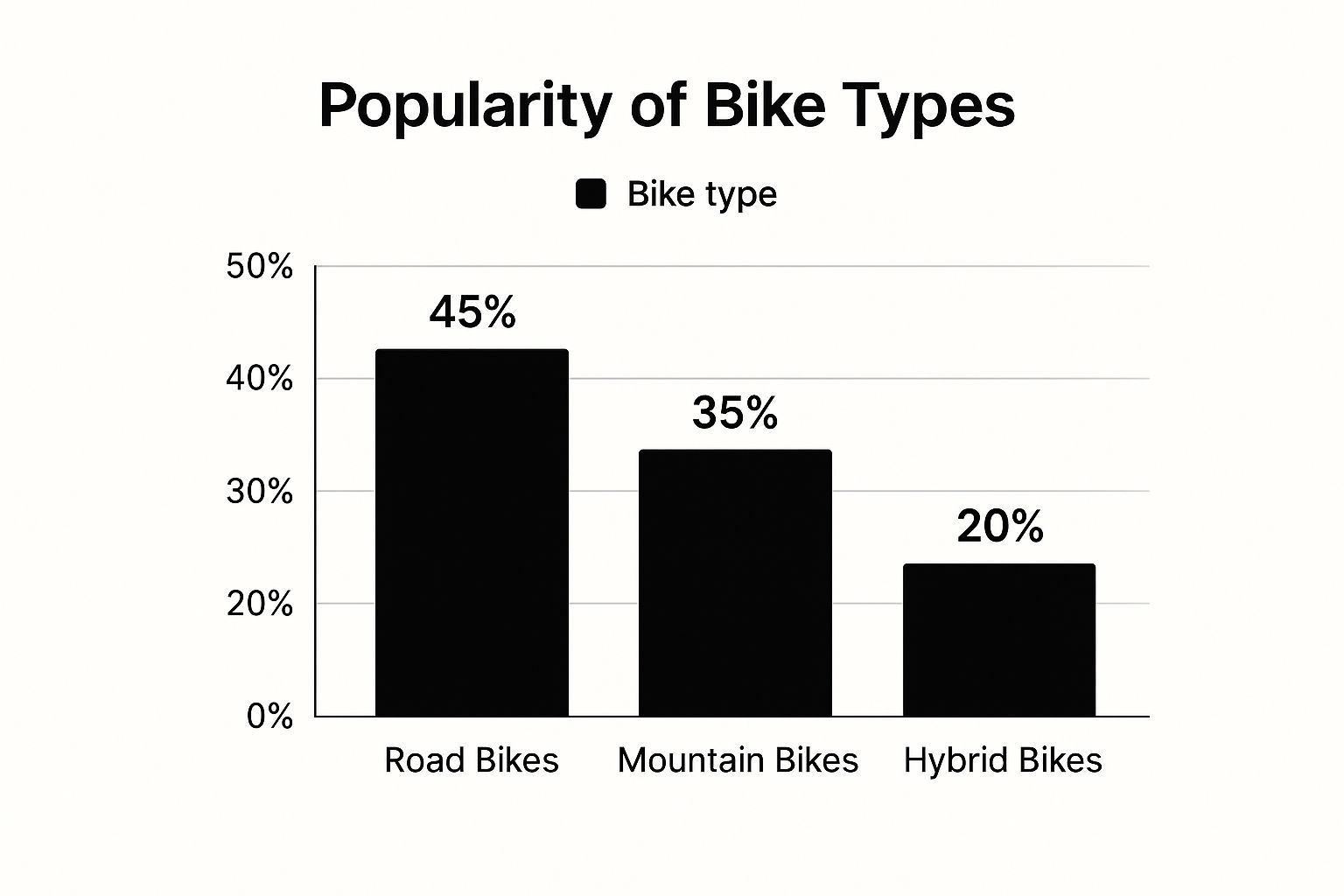
It’s incredibly common for new riders to get seduced by a super-light road bike, only to find it's a nightmare on their pothole-filled commute. Being realistic about your primary use case will save you a lot of frustration—and money—down the line.
Let's get practical. Pinpointing your bike's main job will instantly narrow down the overwhelming number of options out there.
Sometimes, your specific needs go beyond just terrain. For riders dealing with physical limitations, finding exercise bikes tailored for specific needs can be a great indoor alternative. And if you're helping a little one start their cycling journey, our guide on the best bicycle for kids 3 to 5 years has you covered.
To make it even clearer, I've put together a quick comparison table to help you visualize which bike type fits which lifestyle.
| Bike Type | Best For | Typical Terrain | Rider Profile |
|---|---|---|---|
| Road Bike | Speed, fitness, long distances | Paved roads, smooth paths | Performance-focused rider, cyclist who enjoys long weekend rides |
| Mountain Bike | Trail riding, rugged adventures | Dirt trails, gravel, rocky paths | Thrill-seeker, nature enthusiast, someone riding on unpaved surfaces |
| Hybrid Bike | Versatility, commuting, fitness | Paved roads, bike paths, light trails | Practical commuter, recreational rider wanting one bike for multiple uses |
| Cruiser Bike | Casual rides, comfort, style | Flat paths, boardwalks, neighborhoods | Relaxed rider prioritizing comfort and a leisurely pace over speed |
Looking at it this way, you can quickly see how a bike designed for one purpose might not be the best fit for another. Choosing the right category is your first major win in finding the perfect bike.
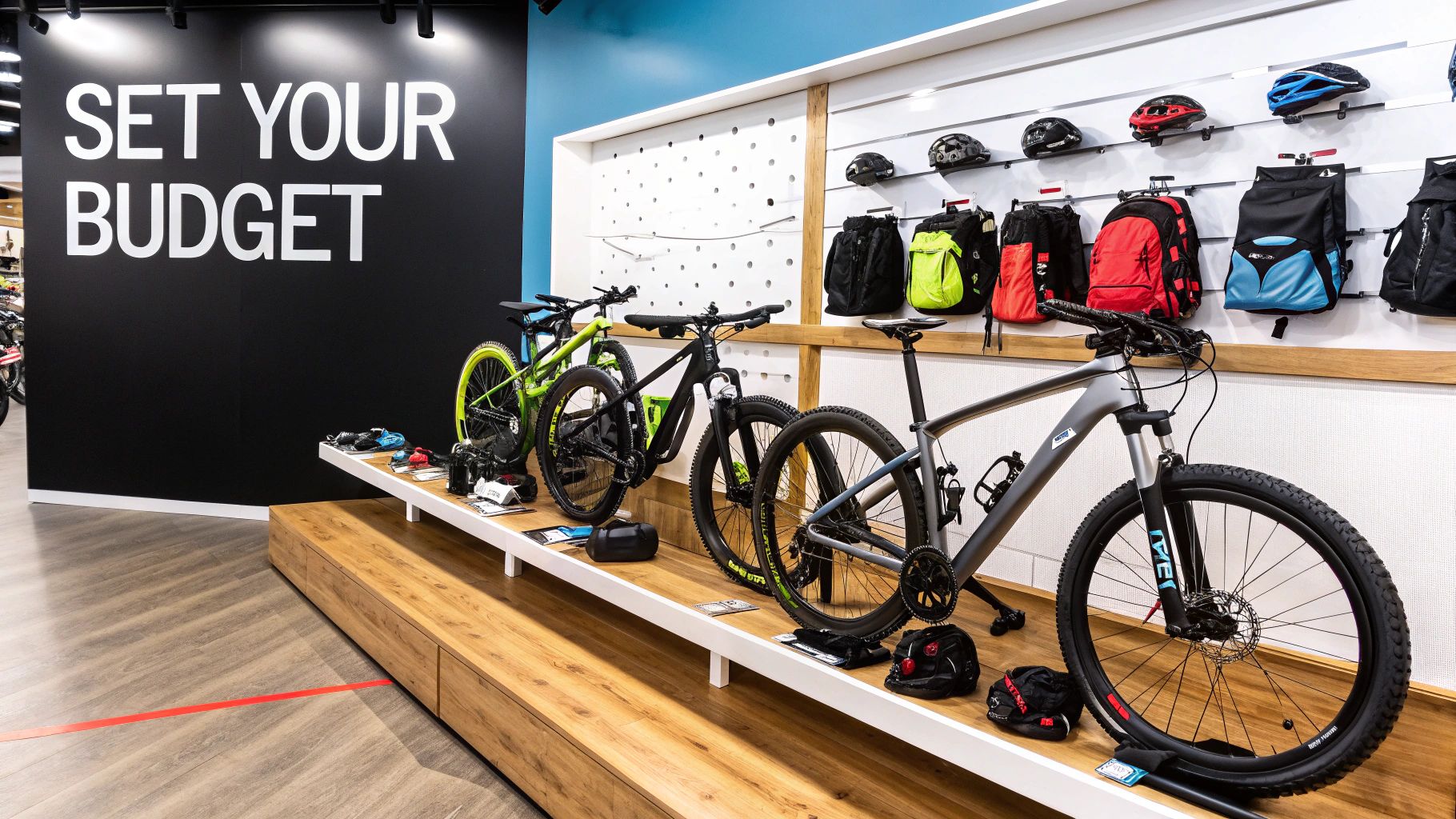
Alright, let's talk about money. It’s often the trickiest part of choosing your first bike. You'll see prices all over the map, from a few hundred bucks to amounts that could buy a decent used car, and it's easy to get lost. So let me be straight with you: you absolutely do not need a top-of-the-line, multi-thousand-dollar machine to fall in love with cycling.
That said, your budget is going to directly influence the quality of what you get. We're talking about the frame's weight, how smoothly the gears shift, and how well the whole bike holds up over time. A bargain-bin bike might look tempting, but I’ve seen it a hundred times—it often means a heavy, clunky ride and more time spent in the repair shop than on the road.
For a new bike that's genuinely reliable and fun to ride, I usually tell people to aim for a budget somewhere between $600 and $1,200. In this sweet spot, you're getting a quality lightweight frame and solid, dependable components that won't give you headaches. As you start spending more, you're paying for things like exotic materials, super-precise engineering, and fancier features.
A word of wisdom from my own experience: The price on the bike's tag is never your final cost. So many first-time buyers get tunnel vision on the bike itself and completely forget about the essential gear. This is where hidden costs can really sneak up on you.
Think of it less as a "bike budget" and more as your total "cycling budget." The bike is the main event, but it's not the whole show. To be truly ready to roll safely from day one, you have to account for the accessories.
Here’s the non-negotiable gear you'll need right away:
These essential items can easily tack on another $150 or more to your total investment. By planning for these costs from the very beginning, you can walk out of the shop with a complete, ride-ready setup without any surprise charges at the register. It’s the best way to ensure you get both the bike and the gear you need, all within a budget that feels comfortable.
Let me share a hard truth I've learned from countless hours in the saddle and helping others find their perfect ride: an expensive bike that fits you poorly is a hundred times worse than an affordable one that fits like a glove. A bad fit is, hands down, the biggest reason people give up on cycling. It's not just about feeling a little awkward at first—it’s a surefire recipe for nagging pain in your back, neck, and knees down the road.
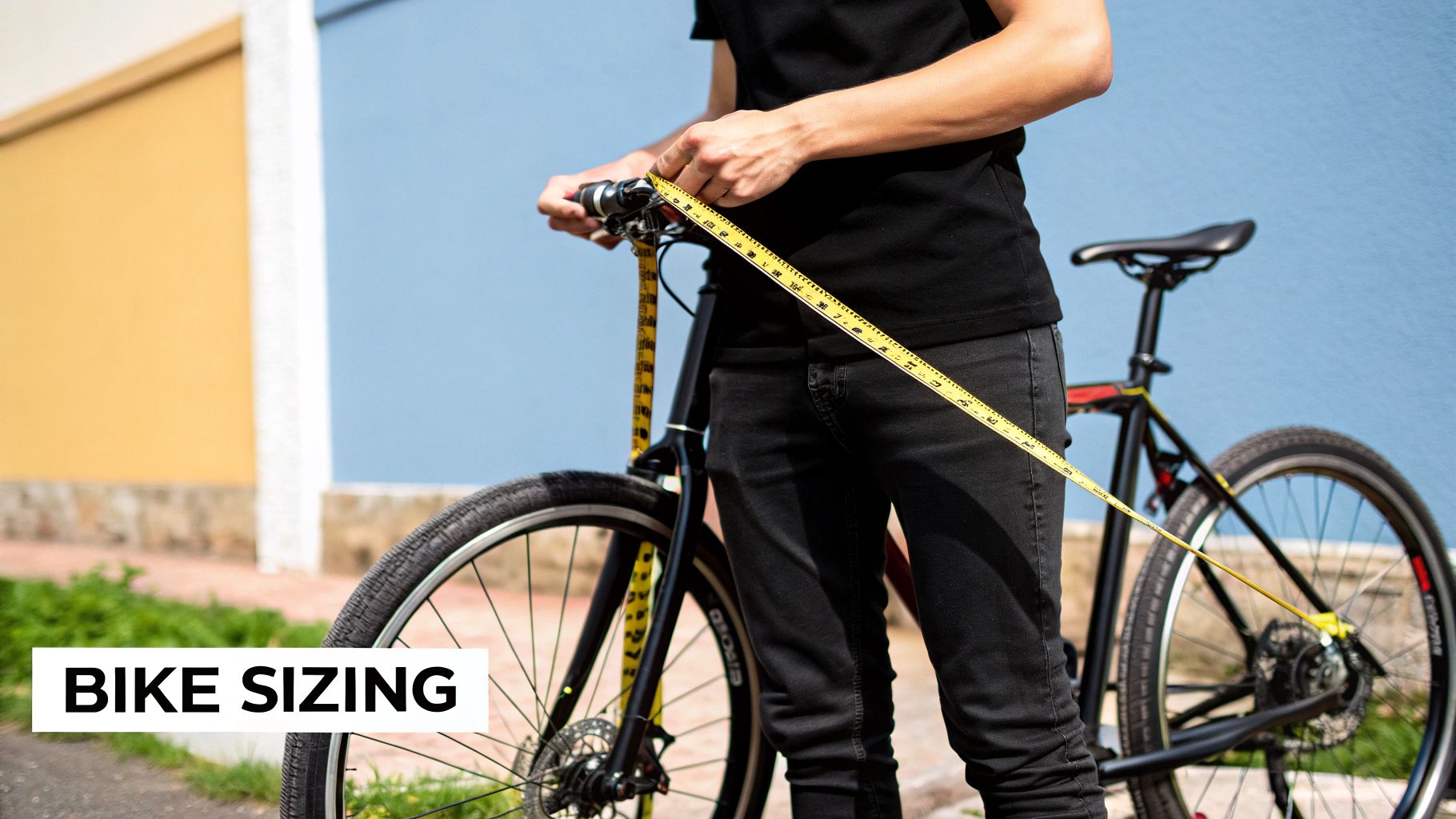
When you’re first figuring out how to choose a bike, it’s easy to get bogged down in a sea of size charts. But a good fit is so much more than a number stamped on a frame. It’s about the dynamic relationship between your body and the bike. You'll often hear two terms thrown around: standover height and reach.
Getting a rough measurement at home is a decent starting point, but it's far from the whole story. These basic numbers don't account for your specific body proportions, your flexibility, or how you'll actually feel on a real ride.
This is precisely why a trip to your local bike shop is worth its weight in gold. A professional bike fitting isn't some exclusive service for pro racers; it’s one of the smartest investments any new cyclist can make.
Investing in a professional bike fit can be the difference between a bike that gathers dust and one that becomes your favorite way to spend an afternoon. It’s the expert touch that ensures every ride is comfortable, efficient, and pain-free.
During a proper fitting, an expert will put you on a stationary trainer and watch how you pedal. They’ll adjust the saddle height, move it forwards or backwards, and dial in the handlebar position. They're looking for things like optimal knee bend and a relaxed, sustainable posture, making tiny tweaks that make a massive difference. This hands-on process catches issues you wouldn’t even notice until you're miles from home, giving you the confidence that your bike is truly working with your body, not against it.
Gears, brakes, and frame materials can feel like a totally different language, but you don't need to be a seasoned mechanic to grasp the essentials. Honestly, getting a handle on this stuff is what separates a good bike purchase from a great one. It helps you see past the marketing and understand what actually impacts your ride.
Think of the components—what we often call the groupset—as the bike’s engine and transmission. This is everything that makes you go and stop: the shifters, gears, and brakes. Big names like Shimano and SRAM have a clear hierarchy, from basic, entry-level parts to the high-end stuff you see on pro bikes.
As you move up that ladder, you’re not just paying for a fancy name. You're paying for tangible improvements. You’ll feel it in crisper, more reliable gear changes and brakes that bite with more power and control. For an everyday cyclist, that means less time fighting a clunky, noisy chain and more confidence when you need to stop on a dime.
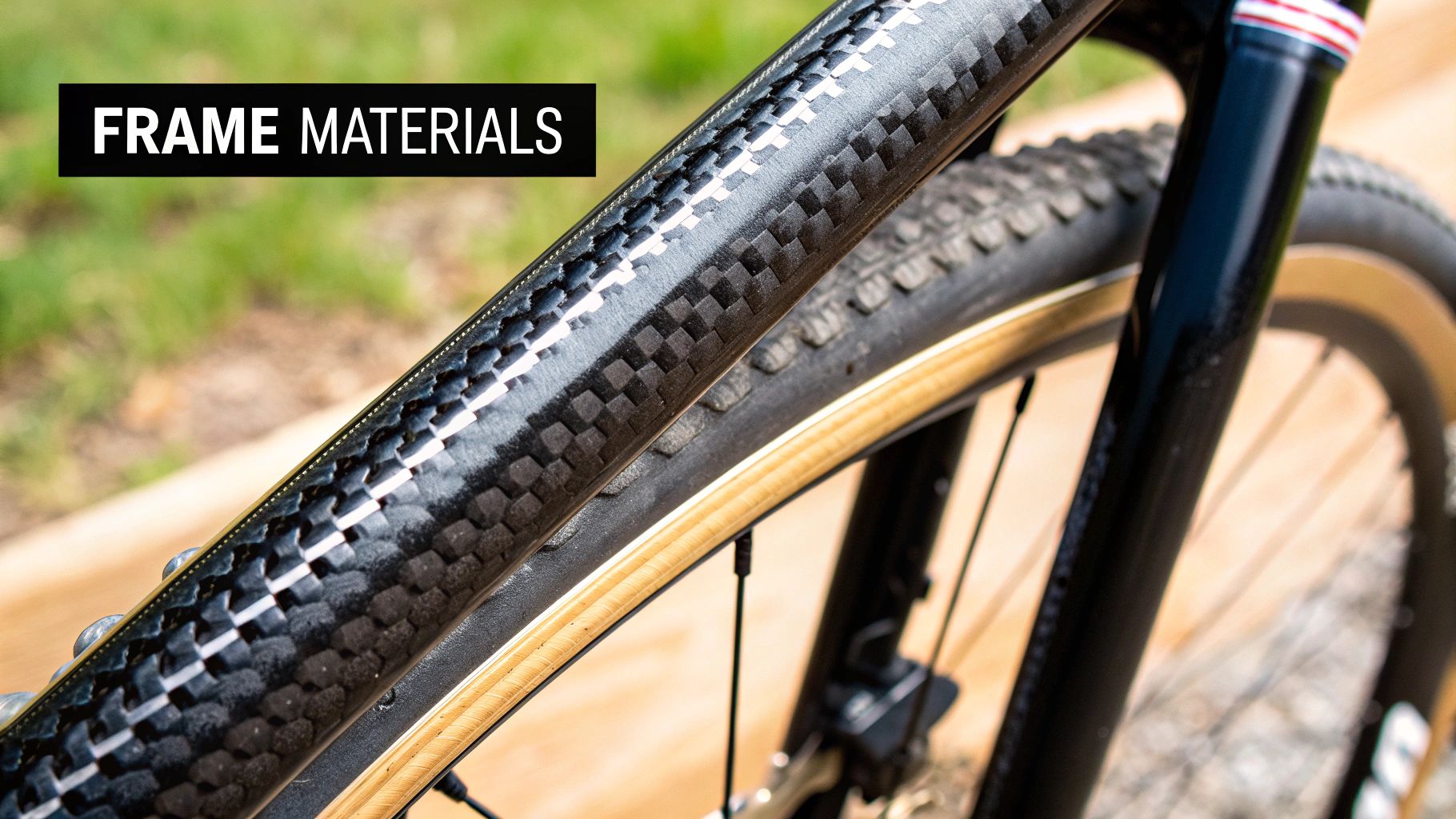
The frame is the heart and soul of your bike. Its material defines the bike's personality—its weight, how comfortable it feels on the road, and, of course, its price tag. Each one delivers a unique ride.
The real choice here comes down to your priorities. Are you trying to stick to a tight budget, find the most comfortable ride for long days, or just go as fast as humanly possible? Your answer will point you straight to the right frame.
This push for lighter, stronger materials is a huge reason the cycling industry is booming. The global bicycle market was valued at around USD 77 billion in 2024 and is projected to hit USD 135 billion by 2030, all thanks to people wanting better-performing and more user-friendly bikes. You can explore the full bicycle market forecast to see where things are headed.
Knowing these basics helps you look at a bike’s spec sheet and understand what all those numbers and names actually mean for your ride.
https://www.youtube.com/embed/02xGizWgwng
You can read all the reviews and compare spec sheets until your eyes glaze over, but none of it compares to actually throwing a leg over the bike and taking it for a spin. This is where the rubber meets the road—literally. The test ride is your single best opportunity to see if a bike is truly the right one for you.
A proper test ride isn't just a wobbly lap around the shop's parking lot. Think of it as a focused evaluation. How does the bike feel? Is the handling sharp and zippy, or is it more laid-back and stable? When you get out of the saddle to climb a small incline, how does it respond?
Before you even start pedaling, have a game plan. You want to mimic the kind of riding you'll actually be doing.
You can fall in love with a bike on paper, but a quick 10-minute ride can uncover a major dealbreaker. Pay attention to your body. Is your back comfortable? Do you feel too stretched out or cramped? That immediate feedback is gold and can save you from a world of buyer's remorse.
If your cycling plans are more focused on indoor fitness, our guide to the 13 best exercise bikes of 2024 offers expert-tested recommendations.
It’s also interesting to see how global trends shape bike availability. The Asia Pacific region, for example, accounts for roughly 31% of the entire global bicycle market. This is largely thanks to huge investments in cycling infrastructure in places like China and Singapore, which makes commuter-style bikes incredibly popular and practical choices there. You can dig deeper into these bicycle market insights on PrecedenceResearch.com.
Even after doing all your homework, a few questions always seem to surface right as you’re about to pull the trigger. It’s completely normal. Let’s clear up some of those last-minute uncertainties so you can buy with confidence.
I get it—the prices online can be tempting, and the selection seems endless. But buying a bike from a website means you’re on your own. You miss out on the incredible value that a good local bike shop (LBS) brings to the table.
Think of it this way: at an LBS, you get professional assembly (which is a bigger deal than you might think), a personalized fitting from someone who knows what they're doing, and a go-to place for tune-ups and advice. For your first serious bike, that hands-on service is easily worth the small premium you might pay. It’s peace of mind, knowing your bike is safe and set up just for you.
The best bike is the one that fits your body, regardless of labels. A great fit is a great fit, period. Always test ride different models to see which one feels the most natural and comfortable for you.
This one comes up a lot. A hybrid bike is your jack-of-all-trades. It borrows the efficient feel of a road bike but gives you the more comfortable, upright posture of a mountain bike. It's the perfect choice for commuting, getting in some fitness laps, or just exploring paved trails.
A cruiser bike, however, is all about laid-back style and pure comfort. Picture wide, sweeping handlebars, a big cushy seat, and a relaxed frame. Cruisers are built for leisurely rides along the boardwalk or through the neighborhood—speed isn't the goal, a comfortable, stylish ride is.
If fitness is a big part of your goal, especially for days you can't get outside, the best exercise bike to lose weight could be a great tool to have in your corner, too.
For a first bike that’s going to be reliable, fun to ride, and last you for years, a realistic budget is somewhere between $600 and $1,200.
This price point is the sweet spot. You're paying for a quality, lightweight frame and dependable components that won't let you down. Dip below that range, and you often start seeing much heavier frames and parts that wear out quickly, leading to a frustrating experience and more trips to the shop.
At FindTopTrends, we're dedicated to helping you discover products that fit your lifestyle perfectly. Explore our curated collections to find everything from tech gadgets to outdoor gear, all designed to keep you ahead of the curve. Visit us at https://findtoptrends.com to see what's trending now.




