


No products in the cart.


Free Shipping Australia-Wide

5 star customer service

Quality Tested Products

Let's be honest, that frantic 5 PM "what's for dinner?" scramble feels universal. For busy families, it’s a daily dose of chaos we could all do without. This isn't about adding another complicated chore to your list; it’s about putting a smart system in place to take back your evenings, save some serious cash, and dial down the daily stress.
A little bit of planning upfront can completely change the tone of your weeknights, turning that rush into relaxed, quality time around the table.
That daily dinner dilemma? It’s not just about food. It's the moment when decision fatigue from a long day of work, school pickups, and a million other tasks finally hits its peak. What I want to show you is a practical way to meal plan that actually fits into your packed schedule, rather than making it worse.
This is all about building a sustainable routine that puts you back in control—of your time, your budget, and what your family is eating.
Once you get into the groove of planning your meals, the benefits show up in ways you might not expect. It goes way beyond just knowing what you’ll eat on Tuesday. You'll feel the impact on your bank account, your stress levels, and your family's overall well-being.
The core idea couldn't be simpler: invest an hour or so once a week to save yourself a ton of time and mental energy every single day.
Here’s what you can look forward to:
The ripple effects of this simple habit go deep, right into the heart of your family life. With everyone's schedules pulling in different directions, sitting down for a meal together is more important than ever.
A huge meta-analysis covering 43 countries found something pretty startling: only 49.12% of kids and teens eat daily meals with their families. That means more than half are missing out on this crucial connection point. And we know from decades of research that regular family dinners—even just a few times a week—are tied to better health, stronger emotional well-being, and even better grades for kids. If you're curious, you can read the full research on family meal prevalence for a deeper look.
Meal planning isn't about becoming a gourmet chef overnight. It's about creating a simple, repeatable system that consistently brings your family together, turning chaos into connection.
Before we dive into the nitty-gritty, let's look at the big picture. This table breaks down exactly how a little planning makes a huge difference.
| Benefit Area | How Meal Planning Helps | Real-World Outcome |
|---|---|---|
| Financial | Creates a focused shopping list, reducing impulse buys and food waste. | You stick to your budget and save an average of $100-$200 per month on groceries and takeout. |
| Time Management | Eliminates daily decision-making and last-minute store runs. | You gain back 3-5 hours per week that were previously lost to dinner-time stress. |
| Health & Nutrition | Enables intentional choices for balanced, home-cooked meals. | Your family eats fewer processed foods and more whole foods, improving overall nutrition. |
| Mental Well-being | Removes a major source of daily stress and decision fatigue. | Weeknights feel calmer and more predictable, reducing parental burnout. |
| Family Connection | Prioritizes and facilitates regular shared mealtimes. | You create a consistent opportunity for conversation and bonding, strengthening family ties. |
As you can see, the payoff is huge. This guide will walk you through a simple, four-part system that I've seen work time and time again: planning, shopping, prepping, and finally, enjoying the fruits of your labor. Forget those overly complicated charts and apps—this is about building a real-world habit that sticks.
Let's be honest: creating a family meal plan shouldn't feel like a second job. The real goal is to get into a simple, repeatable rhythm that takes you from a jumble of ideas to an organized week in about 30 minutes. Forget spending your Sunday afternoon buried in cookbooks. This is all about a quick, strategic huddle that sets your week up for success.
This whole process is about shifting from being reactive to proactive. Instead of the dreaded 5 PM question, "What's for dinner?", you'll already have the answer and, better yet, all the ingredients ready to go. The trick is to build a system that actually fits your life, not the other way around.
When you get this right, the benefits are huge. We're talking less stress, more money in your pocket, and getting precious time back in your day.
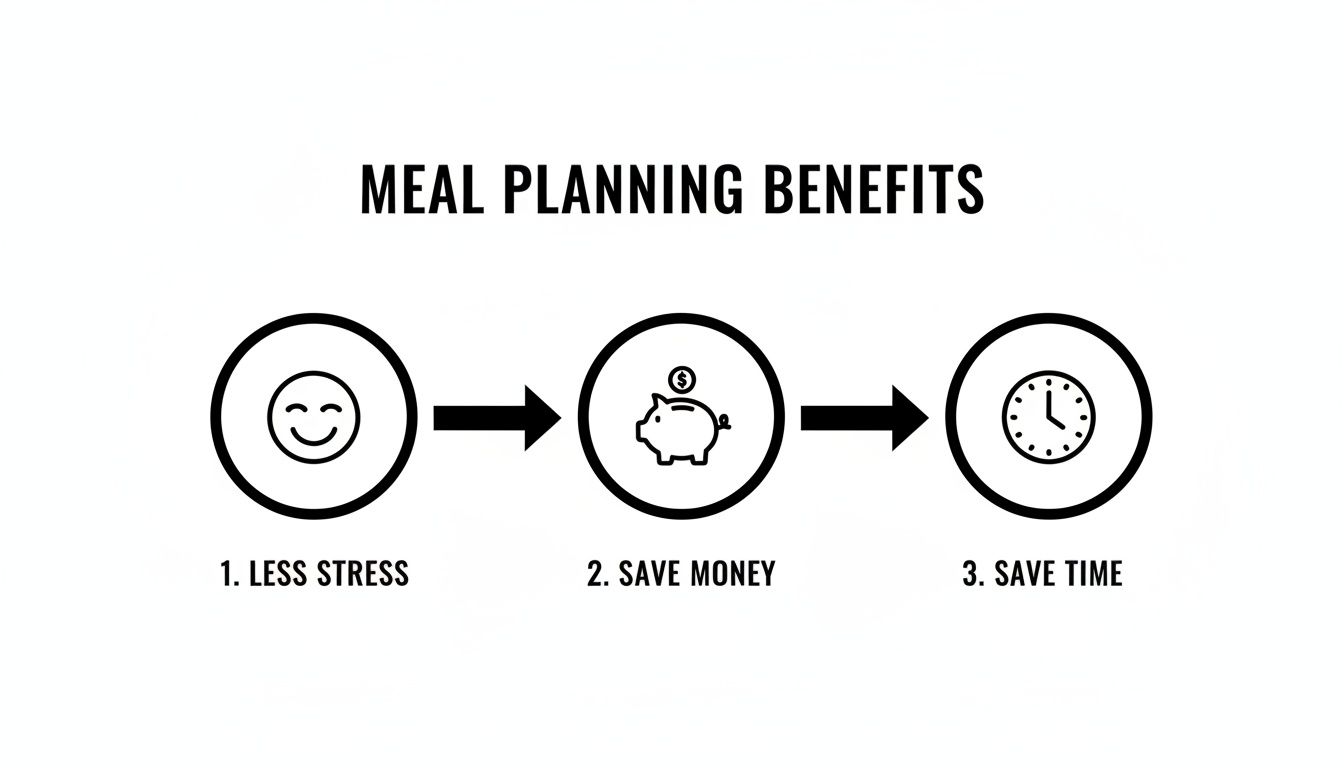
As you can see, each benefit builds on the last, creating a powerful cycle that genuinely simplifies daily life. Now, let’s get into the nitty-gritty of how to build this system for yourself.
Before you even think about specific recipes, grab your family's calendar for the week ahead. Get a clear picture of what's happening. Note the late work nights, the evening soccer practices, and any other commitments that will squeeze your dinner time. This simple step is a game-changer because it helps you match the right meal to the right night—think a 15-minute skillet dinner for a chaotic Tuesday and that more involved lasagna recipe for a laid-back Sunday.
Next up, do a quick "pantry audit." Seriously, just take five minutes to scan your refrigerator, freezer, and cupboards. What needs to be used up soon? Maybe you've got a lonely bag of frozen broccoli, half a box of pasta, or some chicken thighs hiding in the freezer.
Jot these items down. This isn't just about cutting down on food waste; it’s a direct line to saving money by planning meals around ingredients you already own. There's no point in buying more ground beef if you already have a pound in the freezer.
One of the biggest hurdles in meal planning for busy families is staring at a blank page and feeling overwhelmed by infinite choices. A brilliant way to get around this is to lean on theme nights. The strategy is simple: assign a type of food or cooking style to each day. This drastically narrows down your options and makes the whole planning process so much faster.
Your themes should be things your family actually gets excited about. Here are a few popular ideas to get your wheels turning:
By setting simple themes, you completely eliminate the "what on earth should I make?" paralysis. Instead of staring at a blank slate, you're just filling in the blank for "Pasta Night," which is a much easier and faster decision to make.
Once your themes are in place, you can simply rotate specific recipes. For "Pasta Wednesday," one week might be spaghetti and meatballs, the next could be chicken alfredo, and the week after, a simple baked ziti. This creates a predictable structure that still offers plenty of variety.
With your weekly meals all mapped out, the final piece of the puzzle is your shopping list. This is where you turn your plan into reality. A disorganized, scribbled list leads to wandering aimlessly through the aisles, grabbing impulse buys, and—the worst—forgetting a key ingredient.
The solution is a Master Grocery List that's organized by your grocery store's layout. Most stores follow a similar flow: produce, bakery, meat/deli, dairy, and then the center aisles for pantry staples and frozen foods. Grouping your list items into these categories is a total game-changer.
For example, your list might look something like this:
| Category | Items |
|---|---|
| Produce | Onions, garlic, bell peppers, broccoli, lettuce, bananas |
| Meat & Deli | Ground beef (1 lb), chicken breasts (2 lbs), sliced turkey |
| Dairy & Eggs | Milk, shredded cheddar, yogurt, eggs |
| Pantry/Aisles | Pasta sauce, black beans, rice, bread |
| Frozen | Frozen corn, pizza dough |
This one organizational trick transforms your shopping trip from a chaotic chore into an efficient, in-and-out mission. You’ll move through the store in a logical path without any backtracking, which saves a ton of time and helps you steer clear of those tempting end-cap displays filled with things you don't actually need.
The real secret to calm, easy weeknight dinners doesn't magically appear at 6 PM on a Tuesday. The real work—the stuff that actually saves you time—happens over the weekend. This is your chance to turn one focused hour of prep into hours of reclaimed time when you need it most.
And let’s be clear, this isn't about slogging through cooking five entire meals on a Sunday. That's a surefire recipe for burnout, not to mention a fridge full of leftovers nobody's excited about by Thursday. The goal here is much smarter. We're talking about a "Power Hour" dedicated to tackling the most tedious, time-consuming tasks upfront.
Think of it as setting your future self up for a massive win.
Instead of making full, finished meals, the trick is to prep individual components. This approach is a game-changer because it gives you incredible flexibility. When you have a stash of prepped, versatile ingredients, you can mix and match them all week long. This keeps dinners interesting and avoids that dreaded "leftovers again?" sigh.
A solid prep session is the bridge between a great meal plan on paper and a great meal on the table on a chaotic weeknight. It’s the cornerstone of meal planning for busy families that actually works.
So, what does that look like in practice? A typical session might involve:
This isn't just a nice idea; it's a proven strategy for busy households. One study I came across highlighted a common problem: while 75.24% of people agree that planning is essential for family meals, a whopping 68.92% struggle to find the time. The research also showed that families with kids are way more likely to pre-plan meals because they know it’s critical for survival. Component prepping is the perfect solution for that sliver of weekend time you can find. You can check out the full meal planning research here if you're curious.
Let's walk through what this could look like. You've got 60-90 minutes on a Sunday afternoon. With a little planning, you can easily prep components for three different meals by getting your appliances to work for you.
Here’s a possible game plan:
First 15 Minutes (The Kick-Off)
Next 30 Minutes (Action Time)
Final 15-30 Minutes (Cool-Down and Pack-Up)
In about an hour, you've knocked out roasted veggies for side dishes, a versatile grain for a couple of meals, marinated chicken for another night, and cooked ground meat ready for tacos or spaghetti. You haven't made a single finished meal, but you've done 80% of the heavy lifting for several of them.
All this prep work is pointless if your food goes bad by Wednesday. Finding slimy peppers in the back of the fridge is just defeating. Good storage isn't just a suggestion; it's essential.
Mastering this weekend routine is a huge shift. You go from being a frantic, stressed-out cook to a calm, collected meal assembler during the week. It’s one of the single best changes you can make to bring a little more peace to your family's dinner routine.
Let's be honest: a perfect meal plan means nothing if your family won't eat the food. For busy parents, there is almost nothing more deflating than spending your limited time and energy on a meal, only to hear a chorus of "yucks" and pleas for chicken nuggets.
The real goal here isn't just to schedule food. It's to finally end the dinnertime battles and stop being a short-order cook every single night. That means finding a happy medium where the adults are satisfied and the kids actually feel like they have a say. The trick is to build choice right into your plan.
One of my go-to strategies is serving meals "deconstructed" style. This simple shift in how you present the food can be a total game-changer, especially for picky eaters. Instead of putting a fully assembled plate in front of them, you lay out all the individual parts and let everyone build their own meal.
This gives kids a sense of control, which makes them far more likely to try something new. It’s also a lifesaver for families juggling different tastes or dietary needs.
Here are a few ideas that are always a hit in my house:
This isn't really about a specific recipe; it's a different way of thinking about dinner. By offering choices within a meal you’ve already planned, you empower your kids without derailing your entire plan.
I've learned that kids who help plan and cook a meal are way more invested in eating it. When they’ve had a hand in making dinner, they see it as their creation, which makes them much more likely to dig in without a fight.
You can easily adapt kitchen tasks for any age, turning what could be a chore into a fun learning moment.
Age-Appropriate Kitchen Tasks
Getting your kids in the kitchen isn't just a strategy to get them to eat broccoli. It helps build a healthy relationship with food and gives you a natural way to connect. The simple act of sharing a meal is incredibly powerful.
Some cultures are naturally better at this—families in Latin America, for example, share about nine meals per week. In contrast, family dinners in the US have been on the decline for decades. The good news? The tide seems to be turning. Recent trends show over 80% of Americans are now trying to eat together more often, recognizing it strengthens their family bonds. You can learn more about how sharing meals supports happiness and connection.
When you make mealtime interactive and collaborative, you transform it from just another task on your to-do list into a shared family activity.
A solid meal plan is your roadmap to a calmer week, but let's be real—the right tools and a smart budget are the fuel that makes the whole system actually work. This is where we bridge the gap between that beautiful plan on paper and the reality of your kitchen and your wallet.
By pairing your planning with the right tech and some savvy money-saving habits, you can turn a good routine into a great one.
So, let's get into the apps and strategies that will save you time, money, and a whole lot of weeknight stress.
In a world with an app for literally everything, meal planning is no exception. A good one can become your digital command center, holding your recipes, weekly menu, and grocery list all in one place. The trick is finding an app that fits your family's life without making things more complicated.
Some apps are brilliant at grabbing recipes from your favorite food blogs, while others shine at creating perfectly organized shopping lists you can share. Many even offer nutritional info, which is a huge help when you're trying to keep things balanced.
The best tool is the one you'll actually use. Don't get bogged down by an app with a million features you'll never touch. Find one with a clean, simple interface that solves your biggest planning headache.
To help you sort through the noise, I've put together a quick comparison of a few popular choices that are great for different kinds of families.
Choosing an app is a personal decision, but seeing a side-by-side comparison can make it much easier to spot the one that aligns with your goals. Are you a recipe hoarder, or do you need fresh ideas every week? Do you need a shared family calendar, or just a simple list? Here’s a look at how some of the top contenders stack up.
| Feature | App A (e.g., Paprika) | App B (e.g., Mealime) | App C (e.g., Cozi) |
|---|---|---|---|
| Best For | Recipe collectors who want a digital cookbook and planner in one. | Families seeking recipe inspiration and streamlined grocery lists. | Coordinating the entire family schedule, not just meals. |
| Recipe Management | Excellent. Easily saves recipes from any website with one click. | Curated. Provides a personalized set of new recipes each week. | Simple. Allows manual recipe entry and basic organization. |
| Grocery List | Automatically combines ingredients from your plan into a smart, sortable list. | Generates an organized list based on the recipes you've selected for the week. | Shared list that any family member can add to or check off items from. |
| Cost | One-time purchase per device. | Free version available; premium subscription for more features. | Free version available; "Cozi Gold" for premium features. |
Ultimately, many of these offer free trials or versions. The best way to decide is to download one or two and give them a test run for a week.
With food prices constantly climbing, your meal plan is your best defense against a shocking grocery bill. A few simple shifts in how you shop and cook can lead to some serious savings over time.
This isn't about spending hours clipping coupons or sacrificing the quality of your food. It’s about being intentional.
Don't forget about the tools you already have! Your everyday kitchen appliances can be your best friends in sticking to the plan, especially on those days when you're just done.
The slow cooker is a classic for a reason. Tossing ingredients in before you leave in the morning and coming home to a perfectly cooked dinner is a game-changer. It’s my go-to for pulled pork, hearty soups, and pot roast.
For speed, the air fryer is a true hero for busy families. It’s amazing for getting proteins like salmon or chicken tenders cooked quickly and can roast veggies in a fraction of the time it takes an oven. Plus, it delivers that crispy texture kids crave.
And never underestimate a simple rice cooker. It makes perfect rice or quinoa with the push of a button, which frees up a burner on your stove and is one less thing you have to keep an eye on. Making these gadgets part of your regular routine makes it so much easier to follow through with your plan.
Even the most perfect meal plan will eventually run into a little thing called real life. That’s okay! A good plan isn't about being rigid; it’s about having a roadmap that’s flexible enough to handle the chaos that comes with a busy family.
Think of your meal plan like a GPS. You might hit unexpected traffic or a detour, but you don't just abandon the trip. You just find a new route. Let’s walk through some of the most common hurdles I hear about all the time.
This is the classic weeknight panic. You had tacos on the menu, but soccer practice went into overtime, and now you have exactly 15 minutes before everyone gets hangry. This is why you need a few "emergency meals" built right into your weekly plan.
These aren't fancy. They are my go-to, nearly-instant meals made from things I always have in the pantry or fridge.
Having these simple ideas in your back pocket means a last-minute change doesn't automatically blow your budget on takeout. You just punt the planned meal to another, less crazy night.
Juggling different diets without turning into a short-order cook is one of the biggest challenges in meal planning for busy families. My secret weapon? Cook one meal, but serve it as adaptable components. This is where "build-your-own" nights are a game-changer.
On pasta night, for example, it's easy to boil a separate pot of gluten-free noodles. The family member with a dairy allergy just skips the parmesan, while the one who hates tomato sauce can have theirs with a little olive oil and garlic instead.
The key is you’re not cooking three separate meals; you’re just offering a few customizable components. This gives everyone, especially kids, a bit of control over their plate and respects everyone's needs without tripling your workload.
Another trick is to always have a few "safe" side dishes you know everyone will eat. For us, that might be simple roasted broccoli, a bowl of rice, or a big fruit salad. That way, even if the main dish is a miss for someone, they still have something to fill up on.
Meal fatigue is a real problem. It’s the number one reason people give up on meal planning. The best way I've found to fight it is to commit to trying just one new recipe a week. That’s it. It’s a small, manageable goal that keeps things from getting stale.
Where do I find ideas?
This small, consistent effort is all it takes to keep your meal rotation feeling fresh and exciting.
At FindTopTrends, we're obsessed with finding products that make your life easier and a little more fun. From home essentials to game-changing kitchen gadgets, we've curated collections to help you on your meal planning journey. Discover trending products and smart solutions on findtoptrends.com.




