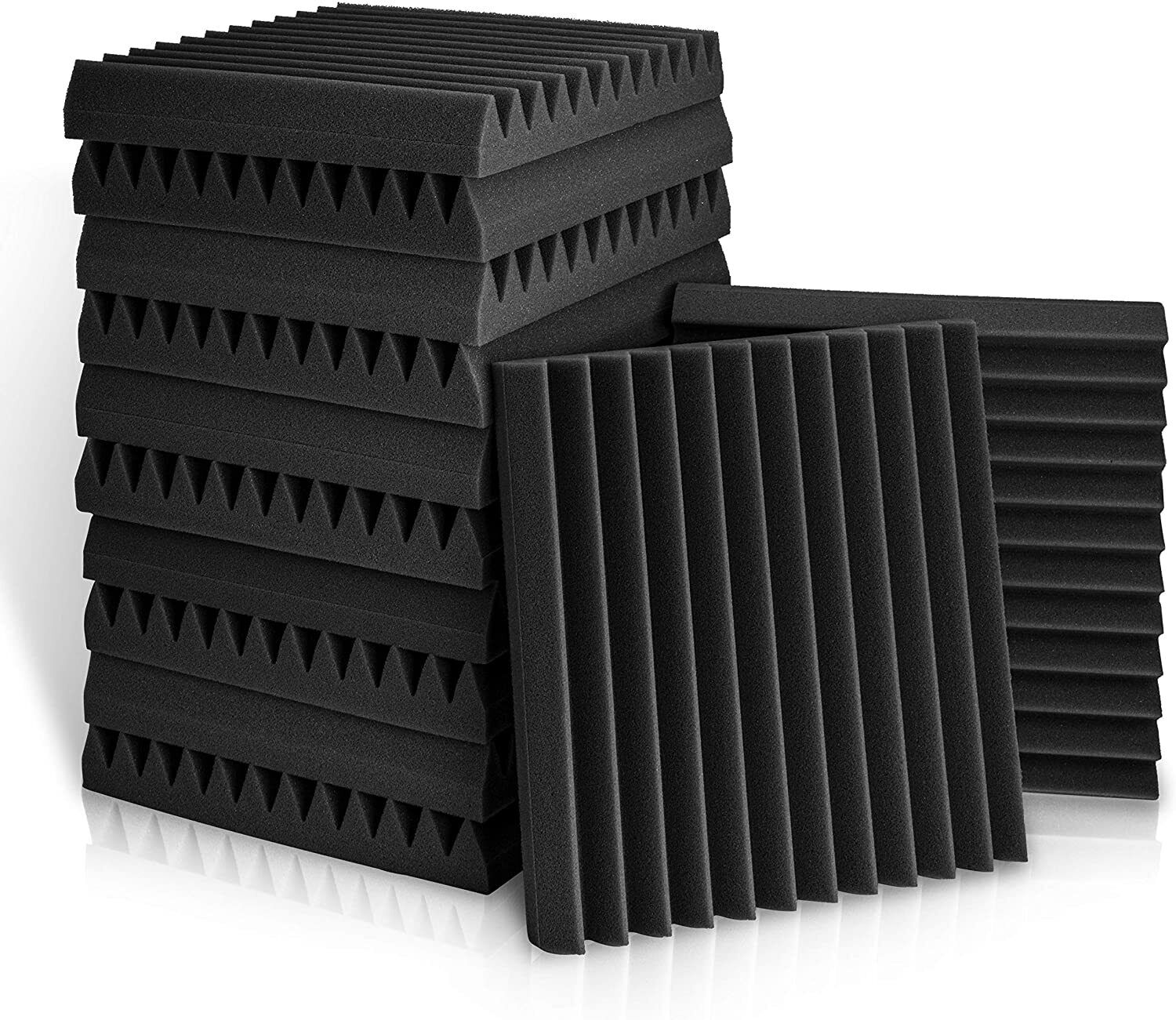
Description
This 12-pack of black acoustic foam wedge panels measures 30 x 30 x 2.5cm each, covering approximately 1.08 square metres in total, priced at $21.99 with fast Australian shipping. They are made from polyurethane foam and are used to reduce echo and reflection inside a room - for recording, streaming, video calls and gaming - by absorbing sound rather than blocking it.
Here is the distinction that decides whether you will be happy with these, and it is worth two sentences before you buy. Acoustic treatment changes how a room sounds from the inside: it soaks up the reflections that make a voice sound boxy, hollow or echoey on a recording. Soundproofing stops sound passing through a wall to the neighbours, and it requires mass - dense, heavy material - not foam. If your goal is that your microphone stops picking up the room, these are the right product. If your goal is that the person in the next flat stops hearing you, no foam of any kind will achieve it.
Specifications
| Quantity |
12 panels |
| Panel size |
30 x 30 x 2.5cm |
| Total coverage |
Approx. 1.08 square metres |
| Colour |
Black |
| Material |
Polyurethane foam |
| Profile |
Wedge |
| Supplied |
Vacuum compressed - expands after unpacking |
What's in the Box
| 12 x |
Acoustic foam wedge panels, black, 30 x 30 x 2.5cm |
Why Choose These Acoustic Foam Panels
-
Kills the echo close to the source - a small area of treatment behind and beside a microphone does most of the audible work
-
Fits how you want - staples, tacks, screws, spray adhesive or removable mounting strips all work
-
Cuts to size - a sharp knife or scissors trims a panel to fit around a shelf, a window frame or a corner
-
Wedge profile - the angled surface scatters and absorbs reflections rather than bouncing them straight back
-
Twelve panels, one small price - enough to treat the first reflection points of a desk setup for the cost of a cable
Does Acoustic Foam Actually Soundproof a Room?
No, and any product that suggests otherwise is overselling. Blocking sound between rooms needs mass and airtightness - a heavier door, a sealed gap under it, a second layer of plasterboard. Foam has almost no mass, so it does nothing to stop transmission. What it genuinely does is absorb mid and high frequency reflections inside the room, which is why a voice recorded in a treated corner sounds tighter and closer than the same voice recorded in a bare one. At 2.5cm thick these work on speech and instrument frequencies; they will not do much to deep bass, which needs far thicker material.
How Much Wall Does a 12 Pack of 30cm Panels Cover?
About 1.08 square metres in total - a patch roughly a metre square. That is the honest figure, and it is not a room's worth. It is, however, close to the right amount for the job most people are actually doing: covering the wall directly behind and to either side of a microphone or a desk, where the earliest and loudest reflections come from. Treating a whole room properly takes several packs and a plan. Treating the small area around a microphone takes one, and delivers most of the audible improvement.
Where Should You Put Acoustic Foam Panels First?
Start with the wall your microphone faces, then the wall directly behind you, then the two side walls at head height. If you have a bare corner behind the desk, fill it - corners collect the most reflection. The ceiling directly above the desk is next. What you are chasing are the surfaces that a sound leaving your mouth hits first, because those reflections arrive back soonest and do the most damage to a recording. Spacing panels with small gaps between them works nearly as well as a solid block and covers more area.
Buyers are typically podcasters and streamers treating a corner of a bedroom, home office workers tired of sounding like they are in a stairwell on video calls, musicians recording vocals at home, and gamers who want a cleaner voice channel. They are also used behind a desk purely for the look.
Browse more in our Tech & Mobile Accessories range, see Office & Stationery for the rest of the desk setup, or check Essentials for everyday practical gear.
Frequently Asked Questions
They arrived flat and hard - is that a fault?
No. They ship vacuum compressed to save space. Leave them in a ventilated room for 24 to 72 hours, or soak briefly in water, wring gently and air dry, and they recover their shape.
How do I attach them without damaging the wall?
Removable mounting strips or tabs are the renter-friendly option. Spray adhesive holds best but will mark paint when removed.
Will they stop my neighbours hearing me?
No. Foam absorbs reflections inside a room; it does not block sound through walls. That requires mass and sealing, not foam.
Can I cut them to size?
Yes. A sharp craft knife or a serrated blade gives the cleanest edge; scissors work for small trims.
Are they fire rated?
The supplier does not publish a fire rating for this product, so we do not claim one. Keep foam away from heat sources, open flames, downlights and electrical fittings.
Do they smell when new?
New polyurethane foam can have a faint odour that fades within a few days of airing. The unpacking period sorts most of it.
How do I clean them?
Vacuum gently with a brush attachment. Do not scrub, soak repeatedly or use solvents.
Fast Australian Shipping
Orders ship from within Australia to Sydney, Melbourne, Brisbane, Perth, Adelaide, Hobart, Canberra and Darwin, plus regional addresses nationwide, dispatched promptly with tracking.
This is acoustic treatment for reducing echo and reflection within a room. It is not soundproofing and will not stop sound transmitting through walls, floors or ceilings. No fire rating, acoustic absorption coefficient or NRC figure is published by the supplier and none is claimed here. Keep away from heat sources, naked flames, heaters, downlights and electrical fittings. Panels are supplied vacuum compressed and require 24 to 72 hours to recover their shape. Dimensions are supplier-stated and may vary slightly.