Description
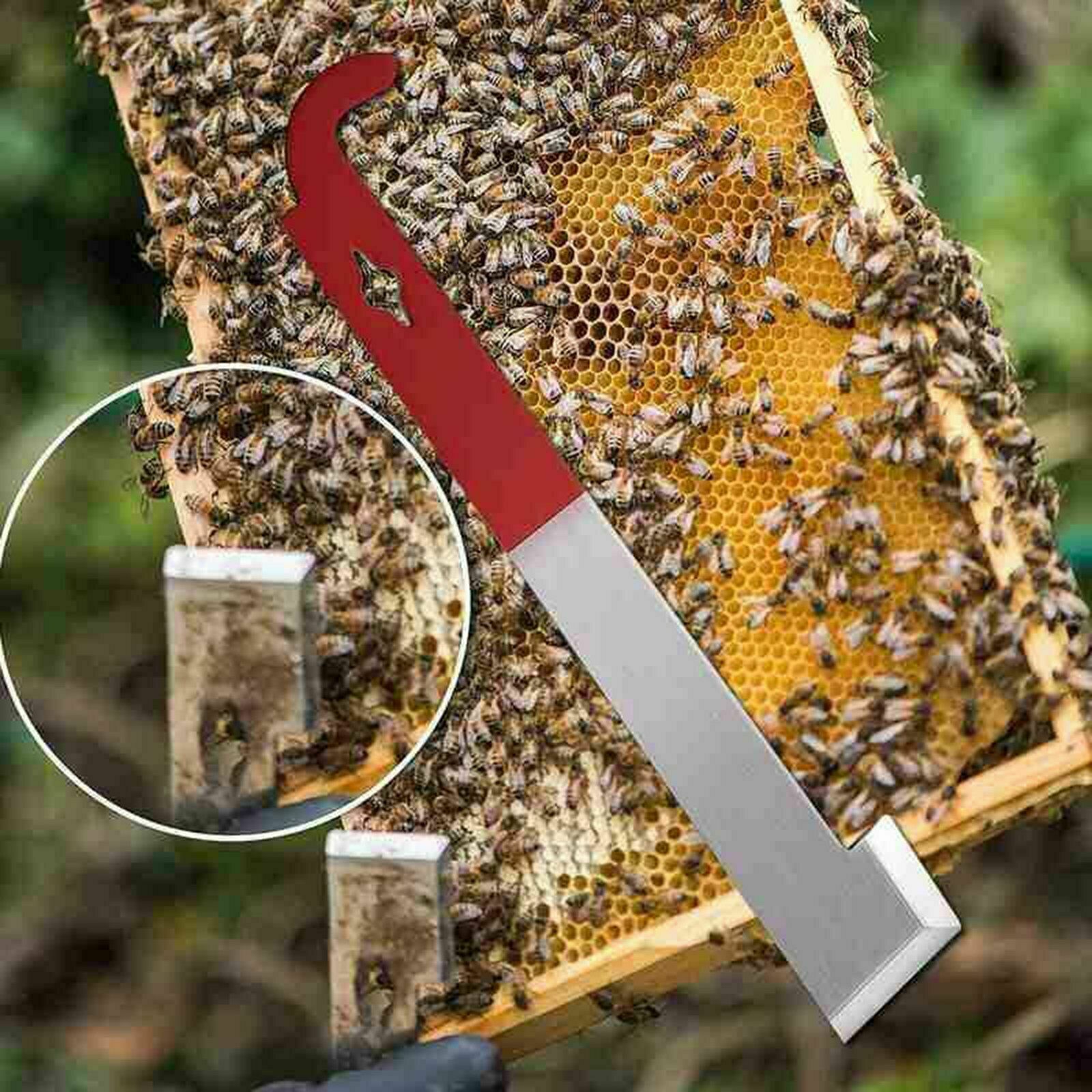
This hive tool is a stainless steel beekeeping tool with a J shaped hook at one end for levering frames up out of a box and a flat scraper blade at the other for cutting away beeswax and propolis. It has a hanging hole in the handle and is $14.99 at Lets Party. It is the single most-used tool in beekeeping and the one most often left behind in the apiary.
Anyone who has opened a hive without one understands the problem immediately. Bees glue everything together with propolis - frames to the rebate, boxes to each other, lids to boxes - and by the second or third inspection of a season a frame can be effectively cemented in place. Trying to lift it by hand either fails or comes free suddenly and crushes bees, which is bad for the colony and rapidly worse for you. The J hook exists specifically so you can apply steady leverage from above the frame rather than prising blindly from the side.
Specifications
| Material |
Stainless steel |
| Hook end |
J shaped, for lifting and levering frames |
| Blade end |
Flat scraper for wax and propolis |
| Handle feature |
Hanging hole |
| Quantity |
1 |
| Length |
Not stated by supplier - see FAQ |
What's in the Box
| Included |
1 x J hook hive tool |
| Not included |
Smoker, veil, gloves, bee brush, frame grip |
Why Choose a J Hook Hive Tool
-
Lifts frames properly - the hook goes under the frame lug and levers upward against the box edge, which is controlled in a way that prising from the side is not.
-
Two tools in one - hook at one end, scraper at the other, so a single tool covers lifting, separating and cleaning.
-
Stainless steel - resists the corrosion that comes with honey, propolis and repeated washing, and takes a scorching for sterilisation without pitting.
-
Hanging hole - it can live on a nail in the shed rather than in the bottom of a bucket, which is how hive tools get lost.
-
Cheap enough to own several - at $14.99 most beekeepers keep a spare, because the one thing guaranteed about a hive tool is that you will put it down in the grass.
What Is a J Hook Hive Tool Used For?
Four jobs, in roughly this order during an inspection. Cracking the lid and separating boxes that have been propolised together, using the flat blade as a wedge. Lifting frames, using the J hook under the lug so you can raise a frame straight up without twisting it. Scraping burr comb and propolis off the top bars, frame rests and box edges, which stops the problem compounding next time. And levering apart frames that have been welded to each other with brace comb. The J hook is the feature that distinguishes this style from a plain flat hive tool, and it is the reason most beekeepers prefer it once they have used one.
Do You Need to Sterilise a Hive Tool Between Hives?
Yes, and in Australia this is more important than a lot of new beekeepers realise. American foulbrood is a notifiable bacterial disease of honey bee brood, its spores survive for decades, and a hive tool carrying spores from one colony to another is one of the recognised ways it spreads between hives and between apiaries. The standard practice is to scorch the tool with a flame or dip it in a strong bleach solution between hives, particularly if you are moving between apiaries or handling somebody else's bees. Stainless steel handles both treatments without degrading, which is one of the practical arguments for it over a plated tool. If you are new to keeping bees, your state department of agriculture publishes the biosecurity requirements that apply where you are, and in most Australian states registration as a beekeeper is a legal requirement rather than an option.
Stainless Steel or Carbon Steel Hive Tool?
Carbon steel is harder, holds a sharper scraping edge and is what many older tools are made from. Stainless steel is softer but does not rust, and rust is the practical enemy here - a hive tool spends its life covered in honey and propolis, gets washed constantly, and frequently gets left outside overnight. Stainless also copes better with repeated flame sterilising and bleach dipping, which matters given the foulbrood point above. For most beekeepers running a handful of hives, stainless is the more forgiving choice; commercial operators who scrape hard all day sometimes still prefer carbon steel and accept the maintenance.
Buyers are typically backyard beekeepers setting up their first hive, established keepers replacing a tool that has gone missing in the grass, people buying a spare to keep in the car or at a second apiary site, and clubs and community apiaries buying several at once.
For more workshop and outdoor gear, see our Tools and Hardware range and our Home and Garden collection.
Frequently Asked Questions
How long is the tool?
The supplier has not given us a length, and we are not going to estimate it. Hive tools of this pattern are typically somewhere between 25cm and 28cm, but we would rather confirm than guess - message us before ordering if the exact length matters and we will ask them.
What colour is it?
The supplier's package list describes a half-red finish while the rest of the specification says bare stainless steel. We have queried the discrepancy. Treat the finish as unconfirmed; the function is unaffected either way.
Can I scorch it to sterilise it?
Yes, stainless steel takes flame sterilising. Let it cool fully before it goes near a hive or your gloves.
Is it sharp?
The scraper end is a chisel edge rather than a knife edge - blunt enough to be safe to carry, sharp enough to cut propolis. Handle it as you would a chisel.
Will it fit in a pocket?
Most beekeepers carry a hive tool in a back pocket or a tool holster. Without a confirmed length we cannot promise it, though this is a standard pattern.
Do I need anything else to start beekeeping?
Yes - at minimum a smoker, a veil and gloves, none of which are included here. This is one tool, not a starter kit.
Is it suitable for Flow Hives and other systems?
A hive tool is universal. It works on Langstroth, Warre, top bar and Flow-style boxes alike, because the job is separating propolised timber.
Fast Australian Shipping
We ship from within Australia, so orders reach Sydney, Melbourne, Brisbane, Perth, Adelaide, Hobart, Canberra and Darwin quickly rather than waiting on overseas transit. Regional and remote addresses go through the standard Australia Post network.
Material and features are as supplied by the manufacturer. Tool length and finish have not been confirmed to us and are not stated here for that reason. Beekeeping is regulated in Australia - registration with your state or territory authority is required in most jurisdictions, and American foulbrood is a notifiable disease. Check the rules that apply where you are before keeping bees.