


No products in the cart.


Free Shipping Australia-Wide

5 star customer service

Quality Tested Products

Believe it or not, some of the best gadgets under $50 deliver incredible bang for your buck. We're not talking about cheap knockoffs, but solid tech that focuses on doing one thing really well. Think categories like smart home starters, portable audio, and essential mobile accessories. For a small investment, you can snag high-quality wireless earbuds, beefy portable chargers, or clever smart plugs that actually make your day-to-day life easier.
It’s easy to think that great technology has to come with a premium price tag. The reality is, the market for affordable gadgets is better than it's ever been. The trick is to stop thinking of it as "settling" and start seeing it as a smart, strategic investment in convenience and fun. You really don't need to spend hundreds to build an impressive tech collection.
This guide isn't just another list of products. The goal here is to give you a new way of thinking about tech shopping—a framework for spotting genuine value. You'll learn how to find those hidden gems that perform brilliantly without the buyer's remorse, turning you into a much savvier shopper.
Some tech categories are just naturally a better fit for the sub-$50 price point. If you focus your search on these areas, you’re far more likely to find products that nail their main job instead of trying to do too much and failing at everything.
To give you a better idea, here's a quick look at the categories where you can find some fantastic deals.
| Gadget Category | What to Look For | Key Benefit |
|---|---|---|
| Smart Home Starters | Smart plugs, smart bulbs, simple security sensors. | Easy, low-cost entry into home automation. |
| Portable Audio | Bluetooth speakers, wireless earbuds with decent battery. | Music and podcasts on the go without breaking the bank. |
| Mobile Accessories | Power banks, multi-port chargers, quality cables. | Solves everyday power and connectivity problems reliably. |
By homing in on these specific categories, you set yourself up for a win.
So, where should you start your hunt?
Smart Home Starters: Devices like smart plugs, LED light strips, and entry-level smart speakers are perfect for dipping your toes into home automation without a major financial commitment.
Mobile Accessories: This is a goldmine for value. You can find high-capacity power banks, multi-port wall chargers, and sturdy phone stands that solve real, everyday problems.
Portable Audio: While you won’t get audiophile-grade sound, you can absolutely find fantastic Bluetooth speakers and wireless earbuds with great battery life and solid audio for casual listening.
The boom in affordable gadgets is tied directly to our mobile-centric lives. The global smartphone market's recovery, which saw an estimated 320.1 million units shipped in Q3 2025, creates a massive ripple effect. Every new phone sold often leads to purchases of cases, chargers, and earbuds, fueling the market for these low-cost accessories.
The secret to finding the best gadgets under 50 is prioritizing purpose over prestige. A simple, well-made device that solves a specific problem will always be a better buy than a feature-packed gadget that cuts too many corners on quality.
This mindset isn't just for general electronics. It applies to niche hobbies, too. For example, you can find awesome budget-friendly high-tech gadgets for car lovers that add real convenience to your drive. The principles of spotting quality and utility are the same, whether you're outfitting your desk or your dashboard. By knowing which categories offer the most bang for your buck, you're already one step closer to making a purchase you'll be happy with for a long time.
Ever stared at a wall of tech and wondered why one Bluetooth speaker is $30 while another, which looks almost identical, costs $300? The secret is in the trade-offs. Finding the best gadgets under 50 isn’t about hunting for cheap knock-offs; it’s about knowing which compromises you can live with and which ones are deal-breakers for you.
Think of it like buying a coffee maker. A simple $25 drip machine gets the job done—it makes a great cup of coffee every morning without any fuss. On the other hand, a high-end espresso machine gives you fancy pressure controls, milk frothers, and pinpoint temperature settings. Those are nice, but they aren't essential for a basic morning brew. Budget tech works the same way. It does its main job exceptionally well by stripping away the non-essential luxuries.
Once you learn to spot these trade-offs, you can zero in on what truly matters for your needs. That way, every purchase feels like a smart win, not a reluctant compromise.
To hit that sweet sub-$50 price point, manufacturers have to make some calculated choices. Knowing what they are helps you see a product's real value.
This visual shows how that value is concentrated in the most popular budget tech categories.
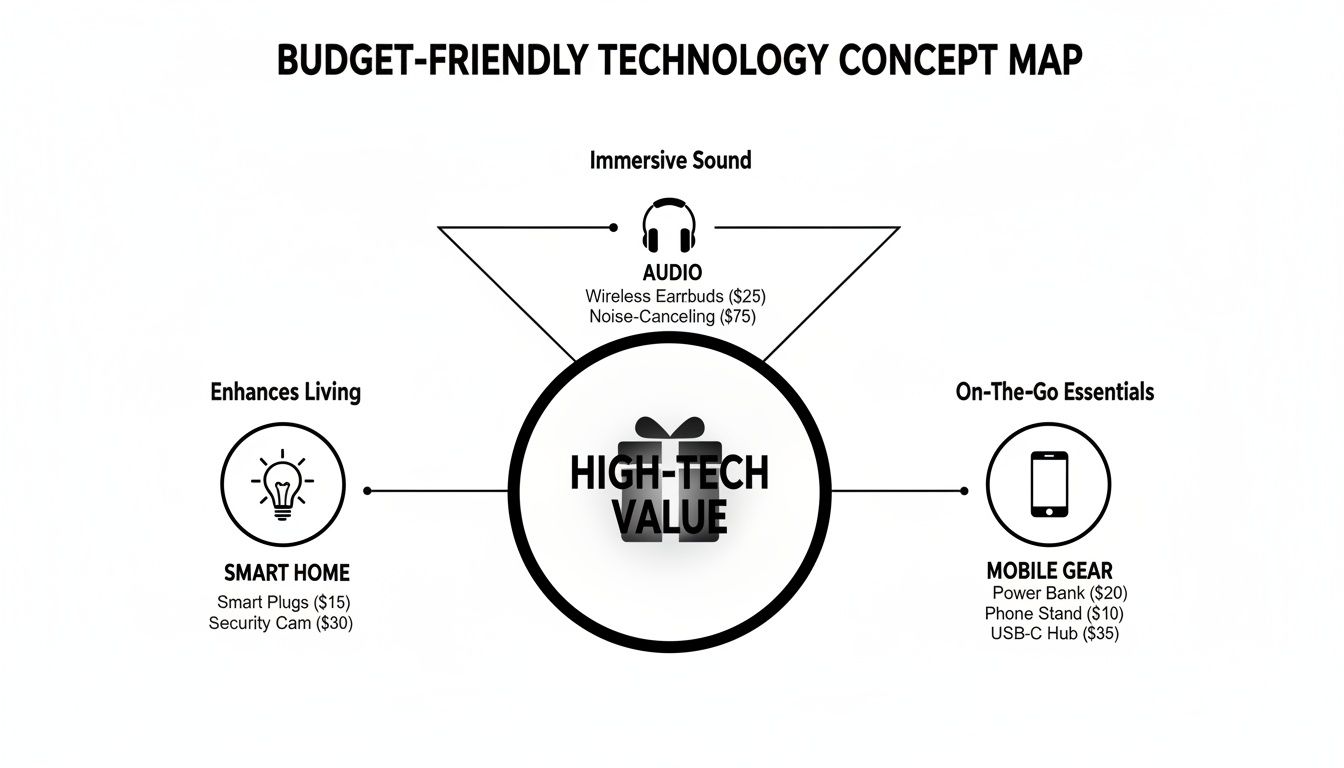
As you can see, the real value comes from doing one primary job really well, whether that’s playing music, controlling an outlet, or charging your phone.
The trick to navigating these trade-offs is knowing yourself. Before you even start browsing, you need to have a clear idea of your non-negotiables. This is the cornerstone of smart shopping. For a deeper look at this approach, you can learn more about what is comparison shopping and really dial in your strategy.
Just start by asking yourself a few simple questions before buying anything:
Answering these questions shifts you from being a passive buyer to a savvy evaluator. You’re no longer just looking at the price tag; you're looking at what you get for your money, based on how you actually live.
By consciously deciding which features are 'must-haves' versus 'nice-to-haves,' you can find a gadget that perfectly fits your requirements without paying for extras you'll never use.
It's a simple, strategic way to shop. For example, a casual user is much better off with a simple fitness tracker that accurately counts steps and sleep than a complicated smartwatch loaded with features they’ll never touch. This approach ensures you squeeze every bit of utility out of every dollar you spend. It proves that the best gadgets under $50 are often just the ones that have been chosen most thoughtfully.

Alright, you know the kinds of trade-offs to expect. Now it's time to put on your detective hat. Finding the best gadgets under 50 isn't just about spotting a low price; it's about spotting quality where it counts. This checklist is your secret weapon for telling a genuine bargain from a piece of future e-waste before you click "buy."
Think of it like inspecting a used car. You wouldn't just be wowed by the shiny paint job, right? You'd pop the hood, check the tires, and listen for any weird noises. We're going to apply that same mindset to budget electronics, helping you weed out the duds and find gadgets that are actually built to last.
That star rating at the top of the page? It’s just the headline. The real story is always buried in the comments. Don’t just glance at the five-star raves and one-star rants; the most valuable intel comes from finding consistent themes across all the reviews.
Here’s how to read between the lines and get the real scoop:
A gadget with a 4.2-star rating full of detailed, specific praise (like "impressive battery life for its tiny size") is a much safer bet than one with a 4.8-star rating based on a bunch of generic, one-word comments.
This approach helps you build a much more realistic profile of what to expect—both the good and the bad.
A picture is worth a thousand words, especially when you're on the hunt for signs of quality. Product listings are designed to sell, but if you look closely, you can often spot signs of cheap construction right in the photos and descriptions.
First, check the materials. Keep an eye out for mentions of ABS plastic, which is a durable, sturdy material commonly used in quality budget tech. If the description just talks about slick colors and avoids specifics, be wary. Then, zoom in on the product photos. Look at the seams where plastic parts meet. Do they look clean and tight, or can you see gaps and rough edges? Those little details tell you a lot about the manufacturing standards.
And don't forget to look for safety certifications. This is a huge deal, especially for anything you'll be plugging into a wall outlet.
Spotting these logos in the product images or text is a great sign that the manufacturer has actually invested in meeting important quality benchmarks.
Last but not least, always check your safety net. A company's warranty and return policy tells you everything you need to know about how much they believe in their own product. A gadget with a 30-day return window and a one-year warranty is a far more reassuring purchase than something marked "final sale" or with a flimsy 90-day warranty.
Before you even think about adding an item to your cart, ask these three questions:
Think of a good warranty as the manufacturer’s promise to you. A strong policy shows they stand behind what they make, giving you the confidence to make that purchase, especially when you’re hunting for the best gadgets under 50.
Spotting a cool gadget is the easy part. The real trick is finding it at a price that doesn't make you wince. The best tech deals don’t just fall into your lap; they’re the reward for being a smart, strategic shopper. It’s time to stop just hoping for a discount and start actively hunting for real value.
Think of it like fishing. A beginner just throws a line in the water and hopes for a bite. A pro, on the other hand, knows the best spots, understands the tides, and uses the right bait. We’re here to give you that pro’s playbook for snagging the best gadgets under 50, so you can consistently reel in the good stuff.
Retailers run on a surprisingly predictable schedule. If you learn their rhythm, you can time your purchases perfectly to get the biggest savings. Those huge sales events aren't random—they're tied to specific times of the year when stores are desperate to move inventory.
Learning this calendar is probably the single easiest way to save a bunch of money without any extra work.
Just by lining up your shopping with these key windows, you’re already putting yourself in the best possible position to grab trending tech at its absolute lowest price.
Why spend your days manually refreshing a webpage when a free tool can do it for you? Price alert and tracking tools are basically your own personal deal-spotting assistants. They watch prices across thousands of stores and ping you the second a gadget you want hits the price you’re willing to pay.
It's simple. Let's say you've got your eye on a smart speaker that’s currently $45. You can set an alert to notify you if it ever drops below $35. The tool then keeps an eye on it 24/7. When a flash sale finally hits, you get an instant email. It's a set-it-and-forget-it strategy that guarantees you never miss a deal.
Price alerts completely flip the script. Instead of you chasing sales, you make the sales come to you. You buy at the perfect moment, every time, without the stress or guesswork.
This one simple trick can save you a surprising amount of cash over time, especially when you're building out your collection of budget-friendly gadgets. For more on staying ahead of the curve, check out our guide on the latest must-have gadgets.
The internet is a ridiculously noisy place. Trying to sift through endless product pages to find something that’s actually good can be exhausting. That’s where curated platforms like FindTopTrends really shine. These sites do all the heavy lifting for you, filtering out the junk and highlighting products that hit that sweet spot of quality, features, and price.
Using a curated platform is like having a personal shopper who already gets your style and knows your budget. You can instantly filter for trending products under $50 that have already been vetted by experts and given the thumbs-up by real shoppers. This not only saves you a ton of time but also seriously cuts down the risk of ending up with a piece of junk.
The global appetite for affordable tech is huge. These low-cost gadgets are the entry point for millions of people, especially in markets where shoppers are watching every dollar but still want quality. With regions like Asia-Pacific driving massive smartphone sales, the demand for value-priced accessories under $50 keeps growing. You can learn more about global smartphone forecast findings to see just how big this trend is. Curated sites tap into this worldwide demand to find the best-value items for you.
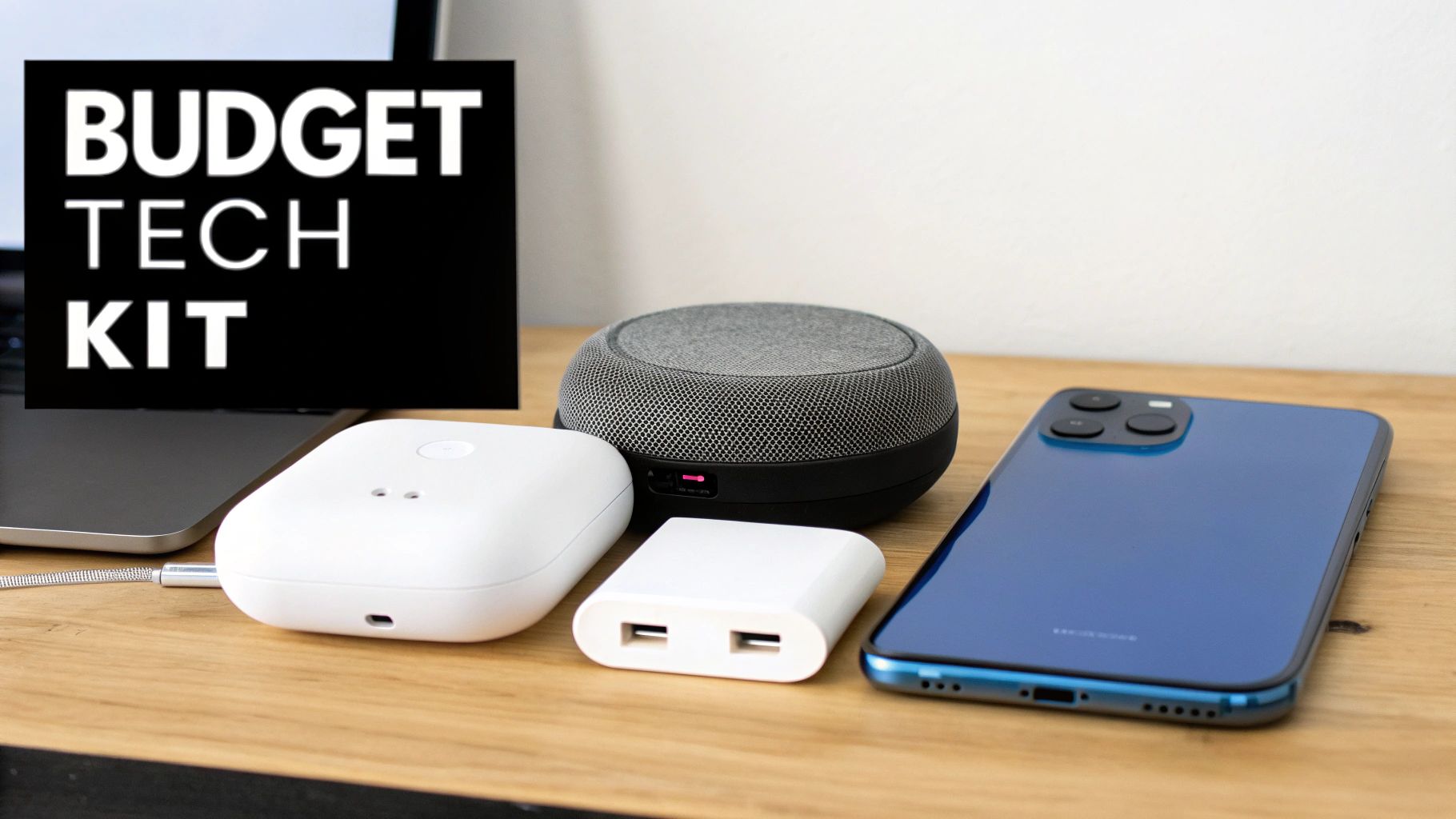
Hunting for the best gadgets under $50 isn’t just about finding one cool item. It's really about putting together a team of tools that make your day-to-day life genuinely better. So, instead of just rattling off a list of products, let's think bigger. We're going to build a couple of practical, real-world tech kits for different lifestyles to show you how a few affordable gadgets can work together for maximum impact.
This way, you learn how to shop for what you actually need, not just what's on sale. Let's walk through two common scenarios: a "Productivity Power Pack" for students or remote workers and a "Smart Home Starter Kit" for anyone settling into their first apartment. Every single item we'll talk about comes in under that $50 sweet spot.
If you're a student, a remote worker, or just someone who needs to get stuff done on the go, the right tech kit is a total game-changer. The goal here isn't flashiness; it’s all about pure, uninterrupted function. You need power you can count on, audio that’s clear for calls, and tools that keep your workspace organized and efficient.
Think of this kit as your portable command center. Each piece is here to solve a specific problem that might otherwise break your focus.
Here are the absolute essentials:
With these four gadgets—each well under $50—you’ve built a powerful setup that keeps you powered up, connected, and comfortable no matter where your work takes you.
Moving into your first place is a huge milestone, but making it feel like home takes time. A smart home starter kit is the perfect way to add convenience, a little bit of fun, and a touch of the future without needing a degree in engineering or a massive budget. We're focused on simple, high-impact upgrades here.
You're not trying to build the Batcave; you're just making your daily routines a little smoother and more enjoyable.
Your first smart home kit should feel like magic, not a chore. Choose simple, reliable devices that solve everyday annoyances, like fumbling for a light switch in the dark or wondering if you left the fan on.
Here’s how you can lay a fantastic smart home foundation for under $100 total, with each gadget costing less than $50.
With just these few pieces, you can walk into your apartment and say, "Hey, turn on the living room lights," and actually watch it happen. It’s a small thing that delivers a huge feeling of control and modern comfort. As you build your kit, remember that value can also come from having the right digital resources, like having access to the best tools for content creators if that's your passion. By thinking in terms of complete kits, you create a tech ecosystem that truly serves you.

A truly smart purchase isn’t just about the price you pay at the checkout. It's really about the value you get over the months and years that follow. Once you've tracked down one of the best gadgets under $50, the last piece of the puzzle is making sure that small investment goes the distance. This is where understanding your rights after the sale and practicing a little bit of care can turn a good deal into a great one.
Think of warranties and return policies as your gadget's built-in safety net. This is especially true with budget electronics, where these policies are your first line of defense against a product that gives up the ghost way too early. Before you ever click "buy," always check that the seller offers at least a 30-day return window and a minimum one-year manufacturer's warranty. That peace of mind is worth its weight in gold.
It's easy to assume all warranties are the same, but knowing who to call when something goes wrong makes a huge difference. You typically have two layers of protection to work with.
Seller's Return Policy: This is your immediate support system, usually lasting 30-90 days. The retailer you bought from—whether it's Amazon or the brand's direct website—will handle any returns or exchanges for defects. This is always your fastest and easiest option for a quick fix.
Manufacturer's Warranty: This takes over after the seller's return window closes and usually lasts for one year. If your gadget fails because of a manufacturing flaw a few months down the line, you'll need to reach out to the brand directly for a repair or replacement.
Just knowing that distinction can save you a ton of time and frustration. If you're within the return period, always start with the seller first.
You absolutely do not need to be a tech wizard to extend the life of your new gadget. In fact, a few simple habits can keep your devices running smoothly and looking sharp for years. The whole point is to protect your investment with the least amount of effort.
Think of it this way: a tiny bit of care now prevents a massive headache later.
The real secret to long-term value isn’t just buying a quality product; it's treating it with a bit of respect. A $30 speaker that's kept clean and charged properly can easily outlast a $100 one that's constantly abused.
Here are a few basic tips to get the most out of whatever you buy:
Keep It Clean: A microfiber cloth is your best friend for wiping down screens and surfaces. For those tricky little ports and crevices, a quick blast from a can of compressed air works wonders to clear out dust that can mess with connections.
Manage Your Batteries: If your device has a rechargeable battery, try to keep its charge between 20% and 80%. Letting it drain completely or leaving it plugged in at 100% all the time can slowly wear down the battery's health.
Use Protective Gear: A simple case for that portable speaker or a screen protector for a small media player can mean the difference between a minor scuff and a dead device. It’s a tiny extra cost that provides a huge amount of protection.
When you combine a smart pre-purchase warranty check with some basic post-purchase care, you guarantee your new gadget delivers value far beyond its modest price tag. This final step is what separates a casual buyer from a savvy tech shopper who knows how to make every single dollar count.
Shopping for tech on a tight budget often brings up a few common questions. Let's tackle some of the big ones so you can feel confident you're getting a great deal, not a dud.
They absolutely can be, but you have to know what to look for. Durability in the budget aisle isn't about fancy metals or premium finishes; it's about smart design and solid materials.
Look for gadgets made from tough stuff like ABS plastic and prioritize simpler devices. A well-built gadget that does one thing perfectly will almost always outlive a cheap one that tries to do ten things poorly. Always, always scan user reviews for recurring comments about how the product holds up over time.
This depends on the gadget, but the answer is almost always core functionality. Forget the bells and whistles for a second and ask, "Does it do its main job well?"
A gadget that promises the world for under $50 is a huge red flag. More often than not, those extra features come at the cost of the one thing you actually need it to do. Stick to the basics, and you'll rarely be disappointed.
Ready to find top-rated gadgets without the endless searching? Explore the curated collections on FindTopTrends and discover your next favorite device today at https://findtoptrends.com.




