


No products in the cart.

Free Shipping Australia-Wide

5 star customer service

Quality Tested Products

The best multi-tool for camping is always a compromise. It’s about finding that sweet spot between having the right tools—like a sharp knife, strong pliers, and a can opener that actually works—and a size and weight you’ll actually carry. Brands like Leatherman and Gerber have earned their reputation by building tough, reliable tools with smart locking mechanisms that won't let you down when you're miles from anywhere.
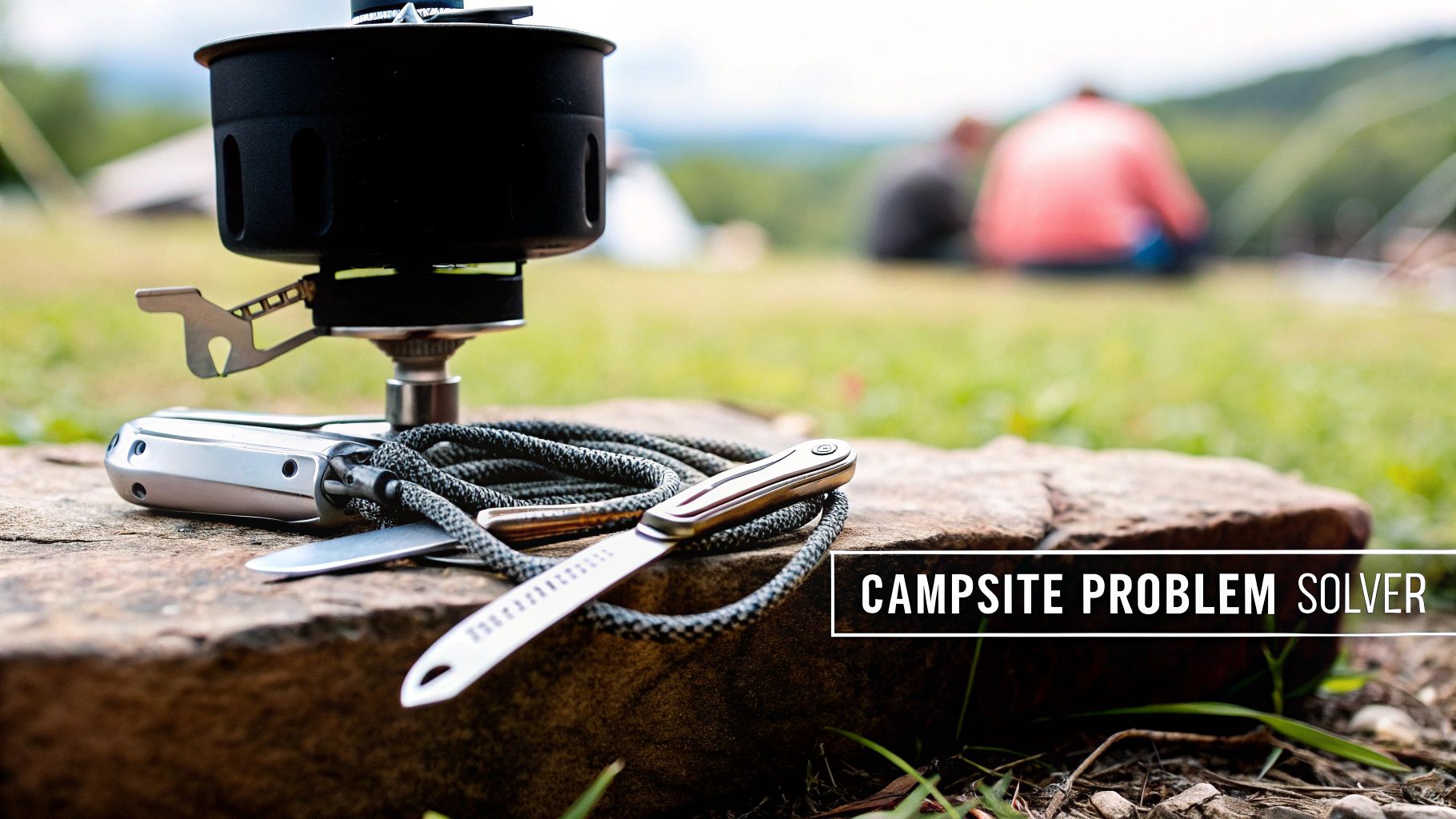
Picture this: you're settled in at your campsite, far from the nearest town. You need to slice some rope for a clothesline, tighten a wobbly screw on your camp stove, and pop open a can of beans for dinner. Instead of digging through a heavy, clanking toolbox, you just reach for one thing. That’s the magic of a good multi-tool.
It’s really the modern evolution of the classic Swiss Army knife, but beefed up and built specifically for the kinds of challenges you face outdoors. Finding the right one isn't about getting the model with the most gadgets crammed into it; it's about having the right tools for the job when you're counting on them.
A quality multi-tool is simply about being prepared. It’s the little things that can trip you up on an outdoor adventure, and this one piece of gear can turn a trip-ruining headache into a quick, two-minute fix.
Here’s why it’s a non-negotiable part of my kit:
A multi-tool isn't just a gadget; it's your portable repair kit, kitchen assistant, and first-aid support rolled into one. It empowers you to handle the unexpected with confidence, ensuring a smoother and safer outdoor adventure.
This guide is designed to cut through the noise and help you figure out what really matters when choosing a multi-tool for camping. We'll focus on the tools you'll actually use, the materials that can take a beating, and the safety features that are non-negotiable. By the end, you'll know exactly what to look for to find a reliable partner for whatever the trail throws at you.
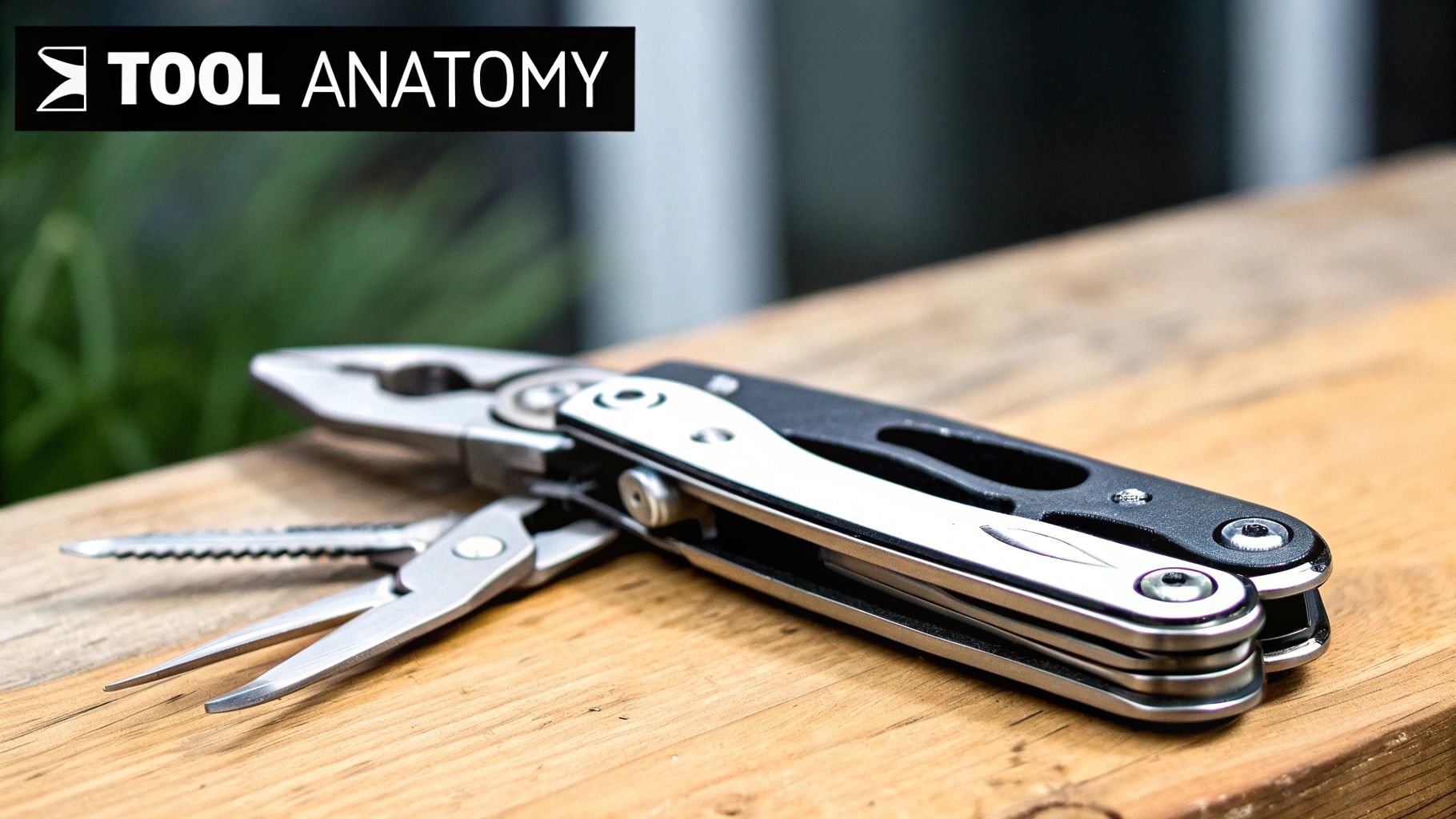
Let’s be honest, not all multi-tools are created equal, especially when your campsite is miles from the nearest town. Picking the best multi tool for camping means looking past the sheer number of gadgets and focusing on what actually solves problems in the wild. Think of it as assembling a small, reliable crew for your pocket—each member has to pull their weight and do their job without fail.
So, let's break down the "must-have" implements that form the foundation of a truly great camping multi-tool. These are the non-negotiables, the tools that separate a dependable field companion from just another frustrating chunk of metal.
The knife is the heart and soul of any multi-tool. It's the go-to for countless jobs, from slicing cordage and opening food packets to shaving feather sticks to get a fire going. A solid camping multi-tool blade needs to be sharp right out of the box, hold that edge for a decent amount of time, and be easy to get to—ideally with just one hand.
For camping, you'll find that a blade length between 2.25 and 3 inches hits the sweet spot. That's enough cutting surface for most tasks without being too clumsy or running into legal issues in certain parks or regions. Keep an eye out for blades made from quality stainless steel; it gives you the right mix of rust resistance and durability.
Pliers are the problem-solvers you forget you need until something goes wrong. A bent tent pole, a hot pot lid you can't grab, or a loose nut on your camp stove can quickly turn a good trip sour. A sturdy set of pliers, especially the needle-nose kind, gives you the grip and leverage you need to make those on-the-fly repairs.
You really can't overstate their importance. They act as your portable vise, your impromptu wrench, and your grab-anything tool all rolled into one. The best ones have a strong pivot and handles that are comfortable enough to squeeze hard without digging into your palm.
No, you're not going to be felling trees with it, but a small wood saw is a game-changer for processing tinder and small branches for your fire. Those serrated teeth make quick work of wood that would be a real pain—or just plain unsafe—to tackle with your main knife blade.
A good multi-tool saw is designed to cut efficiently on the pull stroke. This lets you gather and prepare kindling fast, which is critical when you're trying to get a fire going in damp conditions or as the sun is going down.
This one feature is a huge advantage for anyone who relies on a campfire for cooking, warmth, or just keeping spirits high. It’s what separates a generic, everyday multi-tool from one that’s truly built for the outdoors.
Finally, never underestimate the classics. Having dedicated can and bottle openers means you can get into your food and drinks without resorting to risky tricks. Trying to pry open a can with your knife tip is a great way to break your blade or, worse, get a nasty cut.
These four tools are the backbone of a reliable camping multi-tool:
When you start with this foundation, you ensure your multi-tool is a powerful asset, not just dead weight in your pack. Once these basics are covered, you can start looking at other handy additions that fit your personal camping style.
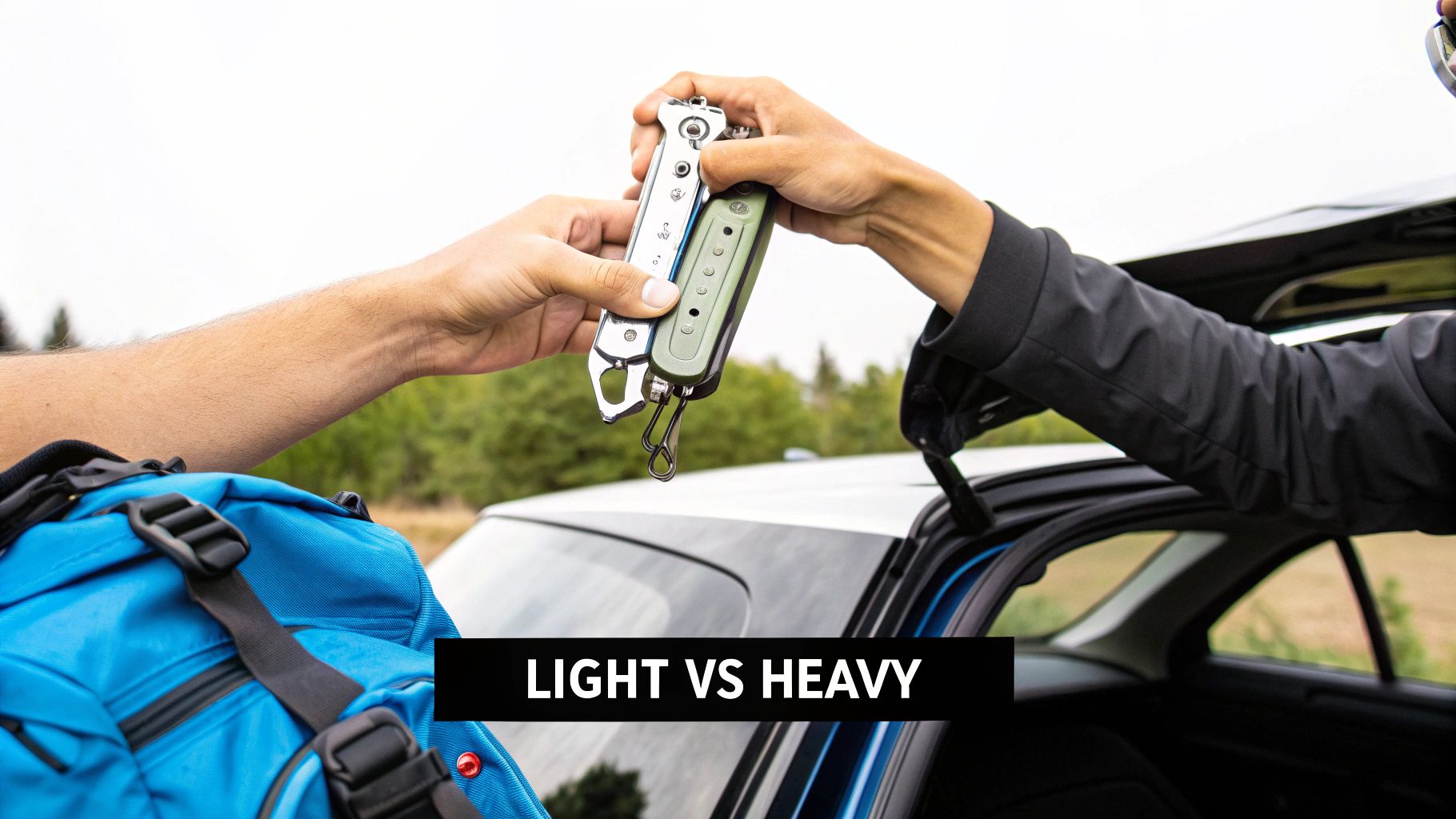
The multi-tool with the most gadgets is useless if it feels like a brick in your pack and gets left in the car. This brings us to the core dilemma every camper faces: striking the right balance between what a tool can do and how much it weighs. It's a constant tug-of-war between capability and portability.
Think about it like packing for any other trip. For a casual weekend away, you might throw a big suitcase in the trunk without a second thought. But if you're trekking deep into the mountains, every single ounce matters. You'd strip your pack down to the absolute essentials. That same logic applies perfectly when you're picking a multi-tool for camping.
A heavy-duty multi-tool can feel like a complete toolbox in your hand, often boasting 20+ functions, including specialized files and beefy wrenches. This kind of setup is brilliant for car camping or overlanding. Your vehicle is doing the heavy lifting, and the ability to tackle a complex repair is worth the extra weight.
For a backpacker, however, a tool tipping the scales at over 8 ounces (about 225 grams) can feel like a boat anchor. Shaving off even a few ounces makes a noticeable difference on a long trail. This is where ultralight models shine. They ditch the less critical implements, focusing on a high-quality blade, reliable pliers, and maybe a screwdriver or two. You get the core functions you need at a fraction of the weight.
Your multi-tool should feel like a natural part of your kit, not a burden. The "best" one is simply the one that matches how you camp and how far you have to carry your gear.
Regardless of its weight, a multi-tool has to be tough. Durability is non-negotiable. The gold standard for dependable multi-tools is stainless steel. It gives you an excellent mix of raw strength, resistance to rust, and the ability to keep a knife blade sharp.
You'll also run into tools with special coatings that add an extra layer of protection:
This demand for functional, lightweight, and durable gear is what's driving the multi-tool market, which was valued at around USD 2.7 billion in 2023. It’s outdoor enthusiasts like us who are pushing manufacturers to create more versatile and compact solutions. You can discover more insights about multi-tool market trends from this research.
In the end, choosing the right material and weight class is what ensures your multi-tool becomes a trusted partner you'll actually want to carry on every single trip.
When you’re deep into a task—maybe sawing through a tough branch or pushing a blade to cut thick cordage—the last thing you need is for that tool to snap shut on your fingers. This isn’t just a minor inconvenience; it’s a serious safety issue. A solid locking mechanism is, without a doubt, the most critical safety feature on any multi-tool.
Think of it this way: an unlocked blade is like a door that's closed but not latched. The slightest push from the wrong direction can send it swinging. A good lock is the deadbolt. It clicks into place, turning that wobbly implement into a fixed, reliable tool you can trust under pressure.
You'll find a few common designs on most quality multi-tools, each with a slightly different feel but all serving the same crucial purpose.
Liner Lock: This is probably the most common one you'll see. A thin metal bar (the "liner") inside the handle is under tension. When you open a blade, it springs into place behind the blade’s base, blocking it from closing. To close it, you just push that liner to the side with your thumb. It's simple and effective.
Frame Lock: Think of this as the liner lock's bigger, tougher sibling. Instead of a separate liner, a piece of the tool's actual handle frame moves into place to lock the blade. It's an incredibly strong design often found on tools built for heavy-duty work.
Back Lock: A true classic. You’ll see a bar that rocks along the spine (or "back") of the handle. When the blade opens, a hook on that bar drops into a notch, locking it tight.
The best multi tool for you will have a rock-solid lock on the main blade and saw, at the very least. This isn't a premium add-on; it's a non-negotiable feature that drastically cuts down the risk of an accident when you're putting in some real work.
But safety isn't just about locks. It's also about how the tool feels in your hand and how you access its features. This is where ergonomics—basically, how comfortable and efficient a tool is to use—comes into play. A handle with smooth, rounded edges and a grippy texture is far less likely to cause hand fatigue, which means you're less likely to slip up.
Another game-changer is one-handed access, especially for the primary knife blade. Being able to flick open the blade with just your thumb, without having to unfold the entire tool, is incredibly practical. It lets you keep one hand on whatever you're working on, making simple things like cutting a fishing line or opening a food package much safer and quicker.
What works for a weekend car camper would be a lead weight for an ultralight backpacker. The truth is, the best multi tool for camping isn’t a one-size-fits-all gadget; it's about picking a reliable partner that truly fits your adventure. You wouldn't lug a heavy-duty canvas tent on a thru-hike, and the same logic applies here—your tool has to match your priorities.
This is more important than ever, with outdoor recreation booming. The camping equipment market is set to climb from USD 22.08 billion in 2026 to a massive USD 29.49 billion by 2031, largely because more people want gear that's easy to pack and carry. This trend has pushed multi-tools from being a niche item to a must-have piece of camping kit. You can dive deeper into this trend with the full camping equipment market analysis.
When you’re counting every single ounce, your gear choices have to be ruthless. For backpackers, the perfect multi-tool is a minimalist wonder, ideally weighing under 6 ounces. Forget those 21-in-1 monsters; what you need are a few core functions that work perfectly every time.
Focus on the absolute essentials:
Anything beyond that is often just dead weight. The goal is a tool that disappears into your pack but is ready to perform when you need it most.
With a vehicle doing the heavy lifting, car campers have the luxury of being a bit more prepared. Weight isn't the primary concern, so you can go for a more robust, feature-rich multi-tool that makes setting up and managing your campsite a breeze.
Look for a toolset that beefs up the basics:
This kind of tool means you can handle most camp-related fixes without digging through a separate, clunky toolbox.
Overlanding and RVing are all about self-sufficiency, often in places where a mechanical breakdown is more than just an inconvenience. Your multi-tool needs to be your first line of defense for vehicle maintenance and system repairs. These are the true heavyweights of the multi-tool world.
Your tool should be built for serious work and include features like:
Before tackling any job, big or small, a quick safety check is crucial. This flowchart breaks it down simply.
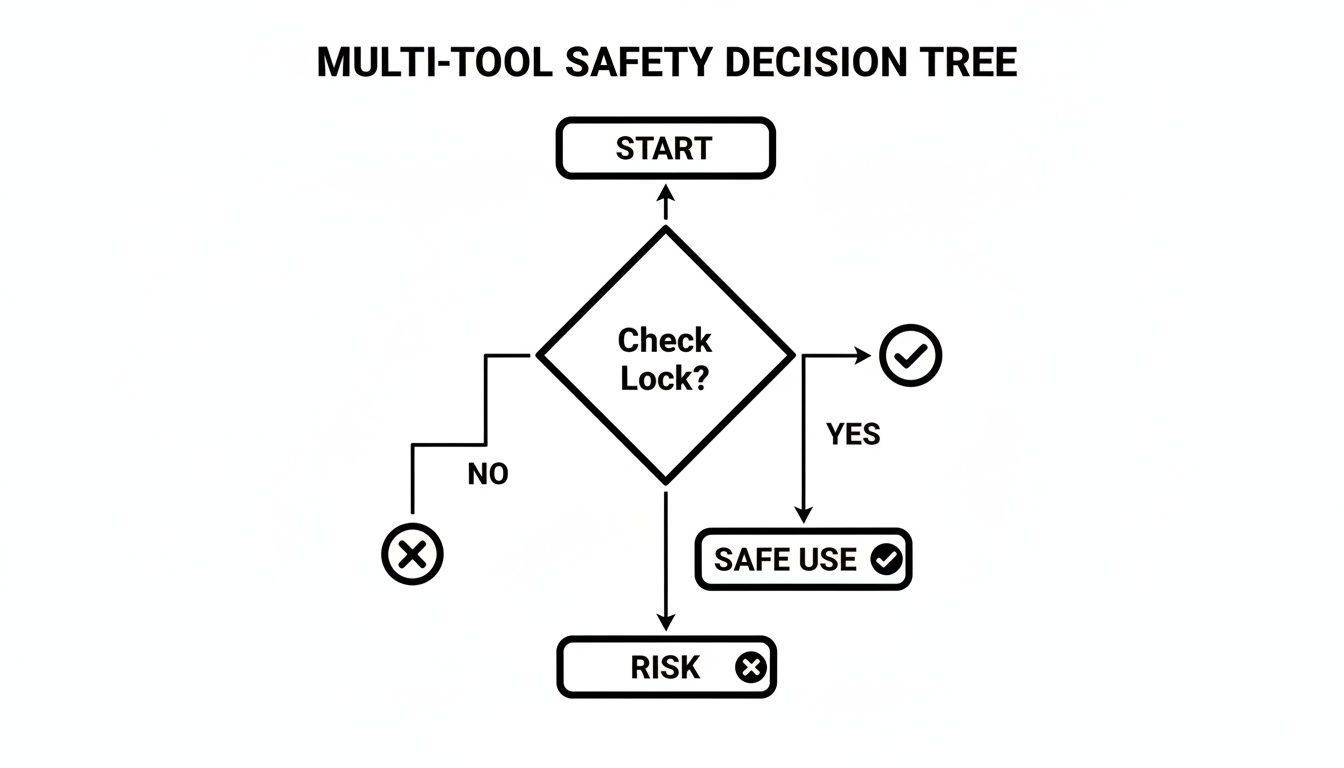
It’s a great reminder that just checking the locking mechanism is the first and most important step to prevent a blade or tool from accidentally closing on your hand.
Staring at a wall of multi-tools, it's easy to wonder what separates a $30 model from one costing $150. Is the pricey one really five times better, or are you just paying for a fancy name on the side? The truth is, the difference goes way beyond the tool count—it’s about the hidden details that define whether your tool will be a reliable partner or a frustrating liability when you're miles from civilization.
I like to think of it like buying a good set of kitchen knives. Sure, a cheap knife from the discount bin will cut a tomato, but it’ll get dull after a few uses, the handle feels flimsy, and it might even rust. A premium chef's knife, on the other hand, is made from incredible steel that holds a razor edge for ages and feels perfectly balanced in your hand. Multi-tools follow that exact same logic.
The biggest jump in price comes down to one thing: steel quality. Most budget multi-tools use a softer, basic stainless steel. It works for a while, but you'll find yourself constantly sharpening the knife blade, and the pliers might flex or even bend when you really clamp down on something stubborn.
Premium brands, however, build their tools with high-carbon super-steels like S30V or 154CM. These aren't just fancy names; they translate directly into a blade that stays sharp through a whole weekend of camp chores and pliers that won't give up on you. You're buying performance that lasts.
Investing in a premium multi-tool is buying peace of mind. You're paying for better steel that won't fail, tighter manufacturing tolerances that prevent wobble, and a warranty that guarantees your tool for years, not just a single season.
Beyond the metal itself, your money pays for manufacturing precision. Pick up a cheap tool and you'll feel it immediately. The tools might feel gritty or stiff to open. The main blade might have a bit of side-to-side wobble. The plier jaws might not meet up perfectly.
Now grab a premium one. Every implement opens smoothly. Each tool locks into place with a solid, satisfying click. There’s no wiggle or play in the joints. That’s because high-end manufacturers invest in tight tolerances, making the entire tool feel like a single, solid unit.
This push for better gear isn't just for campers; it’s driven by professionals in construction and the military who demand absolute reliability. This trend is shaping the entire survival tools market—a market valued at USD 1.4 billion in 2023—and pushing brands to innovate. You can actually learn more about these multi-tool market findings to see how professional needs influence the gear we all use.
At the end of the day, a budget tool is perfectly fine to toss in a car's glove box for the odd emergency. But if you’re someone who genuinely depends on their gear in the backcountry, spending more on a premium model is an investment that pays you back every single time you use it. It’s about reliability, safety, and buying a tool that will last for decades.
Even with the best guide, a few questions always seem to come up when you're zeroing in on the right multi-tool. Let's tackle some of the most common ones I hear from fellow campers, so you can feel totally confident with your choice.
A dull knife is a dangerous knife—it's more likely to slip and cause an injury. For quick touch-ups out on the trail, a small, pocket-sized diamond sharpener or a simple ceramic rod is all you need. When you get back home, you can break out a more robust sharpening system to really bring back that factory-perfect edge. The secret is always using consistent, light strokes at the right angle.
A little bit of regular maintenance goes a long way. Just a quick clean and sharpen after each trip keeps your tool in prime condition for whatever you throw at it next.
Think of sharpening like tuning a guitar. A little bit of regular upkeep ensures it performs perfectly when you need it most, preventing slips and accidents caused by a blade that just won't bite.
After a few days in the wild, your multi-tool can get pretty grimy with dirt, sticky tree sap, and who knows what else. Cleaning it is simple but absolutely essential for preventing rust and keeping everything moving freely.
This is a big one, and something you can't afford to overlook. Knife laws can change dramatically from one state to another, or even between different national parks and local campgrounds. While most multi-tool blades are short enough to be legal in most places, it's always your responsibility to check the specific regulations for where you're headed.
Before you pack up, do a quick search for the rules at your destination. Pay close attention to things like blade length and whether locking blades are permitted. A five-minute check can save you a major headache and ensure your trip is memorable for all the right reasons.
Ready to find the perfect gear for your next adventure? FindTopTrends curates the best outdoor essentials to keep you prepared. Explore our collection and gear up.




