


No products in the cart.


Free Shipping Australia-Wide

5 star customer service

Quality Tested Products

Dressing your newborn can feel like a puzzle, but there's a simple rule of thumb that seasoned parents swear by: dress them in one more layer than what you're wearing to feel comfortable. This little trick is your best guide, as newborns aren't great at regulating their own body temperature yet. Think soft, simple, and practical—things like onesies and sleepers will be your best friends.
In the beautiful chaos of new parenthood, figuring out what your baby should wear can feel surprisingly stressful. But honestly, it's simpler than you think. The golden rule is to add just one light layer more than what you have on.
So, if you're comfortable indoors wearing a t-shirt, your baby will likely be perfectly snug in a short-sleeve onesie plus a light swaddle or blanket. This approach helps them stay warm without getting overheated.
Why is this so important? Newborns lose body heat way faster than we do. Their internal thermostat is still under development, leaving them susceptible to chills. A quick, reliable way to check if they're comfortable is to feel the back of their neck or their tummy—their hands and feet are often a bit cooler, so they aren't the best indicator.
You really don't need a closet overflowing with tiny, elaborate outfits to get started. The key is to build a small collection of functional, comfortable basics that make those constant diaper changes less of a hassle.
Here’s what you’ll truly need:
Comfort and safety are everything in the baby apparel world. It's a huge market, projected to hit $207.1 billion by 2026, because parents are rightly focused on finding the gentlest materials for their baby's sensitive skin. For a deeper dive into these trends, you can check out the insights at KBV Research.
If you take away one thing, let it be this: the material touching your newborn's skin is paramount. Their skin is incredibly delicate and can get irritated easily.
Always reach for soft, breathable, natural fabrics. 100% cotton is the gold standard for a reason—it’s gentle, it breathes well, and it helps prevent overheating and rashes. If you can, opt for organic cotton, which gives you the extra peace of mind that it's free from harsh chemicals and pesticides. Starting with these fundamentals will keep your baby safe, comfortable, and content.
Before we dive into layering for different temperatures, let's nail down that essential shopping list. Having these items ready will make your first few weeks much smoother.
This table breaks down the absolute must-haves for your baby's first wardrobe. Stick to these basics, and you'll have a practical, functional set of clothes to see you through those early days.
| Clothing Item | Recommended Quantity | Key Feature to Look For |
|---|---|---|
| Onesies (Bodysuits) | 8-10 (mix of long/short sleeve) | Envelope shoulders or side snaps for easy on/off |
| Sleepers (Footies) | 6-8 | Two-way zippers for no-fuss diaper changes |
| Pants/Leggings | 4-6 pairs | Soft, stretchy waistbands that won't dig in |
| Socks or Booties | 6-8 pairs | Ones that actually stay on; look for snug cuffs |
| Hats (Beanies) | 2-3 | Soft, breathable cotton; snug but not tight |
| Swaddle Blankets | 3-5 | Large (47"x47") and made of muslin or cotton |
| Outer Layer | 1-2 (sweater or fleece suit) | Easy to layer; avoid bulky items for car seats |
Remember, babies grow astonishingly fast! It's wise to have a few items in the next size up (0-3 months) ready to go, so you're not caught off guard by a sudden growth spurt.
Figuring out what a newborn should wear can feel like a constant guessing game, especially with the weather all over the place. One minute it's sweltering, the next there's a surprise chill in the air. The real goal is to keep them at a comfortable, stable body temperature, which means avoiding both overheating and getting too cold.
The best trick I've learned is to use yourself as a guide. If you're comfortable in a t-shirt, your baby probably just needs one light layer. If you're reaching for a sweater, they'll likely need an extra light layer on top of their base outfit. It’s a simple rule of thumb that really works.
When it's hot and humid, less is definitely more. Often, a single layer of something light and breathable is all your baby needs. A simple short-sleeve cotton onesie is perfect. For naps inside a cool room, even just a diaper and a light muslin swaddle blanket will do the trick.
But once you step outside, sun protection is everything. A newborn’s skin is incredibly sensitive and shouldn't be in direct sunlight at all.
This handy flowchart is a great visual reminder of how to approach dressing your little one.
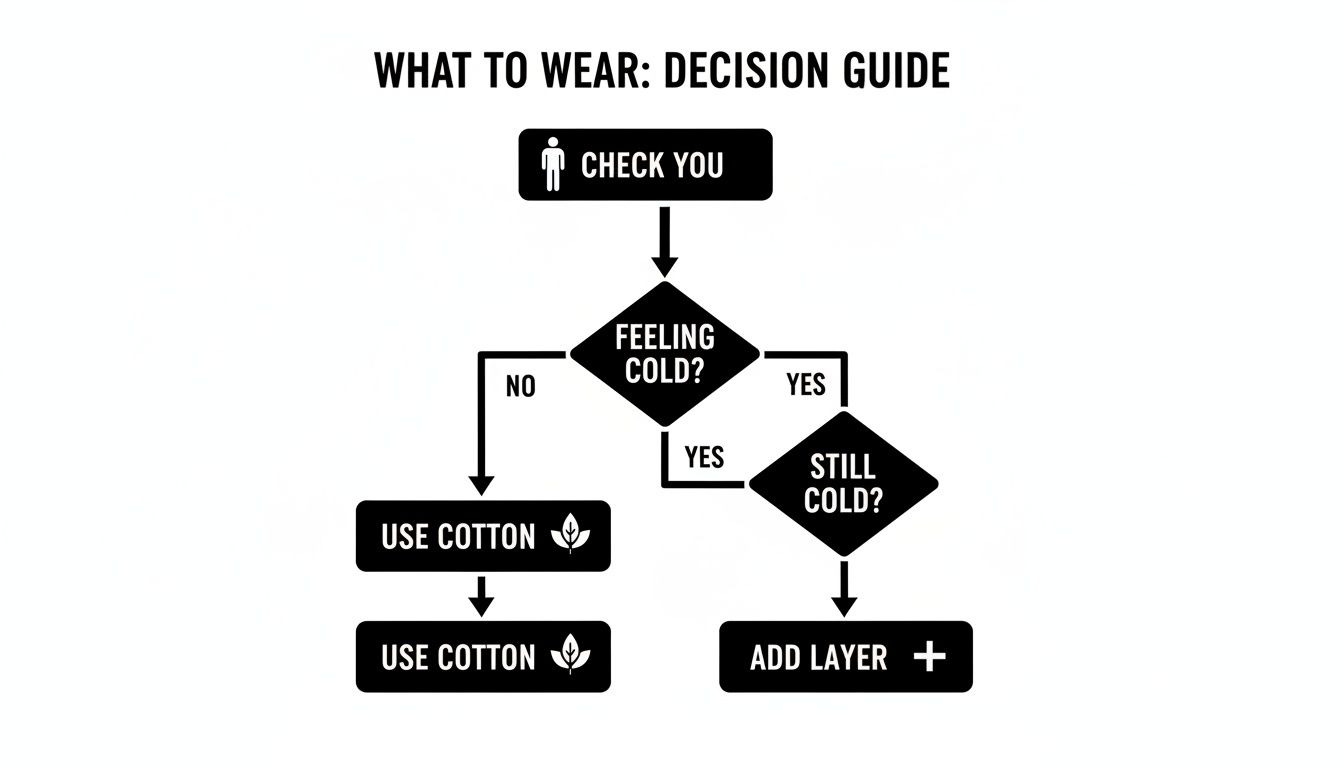
It boils down to a simple process: check how you feel first, then adjust for your baby by adding or removing layers, always sticking to breathable fabrics like cotton.
When the temperature really drops, smart layering is the safest and most effective way to keep your newborn toasty. The idea is to trap warm air between thin layers for insulation. It works much better than relying on one thick, bulky outfit, which can easily cause a baby to overheat.
A great winter strategy usually involves two or three layers, especially since newborns can lose up to 40% of their body heat right from their heads.
Start with a soft, long-sleeved cotton onesie as the base. Next, add something like a fleece or microfleece sleeper. If you're heading out into the cold, a third layer like a bunting suit or a warm blanket tucked securely around them in the stroller is a good move. And don't forget the details: cozy socks, mittens, and a soft hat are crucial for protecting their little hands, feet, and head.
A very common mistake is bundling up the baby too much indoors. If your home is heated to a comfortable 68-72°F (20-22°C), your baby probably only needs one more light layer than you’re wearing. The best way to check is to feel the back of their neck—if it’s sweaty, they’re too hot.
The baby apparel market has shifted to reflect what parents need. For summer, you'll see UV-protective fabrics in about 25% of new clothing lines. For winter, organic cotton's popularity has jumped by 50% since 2015, partly because parents are more aware that chemical dyes can cause allergic reactions in roughly 12% of babies. While shopping online is convenient, you can get a deeper dive into how market trends are shaping baby fashion from this industry analysis.
Let's be honest, those tiny outfits are irresistible. But when you're dealing with a newborn, the right clothing is less about fashion and more about function—for both their comfort and your sanity. You'll quickly learn to appreciate the little details that make dressing and changing a wiggly baby so much easier.
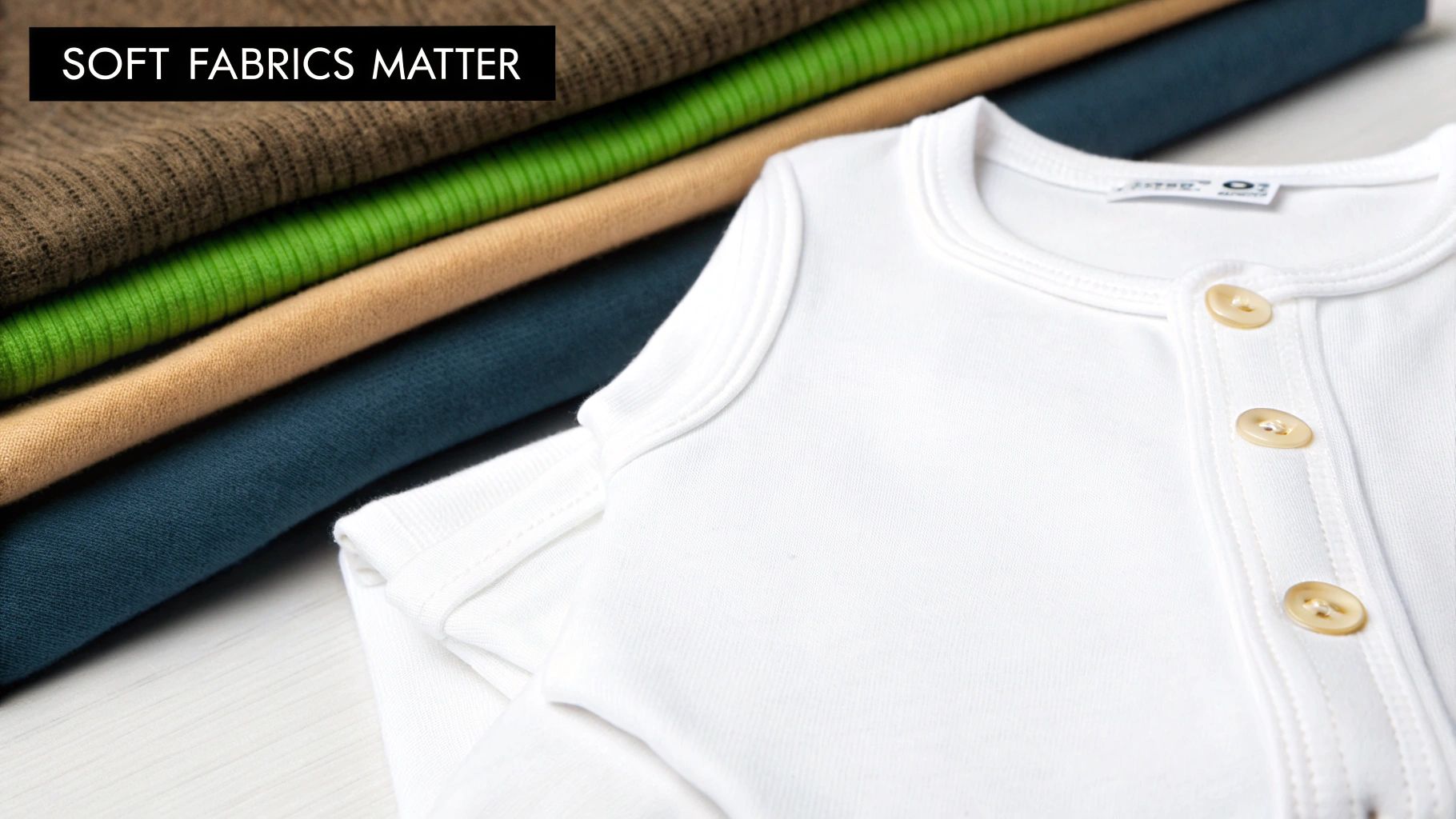
The first rule of thumb is to prioritize soft, breathable materials. A newborn's skin is incredibly thin and sensitive, so the wrong fabric can easily lead to irritation, eczema flare-ups, or heat rash.
Stick with natural fibers whenever you can. They’re gentle, they let your baby's skin breathe, and they do a great job of helping regulate body temperature.
Here are the fabrics I always recommend to new parents:
On the other hand, try to avoid synthetic fabrics like polyester or nylon for base layers. They tend to trap heat and moisture, which can cause overheating and annoying skin rashes. Save them for outer layers, like a snowsuit, where they won't be in direct contact with the skin for long.
As parents learn more about what's best for their babies, the demand for smarter fabrics is growing. It's a noticeable shift: 70% of parents now actively seek out hypoallergenic, tagless clothing to prevent rashes, which affect a surprising 10-15% of newborns. Cotton still dominates the market, but as you can find in baby clothing market trends from Technavio, innovation is key.
Beyond the fabric itself, look for design features that are clearly made with parents in mind. Trust me, you don't want to be fumbling with a dozen tiny buttons on a squirming baby during a 3 a.m. diaper change.
Keep an eye out for these game-changing details:
These little features make a world of difference. They turn potentially stressful moments into quick, simple tasks, leaving you with more time for what really matters—snuggles.
Figuring out what your newborn should wear to bed is more than just a matter of comfort—it's one of the most critical safety routines you'll learn. The whole idea is to keep your baby perfectly warm, but not too warm, which helps reduce the risk of Sudden Infant Death Syndrome (SIDS).
When it comes to the sleep space itself, bare is always best. This means the crib or bassinet should have nothing in it except a fitted sheet. No loose blankets, pillows, bumpers, or cute stuffed animals. While they look cozy, they are serious suffocation hazards. The golden rule is simple: always place your baby on their back to sleep, with nothing else in the crib.
A quick note on hats: they’re great for keeping your baby warm on an outing, but they should come off indoors. It’s surprisingly easy for a newborn to overheat in a temperature-controlled room, and overheating is a known SIDS risk factor. So, keep their little head uncovered while they sleep.
There’s a reason parents have swaddled their newborns for centuries—it works! Wrapping your baby snugly in a thin blanket feels a lot like the womb, and that familiar, secure feeling can be incredibly soothing for them.
Swaddling also tames the Moro reflex, that jerky startle reflex where a baby suddenly flings their arms out. It’s completely involuntary, but it often wakes them up. A good swaddle keeps their arms tucked in, helping them feel secure and, hopefully, sleep a little longer.
Getting the technique right is everything, though:
A great rule of thumb for dressing your newborn for sleep is the 'neck-down' rule. Start with a vest, layer on a sleepsuit, and try not to use more than four layers. This helps prevent overheating, a key factor in the 50% reduction of SIDS since awareness campaigns kicked off in the 1990s. Always choose safe, flame-retardant pajamas without drawstrings, especially since newborns can sleep up to 18 hours a day. You can learn more about the global focus on safe baby apparel trends at SkyQuest.
So, what happens after swaddling? Sleep sacks. Think of them as a wearable blanket—they provide all the warmth without any of the risks of a loose blanket covering your baby's face. They’re sleeveless by design, which is great for air circulation and preventing overheating.
The easiest way to pick the right sleep sack is to look at its TOG (Thermal Overall Grade) rating. This number simply tells you how warm it is, taking all the guesswork out of dressing your baby for the temperature in their room.
Using the TOG system makes it so much easier to get it right, ensuring your little one is dressed perfectly for a safe and comfortable night's sleep.
Taking your newborn out for the first time is a huge milestone! But it also brings up a ton of questions, especially when it comes to the car seat. There's one safety rule that’s absolutely critical and has no exceptions: never put your baby in a car seat while they're wearing a bulky coat or snowsuit.
This is a non-negotiable for a reason. All that puffy fabric creates a dangerous gap between your baby and the harness straps. In a sudden stop or, heaven forbid, an accident, the material compresses, leaving the harness dangerously loose when your baby needs it most.
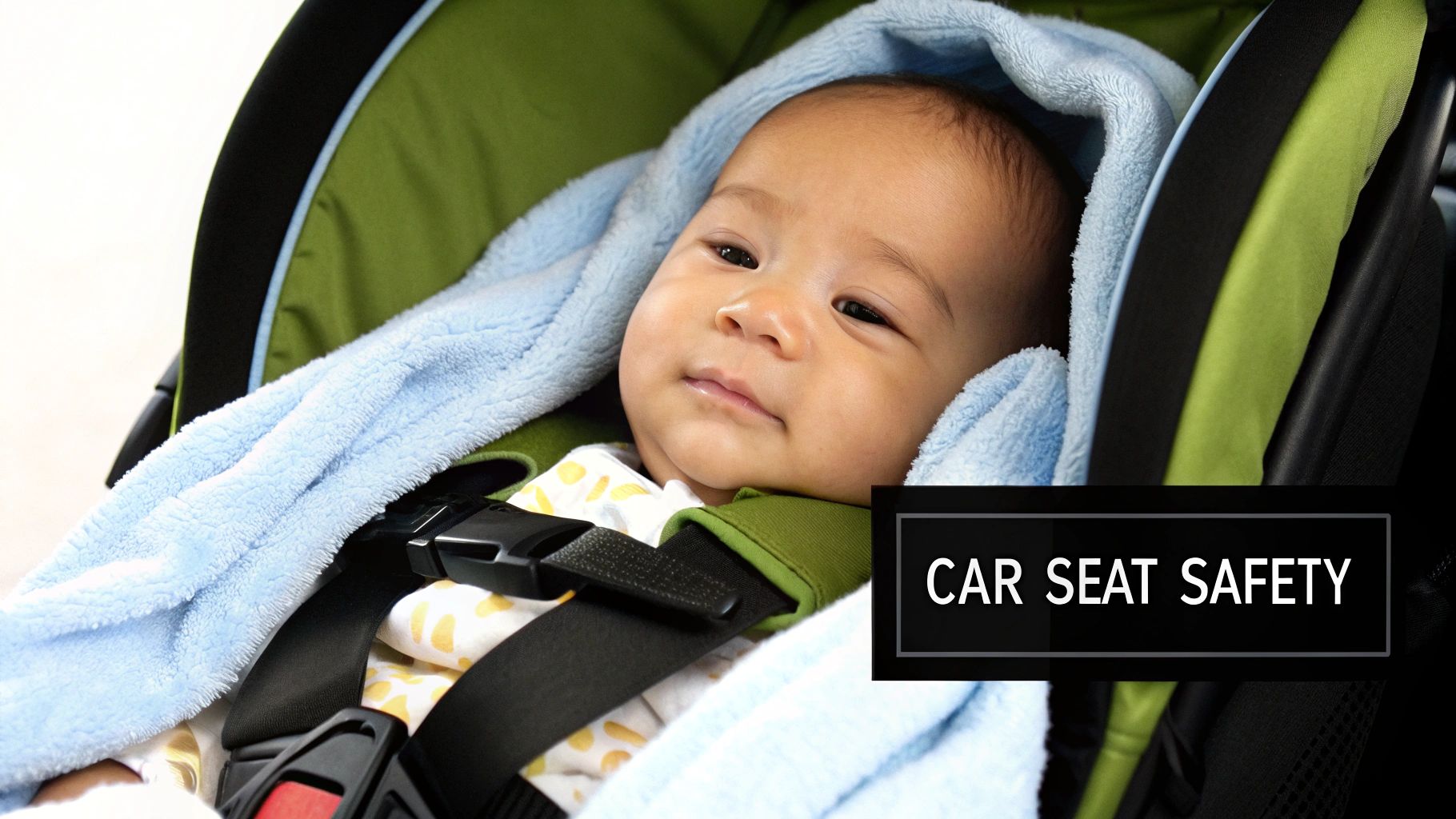
So, what’s the alternative to keep them warm and safe? It all comes down to smart, thin layers.
Forget the puffy snowsuit for the car ride. The key is to create warmth with layers that fit snugly, allowing the car seat harness to do its job properly.
Start by dressing your little one in their normal indoor outfit—a simple long-sleeved onesie and pants works great. From there, you can add one or two thin, warm layers on top.
How to Check the Harness Fit: The Pinch Test
After buckling your baby in, try to pinch the harness strap vertically at their collarbone. If you can grab a fold of the webbing, it's too loose. Tighten it until the strap lies flat.
Once you're out of the car, the rules change a bit. You'll likely be moving from the cold outdoors into a warm store or doctor's office, so easy-on, easy-off layers are your ticket to a happy baby.
For a stroller walk, you can absolutely bundle them up. With no harness straps to worry about, a cozy bunting suit or a thick, tucked-in blanket is perfect. Just be sure to add a warm hat, mittens, and booties to protect their extremities.
Heading to an appointment calls for strategic dressing. A two-way zipper sleeper is a game-changer for quick diaper checks without a full-on wardrobe change. A cardigan is also much easier to slip off in a warm waiting room than a pullover. A little planning goes a long way in keeping your baby comfortable and you feeling calm, cool, and collected on your adventures together.
Even with a closet full of tiny clothes, you're bound to have questions. Dressing a tiny human for the first time brings up all sorts of "what if" scenarios. Let's walk through some of the most common ones I hear from new parents.
A big one is about hats. Does a newborn need a hat indoors? While that little hospital beanie is perfect for their first day or two, you can usually ditch it once you're home. Babies regulate their temperature through their heads, and keeping a hat on inside can actually make them overheat. Save the cute hats for your outdoor adventures.
And what about socks? Specifically, do they need them for sleep? It really depends on their PJs and the temperature of the room. If your baby is already bundled up in footed pajamas or a cozy sleep sack, adding socks is probably overkill and could make them too warm. But if they're in a simple nightgown on a cooler night, a pair of socks can add that perfect touch of warmth.
Navigating baby clothes sizes feels like a guessing game. You'll see tags that say "Newborn," "0-3 Months," and "3M," and they don't always mean the same thing.
My advice? Have a few "Newborn" size outfits ready for those first photos, but stock up on the "0-3 Months" size. You can always roll up sleeves that are a little long, but you can't stretch an outfit that's too small.
Let's be real: your newborn's main job is eating, sleeping, and pooping. You'll be changing a lot of diapers—think 8-10 every single day. Convenience is everything.
Look for outfits with easy-access snaps, especially at the crotch. Kimono-style tops, onesies, and two-way zippers on sleepers are your best friends. They make those middle-of-the-night changes so much faster, which means more sleep for everyone.
It's no surprise that the U.S. baby clothing market is projected to reach $40.21 billion by 2025. Parents are willing to invest in clothes that are both cute and genuinely functional. If you're curious about what drives these trends, you can explore the full baby clothing industry analysis.
At the end of the day, the best guide is your baby. Are they fussy and red-faced? They might be too hot. Feel the back of their neck—if it’s cool, add a layer. If it's sweaty, it's time to take one off. You’ll get the hang of it faster than you think.
At FindTopTrends, we handpick baby essentials that are as practical as they are adorable, so you can find everything you need in one spot. Check out our newborn clothing and accessories at https://findtoptrends.com.




