


No products in the cart.

Free Shipping Australia-Wide

5 star customer service

Quality Tested Products

Ever wonder how a particular gadget, a specific style of jeans, or even a coffee mug suddenly becomes the one thing everyone seems to have? It’s not just random luck. Understanding what's trending is about spotting the patterns that drive what we all decide to buy, wear, and use.
Trends don’t just pop up out of nowhere; they follow a surprisingly predictable path from a niche interest to a mainstream must-have.
Think of a trend like a snowball rolling downhill. It starts off small, usually with just a handful of innovators or early adopters who stumble upon a great new product or idea.
As they share their excitement, the "snowball" starts to pick up speed and gather more snow. Before you know it, it's a massive cultural force that seems almost unstoppable. This whole process is driven by real-world shifts in culture, our own behaviors as consumers, and the market itself. A product doesn't just land on a store shelf as a bestseller—it starts its journey by solving a problem for a small, dedicated community.
Once that initial spark catches, the product enters a growth phase. This is when more people see it, try it, and—most importantly—start talking about it. Social media is a huge catalyst here, capable of turning tiny ripples of interest into giant waves of demand. If you're curious, digging into the underlying psychology of influence reveals why certain things capture our collective attention so powerfully.
Eventually, the trend hits its peak. It has reached maximum popularity and is everywhere. After a while, things level off and begin to fade, making room for the next big thing to start its own journey.
This diagram shows those three key stages, from a niche beginning all the way to peak popularity.
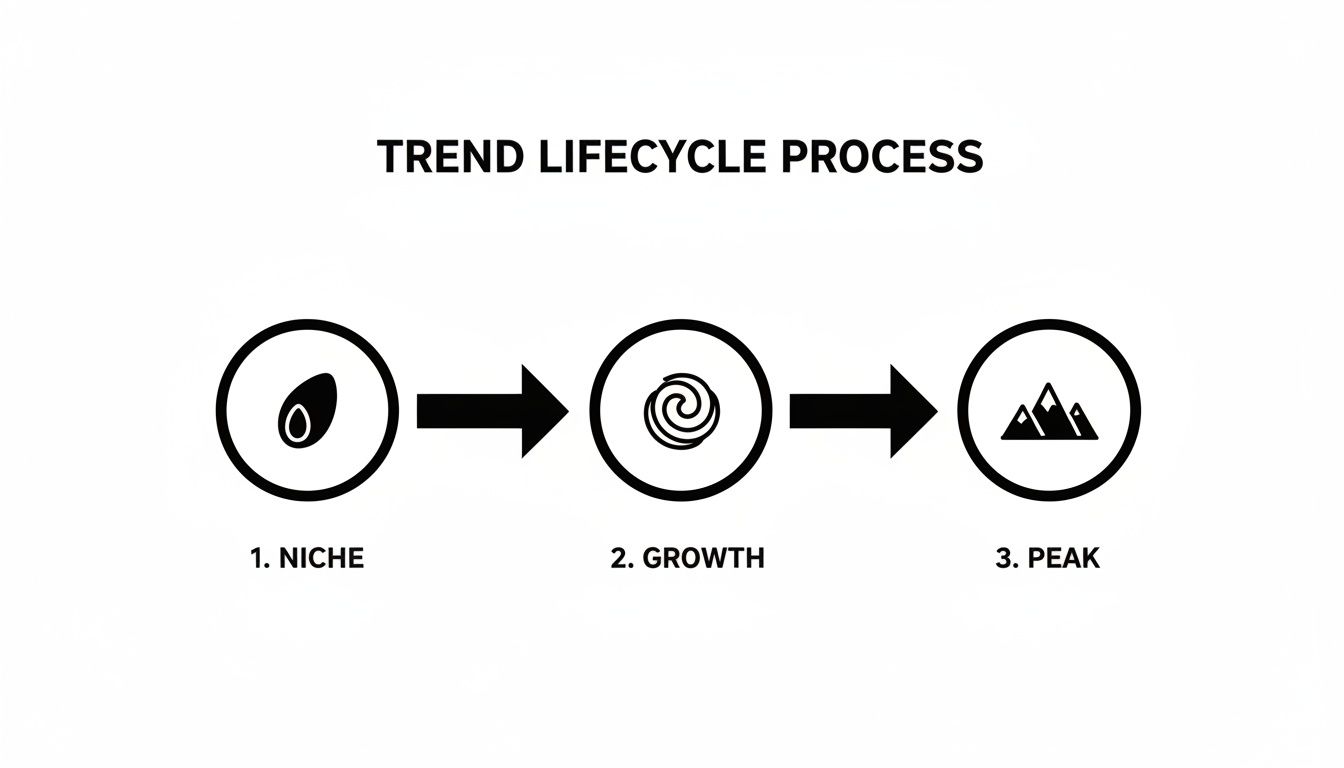
You can see how a small "niche" idea builds momentum during its "growth" phase until it hits the "peak" and becomes a massive success.
This is exactly what trend forecasters study for a living. By analyzing these stages, they can get pretty good at predicting what's going to be popular next. To get a better sense of how the pros do it, you can dive into what is trend forecasting and see the methods they use.
Once you understand this lifecycle, you can start spotting these up-and-coming trends yourself, long before they hit the mainstream. It’s the key to becoming a much smarter and more informed shopper.
So, how can you tell when a product is actually trending and not just a flash in the pan? It’s less about guesswork and more about data. Think of it like a detective piecing together clues—by looking at a few key signals, you can get a really clear picture of what’s hot right now and what’s about to take off.
When these signals align, they tell a compelling story about a product's rise from a niche find to a mainstream must-have. Getting a handle on them is the first step to becoming a pro at spotting trends.
To really break it down, here are the four main indicators we look at to see if a product is gaining real momentum.
| Trend Signal | What It Measures | Real-World Example |
|---|---|---|
| Search Volume | The number of people actively looking for a product or keyword on search engines like Google. | A sudden spike in searches for "walking pad" signals growing interest in at-home fitness solutions. |
| Sales Velocity | The speed at which a product is selling. It's not just about total sales, but how fast they're happening. | An Amazon seller notices a portable blender that used to sell 20 units a day is now selling 200. |
| Social Buzz | The amount of conversation and engagement a product is generating on social media platforms. | A new skincare brand goes viral on TikTok after a few popular creators feature it in their routines. |
| Seasonality | Predictable peaks and valleys in demand based on the time of year, holidays, or seasons. | The demand for inflatable pools skyrockets every year as soon as the weather warms up in late spring. |
Each of these signals provides a different piece of the puzzle. When you put them all together, you get a much more reliable and complete view of what's truly trending.
Think of these first two signals as a powerful one-two punch. Search volume is the first hint of curiosity. It’s like a library where, all of a sudden, everyone starts asking for the same book. When more people start typing "smart bird feeder" or "portable power station" into Google, it's a clear sign that interest is building.
Then you have sales velocity, which measures how quickly a product is actually flying off the shelves. If an item that usually sold 10 units a day is suddenly selling 100, that acceleration is a huge tell. For instance, Shopify merchants saw sales for barrel-fit jeans explode right alongside a 500% jump in Google searches, proving just how closely these two are linked.
Trends are rarely a mystery if you know where to look. By combining search data with sales figures, you can see demand building in real-time, giving you a clear advantage.
Next up is social buzz—the digital word-of-mouth. Imagine a whisper in a crowded room that quickly turns into a roar. That's exactly what happens when a product catches fire on platforms like TikTok or Instagram. Social buzz is that organic, user-driven excitement that can turn an obscure item into an overnight sensation. To get a better sense of this phenomenon, it's worth understanding what makes a video go viral, since the same principles of timing and emotion often apply.
Finally, seasonality gives us essential context. This signal is all about predictable patterns tied to the calendar.
Together, these four signals—search volume, sales velocity, social buzz, and seasonality—form the bedrock of trend analysis. For those who want to dive even deeper, you can explore more about the various trend analysis methods to reveal data insights. Getting comfortable with these concepts is your key to spotting what’s trending right now before everyone else does.
It’s one thing to understand the data behind a trend, but it's far more interesting to see how those signals play out in the real world. Trends aren't just numbers on a screen; they’re real movements that influence what we buy, how we live, and what we get excited about.
So, let's dive into some of the most dynamic consumer categories and see what's hot right now. This snapshot shows how bigger cultural shifts translate into specific, must-have products.
The tech world is all about making life smoother and more powerful. Smart home automation keeps picking up steam, with gadgets like automated blinds and smart locks becoming the new standard. We’re moving toward homes that practically anticipate our needs.
Another huge area is the boom in portable power solutions. Whether it’s a tiny power bank for your daily commute or a serious solar generator for off-grid living, the hunger for reliable energy on the go has never been greater. It speaks to our increasingly mobile lifestyles and the desire to be ready for anything.
In fashion, it feels like everything old is new again. Retro styles are having a major moment, with the '90s and early 2000s leading the charge. We're seeing a huge comeback for baggy jeans, chunky sneakers, and minimalist slip dresses—a perfect blend of nostalgia and modern comfort.
At the same time, sustainability has gone from a niche interest to a major factor in how people shop. Consumers are actively seeking out clothing made from eco-friendly materials like organic cotton and recycled fabrics. This isn't just a fad; it's a fundamental shift toward fashion that feels both stylish and responsible.
A trend's true power is revealed when it reflects a change in our values. The move towards sustainable fashion isn't just about clothes; it's a statement about our collective priorities for the planet.
Our living spaces are getting smarter and greener. With more people working from home, the demand for multi-functional furniture has skyrocketed. Think coffee tables that seamlessly convert into desks or sofas with clever built-in storage. Every square foot has to work harder.
Biophilic design—the idea of bringing nature indoors—is also dominating home decor. This shows up in the boom of houseplants, the use of natural materials like wood and stone, and layouts designed to maximize sunlight. It's all about creating a home that feels calm, grounded, and restorative.
For today’s travelers, the name of the game is efficiency. There's a huge demand for lightweight, durable gear that can take a beating without weighing you down. This applies to everything from packable jackets that fit in your palm to versatile travel bags that can handle any adventure.
Smart luggage is another category that's gaining traction. Features like built-in USB charging ports and digital tracking appeal to the modern traveler who wants to stay connected and keep their belongings secure. It's all part of a larger desire for a smarter, more seamless journey.
When it comes to shopping for kids, parents are focused on two key things: sustainability and education. Eco-friendly baby products, like biodegradable diapers and organic cotton onesies, are more popular than ever. It's a clear sign that parents want what's best for their baby and the planet.
At the same time, there's a strong pull toward educational toys that help build skills. STEM-focused kits, classic building blocks, and creative play sets are flying off the shelves as parents look for ways to make learning fun. If you're looking for more specific ideas, our guide on the top 10 trending products for 2025 is a great place to start.
It’s impossible to talk about shopping trends without mentioning the power of mobile. M-commerce sales are on track to hit $2.51 trillion, which accounts for a staggering 73% of all e-commerce. With smartphones driving nearly 80% of visits to retail websites, it's undeniable that the hunt for the next big thing now happens right in the palm of your hand.
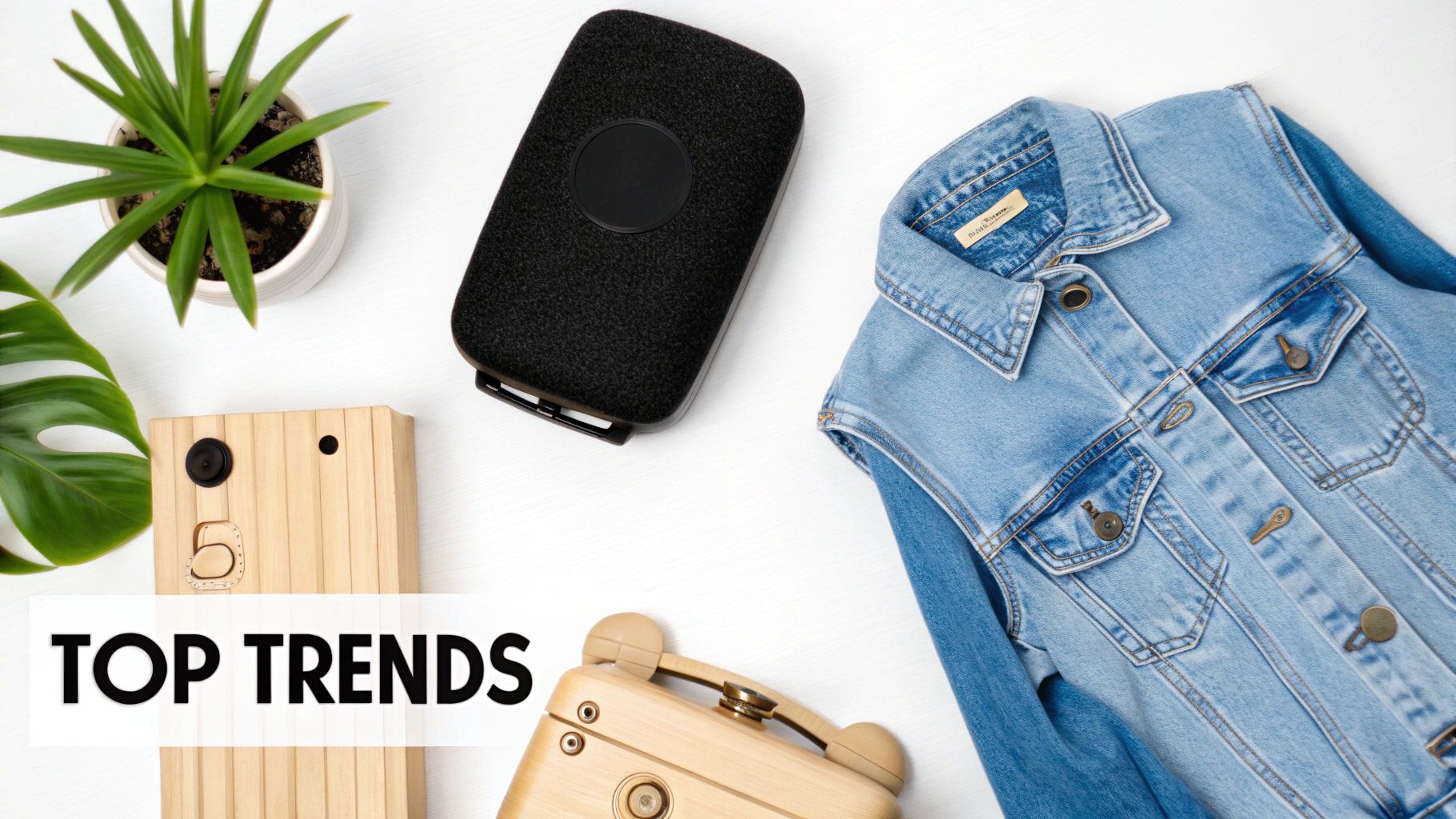
It’s easy to get caught up in the excitement of a new trend, but that thrill can quickly turn into buyer's remorse if you're not careful. The real secret is to shop with a strategy, turning that momentary buzz into a smart purchase you'll actually love and use.
Before you click "buy" on that viral sensation, just take a beat. Ask yourself if it genuinely adds value to your life. This small pause is the difference between an impulsive splurge and an intentional purchase, making sure your money goes toward things you’ll appreciate for more than a couple of weeks.
First things first: don't let a trend wreck your finances. A simple way to stay grounded is to get honest about wants versus needs. Is that new gadget solving a real-world problem for you, or is it just the shiny new thing everyone's talking about?
Try setting aside a small, specific part of your monthly budget for "fun" or "trend" buys. This gives you the freedom to experiment with what's new without the guilt. It’s a simple fence that keeps impulse spending in check while still letting you enjoy the fun of discovering something new.
Smart trend shopping isn't about restriction; it's about empowerment. It's the art of balancing the excitement of the new with the satisfaction of a well-considered purchase.
This approach makes your trend-driven purchases feel like thoughtful additions, not financial mistakes.
Knowing when to buy is just as critical as knowing what to buy. The price of almost any trending product follows a classic lifecycle. It's highest when the hype is at a fever pitch, drops as it goes mainstream, and then plummets once the next big thing arrives.
For the best value, try to buy just after that initial peak. The item is still popular and relevant, but you’re no longer paying that "early adopter tax." You get all the style without the premium price tag.
Here’s how to time it right:
At the end of the day, the smartest trend shoppers prioritize quality over everything else. Think about it like buying an umbrella. You could grab a cheap one that will collapse in the first gust of wind, or you could spend a little more on a well-built one that will keep you dry for years.
The exact same principle applies here. A well-made gadget or a classic garment with a modern twist will outlast a cheaply made fad every single time. Before you commit, ask yourself if the item has a life beyond the current hype. Does it solve a genuine need or fit into your personal style for the long haul?
Investing in trends that offer both substance and style is the ultimate way to shop without a single regret.
Alright, you understand what makes a product "trend," but how do you actually find those things before everyone else does? This is where the theory ends and the fun begins. We’ll walk through how to use a platform like FindTopTrends to stop guessing and start finding what’s genuinely buzzing right now.
Think of it less like a massive, overwhelming store and more like your personal trend radar. Instead of scrolling endlessly through a sea of products, you get to point your search exactly where you want it to go. Your best friend in this process? Filters. They let you slice through the noise and zero in on what you actually care about.
The secret to a good search is getting specific. The category filters on FindTopTrends are built for precisely that—letting you drill down into your personal interests.
Here’s a practical look at how that works:
This is how you skip the fluff. It’s the difference between wandering through a giant superstore hoping to stumble upon something cool and having a personal shopper take you straight to the one aisle that has everything you need.
The most powerful tool for a smart shopper is clarity. Knowing what you're looking for allows you to filter out the noise and spot the true gems that align with your needs and passions.
If you’re looking for the best bang for your buck, head straight to the 'Trending Deals' section. This isn’t just a random list of sale items; it’s a hand-picked collection of products that hit the sweet spot between popularity, quality, and price. It’s like having a savvy friend tap you on the shoulder and say, "Hey, check this out before it's gone."
This is a huge advantage, especially now that shopping is a global game. Cross-border e-commerce is absolutely exploding, now making up 18.8% of all online sales. In fact, 59% of shoppers around the world are buying from retailers outside their own country. You can dive deeper into these numbers with this article on the rise of global e-commerce on ecommercegermany.com.
What does that mean for you? It means you can snag U.S. tech accessories, European fashion, or innovative Asian gadgets—often at better prices—through a platform like FindTopTrends.
When you use tools like these, you shift from being a passive browser to an active, informed trend-spotter. You can see what's hot, compare your options, and feel confident that your next great find is just a few clicks away.
Trends rarely just pop up out of nowhere. They're more like the visible tips of massive icebergs, shaped by powerful global forces hiding just beneath the surface. The products you see trending right now are direct reflections of these big shifts—everything from economic changes to technological leaps that completely alter how we live.
Think of it like a river current. You might only notice the leaves floating on top, but there's a huge, unseen force guiding their direction.
These macro-forces create the perfect environment for certain trends to take off. For instance, a growing collective focus on wellness directly fuels the demand for everything from home fitness gear to organic skincare. In the same way, a worldwide push for sustainability has turned eco-friendly products from a niche interest into a mainstream expectation.
Of all these forces, perhaps the biggest game-changer has been the incredible boom in e-commerce. Mobile technology has connected the world in a way that lets new ideas spread globally in days, not years. This digital marketplace has fundamentally changed how quickly trends are born, peak, and fade away. It's a fast-paced world where something popular in one country can become a global phenomenon practically overnight.
This rapid cycle is powered by jaw-dropping amounts of online spending. By 2025, global e-commerce sales are projected to hit a staggering $7.4 trillion, which will account for nearly 24% of all retail spending. A huge slice of that pie is mobile commerce, set to reach $2.51 trillion and make up 73% of all online sales. You can dive deeper into these numbers with some fascinating online retail statistics and trends on invespcro.com.
Every purchase you make connects you to a vast global network. Understanding these larger forces helps you see trends not as fleeting fads, but as meaningful responses to a changing world.
So, when you spot a trending product, you're not just seeing a popular item. You're witnessing a small piece of a much larger story about where our world is heading. This perspective turns you from a simple shopper into a savvy participant in a dynamic, interconnected marketplace.
Even after you get the hang of what makes something popular, a few practical questions always seem to pop up. It's one thing to spot a trend, but it's another to know how to shop for it wisely. Let's tackle some of the most common questions we hear.
The best way to judge a trend's staying power is to ask yourself: does it solve a real problem? Think about the explosion in ergonomic home office gear. That's not just a fleeting style—it's a response to a massive shift in how we work, meeting a genuine need for comfort and productivity. It's got legs.
Lasting trends almost always connect to bigger cultural movements. Is it tied to sustainability, wellness, or a major tech breakthrough? If a product plugs into one of those larger shifts, you can bet it has a much better chance of sticking around for the long haul.
You don't need to chase every single new thing. The secret is to be selective. Aim to add just one or two key trending items each season instead of trying to overhaul everything. Use sites that let you compare prices and set alerts for when that item you’ve been eyeing goes on sale.
Pro Tip for Budget Shoppers: Focus on trending accessories. A new style of handbag, a clever piece of tech, or a statement necklace can make your existing outfits feel completely fresh for a fraction of the cost of a new wardrobe.
It's not your imagination—the trend cycle is moving at lightning speed, and social media is the engine. Micro-trends, especially in fashion and beauty, can literally blow up and disappear in just a few weeks. A single viral video can create a sold-out product overnight.
But remember, not everything moves that fast. The bigger "macro" trends—the shifts in home design, travel, and technology—unfold much more slowly, often over several months or even years. The real skill is learning to tell the difference between a flash-in-the-pan fad and a meaningful, slow-burning shift.
Ready to stop chasing trends and start choosing them? At FindTopTrends, we do the digging for you, surfacing the best trending products so you can find what you love with confidence. Check out our latest finds and deals at https://findtoptrends.com.




