


No products in the cart.

Free Shipping Australia-Wide

5 star customer service

Quality Tested Products

Bringing a new baby home is one of life's most exciting moments, but let's be honest—staring down the endless aisles of baby gear can be completely overwhelming. The good news? You don't need it all.
The best baby products for newborns really boil down to just three core needs: a safe place to sleep, an easy way to eat, and a simple system for diapering. If you nail these three, you’ve got the essentials covered.
Walking into a baby store can feel like you're gearing up for a major expedition, with every gadget promising to be the one that makes your life easier. But the truth is, newborns have very simple needs: safety, food, and comfort.
The real secret is learning how to cut through the marketing noise and focus on what genuinely helps in those first few months. This saves you money, sure, but more importantly, it simplifies your life, leaving you with more time and energy to just enjoy your new baby.
If you want a great starting point, this comprehensive guide to the best baby products for newborns is a fantastic checklist. It's not about buying everything on the list, but about making smart choices that fit your family.
Think of your shopping list as being built around your baby's most basic, non-negotiable needs. A minimalist approach is your best friend here. Before you buy anything, ask yourself: does this solve a real problem related to sleeping, feeding, diapering, or getting around?
This visual breaks down the main categories you'll want to focus on.
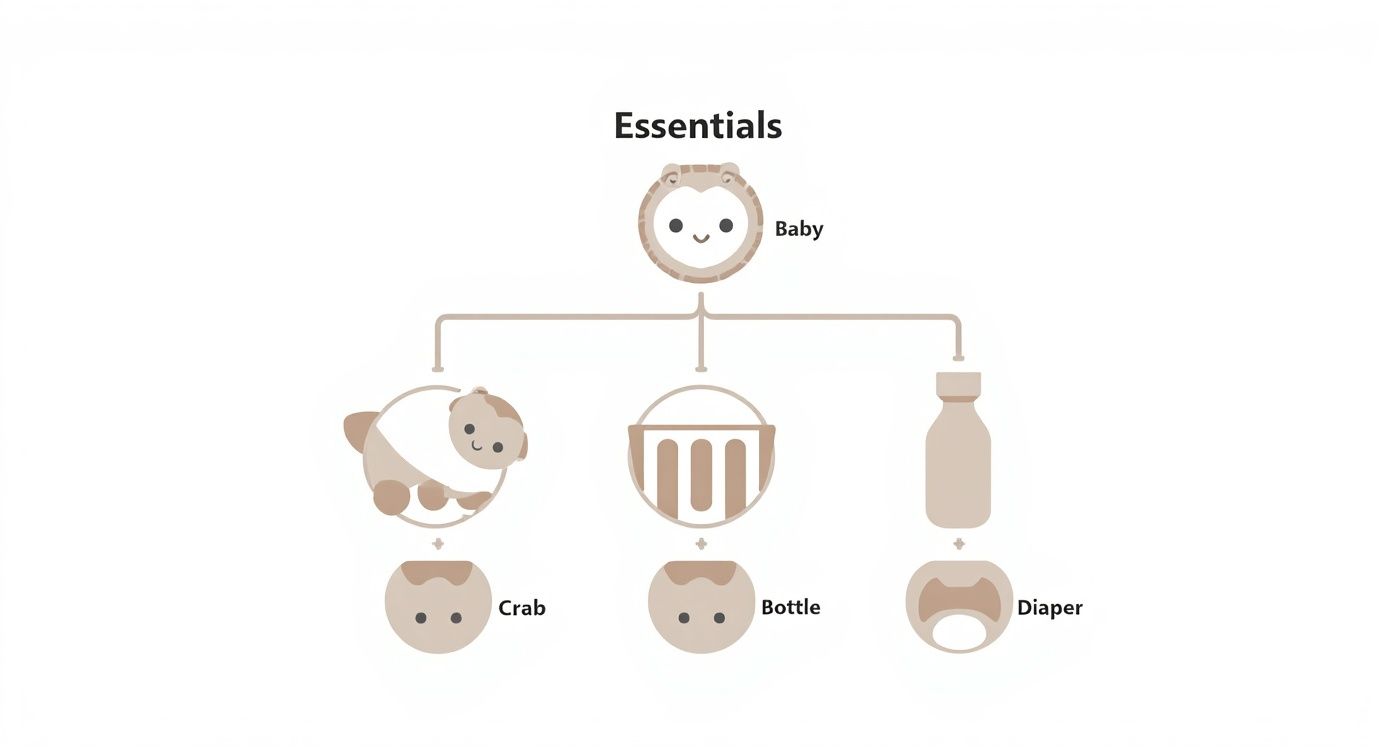
As you can see, everything really stems from those three pillars of newborn care. Keeping this in mind will help you stay organized and avoid impulse buys. It's a massive market, after all—the global baby care industry is expected to hit USD 256.6 billion by 2035, which shows just how much innovation is happening in this space.
By concentrating on these foundational areas, you build a supportive environment for your baby. This guide will walk you through each category, highlighting what truly matters for safety, functionality, and your own peace of mind.
For a newborn, life is a pretty simple loop: eat, sleep, poop, repeat. And they do a lot of sleeping—often 16-17 hours a day! That’s why setting up a sleep space that’s both safe and soothing is one of the most critical things you’ll do as a new parent. This isn’t about picking out a cute theme; it’s about laying the groundwork for healthy sleep right from the very beginning.
The absolute foundation of any nursery is built on safe sleep practices. Just think of the American Academy of Pediatrics (AAP) guidelines as the golden rules for your baby’s crib. The most important one? Always place your baby on their back to sleep, on a firm, flat surface, with absolutely nothing else in there with them.
Your first big decision is figuring out where your baby will actually sleep. The main players are bassinets, cribs, and co-sleepers. Each has its own pros and cons, and what works best really comes down to your home’s layout and your family’s needs.
No matter which option you land on, keep an eye out for a JPMA (Juvenile Products Manufacturers Association) certification. This little seal is your assurance that the product has been tested by an independent third party to meet rigorous safety standards.
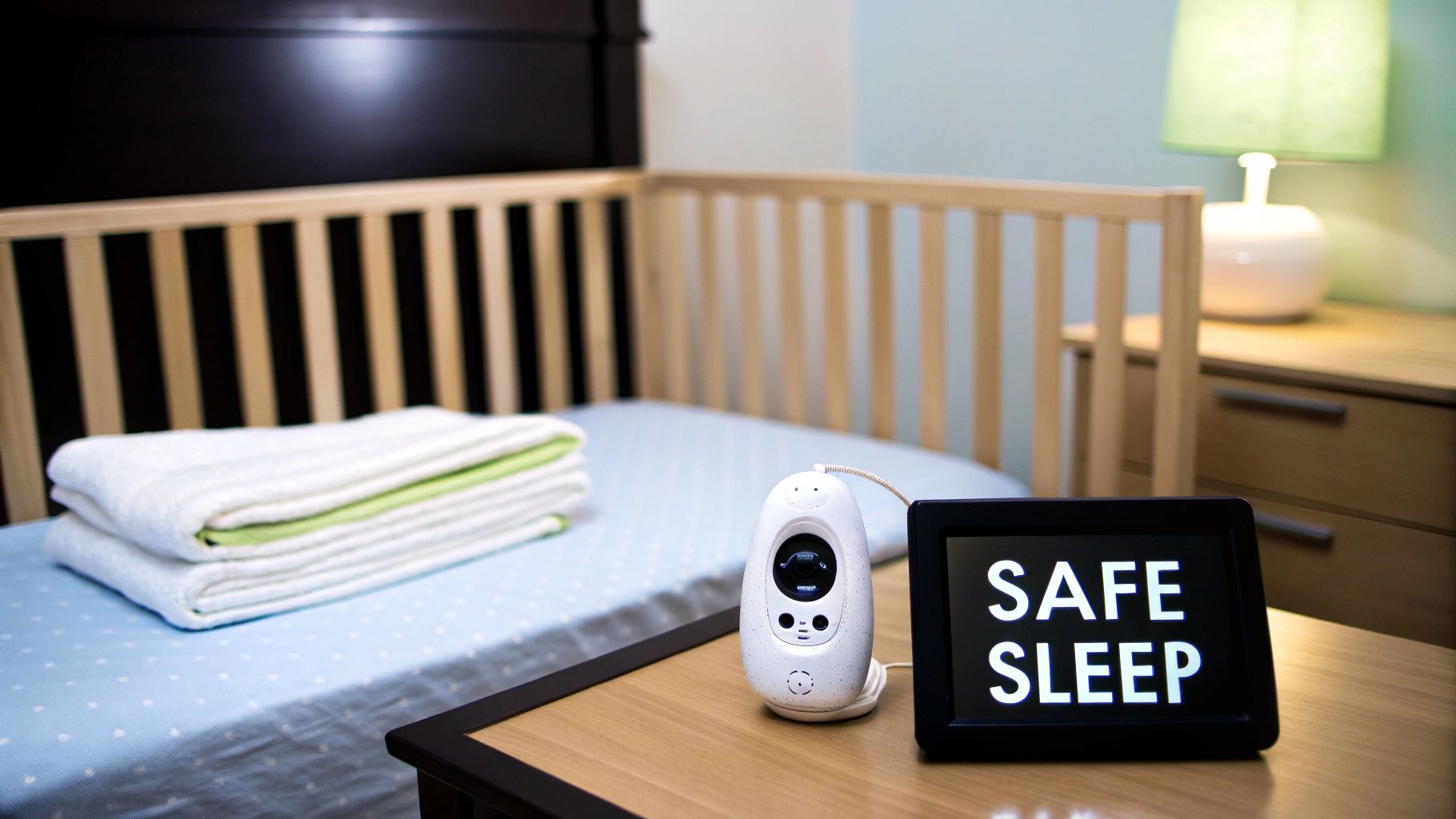
Once you've picked the bed, setting it up correctly is everything. The guiding principle here is simple: less is always more. A boring crib is a safe crib.
The safest sleep environment for an infant is a crib, bassinet, or portable play yard that meets the safety standards of the Consumer Product Safety Commission (CPSC) and has a firm, flat mattress with only a fitted sheet. Avoid bumpers, pillows, blankets, or soft toys.
This means the mattress must be firm and fit snugly inside the crib frame. You shouldn't be able to fit more than two fingers between the mattress and the side of the crib. The only thing on that mattress should be a fitted sheet. Breathable fabrics like cotton or muslin are great choices because they help keep your baby from getting too hot.
A clean nursery environment is also a huge part of good sleep hygiene. Keeping the air quality high is especially important for a newborn’s sensitive system. You can learn more about how the best air purifiers for allergies can help create a healthier space for your baby to rest and grow.
While the crib itself needs to be bare, a few key accessories can make a world of difference in helping your newborn sleep longer and more soundly. These tools work by recreating the snug, comforting feeling of being in the womb.
Swaddles and Sleep Sacks
Ever seen a newborn suddenly jerk their arms and wake themselves up? That’s the startle reflex (also called the Moro reflex). Swaddling—wrapping them up like a tiny, adorable burrito—helps prevent this.
White Noise Machines
The womb is surprisingly loud! A white noise machine creates a constant, shushing sound that mimics what your baby heard 24/7 before they were born. It’s incredibly calming and does a fantastic job of masking other household noises that could wake them up.
Baby Monitors
A good monitor is really for your peace of mind. It lets you check in on your baby without having to sneak into the room and risk waking them.
| Monitor Type | Best For | Key Feature |
|---|---|---|
| Audio Only | Simplicity and budget | Clear sound transmission without any bells and whistles. |
| Video | Visual reassurance | A camera lets you see your little one, even in the dark. |
| Smart Monitors | Data-loving parents | Tracks sleep, breathing, and room temp for total insight. |
By combining a safe sleep surface with these smart accessories, you can create a peaceful sanctuary that helps both you and your newborn get the restorative sleep you both desperately need.
Feeding your newborn is so much more than just a task on a checklist. It's one of the first and most powerful ways you'll bond, and those quiet moments happen around the clock. Whether you're planning on breastfeeding, formula feeding, or a bit of both, having the right gear can make all the difference, turning what could be a stressful scramble into a calm, confident routine.
Let’s be honest, newborns seem to be hungry constantly. You’ll be spending a huge chunk of your time feeding them, which is why getting this category right is so important. A little bit of planning now can save you from those desperate late-night store runs later on, letting you focus on soaking up those newborn cuddles.
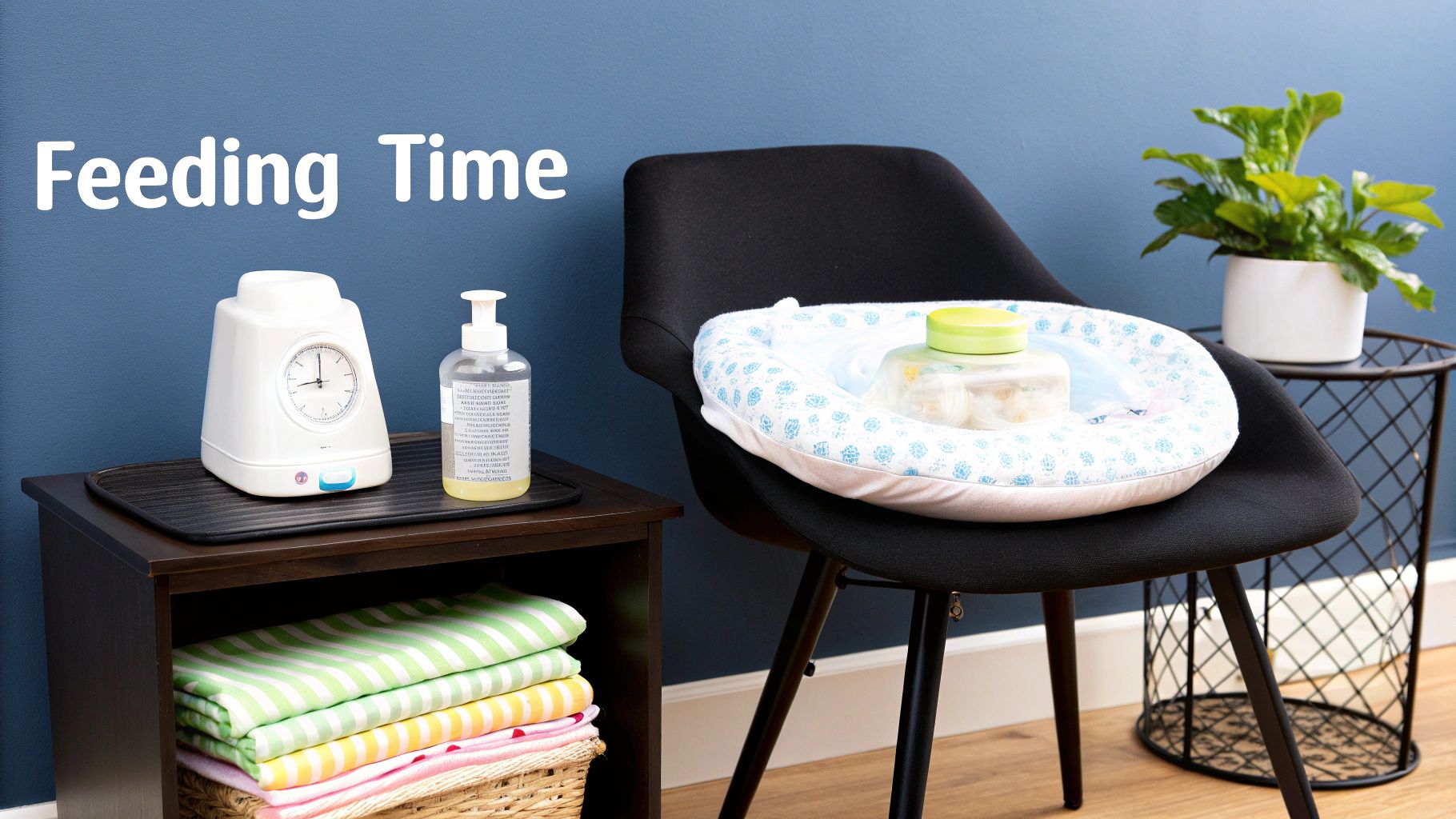
If you're planning to breastfeed or pump, a few key pieces of equipment can seriously improve your comfort and efficiency. Think of them as your personal support crew.
A good breast pump is often the MVP, especially if you're heading back to work or want your partner to be able to help with feedings. A great first step is to check with your health insurance—they are required to cover the cost of a personal pump, so make sure you look into your options!
Beyond the pump, a comfortable setup is a non-negotiable. Nursing pillows, like the ever-popular Boppy or My Brest Friend, are designed to lift your baby to the right height, which saves your back, neck, and arms from aching.
A supportive nursing pillow isn't just a comfort item; it's an ergonomic tool that helps you and your baby find and maintain a proper latch, which is essential for successful breastfeeding in the early weeks.
You'll also need a solid system for storing all that "liquid gold." Look for BPA-free milk storage bags that are pre-sterilized and have a tough, leak-proof seal—the last thing you want is a mess in your freezer.
For parents going the formula route, the game is all about bottles and prep. The sheer number of bottle options out there can feel overwhelming, but the real goal is simple: find one your baby likes that helps keep gas and fussiness to a minimum.
Choosing the Right Bottle
Lots of modern bottles have special anti-colic systems. These are basically clever vents that reduce how much air your baby swallows while eating, which can be a total game-changer if you have a gassy, uncomfortable infant.
| Bottle Material | Pros | Cons |
|---|---|---|
| Plastic | Lightweight, affordable, and shatterproof. | Can degrade over time; must be BPA-free. |
| Glass | Durable, easy to sterilize, and long-lasting. | Heavier and can break if dropped. |
| Silicone | Soft, flexible, and free of BPA and phthalates. | Often more expensive than other options. |
Here’s a pro tip: buy just one or two bottles from a couple of different brands to start. Babies can be surprisingly picky, and this trial-and-error approach lets you figure out what your little one prefers before you commit to a full set.
No matter how you're feeding your baby, some things are just universally essential. First up: an army of burp cloths. Seriously, you can never have too many. Newborns are masters of spit-up, and having a soft, absorbent cloth within arm's reach at all times will save countless outfits (yours and theirs).
A bottle sterilizer also brings a lot of peace of mind. Whether you use microwave steam bags or a countertop electric unit, it ensures your bottles and pump parts are truly, hygienically clean. This is especially important in the first few months while your baby's immune system is still developing.
Finally, a good bottle brush with a dedicated nipple cleaner is a must-have for getting into all those nooks and crannies that a dishwasher can miss. These simple tools are the foundation for a safe, clean, and stress-free feeding routine.
Once you've got sleeping and feeding somewhat figured out, you'll quickly find that diapering and bathing become the cornerstones of your daily routine. This is where you'll spend a surprising amount of one-on-one time with your baby. Having the right gear not only makes these tasks easier but also keeps your newborn’s incredibly sensitive skin safe and healthy right from the start.
Let’s break down the essentials for a simple and stress-free hygiene routine.
The first big choice you'll make here is between disposable and cloth diapers. There’s no right or wrong answer—it’s all about what fits your family's lifestyle.
Disposables are the champions of convenience. They're super absorbent, a breeze to put on, and you just toss them when you're done. In those first few sleep-deprived weeks, that simplicity is a lifesaver.
Cloth diapers, on the other hand, are the eco-friendly and budget-conscious choice in the long run. And forget the old-school pins and plastic pants; modern cloth diapers are incredibly well-designed with simple snaps, absorbent inserts, and cute waterproof covers. The trade-off, of course, is the laundry. You have to be ready to commit to a consistent washing routine.
To help you decide, here’s a quick breakdown of how the two systems stack up.
| Feature | Disposable Diapers | Cloth Diapers |
|---|---|---|
| Upfront Cost | Low | High (need to buy a full set) |
| Long-Term Cost | High (ongoing purchase) | Low (one-time purchase) |
| Convenience | Very high (use and toss) | Lower (requires washing) |
| Environmental Impact | High (contributes to landfill waste) | Low (reusable, less waste) |
| Laundry Load | Minimal | Significant and requires a specific routine |
| Absorbency | Excellent, often with overnight options | Good, but may require more frequent changes |
Ultimately, the best choice is the one that you can realistically manage. Some parents even do a combination of both—cloth at home and disposables when they're out and about.
No matter which diaper you go with, a well-stocked changing station is a non-negotiable. You don't need a special changing table—the top of a sturdy dresser works just fine. The key is to have a designated spot where everything you need is within arm's reach. You can’t leave your baby unattended, not even for a second.
A newborn’s skin is incredibly thin and absorbent, making it prone to dryness and irritation. It's no surprise the baby skincare market is projected to hit USD 31.14 billion by 2034. This just shows how focused parents have become on finding gentle, high-quality ingredients for their little ones.
Bath time can be a really sweet, calming experience, but safety has to come first. Since newborns can't support themselves, a secure infant tub is a must. Tubs with a sling-style insert or those molded to fit in a sink give you great support and make it much easier to handle a slippery baby on your own.
You only need to bathe a newborn a few times a week. Any more than that can dry out their skin by stripping away its natural protective oils. When you do give them a bath, make sure you’re using products designed just for them.
Choose tear-free, hypoallergenic baby washes and shampoos. The best ones have short ingredient lists and are free from harsh chemicals, sulfates, and artificial fragrances to protect their developing skin barrier.
For babies with extra-delicate skin or conditions like eczema, finding the right soap is crucial. A good fragrance-free soap for eczema can make a world of difference in keeping their skin calm and comfortable.
After the bath, wrap your baby up in a soft, hooded towel to keep them warm and snug. It’s these simple, thoughtful products that help turn daily chores into some of your most cherished moments together.
https://www.youtube.com/embed/py67xrfvY9M
Let's be honest, leaving the house with a newborn can feel like you're planning a major expedition. The sheer amount of stuff seems overwhelming at first. But the secret isn't having everything; it's about having the right gear that makes your life easier and keeps your baby safe.
The single most important piece of travel equipment you will buy is an infant car seat. This isn't just a purchase, it's a non-negotiable safety device. You literally cannot bring your baby home from the hospital without one, and getting the installation right is critical.
Think of an infant car seat as your baby's personal safety pod for the car. These are built specifically for newborns and smaller babies, generally until they hit a weight limit of 22-35 pounds or a certain height. They are always installed rear-facing, which is the safest possible position to protect a baby's developing neck and spine during a collision.
When you're comparing seats, look for a five-point harness and good side-impact protection. Pay close attention to ease of installation. A shocking number of car seats are used incorrectly, so features like built-in level indicators and simple LATCH connectors can be lifesavers for getting a secure fit every time.
A correctly installed car seat should not move more than one inch side-to-side or front-to-back at the belt path. Always read both the car seat manual and your car's owner manual to get it right.
You'll hear the term "travel system" a lot, but it's a simple concept: it's a matching infant car seat and stroller that are designed to click together. The convenience here is huge. If your baby falls asleep on the drive home, you can just lift the car seat out of its base and snap it right onto the stroller frame without waking them. It's a game-changer.
One thing to remember is that a newborn can't sit up in a regular stroller seat. They need to lie flat until they develop head and neck control, which usually happens around the six-month mark.
For those of us navigating crowded sidewalks and tight corners, choosing the right model is everything. You can check out some of the best strollers for city living to get an idea of what works well in an urban environment.
Your diaper bag quickly becomes your home base on the go. For a minute, forget about how it looks and focus on how it works. A great bag will have lots of compartments to keep you organized, a lining you can easily wipe down, and a portable changing mat.
The goal is to pack smart, not heavy. You want just enough to handle the usual baby curveballs without feeling like you're hauling a suitcase.
The Essential Diaper Bag Checklist
With the right car seat, a good stroller, and a well-packed bag, you'll be ready to get out and about with your little one, feeling confident and prepared.
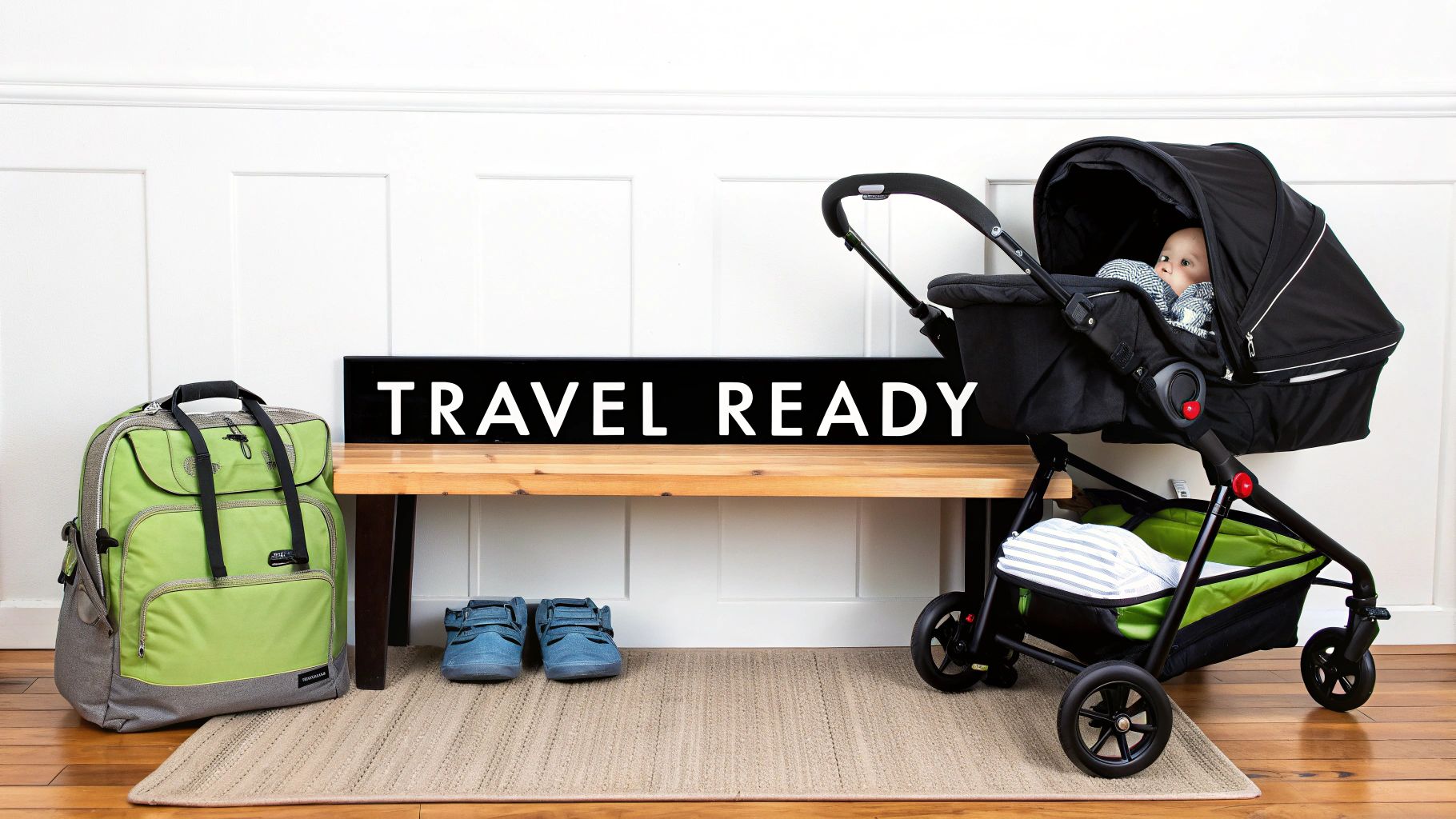
Once you’ve got the big-ticket items like the crib and car seat sorted, it’s time to shift your focus to the small but mighty essentials. These are the everyday items that will keep your baby comfortable, healthy, and safe from day one.
Putting together a practical wardrobe and a well-stocked health kit are two of the most important final steps before your little one arrives.
When it comes to newborn clothing, think practical, soft, and easy. Forget those elaborate outfits with a million tiny buttons—you’ll be changing diapers around the clock, and convenience is your new best friend. Stick with pieces made from gentle fabrics like organic cotton that won’t irritate their brand-new, sensitive skin.
The goal here is balance. You want enough clothes to get through a few days without running the washing machine non-stop, but not so many that your baby outgrows them before they’ve been worn. And trust me, they grow shockingly fast in those first few months.
Here’s a great starting point:
Focus on function over high fashion. The best baby products are often the simplest ones. Soft fabrics, easy-access snaps, and smooth zippers will make your life a million times easier than that adorable but ridiculously complicated sailor suit.
Nothing brings peace of mind like knowing you’re prepared for that first sniffle or an unexpectedly sharp fingernail. You don't need to build a mini-pharmacy in your nursery, but having a few key tools on hand to manage common newborn issues makes all the difference.
Keeping everything in one dedicated kit means you’ll know exactly where to find what you need, even when you're sleep-deprived.
Your baby’s first aid kit is a cornerstone of home safety. For a more comprehensive checklist, check out our guide on essential first aid kit supplies to ensure you've got all your bases covered.
Health Kit Must-Haves
You'll find these essentials everywhere, from your local supermarket to countless online stores. Thankfully, the industry is heavily regulated by standards like the Consumer Product Safety Improvement Act, which enforces strict quality controls. This gives parents confidence that the products they're buying are safe and reliable.
Walking into the world of baby gear can feel overwhelming, like you've been handed a pop quiz in a language you don't speak. Even after you think you've figured out the big stuff—crib, car seat, stroller—all the little questions start popping up. It's totally normal.
Let's tackle some of the most common things new parents ask. Think of this as a quick cheat sheet to help you cut through the noise and shop with a little more confidence.
It's so tempting to buy every adorable, tiny outfit you see, but trust me on this: babies grow faster than you can imagine. Keeping your "newborn" size collection small is one of the smartest things you can do. Many babies are only in that size for a few short weeks!
A great starting point is to have just enough for a few days between laundry cycles:
Your best bet is to focus most of your budget on the 0-3 month size. You'll get so much more use out of them. And always, always choose soft, breathable fabrics like cotton for that sensitive newborn skin.
Definitely not. A high price tag often means you're paying for luxury fabrics, brand recognition, or fancy bells and whistles—not necessarily superior safety. All baby products sold in the U.S. have to meet strict safety standards set by groups like the CPSC, regardless of price.
When you're buying the really important gear like a car seat or a crib, your first priority should be official safety certifications (look for the JPMA seal) and critical safety features. Price just isn't the best indicator. Often, the best baby products for newborns are the mid-range options that offer a perfect blend of safety, solid function, and great value.
Starting with a "less is more" attitude is a fantastic way to save both money and space. So many parents find they never even use some of the items they were told were "must-haves."
You can almost certainly skip things like hard-soled baby shoes (they can't walk yet!), crib bumper pads (which are now widely considered a safety hazard), and fancy baby food makers for the newborn stage. It's much smarter to stick to the absolute essentials for sleeping, eating, and diapering first. You can always buy other things later on if you find you truly need them.
At FindTopTrends, we do the hard work for you by curating top-quality, essential products for every step of your parenting journey. Explore our collection to find everything your newborn needs.




