


No products in the cart.


Free Shipping Australia-Wide

5 star customer service

Quality Tested Products

So you’re ready to take to the skies! Finding the best budget drones for beginners is all about striking that perfect balance between price and features. You don't need to break the bank to get a fantastic experience. A great starting point is something stable, easy to fly, and equipped with a decent camera—think along the lines of the Ryze Tello for pure fun or the DJI Mini series for aspiring photographers. Both offer incredible value right out of the box.
Welcome to the incredibly fun world of aerial photography and flight! This guide is here to cut through the noise and show you how to choose your first drone, proving that you don't need a huge budget to get airborne. Thanks to some amazing leaps in technology, high-quality, user-friendly drones are more affordable than ever, opening up a world once reserved for pros with deep pockets.
Think of your first drone like your first car. You don't need a souped-up racing machine; you need something reliable, safe, and easy to handle. We're going to skip the confusing technical jargon and focus on what really matters for a new pilot. The goal is to find a drone with features that help you build confidence and make flying a blast from day one. Among the latest must-have gadgets, a good beginner drone delivers one of the most rewarding experiences you can have.
Let’s talk money. Understanding what your budget gets you is the first step toward making a smart purchase and avoiding disappointment. We'll walk through the key things to look for, like flight time, camera quality, and how easy the drone is to control, so you can pick the perfect entry-level model with confidence.
Different price points unlock different capabilities. For instance, a drone under $100 is perfect for getting the hang of the controls in your backyard. But if you jump into the $100 to $300 range, you’ll see a huge improvement in camera quality and get helpful features like automated flight modes that make capturing smooth video a breeze.
Your goal as a beginner isn't to buy a drone with the most features, but to find one with the right features. Reliability and intuitive controls will always trump a long list of complex specs you may never use.
To give you a clearer picture, I've put together a quick breakdown of what you can generally expect at different price points. This should help you match your budget to your flying goals.
| Budget Tier | Typical Price Range | Best For | Key Features |
|---|---|---|---|
| Toy & Fun Flyers | Under $100 | Learning basic controls, indoor fun, and casual flying. | Basic camera (720p), short flight time (5-10 mins), simple controls. |
| Hobbyist Starters | $100 - $300 | Aspiring photographers and outdoor adventurers. | Better camera (1080p-4K), GPS stability, longer flight time (15-25 mins). |
| Pro-sumer Entry | $300 - $500 | Serious content creators on a budget. | High-quality 4K camera, advanced safety features, extended flight time (30+ mins). |
This table is a great starting point. As you can see, even a modest budget increase can significantly upgrade your experience, especially when it comes to capturing those stunning aerial shots you're dreaming of.
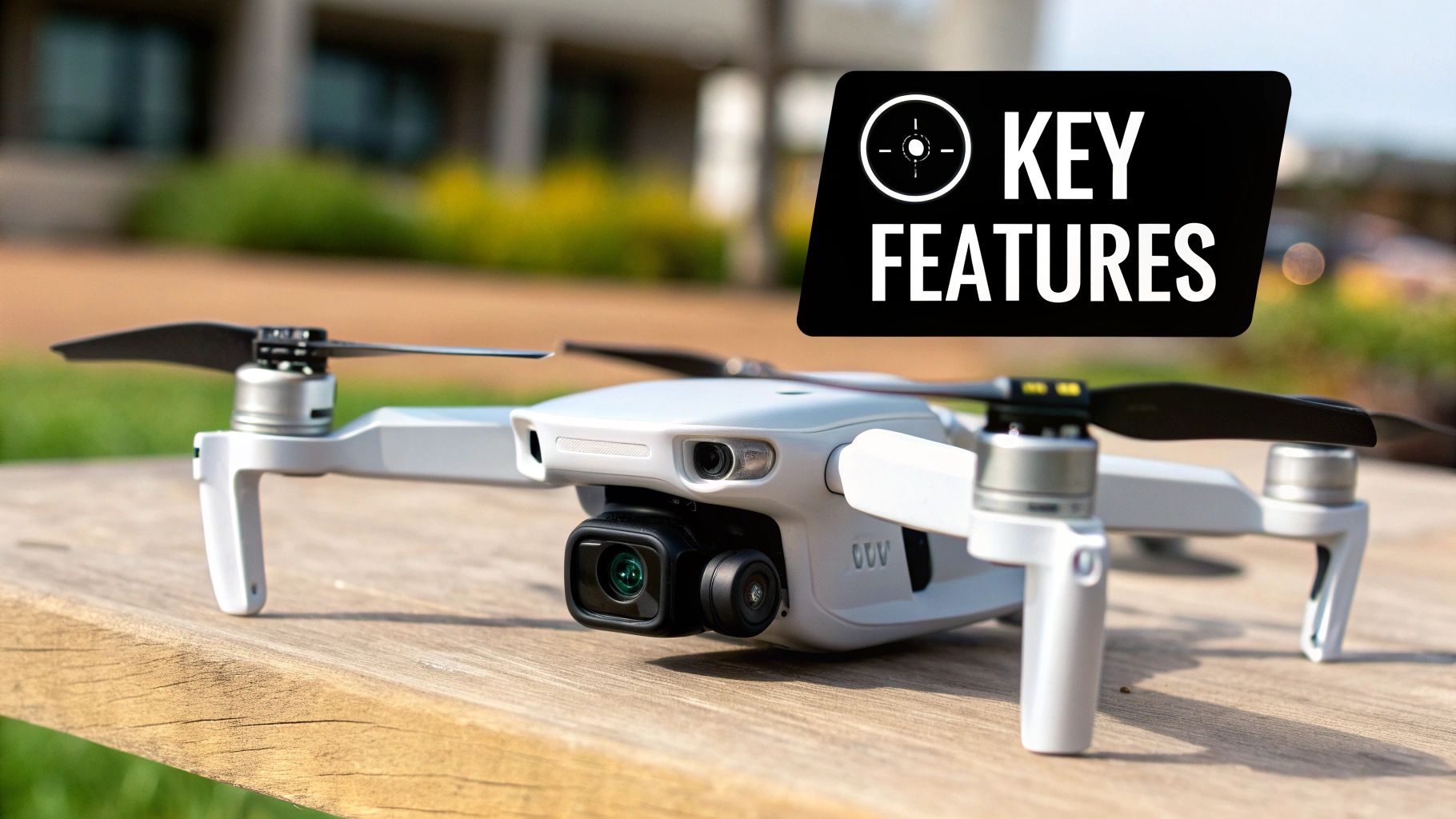
When you start shopping for a beginner-friendly drone, the spec sheet can feel like alphabet soup. You'll see terms like "flight time," "resolution," and "gimbal" thrown around, but what do they actually mean when you’re just trying to get in the air? Let's break down this tech-speak into what it means for your first flying experience.
Think of these features as the drone's personality. Some are built for endurance, others are all about getting that perfect shot, and some are just tough little machines ready for a few bumps. The goal here is to find a drone with the right personality to match what you want to do, so your first flights are fun, not frustrating.
Flight time is one of the most important numbers on the box, but it’s often misunderstood. A drone that advertises a 15-minute flight time doesn't mean you get 15 straight minutes of filming. That number has to account for taking off, getting to where you want to go, framing your shot, and landing safely before the battery gives out.
Toy-grade drones often have a pretty short flight time—around 5-8 minutes. That’s enough to zip around the backyard for a bit, but it can be a real pain if you're trying to capture a specific moment. Bumping up to a drone with 15-25 minutes of airtime makes a world of difference. It gives you the breathing room to actually compose a nice shot without that constant feeling of being rushed.
Pro Tip: My best advice for any new pilot is to buy extra batteries. Seriously. Swapping out a dead battery for a fresh one is the easiest way to double or triple your time in the air, turning a quick test flight into a real afternoon of practice.
Let's be honest, for a lot of us, the camera is the whole point. But getting bogged down in camera specs is easy. Here's a simple way to think about it. Video resolution is all about the level of detail in your footage.
Speaking of shaky footage, stabilization is just as important as resolution. A drone without a gimbal—the little motorized mount that keeps the camera level—is like trying to film while riding a rollercoaster. The footage is a nauseating mess. Even basic electronic stabilization helps, but a real mechanical gimbal is what creates that buttery-smooth, cinematic look. If you want to dive deeper into how cameras work, our guide on DSLR vs mirrorless cameras covers a lot of the core principles.
How you fly the drone is a huge part of the experience. Many budget models just use a smartphone app, which is super intuitive if you’ve ever played a mobile game. Step-up models often come with a dedicated physical remote, which I personally prefer. It gives you much more precise control and a better signal range.
For any beginner, durability is your best friend. You will crash. It's just part of learning. So, look for drones with propeller guards. These are just little plastic cages around the blades that act like training wheels, saving your props (and your walls) from those inevitable bumps. A solid frame built from quality plastic will also handle impacts way better than something that feels flimsy out of the box.
This part isn't optional. Flying safely and legally is your responsibility as a pilot. Before your first flight, you absolutely need to know where you can and cannot fly. The best tool for this is the FAA's B4UFLY app, which gives you real-time maps of airspace restrictions. In fact, a recent survey found that over 90% of registered drone pilots in the US use this app before they fly, and it’s a big reason why accidental airspace violations have dropped. You can learn more about it on the FAA's official website.
So, you're ready to buy a drone, but the prices are all over the map. You've got drones that cost less than a large pizza and others that are a serious investment. What's the real difference? Let's walk through the main budget tiers so you know exactly what your money gets you.
Think of it like buying your first guitar. You could start with a simple acoustic to learn the basic chords, or you could jump to a mid-range electric with an amp if you're already serious about playing. Neither is the "wrong" choice, but one is probably a better fit for your goals and budget. It’s the same with drones.
This is the "toe in the water" category. Drones here are essentially toys, perfect for figuring out if you even enjoy flying without any real financial risk. They're built for learning the absolute basics—up, down, left, right—in a controlled space like your living room or a backyard with zero wind.
Here’s the honest truth about what you get:
These are the ultimate low-risk starter drones. It's no surprise that this tier is incredibly popular—recent sales data shows that over 70% of top-selling budget drones sell for under $50. Take the Cool Mini Drone with Camera, for instance. At just $29.29, it sold an incredible 1,182 units last month, making it one of the easiest ways for anyone to get started. You can dig into more trends on these popular models on Accio.
Alright, now we're talking. For most beginners who are serious about learning, this is the perfect place to start. In this range, drones stop feeling like toys and start becoming genuinely capable tools for capturing cool photos and videos.
This is where you find the best bang for your buck. Models like the Ryze Tello are fantastic because they're easy enough for a total beginner but have enough features to keep you from getting bored as your skills improve.
Here’s what that extra money buys you:
A drone from this category is perfect for grabbing clips of a family vacation, getting a cool overhead shot of your kid's soccer game, or making your first fun videos for social media. This is the ideal starting point if you're an aspiring photographer or videographer on a budget.
If you already have a creative vision and want a drone that can produce near-professional results without the premium price tag, this is your tier. These drones are often packed with advanced features that, just a few years ago, you'd only find on models costing three times as much.
The single biggest upgrade here is GPS stabilization. This allows the drone to lock onto satellites, holding its position in the sky with incredible precision, even in a bit of wind. It also enables critical safety features like an automatic Return-to-Home (RTH) function, which is a lifesaver. If the battery gets low or you lose connection, the drone will fly itself back to where it took off.
For anyone serious about content creation, a drone like the Potensic ATOM SE is a fantastic choice. You can capture stunning aerial photos of real estate, film smooth, cinematic video for a travel vlog, or create high-quality promotional content for a small business. This is the tier where your creative potential really starts to open up.
When you start shopping for a drone, it’s easy to assume that spending more automatically gets you a better machine. But in the world of budget drones, the smartest buys are the hidden gems—the models that pack features once found only in pro-level gear into a price tag that doesn't break the bank.
Finding this sweet spot is the real secret. It’s where you see huge leaps in performance that make a genuine difference in what you can create. We're talking about silky-smooth 4K video, flight times long enough to actually get the perfect shot, and little regulatory perks that save you a ton of hassle. It's about getting a tool that actually helps your creativity, not one that holds you back.
One of the biggest wins for any new pilot is getting a drone that weighs less than 250 grams (that’s about 0.55 pounds). This isn't just some arbitrary number; it’s a key legal cutoff in many places, including the U.S., Canada, and most of Europe. Fly a drone under this weight, and you can often skip the complex and sometimes costly registration process.
This one detail lowers the barrier to entry more than anything else. Less paperwork, more flying. You get to focus on nailing your controls and capturing incredible footage instead of getting tangled up in red tape. It's a massive convenience that adds a ton of value right out of the box.
This decision tree shows how to think about your budget based on what you actually want to do, whether it's just for fun or for more serious projects.
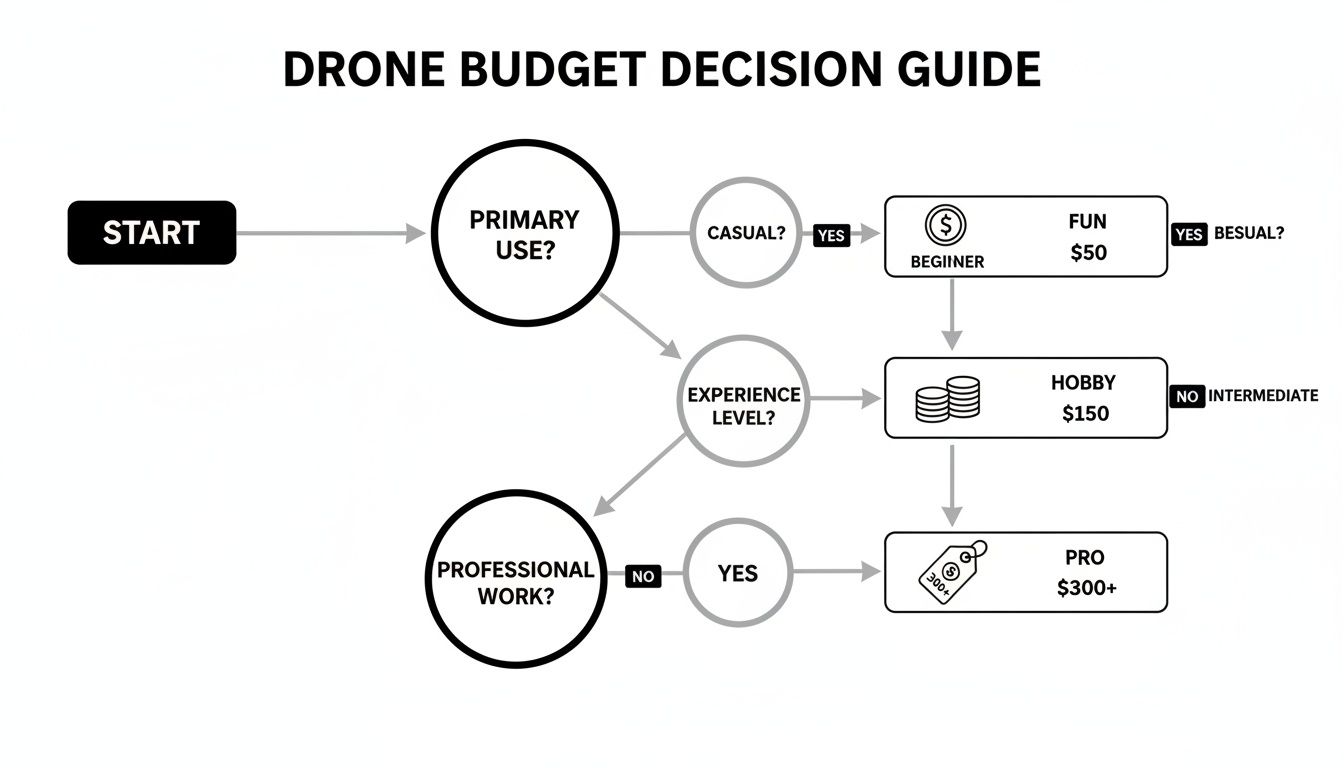
As you can see, your budget should grow as your ambitions shift from backyard fun to creating high-quality content that you'd be proud to share.
If you want a real-world example of this sweet-spot thinking, look no further than the DJI Mini 4K. It’s rapidly become the go-to for anyone searching for the best budget drones for beginners because it delivers professional-level results in an easy-to-use, affordable drone. The mix of performance and pure convenience is what sets it so far apart from the crowd.
The DJI Mini 4K really changed the game. It proves you don't have to compromise on the essentials—like a great camera and stable flight—even if you're on a tight budget. It’s the kind of first drone you won't feel the need to upgrade after just a few flights.
Here’s a breakdown of why it hits that perfect balance:
To see how these features stack up in the real world, let's compare what you get at different price points. This table breaks down the key specs you should be looking at, from a basic toy drone to a more capable model like the DJI Mini 4K.
| Feature | Toy Drone (e.g., Cool Mini) | Mid-Range (e.g., Ryze Tello) | Pro-sumer (e.g., DJI Mini 4K) |
|---|---|---|---|
| Camera Quality | 720p Video / 2MP Photos | 720p Video / 5MP Photos | 4K/30fps Video / 12MP Photos |
| Flight Time | 5-7 minutes | 10-13 minutes | Up to 31 minutes |
| Range | ~50 meters | ~100 meters | Up to 10 kilometers |
| GPS | No | No | Yes (Essential for Stability) |
| Weight | ~80g | ~80g | Sub-249g |
| Price | < $50 | ~ $100 | ~ $299 |
As you move up from toy-grade models, the improvements in camera quality, flight time, and stability are massive. The jump to a "pro-sumer" model like the Mini 4K isn't just a small step—it's a leap into a completely different league of performance and reliability.
The DJI Mini 4K has truly locked down its position as the best all-around drone for under $300. Its market dominance is no accident; DJI’s Mini series commands over 60% of the market share for sub-$300 drones. Even more impressive, its stable hover technology is reported to cut crash rates for new pilots by an estimated 40%. You can dig deeper into these drone market findings on UAV BC.
That feeling when you first unbox a new drone is pure excitement. It's tempting to throw the battery in and get it in the air immediately, but hold on for just a minute. A successful first flight isn't about how fast you can launch; it's about being prepared.
Think of it like a pilot's checklist before takeoff. A few simple steps can transform pre-flight jitters into pure confidence, making sure your time in the sky is safe, legal, and just plain fun. This quick routine will become second nature, and it’s what separates a responsible pilot from a reckless one.
Let's walk through the essential checks to get you ready for a perfect launch.

Before you even step out the door, there are a few things you need to take care of. Getting these basics right on the ground is the best way to prevent a headache in the air.
Power Up Everything: This is the #1 rookie mistake. A low battery warning mid-flight is a recipe for panic and a crash landing. Make sure you fully charge your drone's flight batteries, the remote controller, and the phone or tablet you're using.
Check Your Propellers: Give each propeller a quick inspection. Look for any nicks, cracks, or stress marks. A damaged prop can make the drone fly erratically or fail entirely, and they are incredibly cheap and easy to replace. Never take the risk.
Calibrate the Compass: Your drone’s compass is its sense of direction. Any time you fly in a new location, you need to recalibrate it. The app will walk you through the simple "drone dance"—it only takes about 30 seconds and ensures your drone knows which way is which.
It's also a good idea to understand the power source you're dealing with. Knowing about potential issues like what thermal runaway is in lithium-ion batteries is a key part of responsible drone ownership.
Flying a drone isn't just a hobby; it’s a responsibility. Knowing the rules of the sky is non-negotiable for protecting yourself, other people, and your new drone. Thankfully, for recreational flyers, the requirements are pretty straightforward.
The absolute first thing any new pilot in the U.S. must do is complete The Recreational UAS Safety Test (TRUST). The FAA requires all recreational pilots to pass this free, online test. It takes about 30 minutes and covers the safety essentials. An FAA report even noted a 20% reduction in safety incidents since it was introduced, which shows how valuable this basic knowledge is. You can learn more about these important FAA safety updates on their official site.
Key Takeaway: Your drone is not a toy. Always fly with situational awareness. Never fly over crowds, moving cars, or near airports. And remember, respecting people's privacy is just as important—don't fly over private property without permission.
Alright, you've arrived at a safe, open spot to fly. Before you launch, run through this quick final check to make sure everything is good to go.
Follow this checklist every time, and you'll set yourself up for success. Your gear will be ready, you'll be flying legally, and you’ll be doing it safely. Now, you’re ready for the fun part.
Picking the right drone is only half the battle. Once you've got your hands on a great beginner model, you need to protect that investment. A little bit of care goes a long way in keeping your drone flying safely for months and years to come, ensuring you get maximum value out of it.
Think of it like owning a car—you wouldn’t drive it for months without checking the oil, right? The same logic applies here. Simple habits like giving the camera lens a quick wipe with a microfiber cloth for crystal-clear shots, checking the propellers for any nicks or cracks before you fly, and making sure the motors are free of grass or dirt will save you a lot of headaches.
It's not just a hunch, either. A recent study found that frequently flown drones with little to no maintenance have a 60% higher failure rate within their first six months. On the flip side, simple checks can extend a budget drone's operational lifespan by up to 50%. You can explore the full study about consumer electronics trends on the CTA website.
Proper battery care is another big one. Never leave your batteries sitting at a full charge for days on end—it degrades them. A good rule of thumb is to store them at about 50% capacity in a cool, dry place. For a deep dive into battery health, this guide has some crucial safe charging & buying tips for LiPo batteries that are well worth a read.
Before you even get to the maintenance part, you can set yourself up for success by shopping smart. One of the best pieces of advice I can give any new pilot is to look for a “Fly More Combo” or bundle deal.
These packages almost always offer way better value than buying the drone by itself. You’ll typically get essentials like extra batteries (a must-have!), a carrying case, and a multi-battery charging hub for a price that's much cheaper than buying them all separately.
Also, keep an eye out for sales. Major holidays and the weeks following a new model announcement are prime time to find deals, as retailers will often discount older (but still fantastic) drones. When you’re ready to pull the trigger, make sure you're buying securely. Our guide on how to shop online safely walks you through the steps to protect your purchase. A little strategy here means you'll start your drone journey with the best gear at the best possible price.
It's totally normal to have a few last-minute questions before you get started. After all, you're about to put a flying camera into the sky! Getting these final details sorted out is the last step before you can fly with real confidence.
Let's clear up some of the most common things new pilots wonder about.
This is a big one, and the answer is usually no—but with a couple of important catches. For strictly hobby flying in the US, you don't need a formal pilot's license.
However, there are two simple rules you absolutely have to follow:
The technical range of your drone depends heavily on how much you spend. A toy drone you'd find for under $50 might only stay connected for about 30 to 50 meters. Jump up to a mid-range model, and you could be looking at a range of several hundred meters.
But here’s the most important part: your drone's maximum range doesn't matter as much as the FAA's rules. You are legally required to keep the drone within your visual line of sight at all times. You also can't fly higher than 400 feet above the ground. When you're just starting out, keeping it closer and lower is always the smartest (and safest) way to fly.
That's the nightmare scenario for every new pilot, right? The good news is that modern drones are built to handle it gracefully. A toy-grade drone will usually just start a slow, controlled landing right where it is, so it won’t simply drop out of the sky.
If you invest in a slightly better drone, often in the $150+ range, you'll likely get a game-changing feature called Return to Home (RTH). Using GPS, the drone remembers exactly where it took off. If the battery gets dangerously low or the controller signal drops, it automatically flies itself back to you and lands safely. For a new pilot, that feature is pure peace of mind.
At FindTopTrends, our whole goal is to sift through the options and find the gear that lets you jump into a new hobby without the headaches. Our drone selections are all about hitting that sweet spot of performance, safety, and value. Discover the latest trending drones and tech essentials on FindTopTrends and get ready to see the world from a whole new angle.




