


No products in the cart.


Free Shipping Australia-Wide

5 star customer service

Quality Tested Products

So, you’re thinking about camping. That's fantastic. But stepping into that world can feel like walking into a gear shop blindfolded. There's an endless sea of gadgets, high-tech fabrics, and a mountain of conflicting advice online. It’s enough to make anyone’s head spin.
Let's cut through the noise. The truth is, you don’t need a garage full of expensive equipment to have an incredible first trip. It all boils down to getting just a few key things right.
Think of it like building a house. You don't start with the curtains; you start with a solid foundation. For camping, that foundation is your shelter, your sleep system, and a way to make a hot meal. Everything else is just furnishing. We’re here to help you nail that foundation without breaking the bank.
You've picked the perfect time to get into this. The global market for camping gear hit a staggering USD 20.85 billion in 2025, and that boom is great news for you. With millions of people trying camping for the first time, companies are competing to create gear that’s affordable, easy to use, and perfect for beginners. You can read more about this market growth and what it means for shoppers.
What does that mean in simple terms? More choices, better designs, and lower prices on the stuff that really matters for your first trip.
The rule for any beginner is simple: invest in your comfort and safety first. A warm, dry night's sleep is worth more than any fancy gadget. Getting that right is what turns a one-time ordeal into a lifelong passion.
Our goal is to give you a clear roadmap. We'll start by breaking down the essential gear categories so you know not just what to buy, but why each piece is so important for a great first night under the stars.
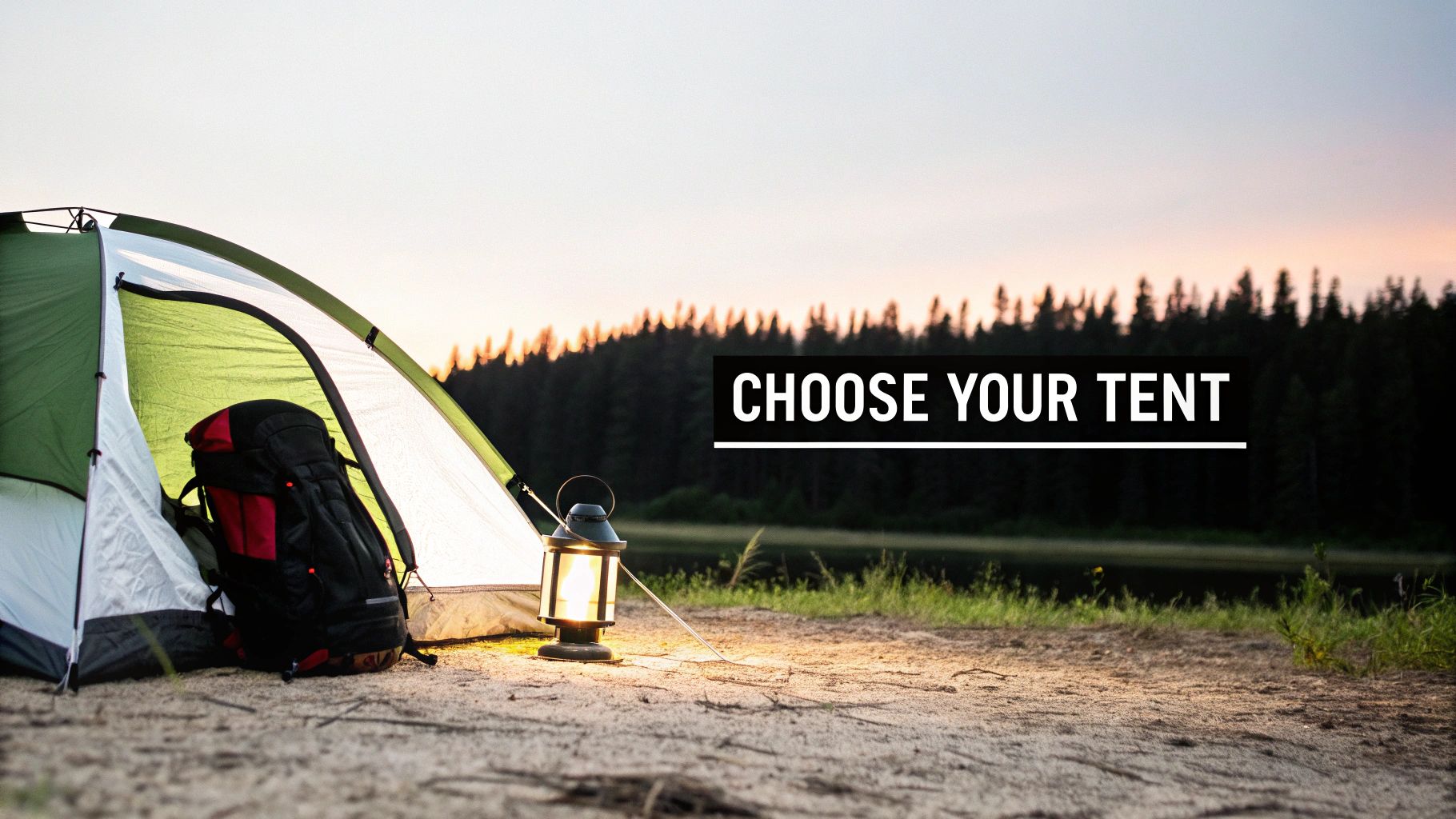
Your tent is way more than just some fabric and poles; it's your sanctuary in the wild. This is your personal space, your reliable shelter from wind, rain, and curious critters. Think of it like picking out your first tiny apartment—it needs to feel safe, keep you dry, and be a comfortable place to crash after a day of adventure.
When you're just starting, the sheer number of tent options can feel overwhelming. But honestly, you only need to focus on a few key things to find a great tent that will serve you well for years. We'll break it down so you can pick a dependable shelter without getting lost in technical jargon or dropping cash on features you don't need yet.
One of the first things you'll see is the tent's capacity, like "2-person" or "4-person." Let's be real: this number can be a little misleading. It typically represents the absolute maximum number of sleeping pads you can cram in side-by-side, with virtually no room for anything else.
For a much more comfortable trip, a great rule of thumb for beginners is the “plus one” rule. If you're camping solo, a 2-person tent gives you plenty of room to bring your backpack and gear inside. If there are two of you, a 3-person tent is the way to go, offering that crucial extra space so you're not bumping elbows all night.
Beginner's Pro Tip: Always size up your tent capacity by at least one person. The extra space for your gear, changing clothes, and just moving around is a small luxury that makes a huge difference, especially if you get stuck inside on a rainy day.
This simple strategy transforms your tent from just a place to sleep into a functional living space.
Next up, let's talk about how a tent keeps you protected. You'll hear the term "3-season tent" a lot, and for good reason—it's the perfect starting point for most new campers. This doesn't mean it’s only for spring, summer, and fall; it means the tent is built for the conditions of those seasons.
These tents strike a great balance between protection and airflow. They can handle moderate rain and wind just fine, but they aren't built for heavy snow or harsh winter gales. For anyone sticking to fair-weather trips, a 3-season model is exactly what you need.
One of the most critical features to look for is a full-coverage rainfly. This is the waterproof outer layer that drapes over the main tent body. Some cheaper tents have flimsy rainflies that only cover the very top, leaving the sides exposed. A full-coverage fly extends nearly to the ground, offering serious protection against driving rain and wind, ensuring you and your gear stay bone-dry.
After a long drive to the campsite, the absolute last thing you want is to wrestle with a complicated tent. Thankfully, most modern beginner tents are designed to be put up quickly and intuitively.
Look for these key features to guarantee a stress-free setup:
Choosing a tent with these features means you’ll spend less time fighting with instructions and more time kicking back and enjoying the view. For your first few trips, that convenience is priceless and helps build your confidence. By focusing on these three things—spacious capacity, solid weather protection, and a simple setup—you can confidently choose from the best camping gear for beginners and find a tent that will feel like a true home in the wild.
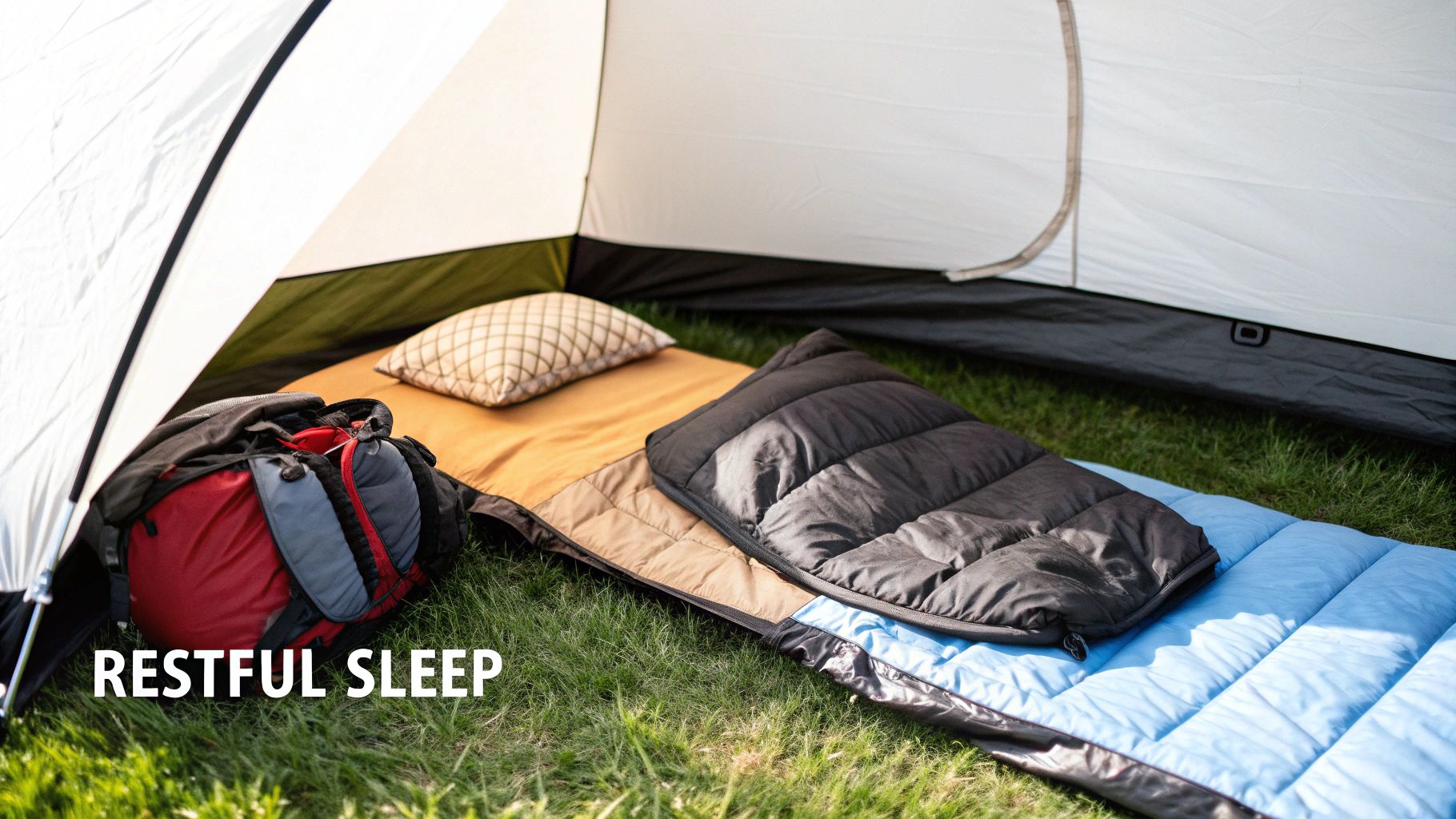
A good night's sleep is the secret ingredient to a fantastic camping trip. It's the difference between waking up energized for a day of adventure and feeling like you wrestled a bear all night. The key to that restorative sleep is your outdoor "bed," a two-part system that works in perfect harmony: the sleeping bag and the sleeping pad.
Think of them like a mattress and a box spring. One really doesn't work well without the other. Your sleeping bag is designed to trap body heat, but it’s the sleeping pad that provides cushioning and, crucially, insulates you from the cold, hard ground. Many first-timers think the bag does all the work, but the ground will suck the warmth right out of you without a proper pad underneath.
When you start looking at sleeping bags, the first thing you’ll notice is the temperature rating. This number, say 30°F or -5°C, tells you the lowest temperature at which the bag is designed to keep an "average sleeper" comfortable.
A great rule of thumb for beginners is to pick a bag rated for temperatures 10-15°F colder than the lowest nighttime temperature you actually expect. Why? Because you can always unzip a bag if you're too warm, but it's a real struggle to make a cold bag warmer in the middle of the night.
For your first bag, a synthetic-fill model is almost always the smartest choice. Unlike pricier down bags, synthetic insulation keeps you warm even if it gets a little damp from condensation inside the tent. It's also more durable and way more affordable, which makes it a forgiving and practical option while you’re still learning the ropes.
The good news is that the camping equipment market is booming—it's projected to grow from USD 35.4 billion in 2021 to a massive USD 88.2 billion by 2033. This explosion in popularity has led to a ton of innovative and budget-friendly options. In North America, which holds a 32.59% market share, most beginners start with synthetic bags rated between 20-40°F for their incredible three-season versatility. You can discover more insights about the growing camping market and see how it benefits newcomers.
Don't overlook the sleeping pad—it’s the foundation of your entire sleep system. Its primary job is to insulate you from the ground, which is often the biggest source of heat loss. The magic behind this is a simple number called the R-value.
A sleeping pad's R-value tells you how well it resists heat flow (that's what the "R" stands for). The higher the R-value, the better it insulates you from the cold ground, and the warmer you'll sleep. For three-season camping, a pad with an R-value between 2 and 5 is the perfect starting point.
You’ll generally find three main types of sleeping pads, each with its own pros and cons for a beginner.
Choosing the right sleeping bag and pad isn't just another purchase; it's an investment in your own energy and enjoyment. This combo is a core part of the best camping gear for beginners because a restful night ensures you wake up refreshed and ready to embrace a full day outdoors.
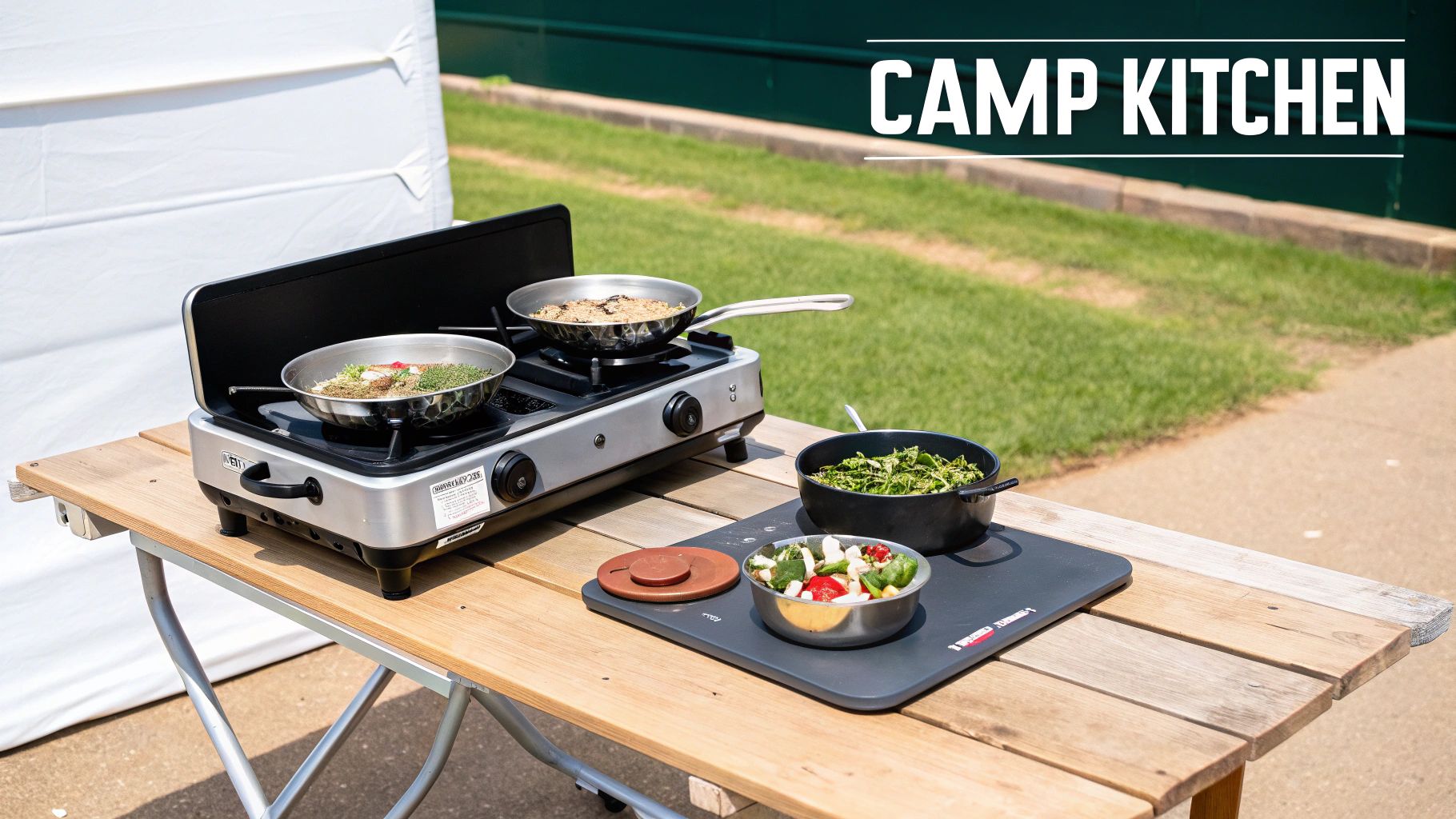
There's something magical about a good meal under the stars. It’s one of the best parts of camping, and you don’t need a complicated, gourmet setup to make it happen. A simple, functional camp kitchen turns cooking from a potential chore into a genuinely fun part of the adventure. Forget trying to balance a pot on a wobbly campfire grate—a few key pieces of gear will have you eating well with zero fuss.
Your whole camp kitchen really just boils down to three things: something to cook on, something to cook with, and a way to keep your food and cleanup organized. If you stick with reliable, easy-to-use gear, you’ll have a setup that works no matter the weather. Trust me, a guaranteed hot meal or morning coffee is a huge morale booster, making this a critical part of the best camping gear for beginners.
Here’s a classic rookie mistake: relying only on a campfire for cooking. Campfires are amazing for atmosphere and s'mores, but for actual meal prep, they can be a nightmare. Wet wood, high winds, or unexpected fire bans can completely derail your dinner plans.
This is exactly why a camp stove is your most valuable kitchen tool. For anyone driving to their campsite (what we call car camping), a two-burner propane stove is the undisputed champion. It works almost exactly like the gas range in your kitchen, giving you fantastic temperature control and consistent heat.
While it might seem like a secondary purchase, the market for camping cookware is booming. That classic 2-burner propane stove is a game-changer for a reason—it's incredibly popular in the North American market, which is valued at a whopping USD 5.8 billion in 2025. Here's the good news for you: medium-priced, bundled kits make up 44.7% of those sales, so finding an affordable and reliable option is easy. You can discover more insights about sales data for camping gear to see why these stoves are such a go-to choice.
You really don't need to raid your home kitchen for pots and pans. In fact, it's better if you don't. A dedicated, compact cookset is a smart investment that keeps you organized and saves a ton of precious cargo space.
The best thing to look for is a nesting cookset. Think of it like a set of Russian dolls—the pots, pans, and lids all stack neatly inside one another. Most beginner sets are made from tough but lightweight aluminum and often include handy extras like a pot gripper.
Beyond the big stuff, a few small tools can make a world of difference. I recommend putting together a little "kitchen essentials" bag with these items:
Beginner's Pro Tip: Get a dedicated, clear plastic bin for all your kitchen gear. We call this a "chuck box." It keeps everything in one place, makes it easy to see and grab what you need, and pretty much guarantees you’ll never forget the can opener again.
With a dependable stove and an organized kit, you're all set. This simple approach is proof that you don't need much to eat incredibly well in the great outdoors.
Once you’ve got your shelter, sleep system, and kitchen dialed in, you’ve basically built your core outdoor home. Now it’s time to add the "utilities"—the smaller, often-overlooked items that really elevate your comfort and safety, especially after dark. These are the pieces that shift a trip from just getting by in the woods to truly enjoying yourself.
Think about it: these items provide light, offer peace of mind when you get a scrape, and give you a proper place to sit and relax. Trying to cut corners here might save a few bucks upfront, but you’ll feel the absence of these essentials in a big way.
The moment the sun disappears, you’ll realize just how much you depend on your eyes. Trying to cook dinner or dig through your tent while juggling a flashlight is a quick lesson in frustration. That’s precisely why a headlamp is one of the most non-negotiable pieces of gear you can own.
A headlamp frees up both of your hands for setting up the tent, prepping food, or just reading a book. Today’s headlamps are surprisingly powerful, lightweight, and won't break the bank. For most campground situations, something in the 300-350 lumen range is the sweet spot—bright enough to see what you're doing without blinding your campmates.
When you're shopping for your first headlamp, just look for these key features:
Your clothing is your personal thermostat and your first line of defense against the weather. The real secret to staying comfortable isn't packing one massive, bulky coat—it's using a smart layering system. This approach gives you the flexibility to add or remove clothing to perfectly regulate your temperature as conditions change.
It's all about creating a versatile outfit that works together. Each layer has a specific job, keeping you warm when it's cold, dry when you sweat, and shielded from the elements. Just remember the number one rule: avoid cotton. When cotton gets wet (from sweat or rain), it sucks heat away from your body, which can be seriously dangerous.
Here’s the classic three-part system that never fails:
Once you get the hang of layering, you’ll be amazed at how comfortable you can be in almost any weather without having to pack half your closet. It’s an efficient system that prepares you for chilly mornings, sunny afternoons, and those pop-up rain showers.
Finally, let's talk about a couple of items that add a huge dose of comfort and a critical safety net. A solid camp chair might seem like a luxury, but after a long day of hiking, having a comfortable spot to sit by the fire instead of on a cold, damp log feels absolutely priceless.
Just as important is a basic first-aid kit. You don’t need a mobile emergency room, but a small kit with bandages, antiseptic wipes, blister care, and some pain relievers can turn a minor issue into a non-issue. You can easily find pre-packaged kits designed for hiking that have everything you need.
These last few items round out your gear list, making sure you’re not just prepared for the basics, but truly set up for a comfortable, safe, and memorable adventure.
Staring at a long list of camping gear can feel overwhelming, especially when you start adding up the costs. But here’s the secret: you don't need everything at once. Getting your first camping kit together is a marathon, not a sprint.
The smart way to start is by focusing on the absolute must-haves—your shelter and your sleep system. These are the things that keep you safe, warm, and dry. Think of it like building a house; you have to get the foundation and roof right before you worry about the furniture. Once you've got a good night's sleep locked down, you can add everything else piece by piece.
One of the first big questions is whether to buy brand new or go for second-hand. While unwrapping a shiny new tent is a great feeling, the used market is an absolute goldmine for beginners trying to save some cash. You can often find high-quality gear that’s barely been used for a fraction of what it costs in a store.
But you have to be smart about it. Some things are great to buy used, while others are a hard pass.
Here’s a simple rule of thumb:
This approach lets you stretch your budget where it makes sense, without compromising on the gear that directly impacts your health and comfort.
This infographic really drives home the core pillars of any beginner's kit—it all comes down to light, warmth, and safety.
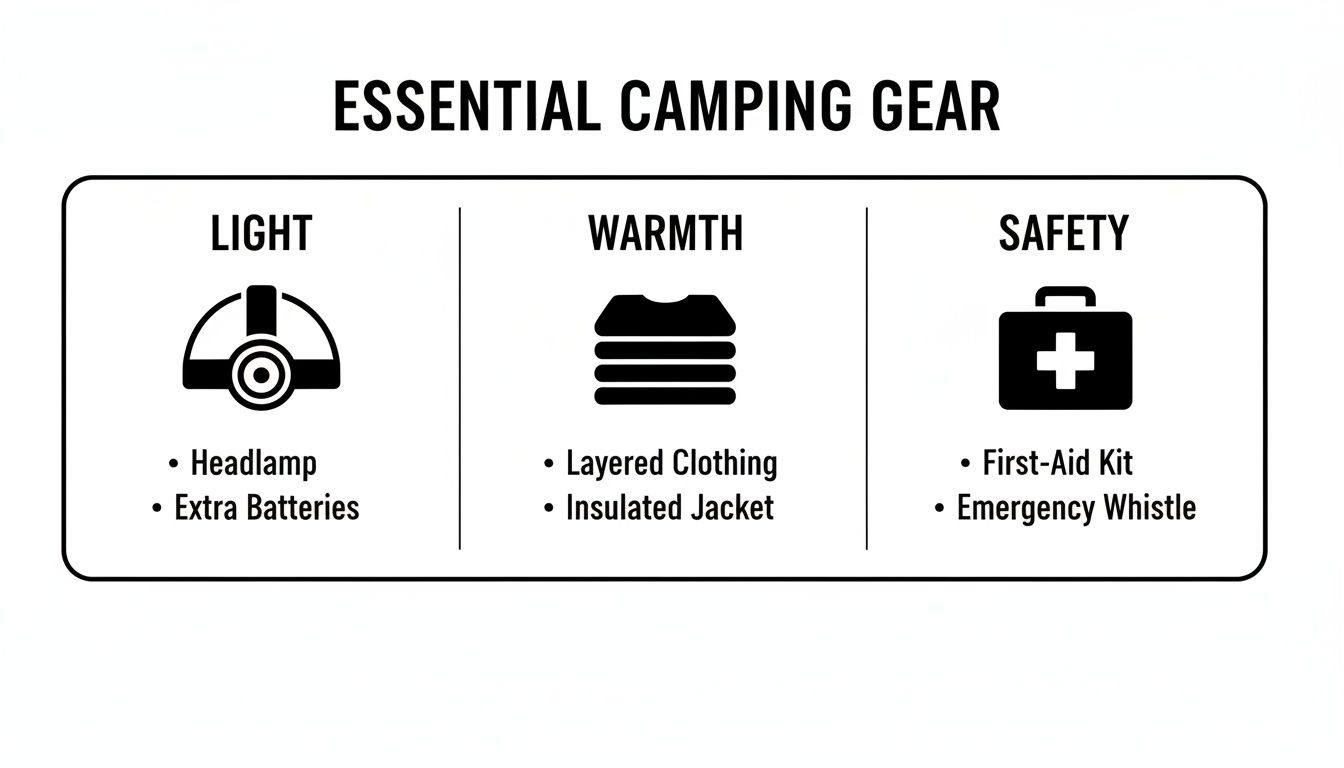
Keep these fundamentals in mind, and you'll always prioritize the right things.
When you buy is just as important as what you buy. If you time it right, you can save a ton of money. The absolute best time to find deals on camping gear is during end-of-season sales.
When late August and September roll around, retailers are desperate to clear out their summer inventory to make space for ski and snow gear. That’s your moment to pounce on tents, sleeping bags, and other warm-weather essentials at a steep discount.
You can also find some solid deals after major holidays like Father's Day or Labor Day, as stores often run big promotional sales. A pro tip? Sign up for email newsletters from your favorite outdoor brands. You'll be the first to know about flash sales and clearance events.
To give you a real-world idea of how to get started, here are a couple of sample kits. This isn't about buying the absolute best camping gear for beginners on day one; it's about getting you outside and comfortable without having to drain your savings account.
Here's a look at how you can piece together a solid starter kit at two different price points. Notice how the "Bare Essentials" kit focuses on function, while the "Comfort Seeker" kit uses a little extra cash to upgrade the key items for a better experience.
| Gear Item | Bare Essentials Kit (~$300) | Comfort Seeker Kit (~$600) |
|---|---|---|
| Tent | A reliable 3-person dome tent from a store brand or budget-friendly name. | A well-reviewed 3-person tent from a major brand with better weather resistance and features. |
| Sleeping Bag | A synthetic 30°F rectangular bag that offers versatility and value. | A synthetic 20°F mummy-style bag for increased warmth and packability. |
| Sleeping Pad | A closed-cell foam pad, which is durable and provides essential insulation. | A self-inflating pad that offers a significant upgrade in comfort and insulation. |
| Stove | A small, single-burner backpacking stove that screws onto a fuel canister. | A classic two-burner propane stove for more cooking power and flexibility. |
| Headlamp | A basic, battery-powered model with at least 200 lumens. | A rechargeable headlamp with multiple modes, including a red light setting. |
As you can see, a bigger budget doesn't necessarily mean more gear—it often means better, more comfortable, and more durable versions of the same essential items. Start where you can, and you can always upgrade down the road.
Even with the best gear list, a few questions are bound to pop up before you head out for the first time. That's totally normal. Let's walk through some of the most common things new campers wonder about. Getting these sorted will help you feel more confident and make better decisions from the get-go.
You might think it's the tent, but honestly, the most critical piece of gear for a good first experience is your sleeping pad. The ground is a massive heat thief, sucking warmth right out of your body way faster than the air ever could.
A good, insulated pad is the secret weapon that actually keeps you toasty all night long. You can have the best tent in the world, but you'll still be shivering if you're sleeping on a cold, uninsulated surface. A warm, comfortable night's sleep is what powers your whole trip, making a quality sleeping pad a surprisingly non-negotiable item.
Those temperature ratings on sleeping bags can be a little tricky. They're meant to show the lowest temperature an "average sleeper" will be comfortable, but "average" is a pretty vague term. When you're just starting, it's always smarter to err on the side of caution.
Here's a solid rule of thumb: pick a bag rated 10-15°F lower than the coldest temperature you actually expect. For most camping from spring through fall, a bag rated somewhere between 20°F and 40°F is a really versatile choice.
Think about it this way: you can always unzip your bag or wear fewer layers if you get too warm. But trying to get warm in a bag that just isn't cutting it? That’s a tough, miserable night you don't want to have.
Ah, the romantic campfire meal. While it sounds great, relying only on a fire is a classic rookie move that often ends in frustration (and hunger). For one, many campsites have strict fire restrictions or even total bans, especially when it's dry.
And even when you can have a fire, they’re a pain to cook on. They're unreliable in the rain and offer almost zero temperature control—get ready for burnt-on-the-outside, raw-on-the-inside food. A simple propane stove is your best friend; it's fast, safe, and works no matter what the weather does. It guarantees you can have that hot cup of coffee in the morning and a warm dinner at night.
When you're car camping, being organized is the name of the game. Grab a few clear plastic bins and group your gear by category. Put all your kitchen stuff in one, your sleeping gear in another, and tools and lights in a third.
This system is a lifesaver. You'll know exactly where everything is at the campsite, and packing up to leave becomes a breeze instead of a chaotic mess. Pro tip: use a compression sack to squish your sleeping bag down to a more manageable size. When you're loading the car, put the heavy stuff like coolers on the bottom and lighter gear on top, and always keep your headlamp and rain jacket somewhere you can grab them in a hurry.
At FindTopTrends, we're all about helping you find great, trending gear that sets you up for successful adventures. Check out our handpicked selection of camping essentials and start building your perfect kit today at https://findtoptrends.com.




