


No products in the cart.


Free Shipping Australia-Wide

5 star customer service

Quality Tested Products

For anyone just starting out, the best yoga mats really boil down to a few key things: solid grip, a decent amount of cushion (around 4-6mm is the sweet spot), and a material that won't fall apart after a few sessions, like TPE or a good-quality PVC. You'll often see mats like the Gaiam 2-Color Yoga Mat pop up for their great value, while something like the Manduka PROlite is a classic for its incredible durability.
Either way, the goal is to find a stable, comfortable surface to begin your practice.
Stepping onto a yoga mat for the first time is the start of an amazing journey. But let's be honest—staring at a wall of rolled-up mats, online or in-store, can feel pretty overwhelming. The truth is, there’s no single "best" mat. It's all about what's best for you.
Think of it like buying your first pair of running shoes. You wouldn't just grab any old pair, right? You need the right support and fit to feel good and avoid injury. Your yoga mat is no different. It’s there to give you the stability to hold a pose, the cushion to protect your joints, and the grip you need to build real confidence.
When you have a reliable mat under you, you can stop thinking about the mat and start focusing on your practice. Instead of worrying about your hands slipping in Downward-Facing Dog, you can concentrate on your breath and alignment. A good mat just gets out of the way and lets you do the work.
This guide is here to cut through the noise. We'll break down exactly what to look for so you can find a mat that truly supports you from your very first class.
The demand for yoga gear is huge—the global market is expected to jump from USD 11.7 billion in 2021 to USD 15.2 billion by 2026. For you, that's great news! It means more choices and better prices, especially for beginners who are looking for quality without a huge investment. With so many people shopping online, it's easier than ever to find deals and read reviews to get the most for your money. You can discover more insights about yoga mat market trends if you're curious.
Your first yoga mat is more than just a piece of equipment; it’s your personal space to grow. It needs to feel supportive and safe so you can explore poses without hesitation. A trustworthy mat clears away distractions, making your practice that much better.
For beginners, a few key features make all the difference. Don't get bogged down by fancy marketing terms or expensive extras just yet. The table below highlights the fundamentals that will support you as you get started.
| Key Feature | Why It Matters for Beginners | Good Starting Point |
|---|---|---|
| Grip | Prevents slipping, which is crucial for safety and holding poses correctly. A "sticky" mat builds confidence. | Look for a mat described as having a "sticky" or "non-slip" surface. TPE and PVC often provide great grip. |
| Thickness | Provides cushion for your knees, wrists, and spine. Too thick can hurt your balance; too thin can be uncomfortable. | 4mm to 6mm is the ideal range. It offers a nice balance of comfort and stability for most styles of yoga. |
| Durability | You want a mat that can withstand regular use without peeling, flaking, or falling apart. | High-density PVC or TPE are solid, long-lasting choices that won't break the bank. |
By keeping these basics in mind, you're already on the right track. Think of this table as your cheat sheet for finding a mat that will be a reliable partner on your yoga journey.
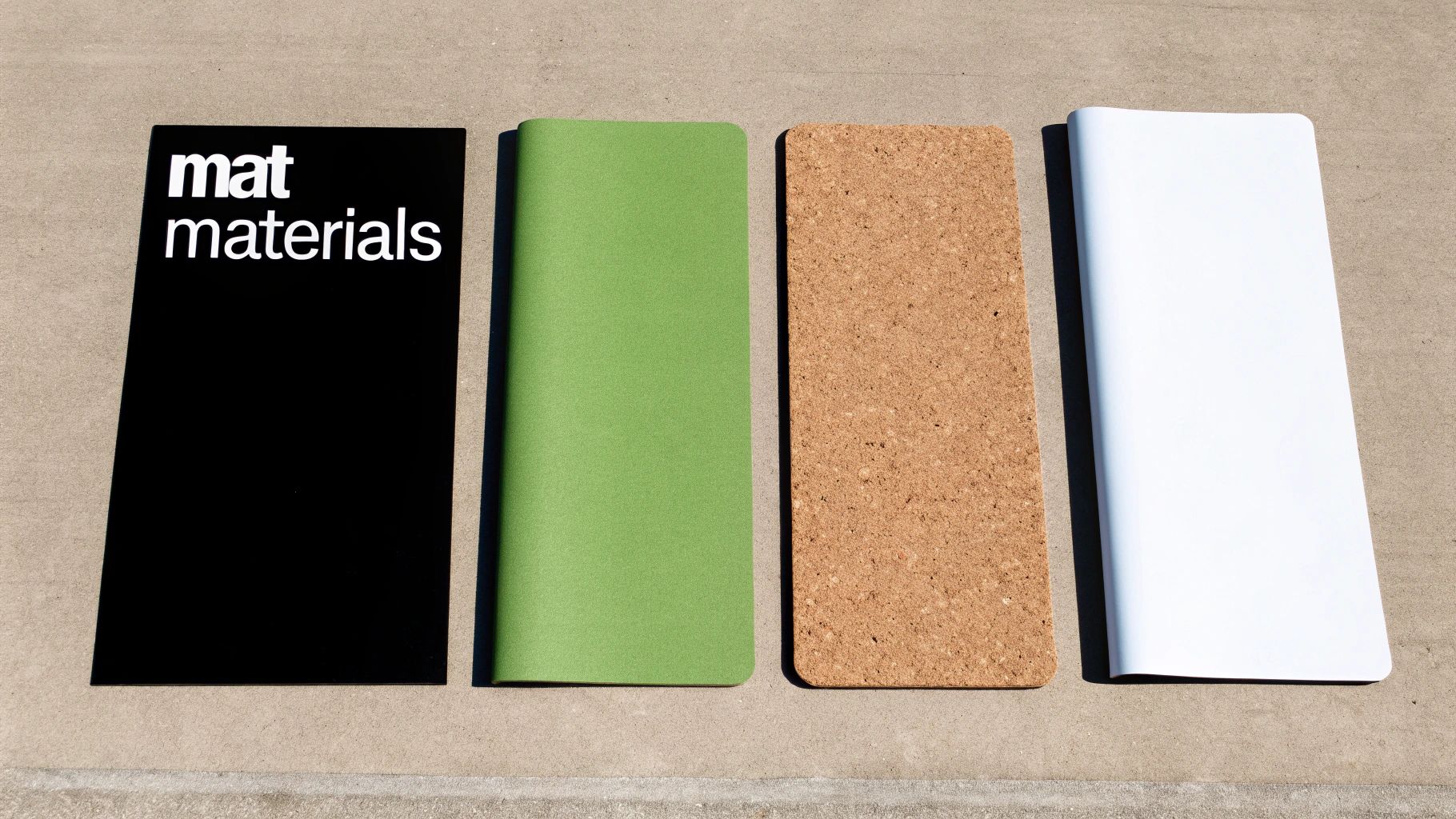
Think about picking the right fabric for workout gear. Some materials are built for tough, everyday use, while others feel more natural and perform like a second skin. Choosing a yoga mat material is a lot like that. It's about finding the right fit for your practice, your budget, and what matters most to you.
Let’s dig into the most common materials you'll find on the market. Each one has its own personality—its own pros and cons that will directly impact your grip, comfort, and how long it lasts. Knowing the difference is the first step to investing in a mat you'll actually love.
PVC (Polyvinyl Chloride) is the original yoga mat material, and you still see it everywhere, especially in beginner classes. It’s the sturdy, reliable sedan of the yoga world—it’s affordable, almost indestructible, and gets the job done without any fuss.
Its dense feel gives you great support and padding on hard studio floors. One of its biggest draws for newcomers is that classic "sticky" surface. It offers dependable grip right out of the package, which helps you feel much more secure as you're learning the ropes of new poses.
The main knock against PVC, however, is its environmental footprint. It’s a synthetic plastic that isn't biodegradable, which is a major dealbreaker for many eco-conscious yogis. Some cheaper PVC mats can also have a noticeable chemical smell when you first unroll them, but this usually airs out over time.
TPE (Thermoplastic Elastomer) is a newer player on the scene, a man-made material that cleverly blends qualities of both plastic and rubber. It's often the "just right" option for beginners because it hits a sweet spot between performance, price, and eco-friendliness.
TPE mats are noticeably lightweight, which makes lugging one to and from class a breeze. They offer a great balance of cushy support and flexibility, and many even have a dual-sided texture for different types of grip. A huge plus is that TPE is a closed-cell material, meaning it won’t soak up sweat and bacteria. This makes it way easier to keep clean.
From an environmental standpoint, TPE is a significant step up from PVC. It’s recyclable and manufactured without the toxic chemicals often associated with traditional plastics, offering peace of mind for those looking for a greener choice.
If grip is your number one priority, look no further. Natural rubber is the undisputed champion. It’s sourced sustainably from rubber trees and provides an incredible level of traction that, get this, actually improves as you get warmer and sweatier. This makes it a huge favorite for hot yoga or more vigorous Vinyasa-style classes.
The open-cell structure of rubber creates a spongy, supportive cushion that just feels fantastic under your hands and feet. As a completely natural material, it's both sustainable and biodegradable, which really resonates with practitioners who want their gear to feel as grounded as their practice.
Just a couple of things to be aware of: natural rubber mats are heavier than their TPE or PVC cousins, so they aren't the best for travel. They also have a distinct rubbery smell at first. It can be a bit strong, but it almost always fades away after a few weeks of use and airing out.
Cork is another amazing eco-friendly material that brings some pretty unique qualities to the mat. Harvested from the bark of cork oak trees without harming them, it's a completely renewable and sustainable resource. You'll typically find a cork surface bonded to a TPE or natural rubber base for cushioning.
The real magic of cork is its antimicrobial nature. It naturally keeps mold, mildew, and funky smells at bay, meaning your mat stays fresh with very little effort. Much like natural rubber, its grip gets even better when it's damp. A light spritz of water or the start of a good sweat is all it takes to create an unbelievably secure surface.
Ultimately, choosing the right material is a personal call. It's all about balancing what you need in practice with your personal priorities. Whether you value the no-nonsense affordability of PVC, the all-around performance of TPE, or the earthy grip of rubber and cork, you're now equipped to pick a mat that feels like it was made just for you.
Think of picking your mat's thickness like Goldilocks trying out mattresses—too hard, too soft, or just right. This one decision completely changes how stable and comfortable you feel on the mat. For a beginner, finding that perfect balance between cushy comfort and solid support is the secret to building confidence.
Yoga mat thickness is measured in millimeters (mm), and trust me, a few millimeters make a world of difference. You're essentially trying to solve two problems at once: you need enough padding to protect your joints from a hard floor, but you also need to feel a firm, stable connection to the ground. Let's look at what those numbers actually mean for your practice.
For anyone just starting out, the sweet spot is usually between 4mm and 6mm. This range gives you enough padding to keep your knees happy in Cat-Cow or your wrists supported in Plank, but it won't feel like you’re trying to balance on a marshmallow.
With so many people now practicing at home, this choice is more critical than ever. The home fitness mat market hit a staggering USD 3.26 billion in 2024, as more and more beginners are rolling out their mats in the living room. For these at-home yogis, joint protection is non-negotiable; some studies even suggest a 4-6mm mat can cut the risk of injury for newcomers by 25%. If you're curious about how wellness trends are influencing mat design, you can read the full research about the fitness mat market.
For most people, a standard-sized yoga mat—which is usually around 68 inches long and 24 inches wide—is perfectly fine. It gives you plenty of room for all the foundational poses without taking over your entire floor.
Where size really starts to matter is if you're on the taller side. If you're over 5'10", you might notice your feet hanging off the end in Savasana (Corpse Pose) or your hands creeping onto the floor during Downward-Facing Dog.
Pro-Tip for Taller Yogis: Keep an eye out for mats labeled "long" or "extra-long." These typically run from 72 to 84 inches in length. Some brands also make wider mats (26-30 inches), which give you more side-to-side space to feel secure.
The bottom line is you want a mat where you can stretch out completely without any part of your body touching the floor. The best test is a simple one: lie down on it. If your head and heels both fit comfortably, you’ve found your match. This way, your personal practice space stays exactly that—yours.
Picture yourself trying to hold a pose on a slick, wet floor. That's exactly what it feels like to practice on a yoga mat with bad grip. For someone just starting out, grip isn't just a nice-to-have feature—it’s your safety net. It’s what gives you the confidence to build every single pose from the ground up.
A mat with solid grip stops you from worrying about slipping, so you can actually focus on your form and your breath.
Think of it like the tires on your car. Some are built for dry, sunny roads and give you a sticky, reliable hold in perfect weather. Others are engineered to push water away and keep you grounded during a downpour. Yoga mat grips work in a similar way; how they perform really depends on the material and how much moisture is involved.
Getting a handle on how grip works will help you zero in on the best mat for you. Most mats for beginners will have one of two kinds of grip: mechanical or absorbent.
When you're starting out, a huge part of the puzzle is figuring out the right thickness. It's all about finding that sweet spot between comfort for your joints and stability for your balance.
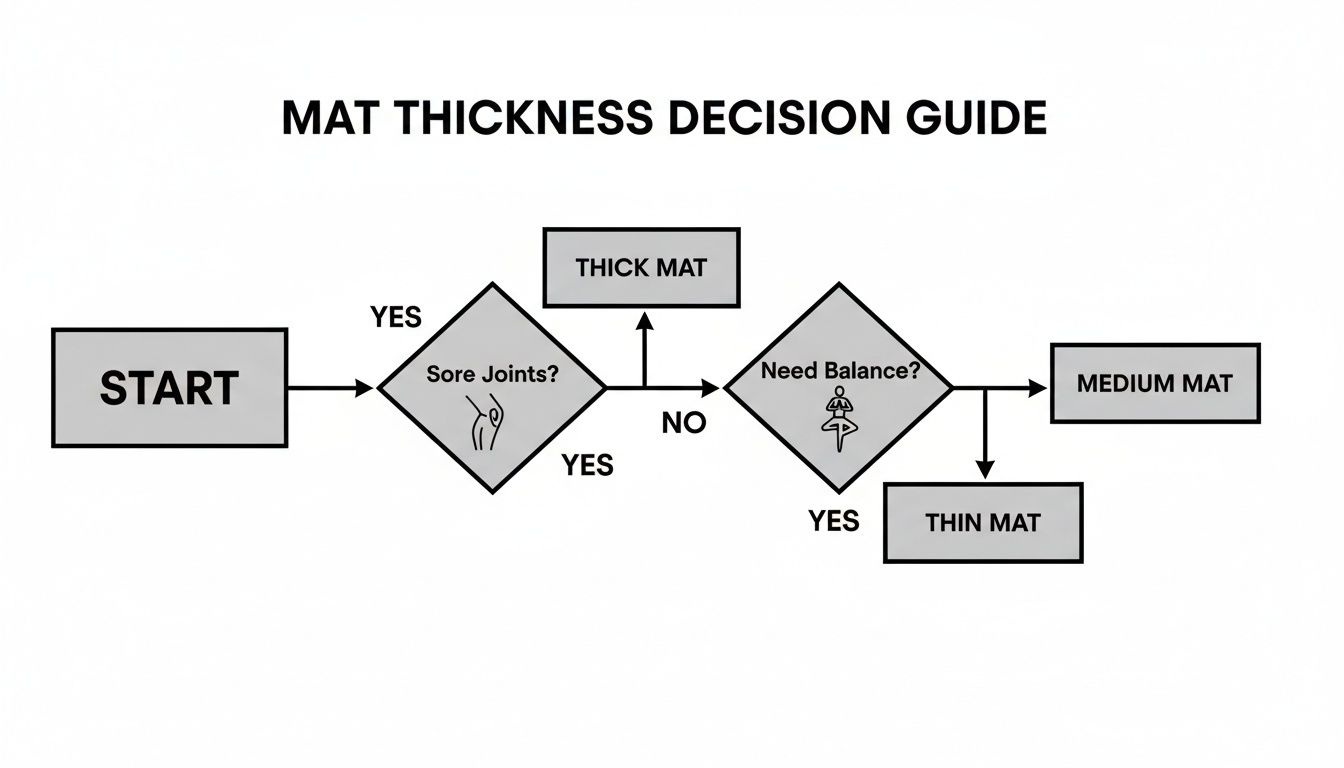
As this chart shows, if your joints tend to get sore, a thicker mat offers that much-needed cushioning. On the other hand, a thinner mat will give you a better connection to the floor, which is a game-changer for balancing poses.
The moment your hands start sliding forward in Downward-Facing Dog, everything tenses up. You start digging your fingers in, clenching your shoulders, and shifting your weight all wrong just to stay put. This doesn't just mess with your alignment; it creates a mental block, swapping that feeling of calm you're after with pure anxiety.
A grip you can count on lets you relax and trust your foundation. It gives you the freedom to fully lengthen into a pose, knowing the mat has your back (and your hands and feet). That sense of security is essential for building the muscle memory you need to progress safely.
A great mat doesn't make you a better yogi, but a bad mat can definitely hold you back. When you trust your mat's grip, you give yourself the freedom to explore your limits without fear of slipping.
Beyond just the texture of the surface, you'll see a lot of mats these days with alignment lines. These are just subtle markings that act as visual cues for where to put your hands and feet, helping you find consistency from one pose to the next. For a beginner, they're like training wheels for your body, teaching you proper spacing and symmetry right from the start.
And this isn't just a gimmick. Globally, 25% of beginners say mat quality is their number one factor when buying, with a huge emphasis on grip. It makes sense, then, that 55% of all yoga mats sold in 2024 are for newcomers, and there's been an 18% jump in demand for eco-friendly materials like natural rubber, which is famous for its incredible traction. Some brands have even found that alignment markers can cut down on beginner errors in pose accuracy by up to 30%. You can learn more about the yoga mat market trends to see how what people want is changing how mats are made.
At the end of the day, the right grip comes down to your body and the kind of yoga you want to do. If your hands are usually dry and you're leaning toward gentle flows, a sticky PVC or TPE mat will be a great partner. But if you think you'll be sweating or want to try more dynamic classes, investing in a natural rubber or cork mat might be the best first step you take on your yoga journey.
Think of your new yoga mat as an investment in yourself. A little regular care will go a long way in keeping it fresh, grippy, and ready for your next practice. After all, a clean and supportive mat helps you focus on your poses, not on what's underneath you.
Just like seasoning a cast-iron pan, a few simple habits will actually improve your mat's performance and extend its life. This really just boils down to wiping it down after a sweaty session, giving it the occasional deep clean, and storing it properly to avoid cracks and funky smells.
Not all mats are the same, and what works for one material can ruin another. Using the wrong cleaner can strip away the mat's grip or even cause it to break down.
Here’s a quick rundown on how to clean your specific type of mat.
For PVC and TPE Mats: Good news—these are the easiest to care for. They're non-porous, so a quick wipe-down is all you need. Just mix a few drops of gentle dish soap with warm water in a spray bottle, give the mat a light spritz, and wipe it clean with a soft cloth. Never soak the mat or use harsh chemicals, as that can leave a slippery film behind.
For Natural Rubber and Cork Mats: These eco-friendly materials need a gentler touch. Abrasive cleaners will dry them out, leading to cracking and crumbling. Your best bet is a simple 50/50 solution of white vinegar and water. Spray it on lightly, wipe it down, and always let it air dry completely before rolling it up.
One thing you should never, ever do is put your mat in the washing machine or dryer. The high heat and tumbling will absolutely destroy it. It can cause tearing, warping, and a total loss of that essential grip you rely on. A little hand-cleaning is all it takes.
Where you keep your mat between sessions matters just as much as how you clean it. Tossing it in a corner or stuffing it somewhere can cause permanent damage that messes with your balance.
Always Let It Dry Completely: After cleaning or a particularly sweaty practice, hang your mat over a chair or lay it flat to air dry. Rolling up a damp mat is a recipe for mildew and bacteria. Nobody wants that.
Roll It Loosely, Not Tightly: Once it's dry, roll your mat up, but don't cinch it super tight. Constant tension can create creases and cracks over time. Pro tip: always roll it with the top side (the side you practice on) facing out. This little trick helps the edges lay flat the next time you unroll it, so you're not fighting with curling corners.
Following these simple steps is the best way to maintain one of the most important tools for finding the best yoga mats for beginners and ensure yours stays in great shape for years to come.
Making that final decision can feel like a big deal, and it's totally normal to have a few last-minute questions swirling around. You want to get it right! Let's clear up some of the most common things people wonder about before they buy their first mat.
Think of this as your final confidence boost. We've tackled the questions we hear all the time from beginners, helping you feel 100% sure about the mat you choose to start your yoga journey with.
Your mat will tell you when it’s time for a new one. The signs are usually pretty obvious once you know what to look for. If you start seeing little flakes or bits of the mat on your clothes after practice, that's a clear signal its structure is breaking down.
Another huge giveaway is a loss of grip. Are your hands suddenly slipping in Downward Dog where they used to feel locked in? That means the surface texture has worn away. Also, pay attention to how it feels under your knees. If the cushioning feels flat and you’re starting to feel the hard floor more, it's no longer doing its job. A solid beginner mat should easily last you a year or more of consistent practice.
It's a fair question, but a general exercise mat just isn't built for yoga. While they look similar, their purpose is completely different. Those thick, cushy gym mats are designed to absorb the high impact of things like jumping jacks or crunches.
That extra squishiness, however, becomes a problem in yoga. Trying to hold a balancing pose like Tree Pose on a spongy mat feels like standing on a marshmallow—it creates a wobbly, unstable surface. Yoga mats are engineered to provide that perfect blend of grip and stability with just enough cushion, helping you stay grounded and safe.
Ah, the famous new mat smell! It's super common, especially with natural rubber mats, but don't worry—it won't last. The easiest fix is simply to unroll your mat and let it air out for a couple of days in a room with good airflow.
Want to speed things up? You can gently wipe the mat down with a damp cloth and a single drop of mild dish soap, or a 50/50 mix of water and white vinegar. Just be sure to keep it out of direct sunlight, which can degrade the material. A little bit of air and patience, and that smell will be a distant memory.
Honestly, no. When you're just starting out, your focus should be on the essentials: good grip, comfortable cushioning (that sweet spot of 4-6mm is perfect), and something that will hold up. You can easily find all these things in a great-quality, affordable mat.
The pricier mats usually come with perks like specialized, eco-friendly materials or lifetime guarantees that you just don't need right away. The smart move is to start with a reliable, budget-friendly option that covers the basics. Once yoga becomes a solid part of your life, you can always decide to treat yourself to an upgrade down the road.
Ready to find a high-quality, budget-friendly mat that ticks all the right boxes? Explore the curated collections at FindTopTrends and start your yoga journey with confidence.
Shop the Best Yoga Mats for Beginners at FindTopTrends




