


No products in the cart.


Free Shipping Australia-Wide

5 star customer service

Quality Tested Products

The right trail running shoe is your best friend out on the dirt. It needs to deliver a powerful combination of aggressive grip, solid foot protection, and durable support—all purpose-built for the wild, unpredictable surfaces you'll encounter off-road.
Think of trail shoes as all-terrain tires for your feet. They’re designed to keep you stable and safe whether you're navigating muddy singletrack, scrambling up rocky peaks, or bombing down a loose descent. Honestly, picking the right pair is the single most important gear decision you'll make as a trail runner.
Once you leave the pavement, the world underfoot changes completely. You're dealing with dynamic, uneven terrain that asks a whole lot more from your shoes than smooth asphalt ever will. You wouldn't take a sports car with slick racing tires on a rugged mountain jeep trail, right? The same logic applies here. A standard road running shoe is tuned for consistency and cushioning on flat, predictable surfaces, but it can quickly become a liability on the trail.
The most obvious difference is the outsole—the part of the shoe that actually touches the ground. Trail shoes are armed with deep, aggressive protrusions called lugs. These are designed to bite into soft earth, mud, and loose gravel, giving you reliable traction when you need it most. This specialized tread is your first line of defense against slipping and falling, giving you the confidence to tackle steep climbs and technical descents.
But it's not all about the grip. A great trail shoe is built from the ground up to protect your feet from all the things nature can throw at you.
Here are a few key protective features to look for:
This kind of specialized construction is why a dedicated industry has grown around this gear. The global trail running shoe market was valued at around USD 8.44 billion and is expected to hit USD 12.54 billion by 2030. That growth shows just how much runners value having the right equipment for both performance and staying injury-free.
Your shoe choice is the most critical gear decision you'll make. It directly influences your safety, comfort, and overall enjoyment on the trail, acting as the foundation for every step of your adventure.
Ultimately, the right shoe transforms your entire experience. It lets you get into the rhythm of the run and soak in the scenery, instead of constantly worrying about where you’re putting your feet. While some of these ideas are similar to picking other outdoor footwear, the specific demands of running call for a unique balance of protection and agility. To see how these needs differ, check out our guide on choosing hiking boots for beginners.
To pick the right trail running shoes, you have to know what makes them tick. A trail shoe isn't just a road shoe with a tougher attitude; it's a highly specialized tool where every single part works together to give you grip, protection, and stability on unpredictable ground. Think of it like a 4x4 vehicle—the tires, suspension, and chassis are all purpose-built for the job.
Let's start from the ground up and break down exactly how these components keep you safe and moving forward on the trail.
This image really drives home the core differences between your everyday road running shoe and its off-road cousin.
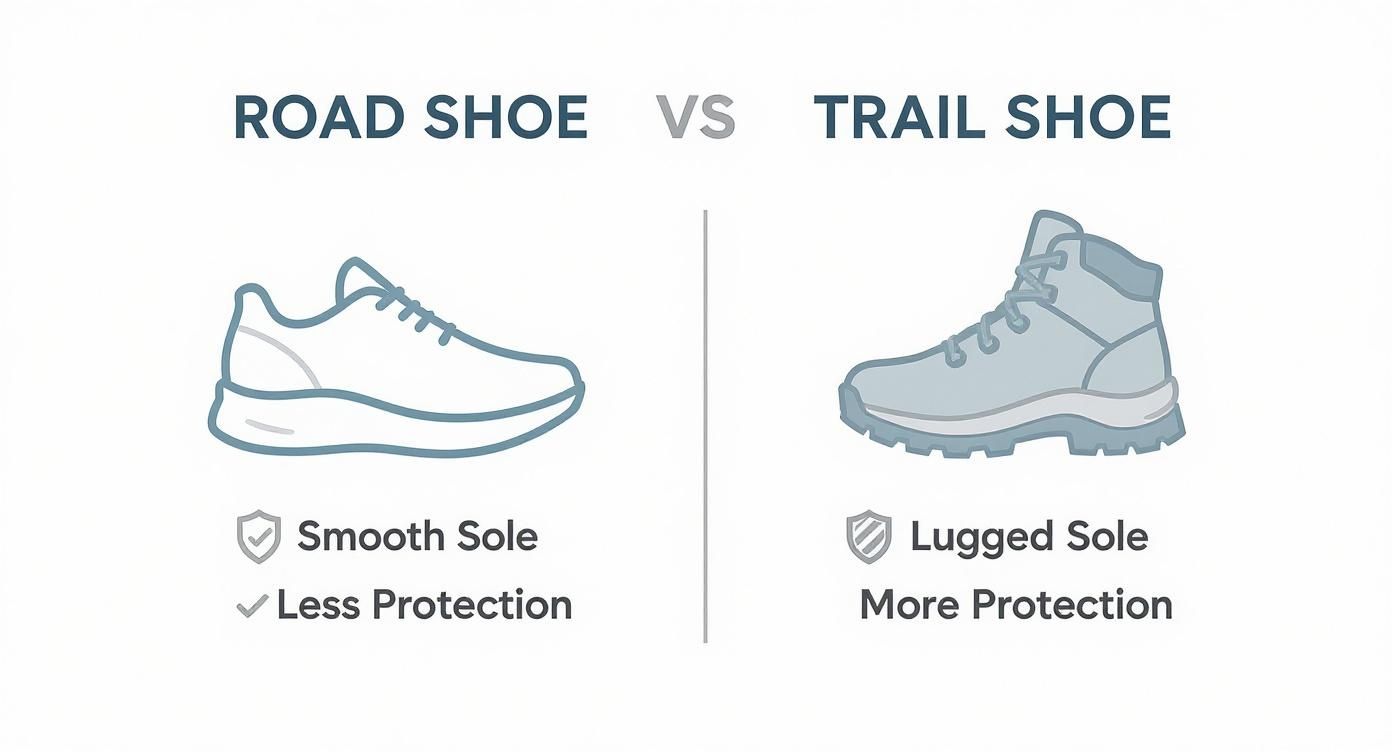
As you can see, the trail shoe is all about rugged features—a heavily lugged sole and reinforced body designed to tackle anything the trail throws at you.
For a quick overview of the key parts we're about to dive into, this table breaks down the essentials.
| Component | Primary Function | Key Features to Consider |
|---|---|---|
| Outsole | Traction & Grip | Lug depth, lug pattern, rubber stickiness |
| Midsole | Cushioning & Protection | Stack height, heel-to-toe drop, rock plate |
| Upper | Foot Security & Debris Shield | Material durability, toe bumper, fit system |
Now, let's explore what each of these components really does for you out on the dirt.
The outsole is that tough rubber layer at the very bottom of the shoe—the part that actually meets the ground. This is where your traction lives or dies. Unlike the smooth, flat outsoles on road shoes, trail outsoles are armed with lugs, which are basically deep, aggressive treads.
These lugs are built to dig into soft ground like mud, loose dirt, or even snow, giving you a confident grip where a road shoe would just spin out. The size and shape of these lugs tell you a lot about the shoe's intended purpose:
The rubber itself is a big deal, too. Softer, "stickier" rubber compounds provide incredible grip on slick rocks and technical, rooty sections, but they tend to wear out more quickly. On the flip side, firmer rubber is way more durable and stands up better to abrasive, rocky trails.
Sandwiched between the outsole and your foot is the midsole. This is the shoe's engine room, handling everything from cushioning and stability to how much "pop" you feel with each step. It’s usually made from foam compounds like EVA or TPU, and the specific blend dictates the shoe's entire personality.
Two concepts are crucial to understanding the midsole:
Tucked away inside the midsole of many trail shoes is a rock plate. This is a thin, semi-rigid sheet of plastic or carbon fiber that acts as a shield, protecting the bottom of your feet from getting bruised by sharp rocks and roots. It’s essentially armor for your soles.
The upper is everything above the midsole—the part that actually wraps around your foot. Its job is twofold: hold your foot securely in place and protect it from all the sticks, rocks, and grit on the trail. Most uppers are made from tough, tightly-woven synthetic mesh that can handle scrapes and scuffs.
A secure, locked-in feel from the upper is non-negotiable. Your foot should not slide around inside the shoe, especially on steep downhills or when making quick side-to-side moves. A sloppy fit is a recipe for blisters and twisted ankles.
Look for features like reinforced toe bumpers (to save your toenails from painful stubs) and overlays that connect with the lacing system to give you that snug, custom fit. Some shoes also include a waterproof membrane, like Gore-Tex, to keep your feet dry. Just know that this waterproofing often means the shoe will be less breathable. Finding the right upper is all about balancing that trifecta of protection, lockdown, and climate control.
Forget finding one “perfect” trail shoe. The real secret is finding the perfect shoe for the ground you run on most of the time. A shoe built for sloppy mud will feel like a brick on hard-packed dirt, and a lightweight cruiser simply won't protect your feet on a jagged, technical ridgeline.
Think of it like picking the right tool for the job. You wouldn't use a tiny artist's brush to paint a house, right? It's the same idea here. The single best thing you can do for your performance, safety, and comfort is to match your shoe's features—like its grip, cushion, and protection—to the trails you call home.
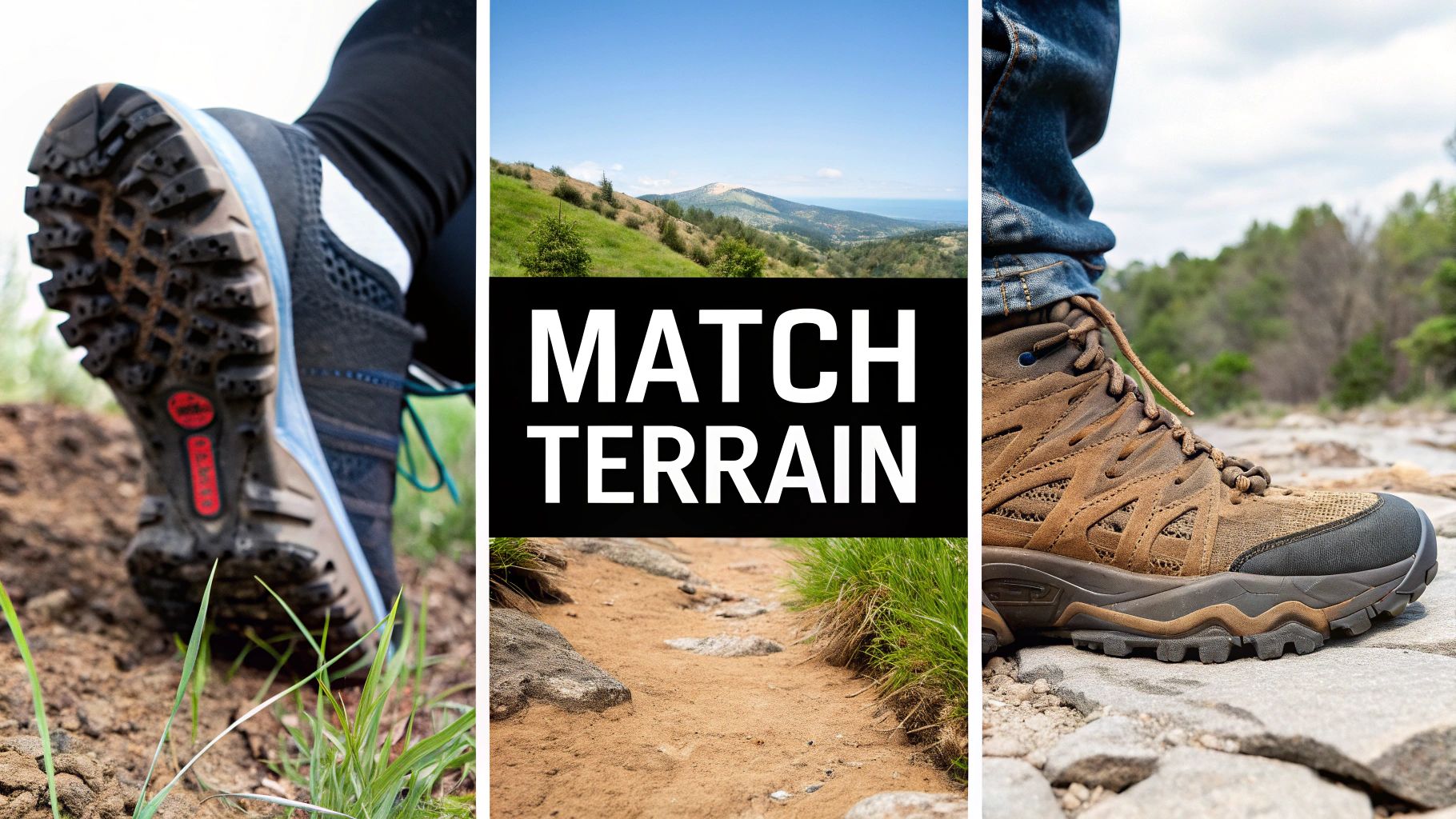
Let's break down the common trail types. Once you know what to look for, you can cut through the noise and find a shoe that feels like it was made just for you.
This is your most predictable turf: smooth dirt paths, fire roads, gravel tracks, and those well-maintained trails you find in local parks. The ground is firm and relatively even, so you don’t need monster-truck-level lugs to get a grip.
On these friendly surfaces, comfort is king. A shoe with these traits will feel right at home:
It's no surprise this category is booming. In North America, light trail running shoes are dominating sales, with the United States market alone hitting USD 2,338.8 million in revenue and growing at a 6.3% CAGR. This reflects a huge cultural shift toward getting outdoors. You can see more on the growth of the trail running shoe market on futuremarketinsights.com.
When your runs feel more like romps through wet forests, boggy fields, or slick, muddy hills, the rulebook changes entirely. Here, it’s all about traction. A shoe made for hard-packed trails will instantly get caked with mud, turning your feet into slippery, useless weights.
For sloppy conditions, you need a shoe that acts like a claw, digging into the earth to give you a secure foothold with every step.
On soft terrain, widely-spaced, deep lugs are non-negotiable. They are designed not only to bite into the ground for maximum grip but also to shed mud effectively, preventing buildup that would otherwise compromise your traction.
Look for these key features:
This is where your shoes truly earn their keep. We’re talking jagged rocks, fields of sharp scree, gnarly roots, and steep, sketchy climbs and descents. Your shoe needs to be a fortress for your foot, protecting it while still giving you the agility to place your feet precisely.
Many runners also use other gear for extra stability on these runs; our guide on how to choose trekking poles is a great resource for tackling tough ascents and descents safely.
Here, the focus shifts to three things: protection, grip, and sheer durability.
Take an honest look at where you spend 80% of your running time. By doing that, you can confidently pick a shoe that’s perfectly tuned to your world, making every single run safer and way more fun.
https://www.youtube.com/embed/Hs71C5Md9FE
Picking a shoe for the right trail is a massive first step, but it’s not the whole story. The best shoe for you also has to work with your body, your running form, and what feels good on your feet. This is where we shift from the outside world of trails and terrain to your own personal experience on them.
Think about it like setting up the suspension on a mountain bike. You pick the right bike for the trails you ride, but you still have to tweak the shocks and tire pressure for your specific weight and riding style. It’s that same level of fine-tuning that makes a good shoe feel like a great one.
One of the biggest decisions you'll make is just how much foam you want between your feet and the ground. This "stack height" runs the gamut, from shoes that give you an intimate feel for every rock and root to others that feel like you're bouncing on pillows. There's no single "best" option—only what feels best for you.
Your perfect cushion level is a balancing act between comfort and control. More cushion can be a real leg-saver over long distances, but less cushion often delivers a more nimble, connected-to-the-trail feeling that can boost your stability.
Heel-to-toe drop—often just called "drop"—is simply the height difference between your heel and your forefoot, measured in millimeters. It might seem like a tiny detail, but it has a huge impact on your running mechanics and which muscles do the most work.
A high drop (8-12mm) puts more cushion under the heel, which is often preferred by runners who land on their heels first. This can help take some of the load off your Achilles tendon and calf muscles. On the flip side, a low or zero drop (0-6mm) shoe encourages a landing that's more on your midfoot or forefoot. This promotes a more natural gait that tends to fire up your glutes and hamstrings more.
Finally, you have to consider the weight of the shoe itself. Lighter shoes just feel fast. They're agile, zippy, and a ton of fun for race day or when you're trying to push the pace. But that nimbleness usually comes at a price.
Heavier shoes are the workhorses. They typically pack in more durability, more protection, and more cushioning—they're built to take a beating for hundreds of miles. The choice really comes down to your main goal for that shoe. Are you chasing speed, or are you looking for long-term comfort and bombproof protection?
The incredible pace of innovation in shoe materials and design is fueling a lot of excitement in this space. Industry analysts are predicting some serious growth, with one report projecting the trail running shoe market will grow by USD 4,176.8 million, accelerating at a 9% CAGR.
Getting the size right is non-negotiable. A bad fit can lead to everything from nagging discomfort to black toenails and nasty blisters, completely sidelining your run. Nailing the fit is key to performance and injury prevention; you can learn more about how to prevent blisters when hiking, a common problem that also plagues trail runners.
Just follow these three simple rules:
Pairing your shoes with the right tech can also take your runs to the next level. For more on tracking your adventures, check out our guide on the best GPS watches for hiking.
Trying to pick the right trail shoe can feel like a massive task, but it gets a lot easier once you realize they fall into a few distinct categories. Don't worry about brand names for now. The goal is to first understand the purpose behind the design. Once you know what kind of running you'll be doing, you can instantly filter out the noise and focus on shoes built for you.
It’s a bit like picking a vehicle. You wouldn’t take a sports car on a rugged off-road adventure, and a heavy-duty pickup truck is overkill for a quick trip to the grocery store. Trail shoes work the same way. Let’s break down the four main groups to see where you fit.
This is your workhorse category—the versatile, jack-of-all-trades shoe that can handle a bit of everything. If you're new to trail running or your runs include a mix of terrain, this is the perfect place to start. These shoes master the art of compromise, balancing comfort, protection, and grip for solid performance on everything from smooth dirt paths to moderately rocky singletrack.
You'll typically find they have:
When the goal is to go fast—whether you’re chasing a new PR or just love that light-on-your-feet feeling—these are the shoes you want. Designers strip away every non-essential gram to create a nimble, responsive ride that feels like an extension of your foot. They are all about agility and ground connection.
Of course, there's a trade-off. To achieve that low weight, they give up some cushioning and underfoot protection. Think of them as the race cars of the trail world: thrilling, precise, and built for speed, but not what you’d choose for a long, comfortable cruise. For runners tackling long distances on diverse terrain, the highly-rated La Sportiva Jackal Trail Running Shoe offers a good example of a shoe that balances cushioning with performance features needed for endurance.
Engineered for pure, unadulterated comfort, max-cushion shoes are a lifesaver for ultramarathoners and anyone looking to shield their joints from relentless pounding. These shoes are defined by a super-thick midsole packed with plush foam, designed to soak up impact mile after mile.
The philosophy here is all about energy preservation. By absorbing more of the shock from each footstrike, these shoes reduce the overall wear and tear on your body, helping you run longer and feel better doing it.
All that comfort comes at the cost of some stability. The high stack can feel a bit wobbly on tricky, off-camber terrain, and the thick foam can dull your feel for the ground. They truly shine on rolling trails or less-technical terrain where a soft, protective ride is the top priority.
If your runs often involve mud, puddles, or slush, waterproof shoes are a godsend. These models feature a waterproof-breathable membrane (like Gore-Tex) built into the upper, which acts as a barrier to keep your feet dry from the outside elements. They're fantastic for cold, wet climates and snowy conditions.
The big thing to remember is the breathability compromise. That same membrane that keeps water out also makes it harder for sweat to escape. On a warm day, your feet can get pretty swampy. And if water does happen to spill in over the top of the shoe, it’s trapped inside. So, be realistic about your climate before committing to a waterproof model.
Getting your hands on the right pair of trail running shoes is a great start, but it's really just the first step. The real test comes next: making sure they work for you on the trail and then keeping them in fighting shape for as long as possible. A smart testing routine, a little bit of care, and knowing when to finally say goodbye will protect your wallet and, more importantly, your body.
So you've found a pair that looks promising. A quick jog on the store's treadmill won't cut it—that perfect, flat surface tells you almost nothing about how they’ll handle roots and rocks. You need to simulate real-world trail conditions, which is why a good running shop with an incline ramp or a few small obstacles is your best friend.
Here’s a quick-and-dirty checklist to put a potential pair through its paces in the store:
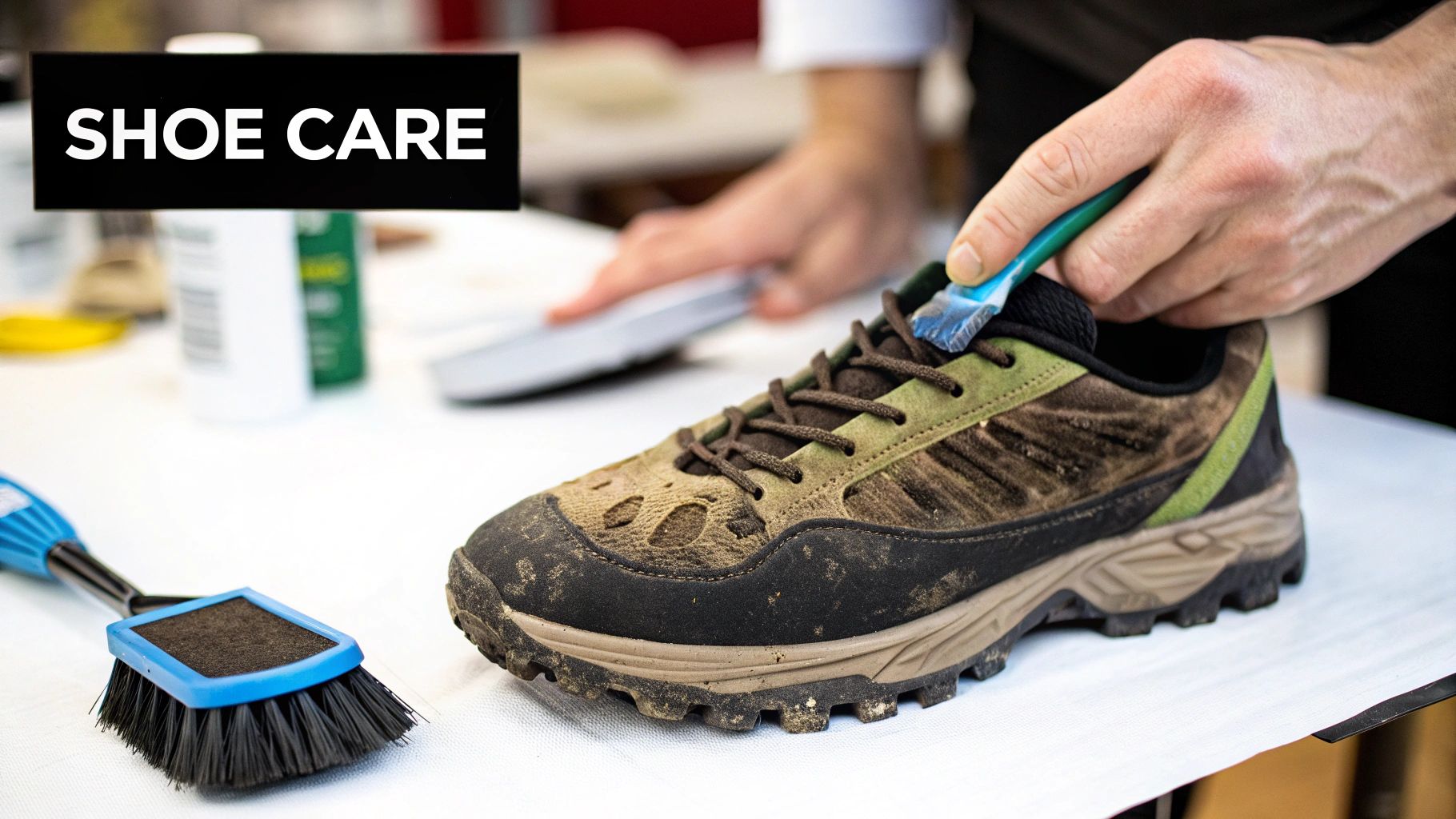
Your trail shoes are built to take a beating from mud, grit, and stream crossings, but a little TLC after each run can make a world of difference. Proper cleaning isn't just about looks; it stops abrasive dirt from grinding away at the upper's mesh and stitching over time.
Whatever you do, don't just toss them in the washing machine or dryer. The intense heat can permanently deform the foam midsole and weaken the glues that hold the entire shoe together. Trust me, it’s a shortcut to a ruined pair of shoes.
Instead, stick to this simple routine:
Proper maintenance is more than just cosmetic. Regularly cleaning your shoes removes abrasive particles that can prematurely wear down the upper's fabric and stitching, significantly extending their functional lifespan.
Even the most well-cared-for shoes have an expiration date. With every step, the foam in the midsole compresses, gradually losing its ability to absorb impact. Pushing them too far is a classic recipe for nagging aches and injuries.
While you'll often hear the 300-500 mile range thrown around, the truth is that the physical signs of wear are a far more reliable indicator.
Keep an eye out for these telltale signs that it’s time to hang 'em up:
Alright, we've covered a ton of ground, from shoe anatomy to matching your pick with specific terrain. But even after all that, a few practical questions almost always pop up. Let's tackle them head-on so you can walk into a store (or browse online) with total confidence.
Think of this as your final checklist before making a decision.
Look, on a perfectly flat, manicured dirt path? Maybe. For a short distance. But for actual trail running, it’s a really bad idea. I can't stress this enough. Road shoes simply don't have the deep, aggressive lugs you need for gripping dirt, mud, or rock. Your chances of slipping and taking a nasty fall go way up.
Beyond the lack of grip, they offer zero protection. There's no rock plate to shield you from sharp stones and no reinforced toe bumper to save you from a painful stub. For your own safety and enjoyment, investing in a proper trail shoe is non-negotiable for off-road running.
Using road shoes on technical trails is like taking a sports car off-roading. You might get a few feet, but you're missing the fundamental equipment needed to handle the conditions safely.
This one comes down entirely to where and when you run. If you're consistently running in cold, wet weather, through snow, or on trails that have you splashing through streams, a waterproof shoe (usually with a Gore-Tex or "GTX" liner) can be a lifesaver. They do a fantastic job of keeping your feet dry and warm.
But here’s the trade-off, and it's a big one: breathability. In warmer weather, that same waterproof membrane traps all your sweat inside, turning your shoe into a swamp. This leads to hot, blister-prone feet. And get this—if water does get in over the top of the ankle, it has nowhere to go. It's stuck in there. For most runners, a standard, non-waterproof shoe made of quick-drying mesh is a much more versatile and comfortable choice.
The old 300-500 mile guideline is a decent starting point, but your shoes will give you much clearer signals. You just have to learn to listen to them.
Here are the dead giveaways that it's time for a new pair:
Don't try to squeeze extra miles out of a worn-out pair. Running on dead shoes is one of the fastest ways to get injured.
Ready to explore a curated selection of top-rated gear for all your adventures? Visit FindTopTrends to discover high-quality essentials and the latest trending products for your outdoor pursuits. Shop now at FindTopTrends.




