


No products in the cart.


Free Shipping Australia-Wide

5 star customer service

Quality Tested Products

When it comes to the best ways to catch trout, you're really looking at two powerhouse methods: spin fishing and fly fishing. Each one is a different tool for a different job, and a smart angler knows when to use which. Spin fishing offers incredible versatility and is easy to pick up, while fly fishing is all about finesse and a subtle, natural presentation.
Catching trout consistently isn't about luck. It's about getting inside their heads, understanding their behavior, and picking the right strategy for the day's conditions. While you could fill a library with different trout techniques, it all boils down to two dominant and time-tested approaches that work for everyone from beginners to seasoned pros.
Think of spin fishing as your workhorse. It’s often the most accessible way to start, letting you cover a ton of water in a short amount of time. This is a huge advantage when you're trying to find where the fish are holding in big rivers, sprawling lakes, or even fast-moving streams. The secret is in the lure—its weight is what lets you cast, so you can launch a spinner or a spoon a country mile with very little effort.
Fly fishing, on the other hand, is a game of deception and artistry. It’s all about imitation. You use the weight of the fly line itself—not the lure—to present a nearly weightless artificial fly that perfectly mimics a natural insect, minnow, or whatever the trout are eating that day. This technique is unbeatable when the fish are wary in clear water or laser-focused on a specific hatch. It takes more practice, but the payoff of fooling a picky trout is what gets so many anglers hooked.
So, which one is right for you? It really depends on the situation. This quick comparison breaks down the two main ways to go after trout, covering where they shine, the gear you'll need, and their biggest strengths.
| Method | Best For | Core Gear | Key Advantage |
|---|---|---|---|
| Spin Fishing | Beginners; Covering large water bodies; Windy conditions | Spinning rod, reel, monofilament line, lures (spinners, spoons) | Simplicity, casting distance, and versatility in various conditions. |
| Fly Fishing | Anglers who enjoy technical challenges; Clear, shallow water | Fly rod, reel, weighted fly line, artificial flies | Unmatched presentation for fooling selective and easily spooked trout. |
At the end of the day, both methods are deadly effective. The real trick is knowing how to read the water and adapt your approach.
The key to success isn't just picking one method, but knowing when and why to use it. An angler who understands both can adapt to any situation the water throws at them, dramatically increasing their chances of a successful day.
Your choice might come down to the type of water you fish most often, your own personal style, or simply what you find more enjoyable. Just remember, no matter which technique you choose, being prepared is non-negotiable. Having a solid wilderness first aid kit stashed in your pack is every bit as critical as picking the perfect lure.
If you've ever watched a fly fisherman, you know it's something special. It's more than just a way to catch fish; it's an art form built on presentation, precision, and a deep connection to the river. You're not just chucking a lure out there—you're trying to think like a trout, to understand its world. This is what makes it one of the most rewarding ways to catch them.
Unlike spin fishing, where the heavy lure pulls the line, fly fishing is the complete opposite. You use the weight of the line itself to deliver a fly that's almost weightless, letting it land on the water with incredible finesse.
It’s a technique beloved around the globe for a reason. Take Scotland, for example. In 2021, anglers reported a rod catch of 12,636 sea trout. What really stands out, though, is that a staggering 87% of those fish were released, a testament to the strong conservation mindset that runs deep in the fly fishing community. You can dive into the numbers yourself in the official Scottish Government publication.
Walking into a fly shop can be intimidating, but you don't need a mountain of gear to get started. A simple, balanced setup is all it takes to get you on the water.
You'll also need a tapered leader and some tippet. This is the invisible connection between your thick fly line and the fly, and it's key to tricking a wary trout.
Fly fishing is, at its heart, a game of deception. The goal is to present a bundle of feathers and fur so convincingly that a trout accepts it as a genuine meal. It’s a puzzle that involves the right gear, the right read of the water, and the right cast.
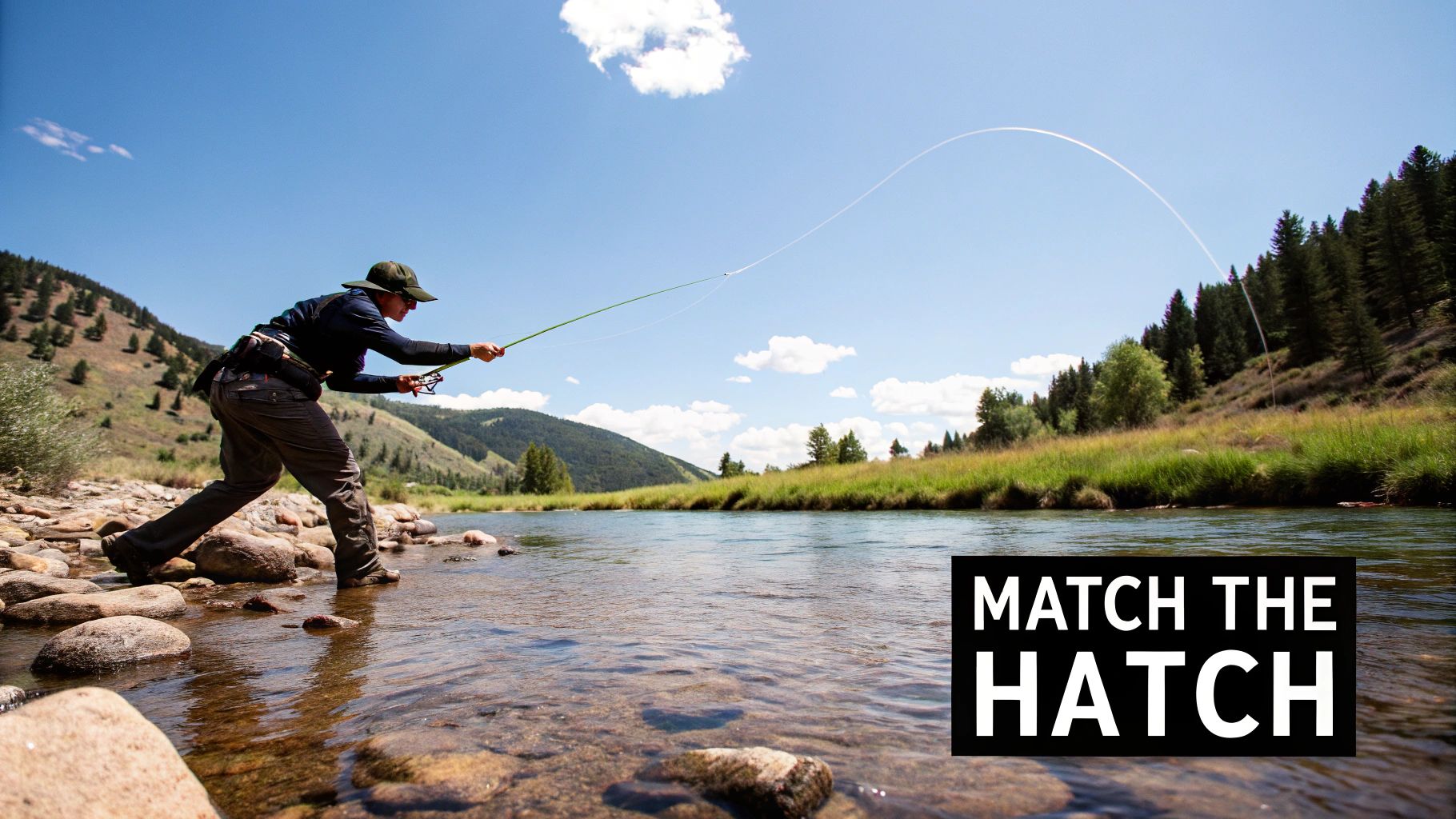
This is where the real magic happens. "Matching the hatch" is the classic fly fishing challenge: figuring out what insects are active and picking a fly that looks just like them.
Are you seeing tiny mayflies floating on the current? Try a Parachute Adams. Caddisflies skittering across the surface near the bank? An Elk Hair Caddis is a must-have. You’re essentially playing detective, trying to crack the code of what the trout are eating right now.
But a perfect fly is useless if you cast it in the wrong place. Learning to read the water is just as crucial. Trout are predictable creatures; they hang out in spots that provide both food and safety from predators. Keep an eye out for these classic trout lies:
Once you get the hang of the basics, you can explore more advanced ways to present your fly. Our guide covering different fly fishing methods is a great next step.
Ultimately, it all comes together in your cast. Work on a smooth, rhythmic motion that allows the fly to land softly on the water. A loud, clumsy splash is the surest way to send every fish in the pool running for cover.
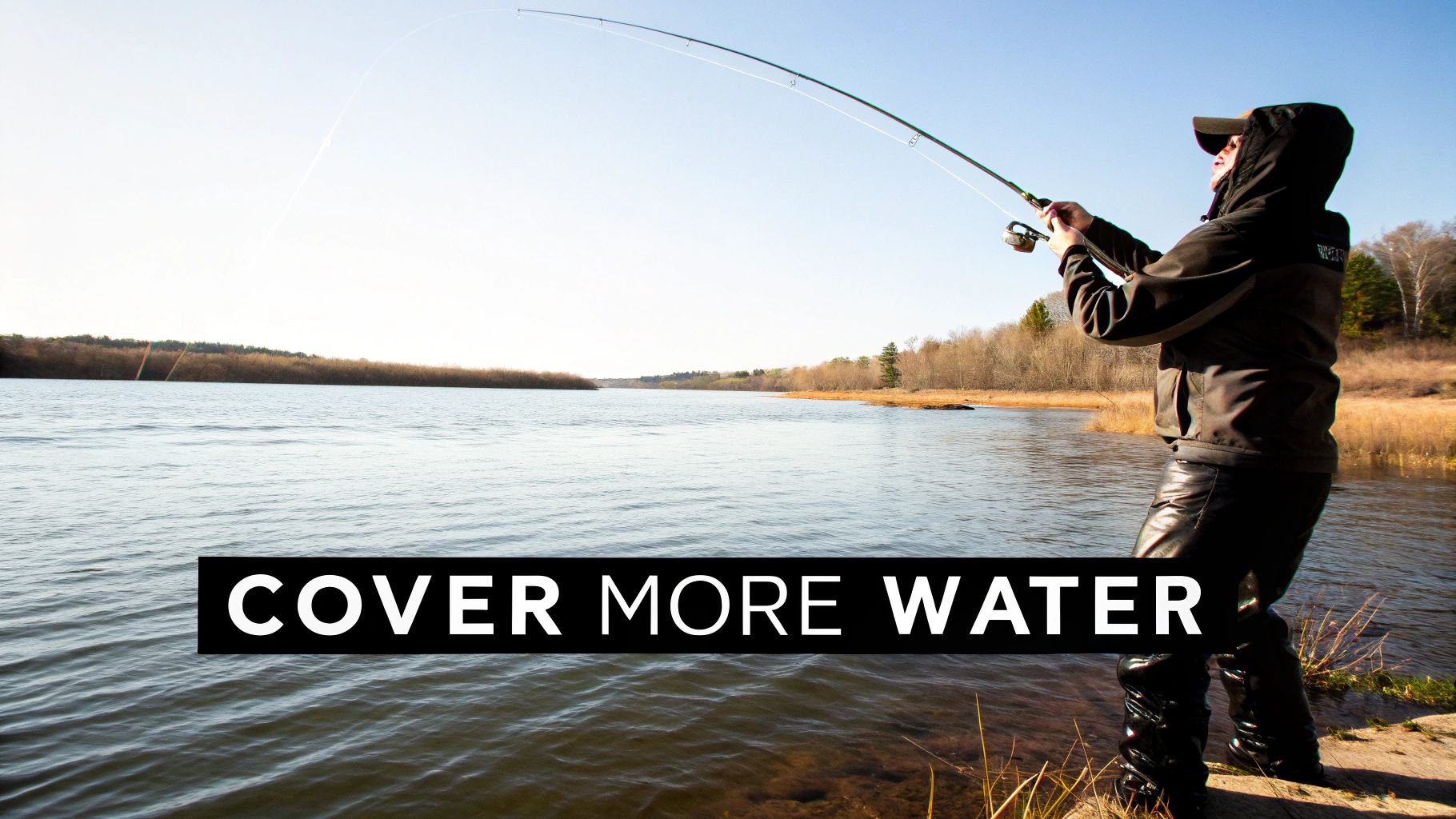
If fly fishing is a delicate art, think of spin fishing as the all-purpose workhorse of the trout world. It's an incredibly straightforward and effective way to fish, letting you cover a massive amount of water in everything from big, fast-moving rivers to the deep, quiet holes of a mountain lake. The concept is simple: the weight of your lure pulls the line off the reel, letting you cast a country mile with very little effort.
This approach is perfect for anglers who like to actively hunt for fish. Instead of waiting for trout to swim by, spin fishing lets you go out and find them. The real beauty is its versatility—you can switch from a shallow-running lure to a deep-diving spoon in just a few seconds to match whatever the water is throwing at you that day.
You really don't need a complicated or pricey setup to start catching fish. A well-balanced combination of rod, reel, and line is all it takes to build a reliable trout-catching machine. The secret is just making sure all the components work together.
Your rod is the foundation of the whole rig. I’ve found that an ultralight to light power rod, usually between 6 and 7 feet long with a fast action, gives you the perfect mix of sensitivity and strength. With a setup like this, you can feel even the most subtle bites but still have enough backbone to wrestle a surprisingly big trout to the net.
Next, you’ll want to pair that rod with a quality spinning reel in the 1000 to 2500 size range. This is the sweet spot for holding plenty of 4 to 6-pound test line without being bulky or heavy. For new anglers, choosing the right reel makes a huge difference. If you're curious about the technical side of things, understanding the debate between baitcasting vs spinning reels can be a real game-changer.
Walk into any tackle shop and the wall of lures can be overwhelming. But honestly, you can catch trout almost anywhere with just three classic types. If you build your tackle box around these core options, you’ll be ready for pretty much any situation.
This whole approach—spin fishing with these types of lures—is exceptionally deadly for rainbow trout, which are a major focus of global aquaculture. In fact, rainbow trout made up 98% of all global trout production back in 2020, with a staggering total output of 959,690 tonnes.
Pro Tip: Always vary your retrieval speed. Some days, the trout want a slow, steady retrieve. Other times, a fast retrieve with a few twitches and pauses is what it takes to trigger a strike from fish that seem otherwise uninterested. Let the fish tell you what they want.
What you tie on the end of your line is arguably the most important decision you'll make all day. The old debate between natural bait and artificial lures will probably never end, but the truth is, the best anglers know when to use each. It all comes down to reading the water and figuring out what the trout want on any given day.
Getting this right is a cornerstone skill for anyone serious about catching trout. Your goal is to offer them something that looks, smells, and moves like an easy meal.
Sometimes, you just can't beat the real thing, especially when trout are acting picky. Natural and prepared baits have an edge because they tap into a trout's powerful sense of smell—a sense that’s often more important than sight, particularly in murky water.
Live bait is a classic for a reason. I've caught countless trout by simply drifting a nightcrawler on a small hook through a current, letting it tumble along the bottom naturally. The trick is making it look alive and vulnerable. Small, lively minnows can also be absolute magic, especially for hooking into bigger, more predatory brown trout hunting for a real meal.
Then you have prepared baits, like the ever-popular PowerBait. These are engineered to leak scent into the water, making them incredibly effective for stocked trout, which are often raised on similar-tasting pellets.
Pro Tip: When you're using dough baits like PowerBait, try molding a small ball around a treble hook just big enough to make it float. This lifts your bait right off the bottom, keeping it out of the weeds and right in a trout's line of sight.
For those interested in exploring sustainable and highly effective natural bait alternatives, it's worth learning about all your options. For an in-depth look at one fantastic choice, check out this ultimate guide to dried Black Soldier Fly larvae.
While bait appeals to a trout's sense of smell, artificial lures are all about triggering their predatory wiring. The flash, wobble, and vibration of a well-fished lure imitate a panicked baitfish, often drawing aggressive strikes from trout that aren't even actively feeding. This makes them perfect for searching a lot of water to find active fish.
Your lure choice should always be a reaction to your surroundings.
To simplify your on-the-water decisions, here’s a quick-reference table that matches common scenarios with baits and lures that consistently produce.
This guide will help you match your offering to the conditions and the type of trout you're after, increasing your chances of a successful day on the water.
| Condition / Species | Recommended Bait | Recommended Lure Type |
|---|---|---|
| Clear, Slow Rivers | Small worms, insects | Realistic soft plastics, small crankbaits |
| Murky, Fast Rivers | Nightcrawlers, salmon eggs | Brightly colored spinners, flashy spoons |
| Deep Lakes | PowerBait, live minnows | Spoons, deep-diving crankbaits |
| Stocked Rainbow Trout | PowerBait, corn | In-line spinners, colorful spoons |
Ultimately, the best approach is to carry a variety of both baits and lures. Start with what the table suggests, but don't be afraid to experiment until you crack the code for the day.
If there's one thing that separates the consistently successful trout anglers from the rest, it's the ability to adapt. A trout's entire world changes with the seasons and the day-to-day conditions of the water. To really think like a fish, you have to understand what drives them: water temperature, food sources, and their need for safety.
The same stretch of river you fished in April is a completely different ballgame come August. To keep catching fish, you’ve got to be willing to change where you fish, what you throw, and when you go. It’s all about reading those environmental cues.
Trout are cold-water fish, plain and simple. Their energy and feeding habits are directly linked to the water temperature. This means each season offers a different set of challenges—and opportunities.
The best anglers I know don't just have a "honey hole." They understand why a spot is good at a particular time of year. That seasonal knowledge is the real secret to turning a lucky day into consistent success.
This timeline gives a great visual for how to switch up your lures as the conditions change.
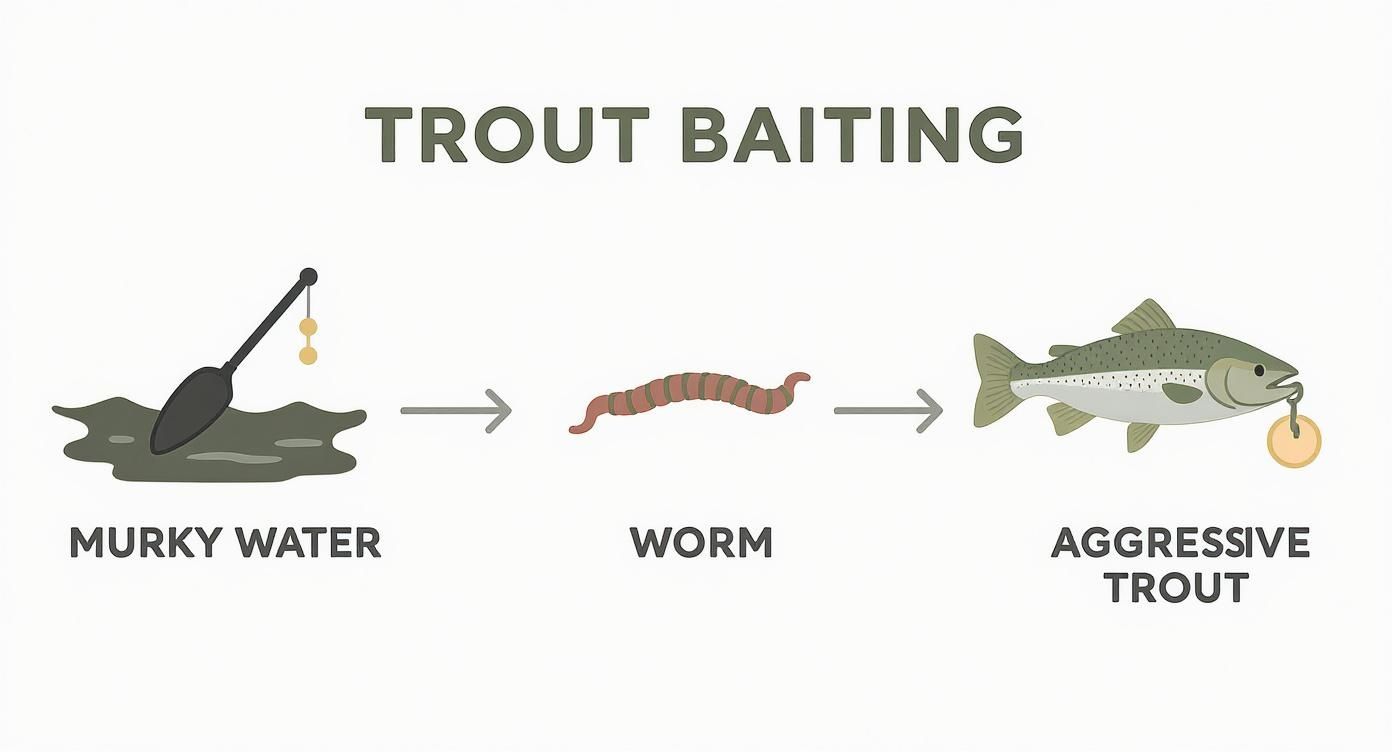
As you can see, you have to match your gear to the environment. Flashy spoons are great for murky water, while crystal-clear conditions call for ultra-realistic baits.
Beyond just the time of year, the water itself is constantly giving you hints. Learning to "read the water" is a skill you'll hone over a lifetime.
In a river, look for the seams where fast and slow currents meet—these are like conveyor belts delivering food to waiting trout. In a lake or pond, keep an eye out for submerged logs, drop-offs, or weed beds. These structures provide cover for trout and attract the smaller fish they feed on.
This often means venturing off the beaten path, so it never hurts to know how to use a map and compass to explore new territory without getting lost. A little bit of observation and strategy can transform you from someone just hoping for a bite into a calculated predator.
Even after you've got all the right gear and feel like you have a solid plan, questions always pop up once you're on the water. It happens to everyone. Getting a handle on these common hang-ups is what really builds confidence and leads to more fish in the net.
Let's clear up some of the most frequent questions I hear from fellow anglers. Knowing the why behind the what is often the little detail that turns a decent day of fishing into a great one.
If you want the short and sweet answer, it’s early morning and late evening. Hands down. During these low-light hours, trout feel much safer from overhead predators like ospreys and herons, so they’ll push into shallower water to feed actively. The time right around sunrise and the hour or two before sunset are the magic hours.
But don't overlook a good, drizzly overcast day. These can be incredible, sometimes offering solid action from dawn till dusk. The cloud cover acts like a giant light diffuser, making the trout feel secure and keeping them on the hunt for much longer.
The toughest time to get a bite? That's almost always high noon on a bright, clear day. When the sun is beating down, trout will bolt for the safety of deeper, cooler water or tuck themselves into the shade of an undercut bank, a submerged log, or a deep pool.
This is a big one. Water temperature is probably one of the most important factors dictating what trout will be doing on any given day. They are cold-water fish, and they have a pretty specific comfort zone.
Their happy place is a temperature range between 50°F and 65°F (10-18°C). In these temps, their metabolism is firing on all cylinders, and they’ll be at their most active.
Once the water dips below 40°F, their metabolism slows to a crawl. They get sluggish and won't waste energy chasing down a meal. On the other end of the spectrum, when water temps push past 70°F, the oxygen levels in the water drop, putting serious stress on the fish. They'll often stop feeding altogether just to conserve energy.
A simple stream thermometer is one of the most valuable, and underrated, tools you can carry. A quick check of the temperature tells you a ton about where trout are likely holding and how aggressive their feeding mood might be.
Yes. Absolutely, unequivocally, yes. A leader is non-negotiable for almost any kind of trout fishing you'll ever do. Trout have incredible eyesight and are famous for being line-shy—they spook easily at the sight of a thick, obvious fishing line tied directly to a lure or fly.
Think of a leader as a stealthy, nearly invisible link between your main line and your hook. It's just a section of lighter, less visible line. Most of us swear by fluorocarbon for this, as it practically vanishes underwater.
Skipping the leader is one of the most common mistakes I see beginners make. It's such a small adjustment, but it makes a world of difference.
At FindTopTrends, we're dedicated to bringing you the best gear for all your outdoor adventures. From high-tech gadgets to essential travel equipment, we help you stay ahead of the curve. Explore our curated collections at FindTopTrends and gear up for your next trip.




