


No products in the cart.


Free Shipping Australia-Wide

5 star customer service

Quality Tested Products

A well-planned grocery list for a family is so much more than a simple shopping aid. Think of it as your secret weapon for budgeting—a tool that can genuinely save you money and cut down on food waste. It’s the bridge between your meal plan and your bank account, stopping those impulse buys and making sure every dollar you spend has a purpose.

Let's be real: grocery shopping for a family can feel chaotic. You pop in for milk and bread and somehow walk out with a cart overflowing with stuff you never intended to buy, and a receipt that makes you wince. This guide is about creating a real-world system to change that.
We're going to move past the generic tips and build a sustainable blueprint that puts you back in the driver's seat of your kitchen and your wallet. The goal here is to craft a list that actually works for your family, turning a weekly chore into a financial win.
A great grocery list isn't something you scribble down in the car on the way to the store. It’s the final, crucial piece of a process that starts at home. When you connect your meal plan to a realistic budget and a well-stocked pantry, you build a powerful defense against overspending.
This structured approach brings some immediate benefits:
A grocery list is your financial game plan for the supermarket. Without it, you're just guessing—and your bank account pays the price.
Ultimately, mastering your family grocery list is all about being intentional. It’s what allows you to feed your family well while staying firmly on budget, proving that a simple piece of paper (or a note on your phone) is one of the most effective money-saving tools you have.
A great family grocery list doesn’t just magically appear in the supermarket aisle. It actually starts right at your kitchen table with a solid meal plan. I can’t tell you how many times I’ve seen people (myself included, in the early days!) walk into a store without a plan. It’s a recipe for overspending and impulse buys.
Think of your meal plan as the blueprint for your grocery list. If you're new to this, learning how to plan weekly meals that you'll actually stick to is the best place to start. A little bit of prep work here saves a ton of money and stress later.
Before you even dream up your menu, do a quick "pantry dive." Seriously, check the fridge, raid the freezer, and see what's hiding in the back of your cupboards. That half-bag of potatoes, forgotten frozen chicken, and lone can of corn? Boom. You've got the makings of a simple sheet pan dinner.
Shopping your own kitchen first is a game-changer for two big reasons:
This one habit is probably the single most effective thing you can do to immediately cut your grocery spending.
One of my favorite tricks for beating picky eating and making meal planning less of a chore is to get everyone in on the action. Assigning theme nights is a fantastic way to make it fun and predictable, which cuts down on that "what's for dinner?" decision fatigue.
Pro Tip: Try out themes like "Taco Tuesday" or "Pizza Friday." This makes planning a breeze—you only need to think of a few variations for each theme to get through a month, and the kids love having something to look forward to.
For more inspiration, you should check out our guide on family meal prep ideas. It's packed with ways to make your weeks run smoother.
Look at how a simple one-week meal plan for a family of four can directly build your core shopping list:
| Day | Dinner | Core Ingredients Needed |
|---|---|---|
| Monday | Spaghetti & Meatballs | Ground beef, pasta, sauce |
| Tuesday | Chicken Tacos | Chicken breasts, tortillas |
| Wednesday | Leftovers Night | Use what you have! |
| Thursday | Breakfast for Dinner | Eggs, bacon, pancake mix |
| Friday | Homemade Pizza | Pizza dough, mozzarella |
This simple chart becomes the backbone of your list. From here, you just add the necessary produce, snacks, and other pantry staples. This intentional approach turns your list from a random collection of items into a strategic tool for feeding your family well while staying on budget.
Once you have a meal plan, it's time to talk money. If you're feeling the squeeze from rising food costs, you're definitely not alone. The goal here isn't about chasing some unrealistic national average; it's about creating a spending plan that actually fits your family.
Let’s look at the numbers for a moment. The U.S. Consumer Price Index for all food jumped 3.2% between August 2024 and August 2025. For groceries alone, that increase was 2.7%, pushing many family budgets towards $900 a month or even higher. You can dig deeper into these trends and find additional food price outlook data on the USDA's website.
Before setting a new budget, you need to know where you stand right now. The best way to do this is to pull up your bank or credit card statements from the last month. Add up every single grocery store purchase.
The final number might be a bit of a shock, but that's okay. This is your baseline—no judgment, just pure data. If you spent $800, trying to slash it to $400 overnight is just setting yourself up for frustration. A much smarter approach is to aim for a 10-15% reduction. Maybe your first goal is $700. See how that feels, and you can always adjust from there.
Cutting your grocery bill doesn't mean you have to survive on ramen noodles. It’s all about becoming a more strategic shopper and making smarter choices right there in the store.
Here are a few of my go-to strategies that really work:
A budget isn’t about restriction; it’s about empowerment. It gives your money a mission and ensures your grocery list for family needs aligns perfectly with your financial goals.
For more in-depth advice, our guide on budgeting tips for families provides even more ways to make your money work harder.
Ever wish you had a magic stash of ingredients that could whip up a dozen different meals at a moment's notice? That’s exactly what a master pantry list does for you. This isn't your typical weekly shopping list; think of it as a permanent checklist for the non-perishables, freezer items, and household staples that are the backbone of your kitchen.
It’s basically your own personal kitchen inventory system. Having a well-stocked pantry means fewer last-minute trips to the store and a lot more flexibility when your week gets crazy. When it's time to make your weekly grocery list for family shopping, you're not starting from a blank page—you're just "shopping" your own pantry first and seeing what needs a top-up.
The easiest way to get started is to group your essentials into categories. This simple trick helps you organize your thoughts and ensures you don't forget an entire food group. Grab a notebook or open a new note on your phone and jot down these basic headings.
Begin by listing things your family uses all the time. What are you constantly running out of? Think about the go-to ingredients for your family's favorite breakfasts, lunches, and dinners.
A master list transforms your pantry from a random collection of items into a strategic reserve. It’s the ultimate tool for making your weekly meal planning and shopping faster and more efficient.
Here’s a quick look at what a basic list might look like for a family of four.
| Category | Essential Items | Pro Tip |
|---|---|---|
| Grains & Carbs | Brown Rice, Quinoa, Pasta (Spaghetti & Penne), Oats, All-Purpose Flour, Bread | Buy grains in bulk when they're on sale. They last for ages and it saves a ton of money over time. |
| Proteins | Canned Tuna, Canned Chicken, Black Beans, Chickpeas, Lentils, Peanut Butter | Stock up on a variety of beans—they're incredibly versatile for chilis, soups, and salads. |
| Canned Goods | Diced Tomatoes, Tomato Sauce, Coconut Milk, Corn, Green Beans, Chicken or Veggie Broth | Having a few cans of coconut milk is a lifesaver for making quick curries on busy nights. |
| Oils & Condiments | Olive Oil, Vegetable Oil, Soy Sauce, Vinegar (Apple Cider & Balsamic), Honey, Mustard | A good quality olive oil can elevate even the simplest dishes. It's worth a little extra investment. |
| Spices & Baking | Salt, Black Pepper, Garlic Powder, Onion Powder, Paprika, Oregano, Sugar, Baking Soda | Create a small, dedicated spice drawer or rack so you can see everything at a glance. |
This table just scratches the surface, but it gives you a solid framework to build from.
And of course, a well-run household needs more than just food. For a bigger-picture view, check out our guide on a complete household essentials shopping list. It’ll help you round out your master checklist with all the necessary cleaning supplies and personal care items so you're truly prepared for anything.
This is where all your hard work pays off. Your meal plan, budget, and pantry inventory are about to merge into the ultimate money-saving tool: your weekly shopping list. The process itself is pretty simple.
Start with your meal plan for the week. Before you write a single thing on your list, go "shopping" in your own kitchen. Check your pantry, fridge, and freezer, and cross off every ingredient you already have on hand for the week's recipes.
What’s left on your meal plan? That’s the starting point for your grocery list. This simple act of cross-checking is the secret to a powerful grocery list for family budgeting. It’s how you stop buying that third bottle of soy sauce and cut down on food waste.
Here’s a pro tip that will change your shopping trips forever: organize your list by the store’s layout. Don't just jot down a random jumble of items. Instead, group everything into categories that match the aisles—produce, dairy, meat, frozen foods, dry goods, and so on.
This little bit of prep work prevents you from zig-zagging all over the store. It gets you in and out faster and, just as importantly, helps you steer clear of the tempting snack aisle you had no business walking down.
This infographic gives a great visual of how common pantry items can be the foundation for so many different meals.
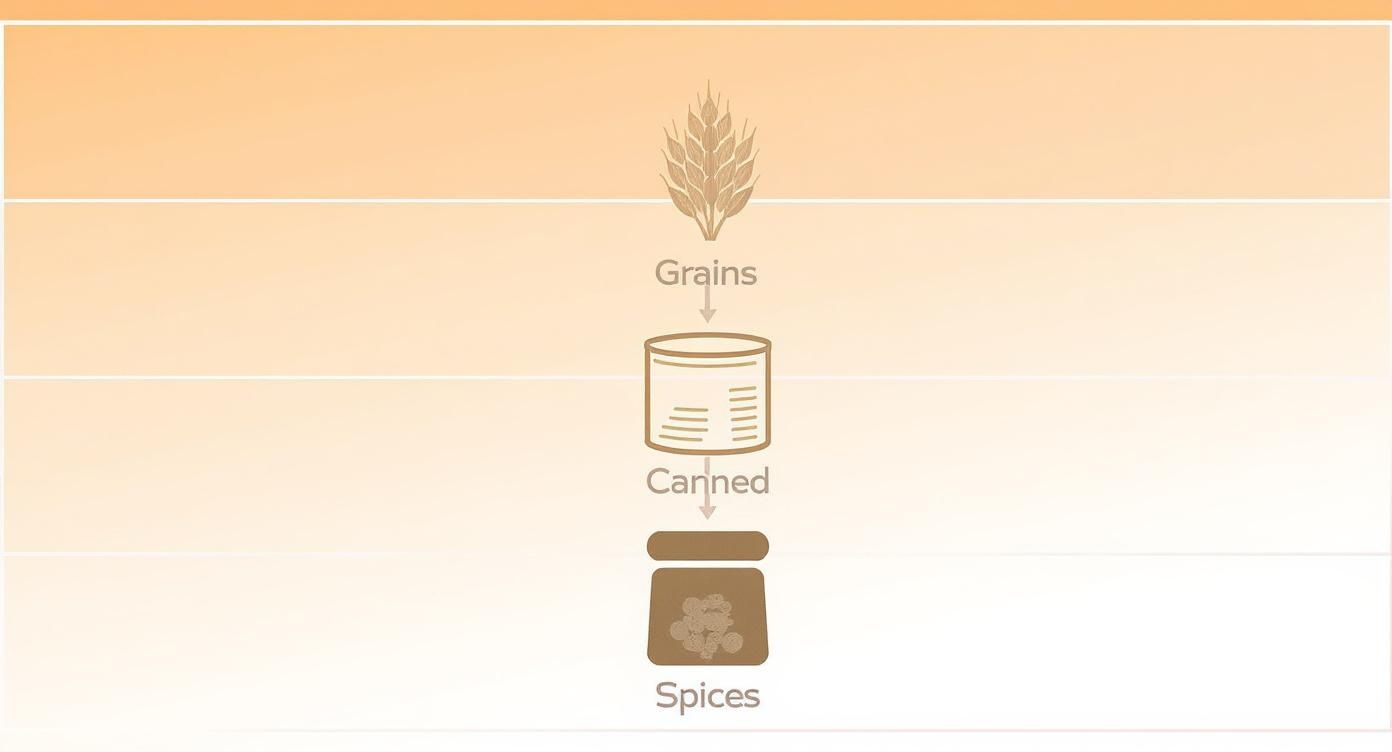
When your pantry is well-stocked with these core items, your weekly list becomes much shorter, focusing mostly on fresh ingredients like produce and meat.
Whether you prefer a digital app or the satisfaction of a pen-and-paper list doesn't really matter. Digital lists are fantastic for sharing with a partner, so they can grab things on the way home. But there's nothing quite like physically crossing items off a paper list. The best method is whichever one you’ll use consistently.
Before you head out the door, do one last budget check. The average U.S. family of four spends around $200 a week on groceries, and it's easy to see how. With 99% of households buying frozen foods, those costs can add up fast. A quick scan of your list helps you avoid that dreaded sticker shock at the checkout. You can discover more grocery shopping statistics and trends on Capital One Shopping to see how your habits compare.
https://www.youtube.com/embed/5rXEZEcA3O0
Alright, you've done the hard work of planning and your list is in hand. The next mission is to get in and out of the grocery store without blowing your budget. Believe it or not, when you shop can make a huge difference. If you can swing it, try a Tuesday or Wednesday morning. The aisles are usually quieter, the shelves are freshly stocked, and the whole experience is just less chaotic.
Let's be real: supermarkets are masterfully designed to make you spend more. Those brightly lit end caps with tempting "deals," the smell of baking bread pulling you toward the bakery, and the fact that essentials like milk are always at the very back of the store? It's all a strategy. They want you to walk through as many aisles as possible, increasing the odds you'll grab things you don't need. Your list is your secret weapon—stick to it like glue.
Taking the kids along doesn't have to be a nightmare. In fact, you can turn it into a learning opportunity or even a game. Give them a job, like being in charge of spotting all the red items on your list or finding the perfect bunch of bananas. This keeps them occupied and starts teaching them valuable lessons about food and money.
The single best thing you can do to fight impulse buys and stick to your budget is to follow your grocery list for family needs to a T. Think of it as your pre-approved spending plan for this trip.
It's no secret that food costs are on the rise. With the average in-store supermarket transaction now hitting $45.70, families are feeling the squeeze. A well-crafted list is your best defense against these climbing prices.
Sometimes, "shopping smarter" means finding ways to save your time and sanity, not just your money. For those incredibly hectic weeks, looking into the best healthy meal delivery service options can be a total game-changer. It takes the planning and prepping off your plate, which is a huge win for busy families.
Of course. Here is the rewritten section, designed to sound completely human-written and natural.
Even the best-laid plans can hit a snag. After years of refining my own family’s grocery routine, I’ve run into just about every question you can imagine. Here are some of the big ones that come up time and time again.
This is the million-dollar question, isn't it? The single most effective thing I've found is to get them involved. We started a "theme night" system where each person gets to pick the dinner one night a week. My youngest always picks taco night, and just having that ownership means he's excited for dinner instead of dreading it.
Another lifesaver is creating a "safe list" of sides and snacks that are always a win. Think apple slices, cheese sticks, or a simple pasta. That way, there’s always something on the table they'll eat, which takes the pressure off everyone while you gently encourage them to try the main dish.
If you're managing a grocery list for family members, a shared app is a game-changer. We've had great luck with apps like Cozi, AnyList, and OurGroceries. They all let family members add items from their own phones the second they notice something is running low.
This simple bit of tech has saved us from buying our third carton of milk in a week and has made sure we never forget the one crucial ingredient for dinner. It’s a small change that makes a huge difference.
My Two Cents: The best app is simply the one your family will actually use. Most have free versions, so give a couple a test run to see which one feels the most intuitive for everyone before you commit.
For most families, a weekly rhythm works best. We do one main trip a week to grab all the fresh stuff—produce, meat, dairy, and bread. This keeps the fridge full of what we need for the week's meals without it overflowing.
To complement that, we do a bigger stock-up run once or twice a month at a warehouse club. That's when we load up on pantry staples, paper towels, and frozen goods. Splitting it up this way helps us save money on bulk items without having to make a massive trip every single weekend.
At FindTopTrends, we're all about finding those high-quality family essentials that just make life easier. You can check out more trending products and practical home solutions over at https://findtoptrends.com.




