


No products in the cart.


Free Shipping Australia-Wide

5 star customer service

Quality Tested Products

Nailing a business casual look is all about finding that sweet spot between structured, professional pieces (like a sharp blazer or tailored trousers) and more relaxed items (think a high-quality knit sweater or even dark-wash jeans). The goal is to blend comfort with polish, creating an outfit that's a clear step up from your weekend gear but stops short of a full-blown suit.
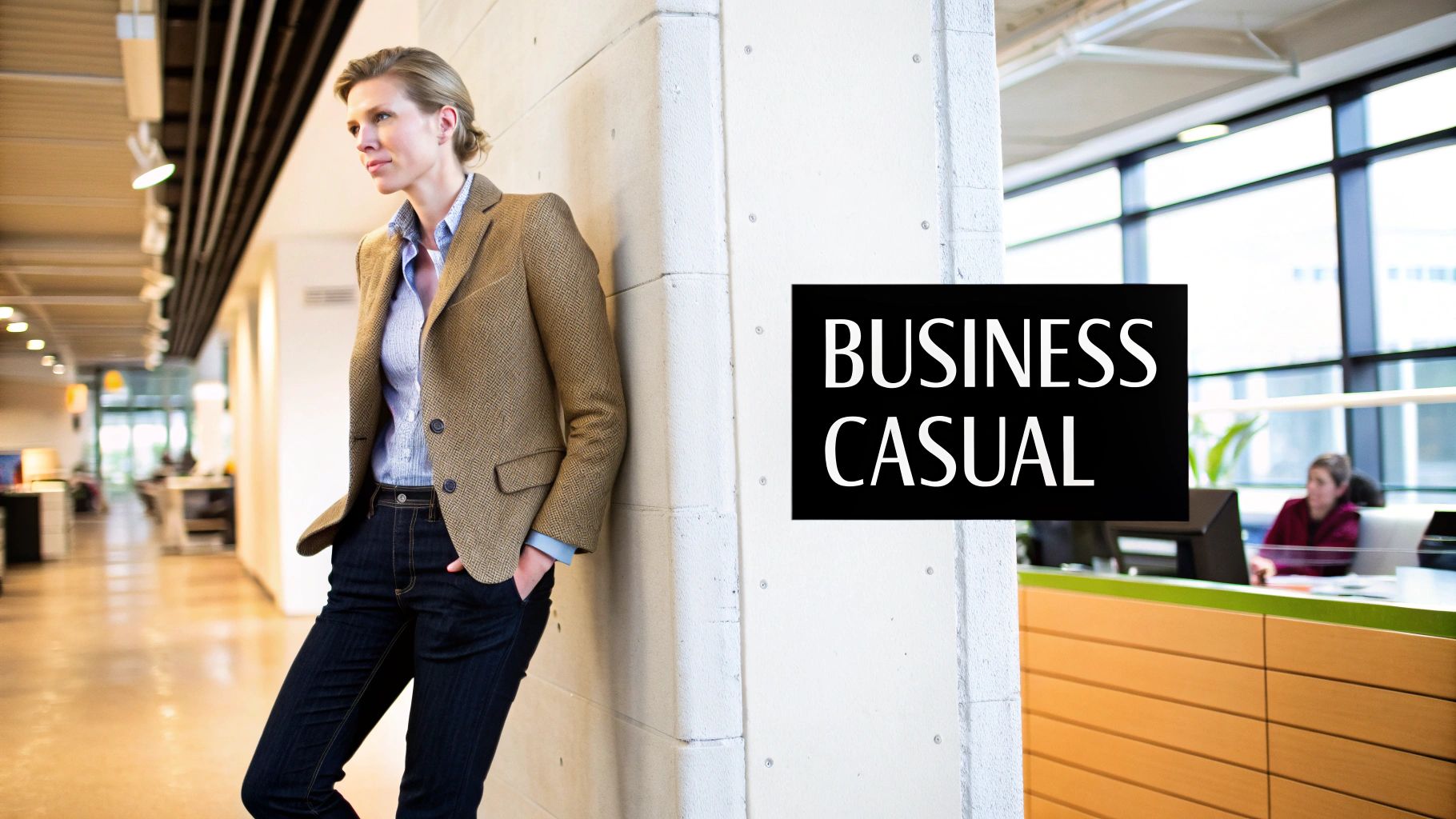
"Business casual" has to be one of the most widely used—and most misunderstood—dress codes out there. It first popped up in the 1990s as a happy medium between stuffy corporate suits and Friday-level casual, but its definition has been a moving target ever since. What flies in a laid-back tech startup would probably raise eyebrows in a buttoned-up law firm.
That ambiguity is exactly why it's better to grasp the principles behind business casual rather than trying to memorize a strict list of rules. The objective is always the same: look competent and professional without coming across as overly formal or rigid.
These days, business casual has moved far beyond its original khaki-and-polo-shirt reputation. The modern take is all about well-fitting, quality garments that you can easily mix and match. It’s less about a specific uniform and more about a general vibe.
Think of it as a spectrum. A great business casual outfit always has a few things in common:
The big shift to business casual isn't just a fleeting trend—it's a direct reflection of how our work culture has changed. It has become the go-to for a huge chunk of the workforce. In fact, recent data shows that 41% of U.S. workers say their office is business casual, while a tiny 3% still wear formal business suits. It's clear people prefer a more flexible, yet still professional, standard.
The real secret to mastering business casual? When in doubt, err on the side of being slightly overdressed. It’s a lot easier to take off a blazer to fit in than it is to suddenly manifest one when you feel underdressed.
For those looking for a helpful overview, here’s a quick rundown of the basics.
| Category | What to Wear (The Dos) | What to Avoid (The Don'ts) |
|---|---|---|
| Tops | Blouses, button-down shirts, quality sweaters, polo shirts, blazers | T-shirts with large logos, tank tops, sweatshirts, hoodies |
| Bottoms | Chinos, dress pants (slacks), dark-wash jeans (no rips), skirts | Ripped jeans, shorts, leggings, sweatpants, athletic wear |
| Footwear | Loafers, Oxfords, dress boots, flats, clean minimalist sneakers | Flip-flops, running shoes, open-toed sandals, worn-out shoes |
| Outerwear | Blazers, sport coats, cardigans, trench coats | Denim jackets, bomber jackets, athletic hoodies |
This table should give you a solid foundation to build from as you refine your wardrobe.
If you want to dig deeper into building a professional wardrobe, this guide on how to dress professionally offers some fantastic insights. Ultimately, figuring out your business casual style is a key part of shaping your professional image. And if you're still working out what your overall style even is, our article on https://letsparty-au.myshopify.com/blogs/news/how-to-find-your-fashion-style is the perfect place to start.
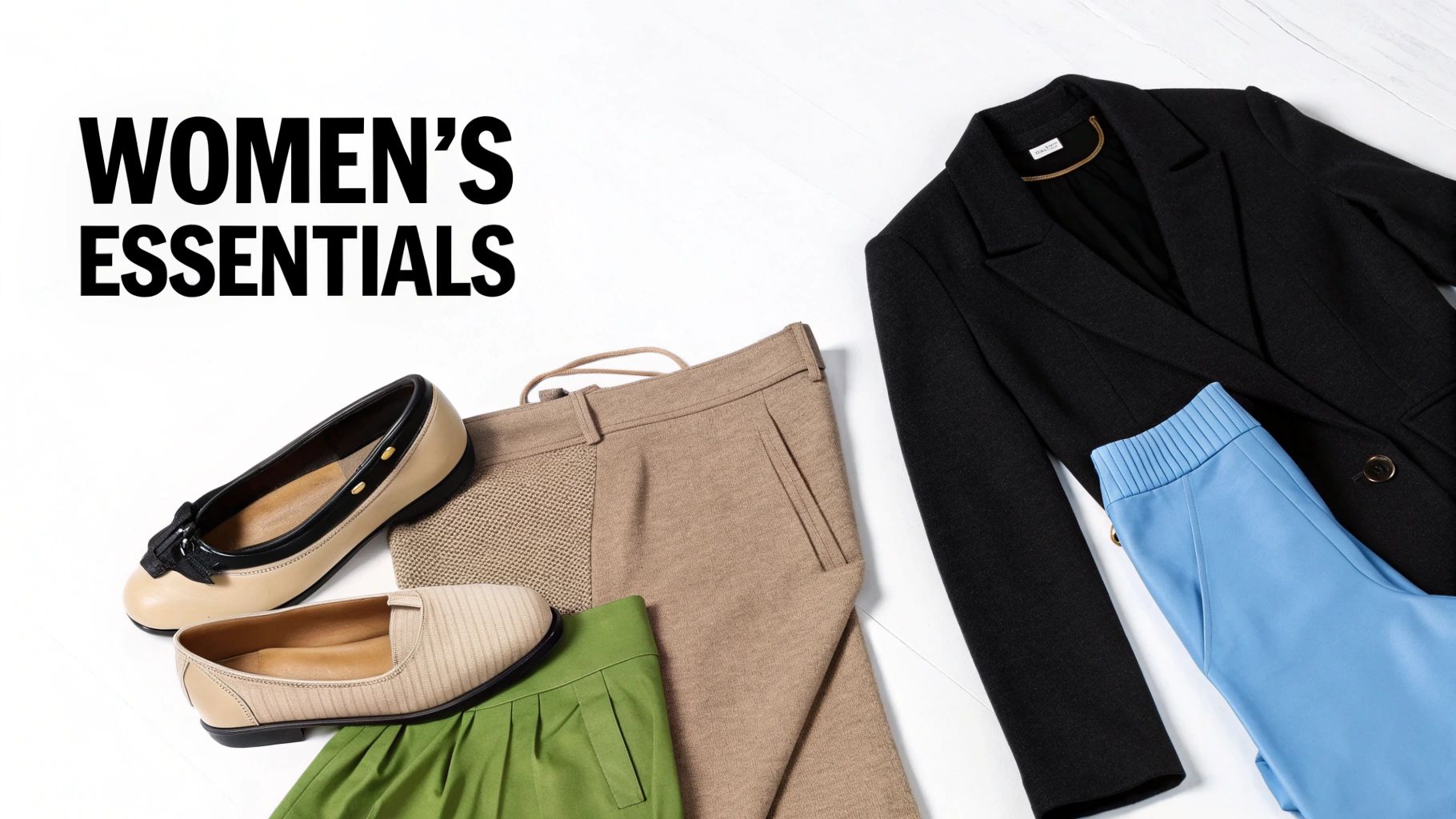
Putting together a business casual wardrobe that works as hard as you do shouldn't feel like a chore. The real secret is building a core collection of timeless, adaptable pieces you can mix and match without a second thought. This isn't about chasing trends; it's about investing in a foundation that saves you time and ensures you always look polished.
We're going to focus on those key pillars that form the base for countless outfits, giving you structure, comfort, and effortless style.
Let’s start with the absolute essentials—the workhorses of your closet. A few pairs of well-fitting trousers in neutral colors like black, navy, or charcoal are non-negotiable. They go with everything and create a clean, professional silhouette that's always a safe bet.
Next up, think about adding a few elegant midi skirts to the rotation. An A-line, pleated, or pencil-style skirt that hits at or just below the knee offers a sophisticated alternative to trousers, adding a different dimension to your look while keeping things professional.
For your tops, you'll want to stock up on high-quality knit sweaters and simple blouses. These are your layering heroes. Think classic shell tops, silk-blend blouses, and fine-gauge merino wool sweaters—they add texture and polish, whether worn alone or under a blazer.
A great rule of thumb for a versatile wardrobe is the 3:1 ratio of tops to bottoms. People notice your top half more, so having a wider variety of shirts and blouses allows you to create dozens of unique looks from just a handful of quality trousers or skirts.
This simple strategy is the key to building a collection of clothes that truly serves you. If you want to dive deeper into this minimalist approach, our capsule wardrobe guide is packed with tips for creating a highly functional closet.
If there's one piece that defines business casual, it's a great blazer. It has this incredible ability to instantly pull an entire outfit together, adding structure and a sense of authority. Just throw it over a simple top and trousers, and suddenly you're ready for that big presentation.
It's smart to have a few different styles on hand to match the occasion and the season:
This single item can transform a simple base layer into a complete, intentional look. It's the ultimate shortcut to looking put-together.
Your shoe choice can make or break your outfit—and your comfort. In a business casual setting, style and practicality have to go hand-in-hand. Luckily, you don't have to choose between them.
Look for shoes that feel as good as they look. Leather loafers are a timeless choice that will carry you through the day in complete comfort. Supportive block heels give you a bit of height without the agony of stilettos, making them perfect for days when you're constantly on your feet.
And never underestimate a chic pair of pointed-toe flats. They have a way of elongating the leg and look incredibly sophisticated with both trousers and skirts. The goal is to find well-made shoes that can handle your commute and keep you feeling confident all day long.
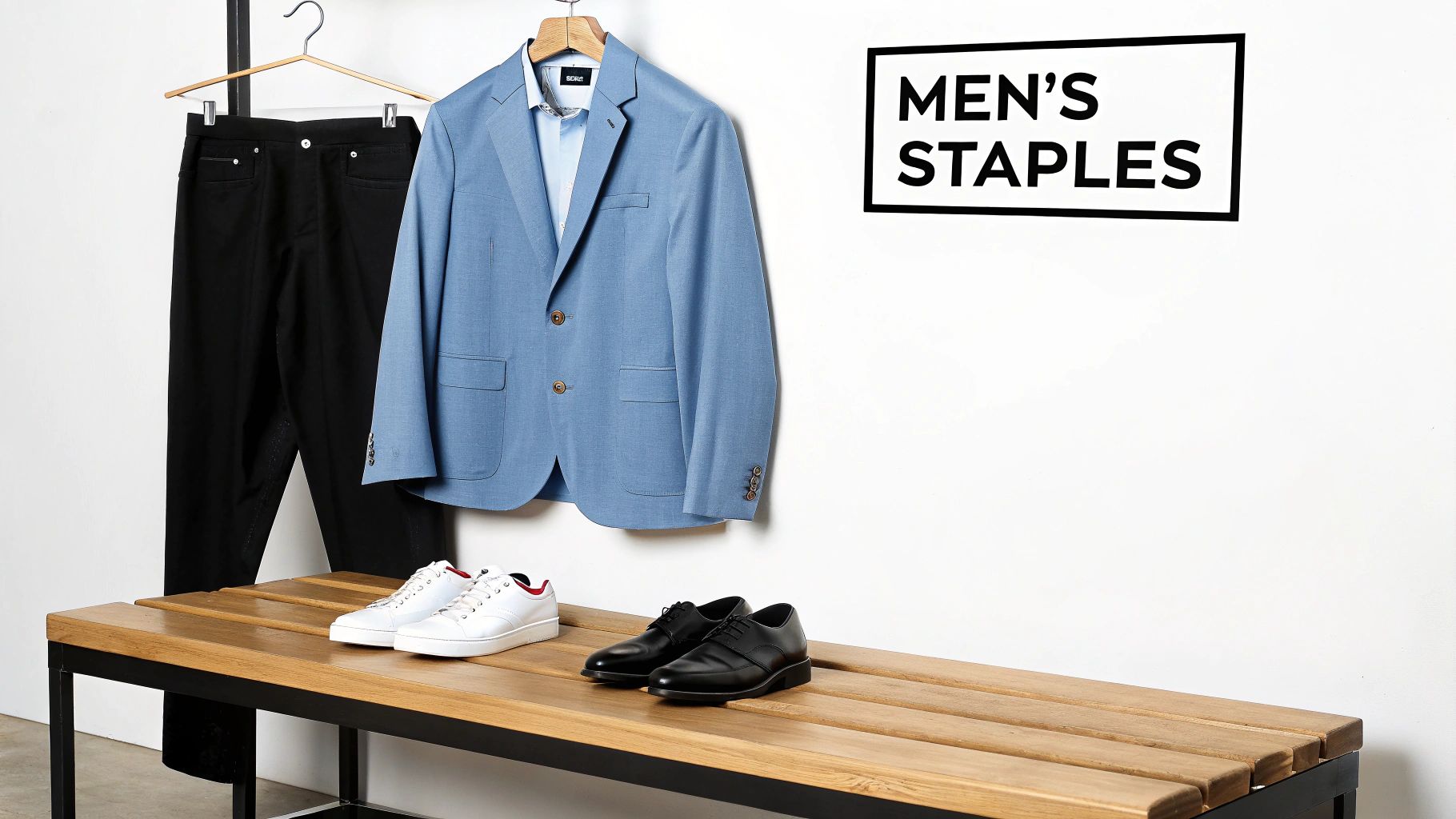
For a lot of guys, business casual feels like a guessing game. It's that tricky middle ground between a stuffy suit and your favorite weekend wear. The secret isn't having a massive closet; it's about owning a few key pieces that are polished, versatile, and easy to mix and match. The goal is to get dressed in the morning without a second thought.
Your foundation? A great shirt. Start by stocking up on a few high-quality Oxford button-downs. You can't go wrong with classic white and light blue. They're crisp, timeless, and provide the perfect canvas for literally any outfit you build.
Next up, trousers. Well-fitted chinos are your workhorse here. I always recommend starting with navy and khaki because they pair with just about everything.
Your choice of pants really dictates the vibe of your entire outfit. And while chinos are the go-to, they aren't the only game in town. Depending on how relaxed your office is, you can bring some other styles into the rotation without sacrificing that professional edge.
If your workplace leans more casual, a pair of dark-wash, non-distressed jeans can look incredibly sharp. Just make sure they're a slim or straight fit with a clean, solid color—no rips or heavy fading. Throw on a sport coat, and you've nailed that smart-casual look. Want to dial it up a notch? Wool trousers offer a texture and drape that chinos just can't compete with, giving you a more refined silhouette.
The single most important factor in looking sharp isn't the price tag—it's the fit. Trousers should sit comfortably at your waist without a belt, and the hem should have a slight break over your shoes. Getting your clothes tailored is a small investment that makes a huge difference.
Seriously, an expensive, ill-fitting garment will always look sloppy. But a perfectly tailored piece, even an affordable one, instantly elevates your entire appearance.
Want to know the easiest trick for making an outfit look complete and intentional? Add a "third piece." This is simply the layer that goes over your shirt and trousers—it adds structure, depth, and signals that you put some thought into your look.
Here are the essential third pieces every guy should have:
Don't let your shoes be an afterthought; they can make or break the entire outfit. While you want to be comfortable, your footwear needs to live up to the business casual standard. This means your beat-up gym sneakers are out.
Instead, focus on building a small rotation of stylish, reliable options. You can never go wrong with classic leather derbies or loafers in brown or black. If you're looking for a more modern and casual vibe, a pair of clean, minimalist leather sneakers in a solid white or navy can work wonders in many offices, giving you all-day comfort without sacrificing an ounce of style.
Think of your shirt and pants as the canvas; your accessories are the brushstrokes that turn it into a finished piece. The right details are what take a business casual outfit from simply "good enough" to truly polished and put-together. It’s how you inject a bit of your own personality while still looking professional.
For men, nailing the basics is the best place to start. A quality leather belt that matches your shoes is an absolute must. It’s a small detail that creates a clean, cohesive look that just works. A classic, understated watch is another key player—it doesn’t have to be a luxury brand, just something tasteful and not overly flashy. And when it comes to carrying your laptop and papers, swap the college backpack for a slim leather messenger bag or a structured briefcase.
Women often have a little more room to play when it comes to accessories, but the key is to be intentional. A simple, well-made leather tote is both practical and effortlessly chic, with plenty of room for your daily essentials. Jewelry is fantastic, but subtlety is your friend here. Think delicate, layered necklaces or simple stud earrings instead of loud, distracting statement pieces. If you want to elevate your look, you can easily master the art of layering jewelry to create a style that's both personal and professional.
Don't underestimate the power of a lightweight silk scarf, either. It’s incredibly versatile. You can tie it around your neck for a classic touch, attach it to your bag for a pop of color, or even use it as a hair accessory. These little touches show you've put real thought into your appearance.
The best accessories don't shout; they whisper. They should complement your outfit, not compete with it. A good rule of thumb is to pick one or two focal points—like a great watch and a quality bag—and keep everything else minimal.
At the end of the day, mastering business casual is all about getting these details right. The goal is to find accessories that are not only practical for a day at the office but also feel true to who you are.
Here are a few key pieces to focus on:
These are the elements that make an outfit feel complete and, more importantly, uniquely yours. For a deeper dive into pulling your entire look together, check out our guide on how to accessorize an outfit.
Business casual is less of a strict uniform and more of a sliding scale. The real trick is learning to read the room and adjust your outfit to fit the specific industry, company culture, and even the day's agenda. What flies in a laid-back creative agency would likely feel completely out of place at a conservative financial firm.
This need for adaptability is more relevant than ever. A 2019 survey revealed that 79% of American workplaces have either a casual or business casual dress code. But even with that relaxed trend, these workplace attire findings also showed that 65% of professionals still think a suit is a must for a job interview. It just goes to show you need to gauge expectations for every single situation.
Got a big client meeting or a presentation on the calendar? Your outfit should scream confidence and competence. This is where you want to lean more toward the “business” end of the business casual spectrum.
For men, that might mean trading the usual chinos for a pair of well-fitting wool trousers and throwing on a sport coat over your button-down. For women, a structured blazer over a silk shell top and tailored pants is a timeless power combination. The goal is to look intentional and authoritative—like you've added an extra layer of polish to signal you mean business.
Now, what about a team lunch or an internal workshop? These are the times to dial back the formality without looking sloppy. This is the perfect scenario for a pair of dark-wash, non-distressed jeans paired with a quality knit sweater or a stylish blouse.
Men can swap the button-down for a clean, classic polo shirt. You want your look to say you're relaxed and ready to collaborate with the team, not that you’ve already checked out for the weekend.
The best way to navigate any business casual scenario is to observe what your leadership wears. Their attire sets the unofficial standard for the company. Mirroring their level of formality is always a safe and smart bet.
This infographic breaks down a simple way to think about accessorizing for different levels of formality.
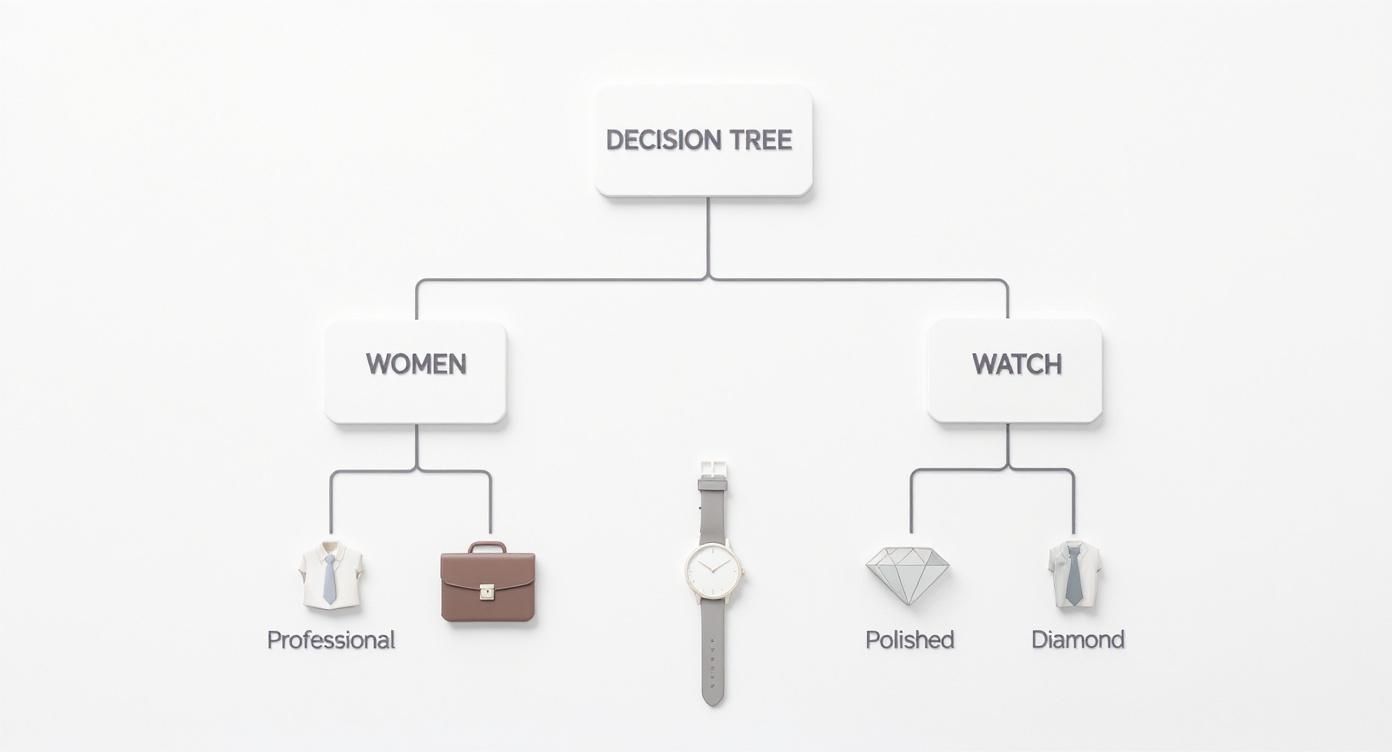
As you can see, timeless pieces like a classic watch for men or a delicate necklace for women can easily be dressed up or down to fit any workplace vibe.
Dressing for a video call is its own unique art form. You have to balance looking professional with being comfortable at home. Since the camera is focused entirely on your upper half, a polished top is absolutely essential.
A crisp button-down shirt, a simple blouse in a solid color, or a fine-gauge sweater are all fantastic choices. Just be mindful of your background—busy patterns on your shirt can clash or look distracting on camera. The best part? You can pair that sharp-looking top with your most comfortable pants. Nobody will ever know.
Even with a closet full of options, navigating the nuances of business casual can feel like a pop quiz you didn't study for. It’s easy to get stuck on the details. Let's walk through some of the most common questions that come up so you can stop second-guessing and start your day with confidence.
It's no secret that office dress codes have relaxed quite a bit over the years. An extensive Ipsos poll found that 40% of workers across 24 different countries now wear casual clothes to work every day. The same poll showed that 38% of employers have dedicated casual days, like the classic "Casual Friday." This just goes to show how much the rules can vary from one company to the next.
This is probably the number one question, and the honest answer is: it completely depends on your workplace.
In a lot of creative or tech-focused offices, a great pair of dark-wash jeans is a go-to. The trick is to make sure they're clean, well-fitted, and have absolutely no rips or distressing. You then dress them up with the rest of your outfit—a sharp blazer, a quality knit sweater, or a pair of leather loafers.
But if you work in a more traditional field like finance, law, or corporate consulting, it’s best to err on the side of caution and stick with trousers, chinos, or skirts. When you're unsure, just observe what leadership and senior team members are wearing. They're your walking, talking style guide.
The Golden Rule of Business Casual Jeans: If you find yourself wondering if they're appropriate, they probably aren't. Always choose a pair that looks clean, dark, and structured to play it safe.
Footwear can single-handedly elevate or torpedo your entire look. You're aiming for that sweet spot between polished and comfortable enough to wear all day without wincing. That means anything you'd wear to the gym, on a hike, or to the beach is automatically out.
Here are a few choices that almost always work:
"Casual Friday" is an invitation to relax your style, not abandon it. Think of it as taking your standard business casual look down one level of formality, not jumping straight into your weekend uniform.
This is the perfect opportunity to break out those dark-wash jeans we talked about or swap your button-down for a well-fitting polo shirt. The key principles don't change: your outfit should still be clean, fit well, and look intentional. You're still at work, after all, and you want to look capable and put-together, just with a slightly more comfortable twist.
Ready to build a wardrobe that masters every dress code? At FindTopTrends, we curate the latest high-quality apparel and accessories to keep you looking sharp and stylish for any occasion. Explore our collection and find your next favorite piece at https://findtoptrends.com.




