


No products in the cart.


Free Shipping Australia-Wide

5 star customer service

Quality Tested Products

Finding a discount code that actually works doesn't have to be a wild goose chase. If you know where to look, it’s surprisingly straightforward. For the biggest and fastest wins, focus on two main players: powerful coupon aggregator sites and automated browser extensions that do the heavy lifting for you. Getting these two methods down is the quickest way to start knocking down the price on nearly everything you buy online.

We've all been there—that last-minute, frantic search for a valid promo code right before hitting "buy." It often feels like a waste of time. But the secret to consistent savings isn't about luck; it's about having a system. Instead of blindly Googling and hoping for a miracle, a more deliberate approach will save you both time and money.
Let’s cut through the noise. This guide lays out the exact strategies savvy shoppers use, starting with the foundational toolkit for any serious deal-hunter: coupon aggregators and browser extensions. These are your low-effort, high-reward tools that will completely change how you shop.
Think of coupon aggregators as massive, organized libraries of discount codes. These sites do the hard work of collecting, verifying, and sharing promo codes for thousands of online stores, all in one place. They're my first stop before any purchase.
What makes them so effective is the community aspect. Many of these platforms rely on users to submit and vote on codes, so you get a real-time pulse on which ones are actually working. This is a huge deal—a whopping 62% of U.S. consumers hunt for a promo code before buying anything online. A major player in this space, slickdeals.net, snagged a massive 7.64% share of all global visits to coupon websites in December 2023 alone.
Key Takeaway: Make a quick stop at a trusted coupon aggregator a non-negotiable part of your checkout routine. It rarely takes more than a few minutes and can easily slice 20-30% off your total.
If you're more of a "set it and forget it" person, browser extensions are a godsend. These are tiny pieces of software you add to your web browser (like Chrome or Safari) that run quietly in the background. When you get to a store's checkout page, the extension springs into action, automatically searching for and testing every available code for that site. It then applies the one that saves you the most money.
Seriously, it’s that simple. You don't have to search, copy, or paste anything. This automated approach is a cornerstone of smart comparison shopping because it ensures you never miss a discount just because you were in a hurry. The convenience is unbeatable. For example, if you're looking to explore specific dining deals, an extension can instantly find you a happy hour special or a two-for-one coupon without you lifting a finger.
To help you decide which approach fits best, here's a quick breakdown of the most popular discount-finding methods.
This table offers a snapshot of the most effective strategies, helping you choose the right tool for the job based on how much effort you want to put in and what kind of savings you're after.
| Method | Effort Level | Typical Savings | Best For |
|---|---|---|---|
| Browser Extensions | Very Low | 5-20% | Effortless, automatic savings on everyday purchases |
| Coupon Aggregators | Low | 10-30% | Quick, reliable searches for major retailers |
| Direct Subscriptions | Low | 15-25% | Securing welcome discounts from your favorite brands |
| Social Media & Influencers | Medium | 10-20% | Finding niche, time-sensitive deals and brand collabs |
| Targeted Google Search | Medium-High | 5-40% | Uncovering hidden or hard-to-find promo codes |
While browser extensions and aggregators are fantastic starting points, combining them with other strategies like email subscriptions and targeted searches will make you an unstoppable saver.
While coupon sites and browser extensions are great, sometimes the best deals aren't advertised to the general public. You have to go straight to the source.
Retailers often reserve their most valuable offers for their own community. If you want access to these hidden gems, your best bet is to engage with your favorite brands directly. This is a non-negotiable step for any serious saver.
The easiest first move? Sign up for email newsletters and join the loyalty programs of brands you actually shop at. It’s a low-effort way to get a steady stream of personalized deals sent right to your inbox. Over time, this simple habit can lead to compounded savings of 25-40% off. It works because it builds a real connection—43% of consumers say they feel more loyal to brands that send them personalized discounts.
To avoid flooding your main inbox, I highly recommend setting up a separate email address just for store newsletters, accounts, and promotional offers. Think of it as your personal deal-hunting headquarters.
This keeps your primary email clean while creating a single place to scan for discounts. It’s perfect for catching flash sales or limited-time codes that would otherwise get lost in the shuffle. Before I buy anything online, I do a quick search in my "deals" inbox first.
This is a classic, and for good reason: it works. The strategy is simple. Log into your account on a retailer's website, add a few items to your shopping cart, and then just leave. Close the browser tab and walk away.
More often than not, the brand will send you a reminder email within a day or two. Tucked inside that email is often an exclusive promo code—think 15% off or free shipping—to nudge you over the finish line. Retailers see an abandoned cart as a potential lost sale, and they're often willing to offer a little something to win you back.
Pro Tip: This tactic is most effective if you're a new customer or haven't shopped with that brand in a while. Retailers are far more likely to roll out the red carpet to win over a new or returning shopper.
These same principles of looking for insider opportunities can unlock huge savings in other areas, too. Travel hackers, for example, know all about finding the best booking sites and sneaky ways to beat prices by using strategies most people overlook.
By engaging directly with retailers and using these simple but powerful tactics, you open up a whole new world of exclusive offers. You're turning your status as a loyal customer into a reliable source of savings.
Some of the best deals aren't on a brand's homepage. They're tucked away in social media posts and buried in search engine results. If you know how to look, you can find discount codes that most shoppers completely miss.
Retailers and influencers are constantly dropping limited-time offers on Instagram, TikTok, and even Reddit. It’s a huge shift in how deals are shared. In fact, internet searches for "discount" and "coupon code" have jumped 11% in the last year alone. And get this: nearly 60% of purchases are now influenced by codes found on social media, saving people anywhere from 15% to 50%. You can read more about these consumer trends in PwC's holiday outlook.
The real trick to finding codes on social media is to think beyond just following the brand's main account. You need to dig a little deeper.
#BrandNameCode, #CouponCommunity, #DiscountCode, or #PromoCode. On visual platforms like Instagram and TikTok, this is the quickest way to find posts from both influencers and regular people sharing codes that actually work.This strategy is particularly effective for newer, direct-to-consumer brands that pour their marketing budgets into creators rather than traditional ads.
A generic Google search for a coupon is a fast track to spammy sites with expired codes. You have to be more specific to cut through the noise.
Actionable Tip: Always wrap your search in quotation marks. Searching for
"Nike" promo codeforces Google to find pages with that exact phrase, immediately filtering out a ton of irrelevant junk.
Here are a few of my go-to search templates you can copy and paste right into Google:
"BrandName" promo code Reddit — This is my favorite. Reddit communities like r/coupons are full of people sharing codes that brands don't advertise."BrandName" discount code "month year" — Adding the current month and year (e.g., "October 2023") helps you find the freshest deals and avoid expired ones.site:instagram.com "BrandName" discount — This little trick tells Google to only search on Instagram, making it easy to spot recent posts from influencers or the brand itself.Once you combine a little social media detective work with these smarter search queries, you stop being a passive shopper. You become an active deal hunter who consistently finds savings that aren't just handed out on the front page.
Why hunt for discount codes when technology can do the work for you? If you're a fan of the “set it and forget it” approach, then automated browser extensions are your new best friend. These are small but mighty tools that you add to your web browser. Once installed, they quietly work in the background, automatically searching for and testing promo codes for you right at checkout.
It's a game-changer. You just shop like you normally would. When you get to the checkout page, the extension's little icon will typically light up, signaling it's ready to go to work. With one click, it runs through every code it can find for that store, tests them all, and applies the one that saves you the most money. It’s a seamless way to make sure you never miss a discount, even when you're in a hurry.
Not all coupon extensions are created equal. The big names like Honey, Rakuten, and Capital One Shopping are popular for a reason, but they each bring something different to the table. Some are laser-focused on finding codes, while others bundle in cashback offers or price-tracking tools.
To figure out which one fits your shopping style, think about what matters most to you:
This diagram shows how different discovery tactics, from social media deep dives to automated tools, can help you uncover those amazing hidden deals.
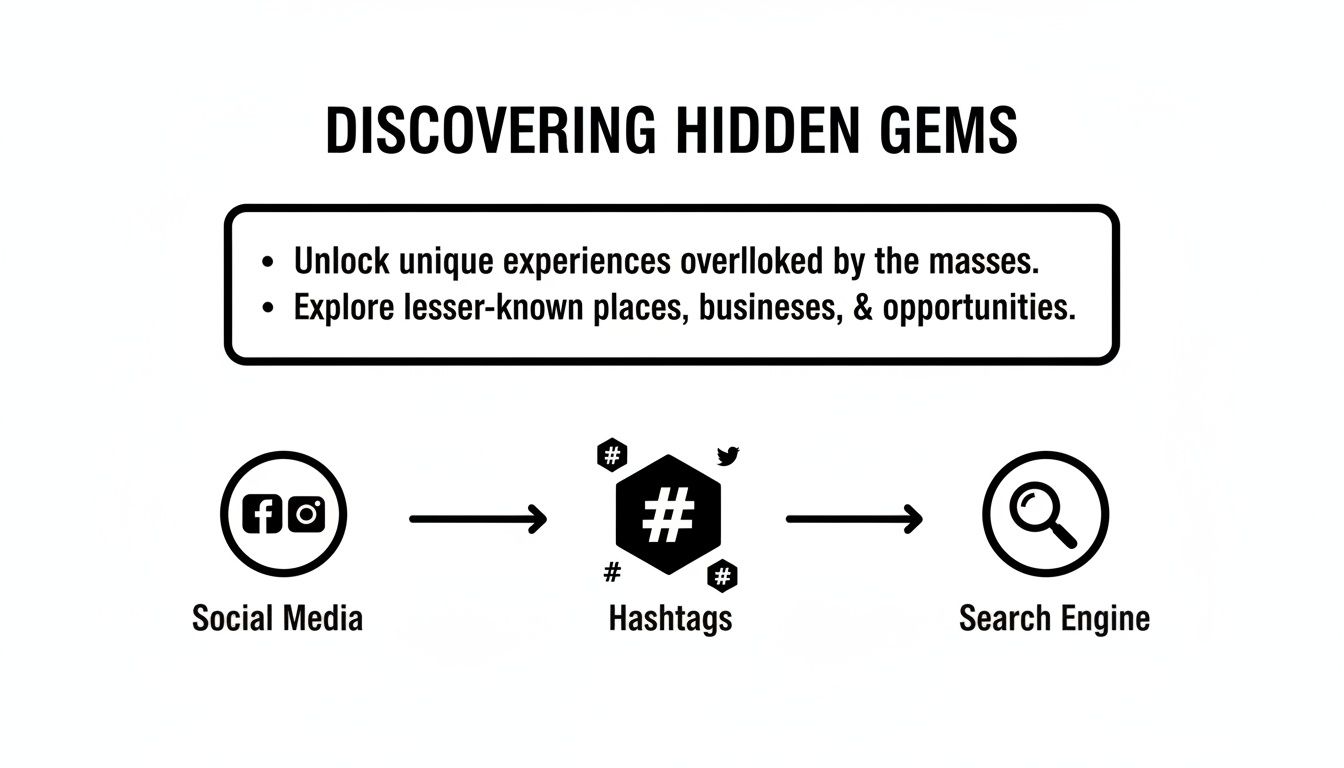
It’s a great reminder that combining automated tools with a bit of manual searching often yields the biggest rewards.
With so many options, picking the right one can feel overwhelming. I've put together a quick comparison of the most popular extensions to help you see how they stack up at a glance.
| Extension Name | Key Features | Browser Compatibility | Best For |
|---|---|---|---|
| Honey | Automatic coupon testing, Honey Gold rewards (cashback), Droplist (price tracking). | Chrome, Safari, Firefox, Opera, Edge | All-around shoppers who want a mix of codes, cashback, and price tracking. |
| Rakuten | Focuses on cashback (up to 40%), also finds and applies some coupons. | Chrome, Safari, Firefox, Edge | Shoppers who prioritize earning cashback over finding the highest-value coupon. |
| Capital One Shopping | Automatic coupons, price comparisons across retailers, loyalty rewards. | Chrome, Safari, Firefox, Edge | Price-conscious buyers who want to ensure they're getting the absolute lowest price. |
| RetailMeNot | Finds codes and cashback offers, Deal Finder browser extension. | Chrome, Firefox | Shoppers who already trust the RetailMeNot website and want that experience integrated. |
Each of these tools can save you money, but the "best" one really depends on your personal shopping habits. My advice? Try one out for a few weeks. If it's not a perfect fit, it only takes a minute to uninstall and try another.
It's good to understand how these tools work their magic. To find you the best deals, browser extensions need to see what you're shopping for, which means they collect data on your online activity.
My Two Cents: Before you install any extension, take two minutes to review its privacy policy. Reputable companies are transparent about what data they collect and why, but you should always make a choice you feel comfortable with.
Stick with the well-known extensions from major companies—they’re generally safe and have thousands of positive reviews to back them up. They offer a powerful, automated way to save, turning what used to be a frantic, last-minute search into a simple background process that consistently keeps more money in your pocket.

Finding a working discount code is a great start, but the real secret to deep savings is knowing when and how to use it. Too many people just grab the first code they find and click "buy," leaving a ton of money on the table.
The trick is to get strategic. You need to time your purchases with a retailer's sales calendar and learn how to layer discounts for the biggest possible impact. This is especially true for bigger purchases you can plan ahead for, like a new TV or a winter coat.
The single easiest way to get a massive discount is to shop when retailers are practically begging you to buy. Don't just shop on impulse. Pull out your calendar and circle these key dates, because this is when the very best coupon codes tend to drop.
My Two Cents: If you're planning a big purchase, a little patience can pay off big time. Waiting for one of these sales events can easily save you 30-50%, especially if you have a great promo code to use on top of the already reduced prices.
Coupon stacking is the holy grail of saving money. It’s when you use more than one discount on a single purchase, and while not every store allows it, finding one that does feels like hitting the jackpot.
Here’s how it might look. Let's say a store is running a 20% off sale for a holiday weekend. You also have a 15% off welcome code you got for signing up to their newsletter, plus a code for free shipping. If the store allows stacking, you could potentially use all three.
The most common (and still powerful) stack is a percentage-off code combined with a free shipping offer. This is a fantastic combo, because a hefty shipping fee can easily cancel out the savings from your discount code. Always check the fine print for a phrase like "cannot be combined with other offers." If you don't see that, you've got a green light to start stacking.
There’s nothing more frustrating than finding what looks like a great discount code, only to get that dreaded “invalid code” error at checkout. It’s a real buzzkill. Before you give up and pay full price, take a moment to troubleshoot. More often than not, it's a simple, fixable issue.
The number one culprit? An expiration date. So many codes are tied to short-term promotions, like a flash sale or a holiday weekend, and they simply expire. Always check the fine print for an end date before you even start shopping.
If the code hasn't expired, there are a few other common reasons it might fail. Running through this quick checklist can usually tell you what's going on and whether the deal is still on the table.
My Two Cents: Always, always read the terms and conditions. I know it's boring, but a quick 10-second scan of the T&Cs can immediately tell you why a code is failing and save you a ton of frustration.
Finally, you have to accept that some codes floating around the internet are just duds. They might be expired, fake, or posted with a typo. As you hunt for deals, it's smart to stay sharp and brush up on how to shop online safely to avoid any sketchy sites. If a code from a random coupon aggregator doesn't work, don't waste too much time on it—just move on and try another source.
Even with a solid game plan, you're bound to run into some head-scratchers when hunting for deals. Let's clear up some of the most common questions I hear so you can shop smarter and with more confidence.
This really depends on the store's personality. Fast-fashion giants and big-box retailers are constantly churning out new codes—sometimes weekly, or even a few times a week—to keep you coming back. You might see a 15% off code running from Monday to Thursday, only for it to be replaced by a free shipping offer for the weekend rush.
On the flip side, high-end or luxury brands play it a lot closer to the chest. They tend to save their best offers for major holidays or those big end-of-season sales. A good habit to get into is checking for new deals at the start of the month and, of course, in the days leading up to any big holiday.
Ah, the million-dollar question! The honest answer is that it's rare, but it feels like hitting the jackpot when you can. Most online retailers have a strict "one code per order" rule. You'll usually find this spelled out in the fine print with phrases like "limit one per customer" or "cannot be combined with other offers."
That said, you can sometimes get away with "coupon stacking" when a store lets you pair a percentage-off discount with a separate code for free shipping. It never hurts to try at checkout—the worst that happens is the system just boots one of them out.
Pro Tip: The real magic happens when you combine a coupon code with an existing sale. If a jacket is already marked down 30%, and you can slap an extra 15% off code on top of that, you're looking at some serious savings. That’s the combo you should always be looking for.
People use these terms interchangeably all the time, but there's a slight technical difference. Think of it this way:
A promo code is that classic mix of letters and numbers you type into a box at online checkout (e.g., SAVE20 or FREESHIP). It's born and bred for e-commerce.
A coupon is a broader term. It can be digital or physical, and it often has a scannable barcode. While online stores accept what we call "coupon codes," the word also covers the paper ones you'd clip and take to a brick-and-mortar store.
So, to put it simply, all promo codes are coupons, but not all coupons are promo codes.
Ready to stop hunting and start saving? FindTopTrends does the heavy lifting for you by gathering the latest deals on trending products. Explore our marketplace today and snag your next great find without the hassle.




