


No products in the cart.


Free Shipping Australia-Wide

5 star customer service

Quality Tested Products

You can't organize clutter. The single most important part of this whole process happens before you buy a single bin or divider: you have to take everything out. I mean everything.
This isn't just about wiping down shelves; it's about a total reset. It’s the only way to get a real, honest look at what you’ve accumulated over the years.
Before you even think about putting things back, pull every last plate, spice jar, and forgotten gadget out of your cabinets. Lay it all out on your countertops or dining table. This step feels a bit chaotic, but trust me, it's a game-changer.
Now, it's time to be ruthless. As you handle each item, sort it into one of three piles:
Getting this initial purge right sets the stage for a system that actually works. We have a whole other guide if you want to dive deeper into how to declutter your home.
This isn't just about tidying up. It's about taking stock of your inventory so you can make intentional decisions. You can't organize what you don't need.
While you have everything out, take a moment to look at the cabinets themselves. This is the perfect time to check if your kitchen cabinets are showing signs of disrepair. You need a solid foundation before building your new, organized system.
This desire to create better, more functional homes is a huge trend. In fact, home improvement spending in the U.S. has jumped by 17% in the last five years. People are investing in their spaces, and the kitchen cabinetry market is booming—it’s expected to hit USD 201.27 billion by 2033.
Once you've cleared out all the clutter, resist the urge to just shove everything back in. The real magic to a well-organized kitchen isn't about having less stuff; it's about thinking like a chef and creating dedicated zones. This is how you stop that mad dash for a spatula while the garlic is browning a little too quickly.
Zoning is what turns a chaotic kitchen into a calm, intuitive space. Instead of having baking supplies scattered all over, you’ll keep them right by the counter where you do your mixing. It’s a simple change in thinking that completely overhauls your daily routine for the better.
Take a moment to think about what you actually do in your kitchen. Most of us have a rhythm, and your cabinet layout should support it. Start by setting up at least three main zones, each centered around the appliance or workspace you use for that task. This simple setup keeps everything you need for a job right where you need it.
The Prep Zone: Find your biggest, clearest stretch of counter space—that's your new prep zone. The cabinets and drawers here should be home to your mixing bowls, measuring cups, cutting boards, and knives. If you have a food processor or blender, this is where it belongs.
The Cooking Zone: This one’s a no-brainer. The cabinets and drawers surrounding your stove and oven are prime real estate for all things cooking. Stock this area with your pots, pans, and baking sheets. Keep cooking oils, vinegars, and your most-used spices close by, too.
The Daily Zone: This is for all your everyday essentials—plates, bowls, glasses, and silverware. The best spot is right next to the dishwasher or sink. Why? It makes unloading the dishwasher an absolute breeze. No more trekking across the kitchen with a stack of heavy plates.
A well-zoned kitchen is all about creating a natural, efficient flow. The whole point is to make your movements smooth and logical, which saves a ton of time and cuts down on the chaos during meal prep.
The basic zones are a great start, but the real genius comes from tailoring the system to your own habits.
Are you a coffee fanatic? Carve out a dedicated coffee station with your mugs, beans, grinder, and sugar all in one spot. If you have little ones, set up a low, easy-to-reach cabinet with their cups, plates, and healthy snacks to give them a bit of independence. This zoning principle is a lifesaver when you're figuring out how to organize small spaces and need every single inch to work harder.
To get you started, here are a few common examples of how you can group items for a smoother kitchen workflow.
This table gives you a few ideas for creating specialized zones beyond the main three.
| Zone Name | Ideal Location | Items to Store |
|---|---|---|
| Baking Zone | A cooler spot in the kitchen | Flour, sugar, baking soda, vanilla, stand mixer |
| Storage Zone | Near the fridge | Food storage containers, wraps, foils |
| Cleaning Zone | Under the kitchen sink | Sponges, dish soap, cleaning sprays, trash bags |
By arranging your cabinets into these smart, functional groups, you’ll finally have a kitchen that feels like it’s working with you. This framework is the secret to getting organized—and staying that way.
Now that you have your kitchen zones mapped out, it’s time to pick the right tools for the job. The perfect cabinet organizers can literally double your usable space, but the wrong ones? They just become more clutter. This isn't about buying every trendy container you see on social media; it's about investing in smart solutions that solve the specific problems you face every day.
The market for these gadgets is huge. In fact, the kitchen storage and pantry organization industry was recently valued at a staggering USD 131.43 billion and it's still growing. This just goes to show how many of us are searching for better ways to manage our kitchen chaos.
Instead of grabbing a generic "kitchen starter kit," take a hard look at each cabinet's unique trouble spots. Is your corner cabinet a black hole where food goes to be forgotten? A lazy Susan is a classic for a reason—it brings everything from the back right to the front with a simple spin.
What about that leaning tower of baking sheets and cutting boards? Vertical dividers are a game-changer. They let you file these flat items away neatly, so you can slide one out without the rest crashing down. To find what truly works, it's worth exploring the best kitchen cabinet organizers that have a proven track record for taming clutter.
This infographic does a great job of showing how different zones—like your Prep, Cook, and Daily use areas—can benefit from specific organizational tools.
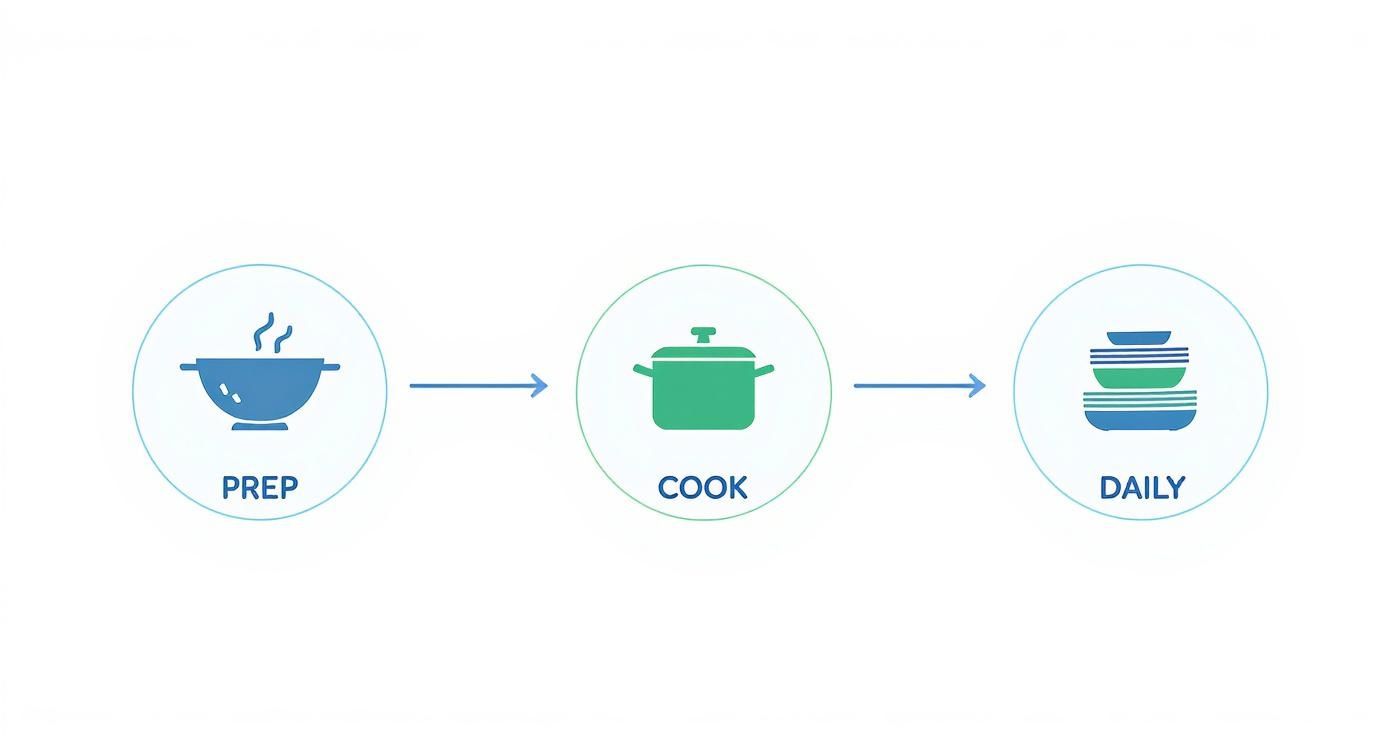
Thinking about your kitchen in zones helps you choose organizers that truly support how you cook and live, creating a much smoother workflow.
You'd be surprised how many common organizational headaches have simple, effective fixes. Don't underestimate the power of basic tools when they’re used the right way. For instance, a simple tiered riser in your spice cabinet makes every label visible, finally ending that frustrating hunt for the cumin. Likewise, pull-out drawers can completely transform those deep, dark lower cabinets, putting every pot and pan within easy reach.
Here are a few workhorse organizers that deliver real results:
The best organizer is one that fits both your space and your habits. Before you click "buy," grab a tape measure and get your cabinet’s height, width, and depth. An organizer that’s too big is useless, and one that’s too small just wastes precious real estate.
Ultimately, the goal is to equip your cabinets with tools that make your life easier. For a bit more inspiration, check out our guide on essential space-saving kitchen tools. By making smart, targeted choices, you’ll create a system that’s not just organized for a day, but truly functional for the long haul.
Okay, your zones are mapped out and your shiny new organizers are waiting. Now for the fun part: putting everything back where it belongs. This isn't just about cramming things in to make them fit; it’s about being intentional. We're going to place every item thoughtfully to create a kitchen that flows with you.
Think of it as applying a little ergonomic magic to make your daily routine easier and safer.
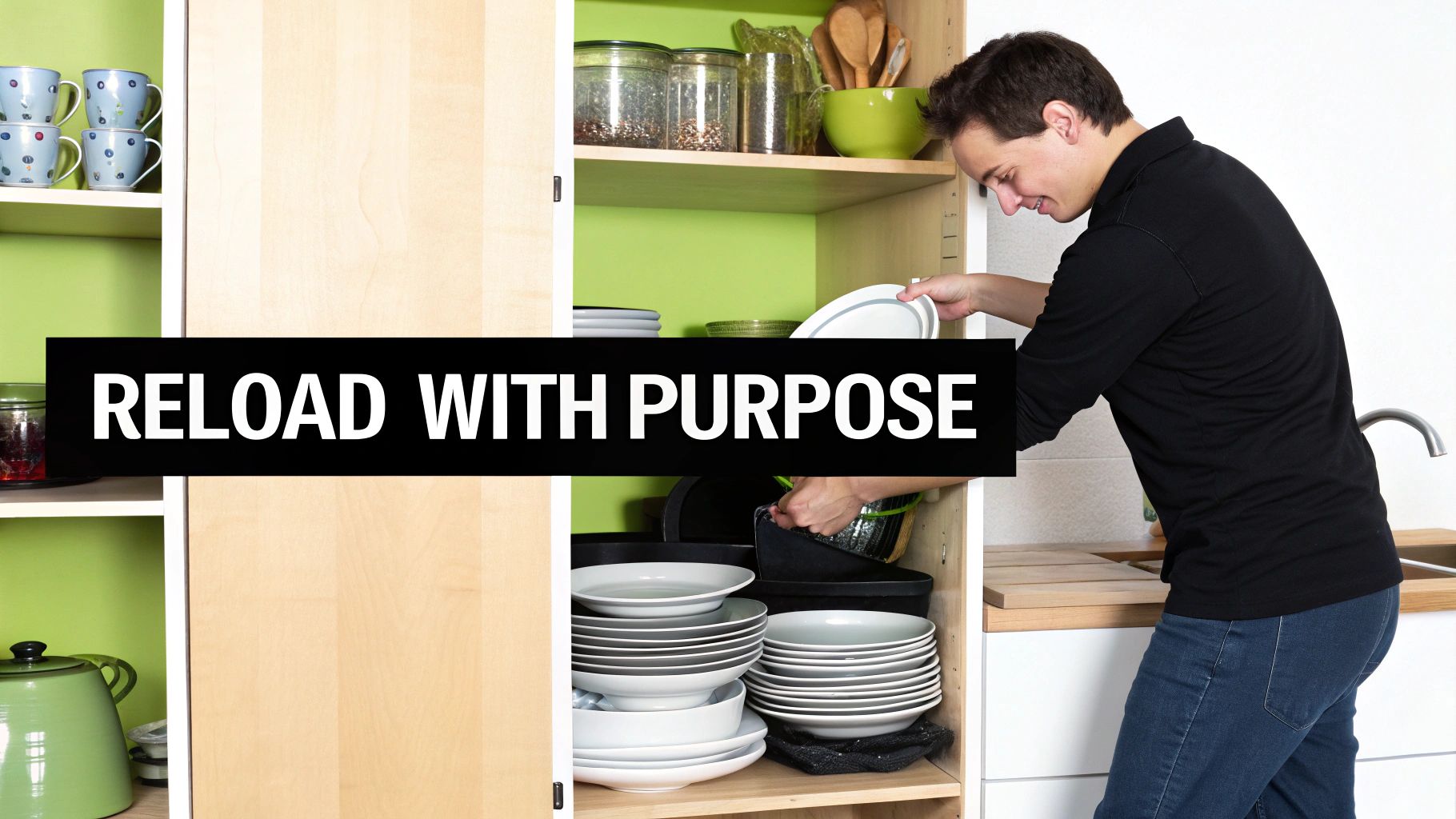
Let's start with the heavy hitters. Your cast-iron skillet, that bulky stand mixer, or your stack of pots and pans should always go on the lowest shelves or in deep base cabinet drawers. Stashing them down low is a simple trick to avoid the strain of lifting something heavy from over your head. Trust me, your back will thank you.
The most accessible space in your kitchen cabinets is the area between your shoulders and your waist. I call this the prime real estate. This zone should be exclusively for the things you grab every single day.
Here's how I typically break it down:
The logic here is simple: you want 80% of what you need most often to be within easy arm's reach. This cuts down on all the bending, stretching, and rummaging that makes cooking feel like a chore.
What about those less-frequent items? The turkey platter you use once a year or that fondue set from 1998 can go on the highest shelves or be tucked away at the back. Out of sight, but still there when you need them.
The real goal is to build an intuitive system. You want anyone in the house to be able to open a cabinet and find what they’re looking for without having to play 20 questions. It's about creating a kitchen that just works.
When you reload your cabinets with this kind of purpose, you're doing more than just cleaning up. You're designing a more efficient, enjoyable space to cook and live in. This is the final, crucial step in mastering how to organize kitchen cabinets for good.
Getting your kitchen cabinets organized feels incredible, doesn't it? But the real challenge—and the real victory—is keeping them that way. I've learned that lasting organization isn't about a massive weekend overhaul; it's about weaving small, smart habits into your everyday life.
These simple routines are what stop the clutter from creeping back in and undoing all your hard work.
One of the most effective habits I've ever adopted is the "one in, one out" rule. It’s simple: before you put away a new bag of flour or a new jar of jam, the old one has to be used up or tossed. This one little trick is a game-changer for preventing duplicate items and keeping your pantry from overflowing.
Another great practice is to set aside just 10 minutes once a week for a quick cabinet reset. This isn't a deep clean. Just use that time to put stray items back where they belong, wipe up any spills, and quickly straighten out your bins and containers. It’s amazing what you can accomplish in such a short amount of time.
The goal isn’t perfection; it’s maintenance. Creating an easy-to-follow system ensures the whole family can help keep things tidy, preventing your beautifully organized space from returning to chaos.
This growing desire for functional, easy-to-maintain kitchens is a huge driver in home design. The global kitchen cabinet market, recently valued at USD 80.72 billion, is expected to keep growing as homeowners look for smarter storage solutions. If you're interested, you can read the full research on kitchen cabinet market trends to see how innovation is shaping the modern kitchen.
Even with the best plan in hand, you're bound to hit a few snags when organizing your kitchen. Let's walk through some of the most common questions that come up, so you can keep your momentum going.
We've all been there. Deep cabinets often turn into black holes where old spices and forgotten gadgets go to disappear. The trick is to make the back of the cabinet just as accessible as the front.
For lower cabinets, pull-out drawers or sliding shelves are a total game-changer. They bring everything out into the open, so you're not on your hands and knees digging for something. If you're tackling deep upper cabinets, try using long, clear bins. I like to group things like baking supplies or backup condiments in them. That way, you can just slide the whole bin out like a drawer instead of blindly reaching into the darkness.
The endless clatter of mismatched pots and lids is a classic kitchen frustration. The secret? Give them separate homes.
Stack your pots and pans neatly, from largest to smallest. Then, find a dedicated spot for the lids. A few simple solutions work wonders:
The real win here is giving lids their own contained space. It’s a small adjustment, but it completely ends that frustrating, noisy search for a matching top.
Thinking through these little problem areas helps you create a system that's tailored to your kitchen's quirks and your collection of cookware.
At FindTopTrends, we find the best home essentials to make your life easier and more organized. Discover trending, high-quality products to finish your kitchen transformation at https://findtoptrends.com.




