


No products in the cart.


Free Shipping Australia-Wide

5 star customer service

Quality Tested Products

The secret to a perfectly packed suitcase has nothing to do with some magical folding technique. It's simple: start your planning days before you ever open your luggage. By thinking through your trip, choosing versatile clothing, and knowing the airline rules upfront, you can turn packing from a last-minute scramble into a calm, controlled process that gets your trip started on the right foot.
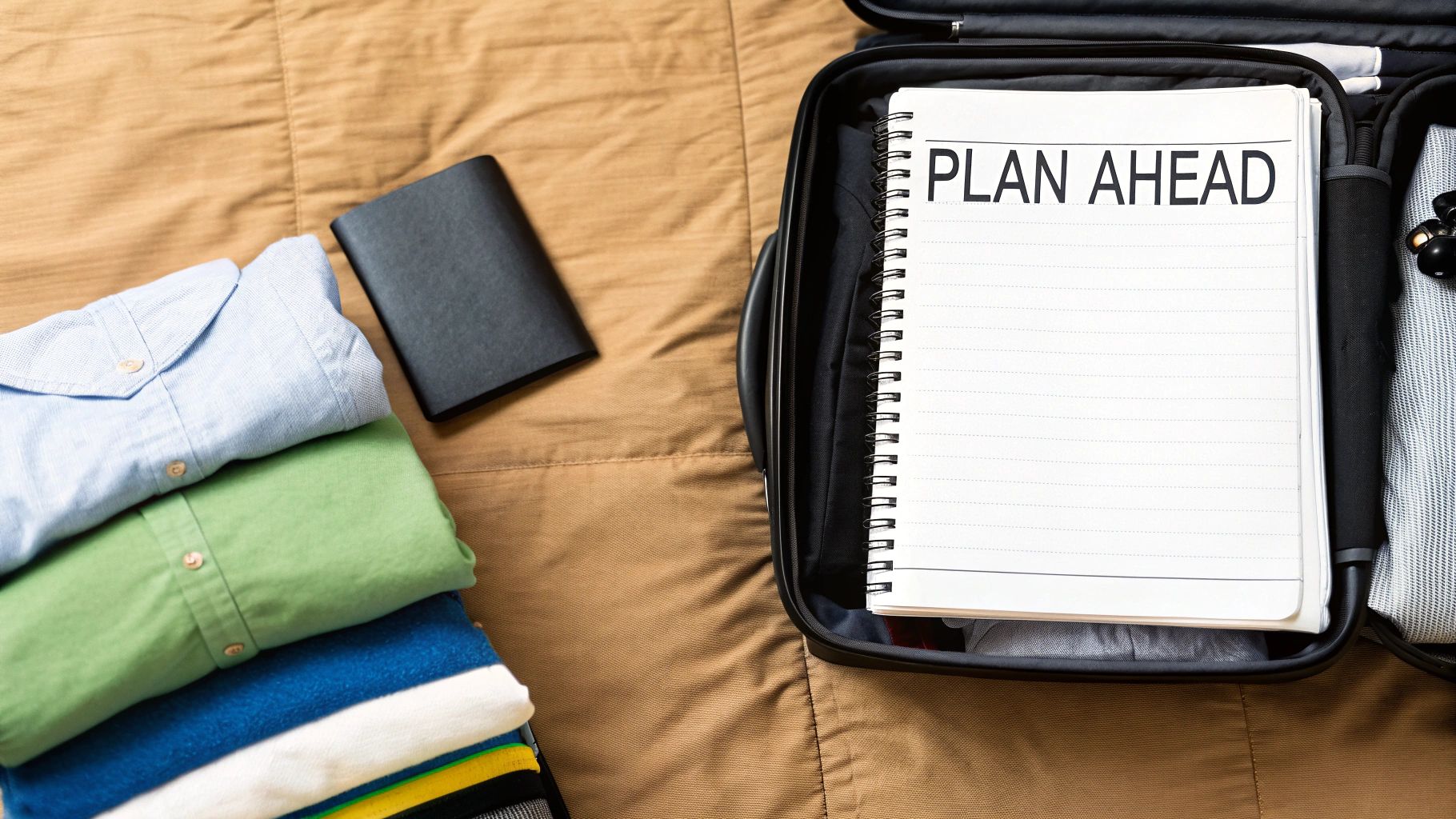
The best packing happens in your head long before your hands get involved. Forget that frantic hour of grabbing random things from your closet right before you have to leave. A genuinely smooth trip starts with a little foresight.
This pre-planning phase is where you make the critical calls that prevent overpacking and ensure you have everything you actually need. Think of it as building a blueprint for your bag. You’re shifting your mindset from "just in case" to "just what's needed," which is the real difference between a seasoned traveler and a stressed-out one.
Before a single t-shirt even gets considered, take a minute to actually walk through your trip in your mind. A few key questions will steer you in the right direction:
Armed with these answers, you can start building a capsule wardrobe for your trip. The idea is to pick a small collection of core items that all work together. Stick to a neutral base palette (think black, navy, or beige) and bring color in through a couple of accent pieces or accessories.
For a five-day city break, this might look like two pairs of bottoms (say, dark jeans and a pair of trousers) and four tops that can be worn with either. Just like that, you have eight potential outfits from only six articles of clothing.
Once you have your contenders, lay every single item out on your bed or the floor. This visual check is my secret weapon. It forces you to see your entire packing list at once, making it incredibly easy to spot where you've overdone it.
Do you really need three different black sweaters? Can one pair of stylish sneakers work for walking during the day and a casual dinner at night? Seeing it all together helps you make those practical cuts. It’s also your best defense against forgetting something important, because you can literally see the gaps.
Pro Tip: Your pre-packing layout is the perfect time to give your clothes a quick once-over. Check for stains, missing buttons, or small tears before an item earns its spot in the suitcase. This simple check saves you from annoying surprises when you get to your destination.
Finally, let's get practical. Before you commit to a bag, check your airline's baggage allowance. This is non-negotiable. Knowing the exact size and weight limits for your carry-on and checked bags will save you from getting hit with painfully expensive fees at the check-in counter.
This information also helps you pick the right luggage for the job. A carry-on might be all you need for a quick weekend away, but a checked bag is a must for longer journeys. The type of luggage matters, too. Packing smart can seriously cut down on travel stress and save money. In 2023, with 1.2 billion international travelers, flexible soft-sided luggage made up 60% of the 148 million units sold for a reason—it helps travelers squeeze in just a little more.
Remember to weigh your bag at home. Airlines rejected 2.5% more bags last year for being overweight, which cost travelers a whopping $15 billion in fees. You can discover more insights about these luggage market trends and see how they're shaping the way we travel.
Alright, you've got your travel wardrobe picked out and laid on the bed. Now for the fun part: making it all fit. This is where a little bit of technique goes a long way. We're not just trying to cram things into a suitcase; we're strategically organizing and compressing to unlock space you didn't even know you had.
Think of yourself as a packing strategist, not just a packer. The right fold or roll can be the difference between zipping your bag with ease and having to sit on it. It also means less time ironing in your hotel room and more time enjoying your trip.
Everyone tells you to roll your clothes, and it's solid advice. But there’s rolling, and then there’s mastering the roll. Different garments need different techniques.
For your everyday stuff—t-shirts, leggings, casual pants—the military roll (sometimes called an army roll) is your absolute best friend. You simply fold the sides of the shirt inward to make a rectangle, roll it up super tight from the bottom, and then tuck the collar end into itself to lock it all in place. It creates a tight little bundle that won't unravel and is surprisingly compact.
But what about your bulky hoodie or that chunky sweater? For these, you need to bring out the big guns: the ranger roll. It’s similar, but you start by folding up a "cuff" at the bottom of the item before you start rolling. Once it's rolled up as tight as you can get it, you pull that cuff over the whole bundle. The result is a seriously compressed package that holds its shape and saves a ton of room.
Now, let's be clear: rolling is a disaster for certain clothes. If you try to roll a blazer or a crisp dress shirt, you're just asking for a map of stubborn creases. For these structured pieces, strategic folding that respects the garment's natural lines is the only way to go.
By working with the grain of the fabric and the garment's construction, you prevent the stress that causes those deep-set travel wrinkles. The goal is to pull them out of your suitcase and have them ready to wear with maybe just a quick steam in the bathroom.
It's helpful to see which method works best for what. Here's a quick cheat sheet.
Deciding whether to roll or fold can feel like a puzzle, but it's pretty simple once you know the goal for each item. This table breaks down the best technique to maximize space and keep your clothes looking fresh.
| Clothing Item | Best Packing Method | Primary Benefit | Pro Tip |
|---|---|---|---|
| T-Shirts & Casual Tops | Rolling | Maximum space-saving | Use the military roll to create tight, uniform bundles that won't unravel. |
| Jeans & Casual Pants | Rolling | Compression | Ranger rolling denim can save a surprising amount of room in your bag. |
| Sweaters & Hoodies | Rolling | Bulk reduction | The ranger roll is essential here; it compresses bulky items significantly. |
| Dress Shirts & Blouses | Folding | Wrinkle prevention | Fold carefully along the seams and store on top of other items to avoid pressure. |
| Blazers & Suit Jackets | Folding | Structure preservation | Use the inside-out folding method to protect the lapels and shoulders. |
| Skirts & Dresses | It Depends | Versatility | Roll soft, casual fabrics. Carefully fold structured or easily-wrinkled materials. |
| Underwear & Socks | Rolling | Organization | Roll and tuck into small gaps, inside shoes, or in a dedicated packing cube. |
Ultimately, the best approach is a hybrid one. Use rolling for the majority of your casual wear to save space, and reserve careful folding for the items you need to keep pristine.
I used to think packing cubes were just for neat freaks, but they are complete game-changers. Their real magic isn't just organization—it's compression. When you pack them tight, these simple fabric cubes can shrink the volume of your clothes by up to 50%.
The trick is to stuff each cube to its limit using the rolling methods we just covered. Once it's full, the zipper works to compress everything down into a dense, manageable brick. This turns the chaos of a suitcase into a tidy, modular system, almost like having a set of portable drawers.
I like to organize my cubes by clothing type, which makes life on the road so much easier:
This way, when you need a fresh shirt, you just grab the "tops" cube instead of rummaging through everything you packed. For an extra space-saving boost, look for dedicated compression packing cubes—they have a second zipper that squeezes out even more air. You can find a huge variety of smart travel gear like this on platforms like FindTopTrends, which is a great resource for finding reliable products for any trip.
You’ve got your clothes rolled and your packing cubes organized. Now for the final step: loading the suitcase. Don't just cram everything in. Think of it like a game of Tetris—a 3D puzzle where every piece has its place. The goal is a dense, balanced bag where nothing shifts and you can find what you need without causing an explosion of clothes.
This is where all that prep work pays off. A well-loaded bag won't tip over while you're waiting in the check-in line, and it will protect your stuff from the inevitable bumps and tumbles of travel. Plus, you won't have to dump everything on the hotel floor just to find your pajamas.
Here's the most important rule I've learned over the years: heavy stuff goes at the bottom, by the wheels. It's a simple trick of physics that creates a low center of gravity. Trust me, it makes a massive difference when you're navigating a crowded airport and stops your bag from constantly falling over.
Your heaviest items are usually your:
This heavy base doesn't just stabilize your suitcase; it creates a protective foundation for the more delicate things you'll pack on top. It’s the bedrock of a good pack.
Pro Tip for Shoes: Don't let the inside of your shoes become wasted space. It’s prime real estate! I always stuff mine with socks, underwear, or even chargers and adapters. This not only maximizes every last inch but also helps your shoes hold their shape.
With your heavy base in place, it’s time to build up the middle layers. This is where your rolled clothes and packing cubes come into play. Fit them in snugly, like puzzle pieces, to get rid of any empty space. Gaps are the enemy—they let everything shift around, which is a surefire way to get wrinkled clothes.
This middle section is also the perfect spot for anything fragile you might be carrying, like a souvenir or a bottle of wine. I call this the 'cushioning core' method. Just place the breakable item right in the center of the bag and then surround it on all sides with your softest, most densely packed clothing. The clothes act as a natural shock absorber.
Packing smart is about more than just fitting in one more outfit; it's about protecting your belongings. With 25 million pieces of luggage lost in 2023, a little defensive packing goes a long way. Hard-sided luggage, which makes up 40% of the 148 million bags sold, can withstand 80% more impact, but what's inside still matters. A common strategy is the 'core method,' where a rolled jacket acts as a central stabilizer. You can learn more about recent luggage stats and trends to see why this is so important.
This visual guide neatly breaks down the best ways to get the most out of your suitcase space.
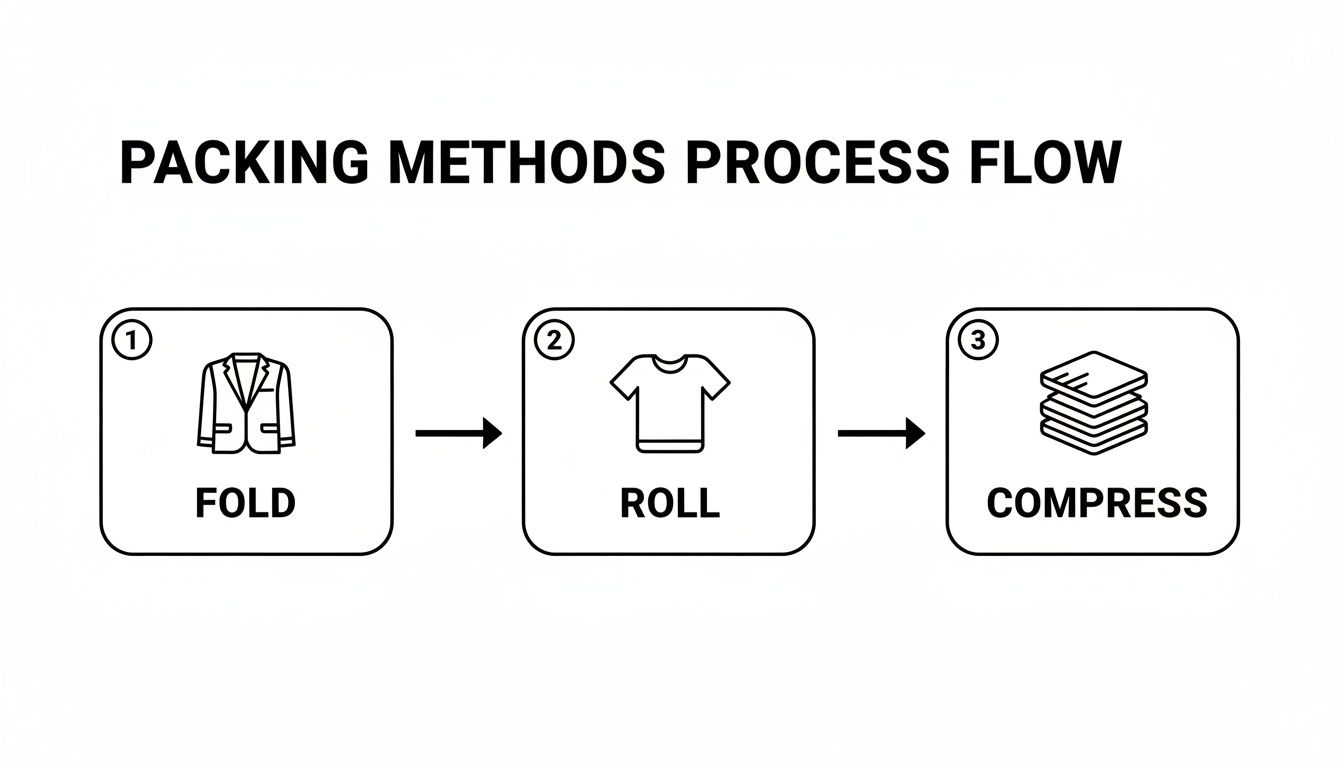
You can see how each technique—folding for structure, rolling for compression, and using cubes for organization—works together to create a perfectly packed bag.
The very last things you put in your suitcase should be the first things you need when you get to your destination. This top layer is all about easy access. After a long day of travel, you don't want to dig for a fresh shirt.
I always reserve this top spot for things like:
Putting these items right on top means you can grab them the second you open your suitcase. It makes that transition from weary traveler to relaxed vacationer happen that much faster.
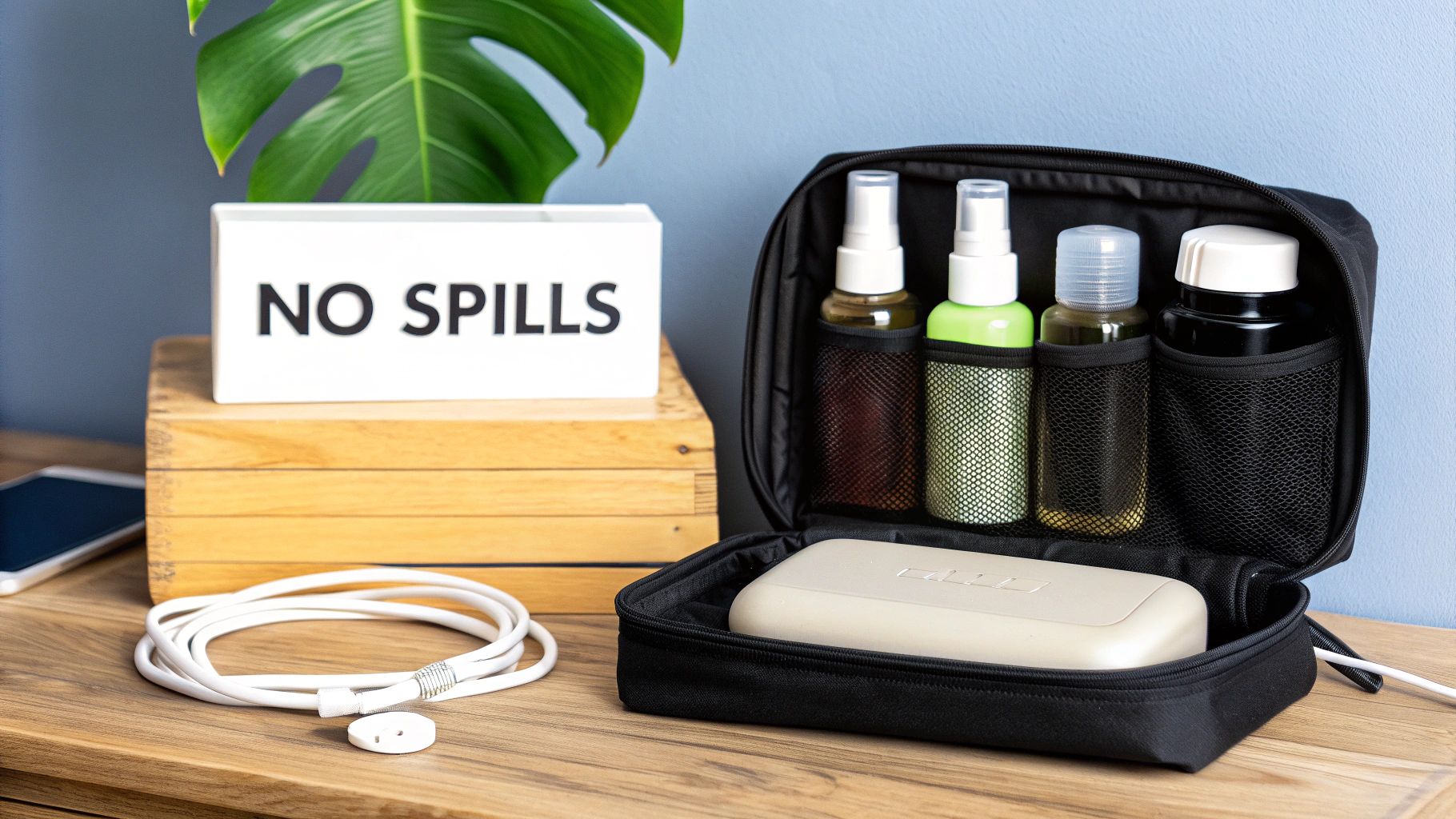
There are two travel nightmares that can ruin a trip before it even begins: opening your suitcase to find a shampoo explosion or facing a bird's nest of tangled chargers. Toiletries and electronics are the usual suspects, but a few smart strategies can make sure they arrive safe, sound, and mess-free.
Learning how to pack a suitcase like a pro means having a specific game plan for these high-risk items. It’s not just about preventing a mess; it's about making your life easier when you arrive. You want to be able to plug in your phone and freshen up without a second thought.
We all have that fear of a shampoo bottle giving up mid-flight. But the real key to stress-free packing is to move beyond just buying travel-sized bottles. The most foolproof way to avoid a spill? Ditch the liquid altogether.
This is where solid toiletries become your best friend. They aren't just novelties anymore; you can find high-quality, travel-perfect essentials that seriously upgrade your packing game.
For any liquids you simply can't live without, there's a brilliantly simple hack for an extra layer of security. Just unscrew the cap, place a small piece of plastic wrap over the opening, and screw the cap back on tightly. This creates a seal that’s surprisingly effective against the pressure changes in a plane's cargo hold.
In our connected world, traveling means carrying a small arsenal of tech: a phone, tablet, headphones, camera, and maybe a laptop. Every device comes with its own cable and charger, quickly creating a tangled mess that’s a real pain to sort through.
A dedicated electronics organizer is an absolute game-changer. These cases have little loops, pockets, and zippered spots designed to hold every single cable and plug in its place. This one simple tool turns a chaotic jumble into a neat, tidy kit, saving you the headache of digging for the right cord.
Crucial Airline Rule: Always pack any device with a lithium-ion battery—like a power bank—in your carry-on luggage. Due to fire safety regulations, most airlines strictly prohibit them in checked bags. Forgetting this can get your bag delayed or your items confiscated.
Keeping your tech safe goes beyond just organizing cables. You have to protect the devices themselves from the inevitable bumps and drops of travel.
By treating your toiletries and tech with a bit of extra care, you can head off the most common packing disasters. A few simple but effective tactics will protect your clothes from spills and your expensive gear from damage, ensuring everything arrives at your destination exactly as you packed it.
Let's be honest—the packing list for a weekend in the city looks nothing like the one for a week-long trek in the mountains. The real secret to packing like a pro isn't finding one perfect list; it's learning how to customize your approach for every single trip you take.
Thinking through your itinerary ahead of time is the game-changer. It helps you shift from a generic, one-size-fits-all checklist to a smart, tailored plan. This way, you bring exactly what you need and leave the "just in case" clutter behind, making your entire journey smoother.
When you're traveling for work, it's all about efficiency. You need to look polished, stay connected, and move through airports without a single snag. Your packing list should reflect that—lean, mean, and built around wrinkle-resistant staples.
Think in terms of a capsule wardrobe. A sharp suit or blazer in a neutral color like navy or charcoal is your foundation. From there, add a couple of high-quality, non-iron dress shirts or blouses. For a typical three-day trip, one suit, two shirts, and one pair of versatile dress shoes is a winning combination.
Your tech is just as important. A dedicated electronics organizer is an absolute must-have. It keeps your laptop charger, phone cable, power bank, and any adapters corralled and easy to find. This, along with your travel documents and a spare shirt, should always be in your carry-on. You'll thank yourself if your checked bag takes a detour.
The Inside-Out Suit Trick: The absolute best way to pack a suit jacket without it becoming a wrinkled mess is to turn it inside out. Tuck one shoulder into the other, creating a neat package. Place your folded trousers inside the hollow of the shoulders, then fold the blazer around them. This protects the jacket’s structure and seriously minimizes creases.
A last-minute weekend trip is all about spontaneity, and your luggage should match that vibe. The challenge? Fit everything into one small carry-on. It's the ultimate test in packing only what you truly need.
I’m a big fan of the "Rule of Threes" for a quick two-night escape:
When it comes to toiletries, think solid. A shampoo bar, toothpaste tabs, and solid deodorant are compact, mess-free, and TSA-friendly. Your phone is your camera, map, and book, so you can leave the other gadgets at home.
When your plans involve trails and unpredictable weather, your packing focus has to shift from fashion to function. Here, the right gear isn't just a luxury—it’s essential for your comfort and, more importantly, your safety.
Forget cotton. Your clothing should be all about performance fabrics like merino wool that wick moisture and dry quickly. Layering is your best friend for adapting to changing temperatures. Always pack a base layer, a fleece or insulated mid-layer, and a waterproof, breathable outer shell.
Your most critical piece of equipment is what’s on your feet. Bring a pair of broken-in, waterproof hiking boots and a separate pair of camp shoes or sandals to give your feet a break at the end of the day.
Beyond clothes, these are your non-negotiables:
Packing for a family, especially with little ones, can feel like planning a major military operation. The trick is to find that sweet spot between being prepared for anything and not hauling half your house with you.
Packing cubes are a parent’s secret weapon. Assign each kid a different color. It makes finding their PJs a breeze and, believe it or not, helps keep the hotel room from exploding into chaos. Another pro tip: pack one complete change of clothes for every family member in your carry-on bags. It’s a lifesaver if a checked suitcase gets lost in transit.
And don’t forget the kid-specific essentials for a meltdown-free trip:
Every great trip starts with a great list. While the specifics will change, the categories often stay the same. We've put together a comprehensive checklist to serve as your starting point. Just print it out and customize it for your next adventure!
| Category | Essential Items | Quantity Notes |
|---|---|---|
| Clothing | Tops (T-shirts, blouses), Bottoms (pants, shorts), Underwear, Socks, Outerwear (jacket, sweater), Sleepwear, Swimsuit, Formal/Dressy Outfit | Adjust quantities based on trip length and laundry access. |
| Footwear | Comfortable Walking Shoes, Dress Shoes/Heels, Sandals/Flip-Flops, Specialty Shoes (hiking boots, water shoes) | Never pack brand-new shoes. Always bring at least two pairs. |
| Toiletries | Toothbrush, Toothpaste, Deodorant, Shampoo & Conditioner, Soap/Body Wash, Skincare (face wash, moisturizer), Sunscreen, Medications | Use travel-sized containers or solid toiletries to save space. |
| Electronics | Phone & Charger, Portable Power Bank, Laptop/Tablet & Charger, Headphones, Travel Adapter | Pre-load media and download maps for offline access. |
| Documents | Passport/ID, Visas (if needed), Boarding Passes, Hotel/Car Rental Confirmations, Credit/Debit Cards, Local Currency | Keep digital and physical copies of important documents. |
| Health & Safety | Prescription Medications, Basic First-Aid Kit (band-aids, pain relievers, antiseptic wipes), Hand Sanitizer, Face Masks | Carry essential medications in your carry-on luggage. |
| Miscellaneous | Reusable Water Bottle, Daypack/Tote Bag, Travel Pillow, Eye Mask & Earplugs, Book/Entertainment, Snacks | Pack items that enhance your comfort during transit. |
By starting with a solid foundation like this, you can confidently add or remove items to perfectly match your travel plans, ensuring you’re ready for anything.
Even the most seasoned travelers get that moment of doubt staring into an empty suitcase. You know the feeling. Those last-minute "what ifs" can turn an exciting pre-trip buzz into a stressful scramble. Let's clear the air and tackle some of the most persistent packing puzzles so you can close that zipper with total confidence.
Honestly, learning how to pack a suitcase well is mostly about unlearning bad habits. By addressing these nagging questions, you'll start to refine your process, making every trip smoother than the last.
This is the number one packing mistake, hands down. We've all been there—hauling a heavy bag full of clothes we never even touched. The best defense is a simple strategy that forces you to be ruthless from the get-go.
I'm a big fan of the '5-4-3-2-1 Rule,' which works wonders for a week-long trip. It's a simple memory aid: pack no more than five sets of socks and underwear, four tops, three bottoms, two pairs of shoes, and one hat. This little trick forces you to pick versatile, mix-and-match pieces and brutally cuts down on those "just in case" outfits.
Before a single thing goes into your bag, lay it all out on your bed. All of it. Seeing your entire travel wardrobe in one place gives you a bird's-eye view, making it painfully obvious when you have five black t-shirts or three pairs of nearly identical pants. It's the easiest way to spot redundancies and ditch what you don't truly need.
Key Takeaway: Overpacking is born from "what if" anxiety. A simple rule and a visual audit force a mental shift. You stop packing for every possibility and start packing with purpose.
Packing for a place with a chaotic forecast feels like a losing game, but the solution is surprisingly simple: layering. Forget bulky sweaters or a single heavy coat that eats up half your suitcase. The real secret is packing multiple thin layers that you can pile on or peel off as the weather gods change their minds.
Here’s the system that never fails:
If you can, invest in a few pieces made of Merino wool. It’s a miracle fabric for travelers—it's incredibly warm for its weight, breathes well so you don't get sweaty, and naturally resists odor. That means you can wear it a few times before it needs a wash. This whole approach gives you the flexibility to handle a 30-degree temperature swing without sacrificing your entire luggage allowance.
Look, are they absolutely essential? No. But are they a total game-changer for staying organized and sane? Absolutely. Think of them as portable drawers for your suitcase. They turn a chaotic jumble of clothes into a neat, modular system.
Packing cubes are especially clutch on longer trips or multi-destination journeys. You can dedicate one cube for tops, another for bottoms, and a third for underwear and socks. They’re also brilliant for quarantining dirty laundry from your clean clothes. While you might be able to get by without them for a quick weekend getaway in a duffel, for anything more, they make finding that one specific shirt a breeze instead of a frantic, suitcase-destroying dig.
Ready to discover the gear that makes every trip easier? At FindTopTrends, we curate the best travel essentials, from high-quality packing cubes to innovative tech organizers, so you can pack smarter, not harder. Explore our collection and upgrade your travel game.




