


No products in the cart.


Free Shipping Australia-Wide

5 star customer service

Quality Tested Products

Living in a small space doesn't mean you have to feel cramped. The trick is to find furniture that works harder, not just takes up room. The best space saving furniture ideas are all about being clever—choosing pieces that are multifunctional, make the most of your vertical space, or even create the illusion of a bigger room.
Forget the old rules about small-space living. Modern design is less about sacrifice and more about smart, stylish innovation. It’s not about getting rid of things you love; it’s about choosing furniture that can pull double, or even triple, duty. Think of it as hiring a small, efficient team where every piece has more than one job.
This isn't just a fleeting trend—it's a direct response to how we live today. The global market for this kind of furniture was valued at USD 23.4 billion in 2023 and is expected to balloon to USD 41.2 billion by 2032. As more of us move into cities and cozier living quarters, this kind of smart design becomes essential. You can dig into more of the numbers on this growing market over at DataIntelo.
To really get this right and transform your home, you just need to keep a few core strategies in mind:
When you start embracing these principles, you stop seeing your small space as a limitation and start seeing it as a fun design challenge. Solving it results in a home that's not only highly functional but also deeply personal.
Getting these concepts down is the first step toward a home that feels more organized and spacious. If you want to dive deeper into decluttering and layout tricks, be sure to check out our guide on how to organize small spaces.
Now, let's get into the specific types of furniture that bring these ideas to life.
Think of your furniture like a Swiss Army knife. A single tool that can do many jobs. What if your coffee table could effortlessly lift to become a dining table, or a chic ottoman could flip open to reveal a hidden stash of blankets? This is the simple genius behind multipurpose furniture, one of the most effective space saving furniture ideas out there. These are the true transformers of home design, turning a single-use area into a space that can adapt on the fly.
Instead of having a guest room that gathers dust for 350 days a year, a great sleeper sofa can instantly turn your living room into a comfortable bedroom for the night. Just like that, a single piece solves a major problem without eating up permanent square footage. The trick is to see how one smart investment can do the job of two or three separate items.
This approach is one of three core pillars of space-saving design, working together to make a room feel bigger than it is.
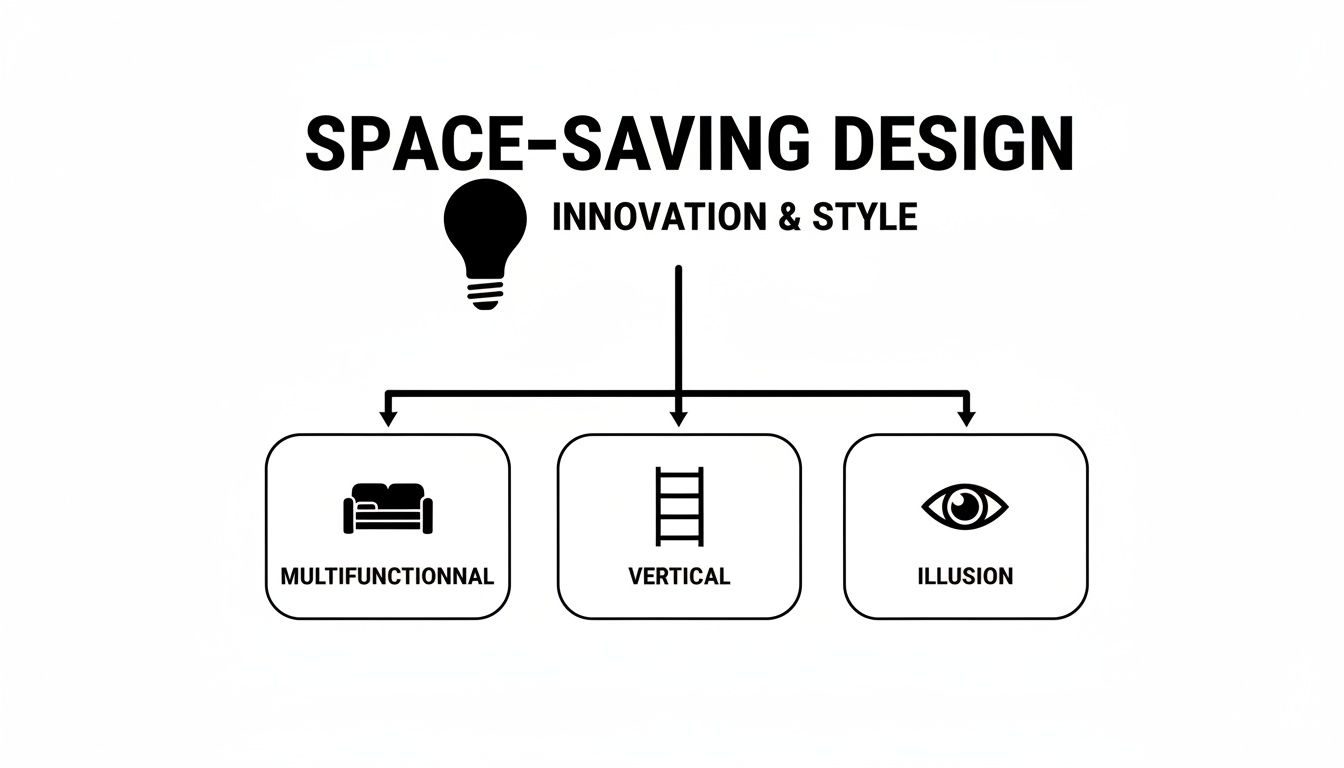
As you can see, multifunctional design isn't just a clever trick; it’s a foundational strategy. It works hand-in-hand with using vertical space and creating visual illusions to craft a home that feels both practical and open.
While the sleeper sofa is the old standby, the world of multipurpose furniture has exploded with creativity. Today's designs are smarter, more stylish, and built to solve all sorts of common household headaches. They’re engineered to make every inch of your home pull its weight.
This isn’t just a passing fad. The multifunctional furniture market hit a value of USD 15.9 billion in 2024 and is expected to keep climbing. This growth reflects a worldwide shift toward smaller, more efficient homes, and you can discover more insights on the multifunctional furniture market to see how this trend is playing out.
Here are a few popular examples that go way beyond the basics:
To help you visualize how these pieces fit into a home, this quick-reference table breaks down some of the most essential types of multipurpose furniture.
| Furniture Type | Primary Use | Secondary Use | Best For (Room) |
|---|---|---|---|
| Storage Bed | Sleeping | Storing clothes, linens, shoes | Bedroom |
| Sleeper Sofa | Seating | Guest bed | Living Room, Office |
| Lift-Top Coffee Table | Surface for drinks, decor | Dining table, workstation | Living Room |
| Nesting Tables | Side tables, coffee table | Extra surfaces for guests | Living Room |
| Storage Ottoman | Footrest, extra seating | Storing blankets, games | Living Room, Bedroom |
| Convertible Desk | Workstation | Console table, bookshelf | Bedroom, Living Room |
| Expandable Dining Table | Small daily dining | Large group dining | Dining Room, Kitchen |
Each of these pieces offers a clever two-for-one deal, allowing you to furnish your space without cluttering it.
The real magic of multipurpose furniture is that it gives you back your space. It lets a room serve different needs at different times, so your home adapts to your life—not the other way around.
When you’re ready to buy, let function be your guide. Start by identifying the biggest pain point in the room. Is it a desperate lack of storage? Not enough seating for guests? A work-from-home setup that’s taken over your dining table? Pinpoint the problem you need to solve first.
Once you know the primary job, think about the secondary one. If you need a place for extra bedding, a storage ottoman or a bed with built-in drawers makes more sense than a lift-top coffee table. By matching the furniture’s dual roles to your actual lifestyle, you ensure it’s a hardworking addition to your home, not just a cool gimmick.
When your floor plan is maxed out and you can't squeeze in another square foot, the only way to go is up. This is what designers mean when they talk about using your vertical real estate—it’s one of the most effective tricks in the book for small-space living. The idea is to draw the eye upward and unlock a ton of storage potential without eating into your precious floor space.
Think of your walls as blank canvases just waiting for a job to do. Instead of leaving them bare, you can turn them into hard-working, stylish assets that not only keep you organized but also make the room feel more complete and intentionally designed.
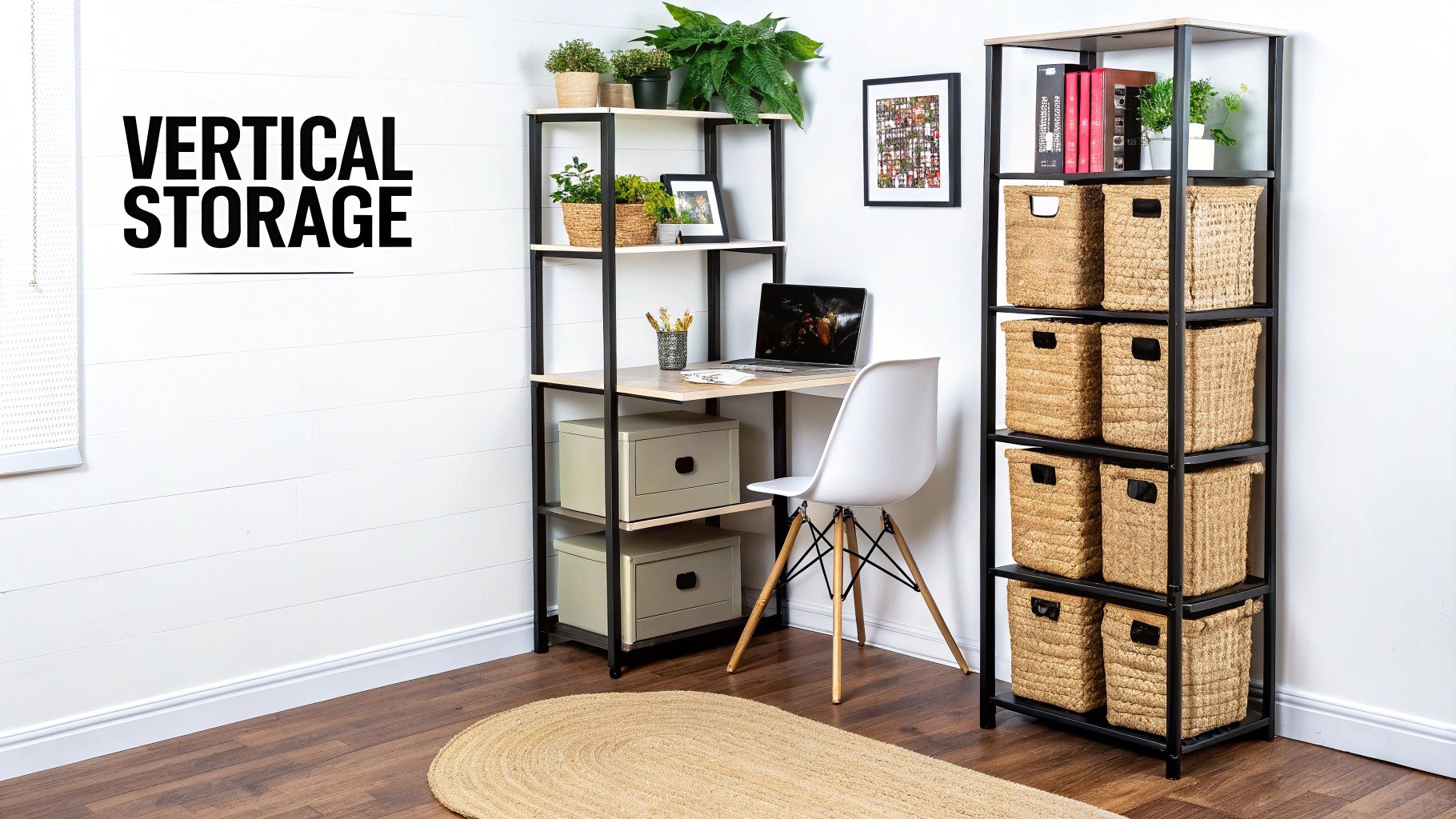
The most straightforward way to claim that vertical space is with tall, slender furniture. Floor-to-ceiling bookshelves are a classic for a reason; they become a stunning visual focal point while offering an incredible amount of room for books, decor, and storage bins.
Floating shelves are another fantastic choice. Since you can't see the brackets, they almost look like they're defying gravity, which helps keep a room feeling open and airy. You can stagger them for a more artistic, eclectic look or line them up perfectly for a clean, minimalist vibe.
It’s not just about shelves, either. Your walls can support entire workstations or even beds. A wall-mounted desk that folds down when you need it gives you a dedicated home office that completely disappears when the workday is over, freeing up the floor for the rest of your life.
For the ultimate in vertical space-saving, nothing beats the clever design of Murphy cabinet and chest beds. These pieces ingeniously tuck a full bed away inside a stylish cabinet or chest, literally giving you back an entire room to use during the day.
This move toward clean, wall-focused furniture is more than just a passing fad. The demand for minimalist cabinets and shelves is expected to jump by a CAGR of 9.8% from 2024 to 2030. It's a clear signal that people are shifting toward organizational furniture that adds function without the bulk.
When you focus on your walls, you’re doing more than just adding storage. You're fundamentally changing how the room works by creating zones for work, display, and relaxation that live above the floor, leaving it open and uncluttered.
Getting your vertical storage right is all about making it look as good as it functions. Keep these simple tips in mind.
Sometimes, the smartest space-saving tricks have less to do with storage and more to do with perception. How do you make a room feel bigger without knocking down a wall? It's all about visual sleight of hand—choosing pieces that fool the eye into seeing more space than is actually there. It’s a design strategy that’s part art, part science, playing with light, lines, and scale.
The core principle is surprisingly simple: the more floor you can see, the larger the room will feel. Think about it. Bulky, solid furniture that sits flat on the ground acts like a heavy anchor, visually shrinking your square footage. In contrast, pieces with exposed legs—a signature of Mid-Century Modern design—lift the furniture off the floor. This simple elevation lets light and air flow underneath, creating an instant feeling of openness.
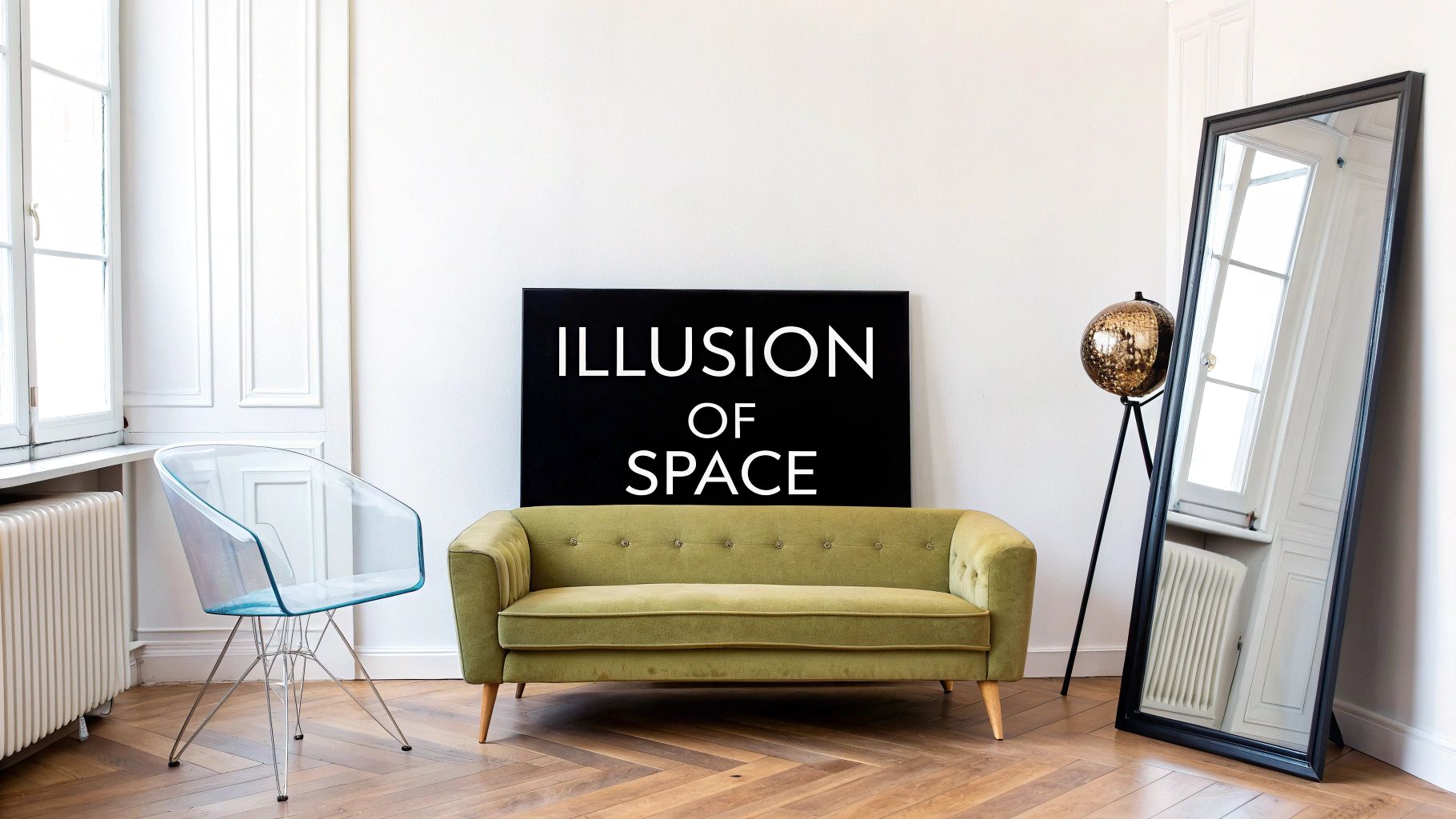
Beyond just getting furniture off the ground, the materials you choose can completely change a room’s vibe. Some materials seem to absorb light and shrink a space, while others bounce it around and open things up. Dark, heavy fabrics and woods are beautiful, but they can make a small room feel a bit cavelike.
To make a room feel bigger, you want materials that act like amplifiers for light and space.
When you pair these materials with a great lighting plan, the effect is even more dramatic. Our guide on home office lighting ideas has some fantastic tips that work just as well in a living room or bedroom.
The final piece of this puzzle is scale. This is critical. A massive, overstuffed sofa will completely overwhelm a small living room, no matter how lovely it is. You need to look for furniture with a slimmer profile and more delicate proportions.
The goal is to furnish the room, not fill it. Every piece should have a little breathing room around it. This "negative space" is just as important as the furniture itself; it gives your eyes a place to rest and keeps the room from feeling chaotic.
Keep an eye out for "apartment-sized" sofas, narrow console tables, and chairs with low-profile arms. When you pick pieces that are proportional to the room, you create a balanced, harmonious layout that feels intentional and spacious, not cramped and accidental.
You've picked out the perfect space-saving furniture—that's a huge win. But the real game-changer is how you arrange it all. A clever layout can make a small room feel not just bigger, but genuinely easier and more comfortable to live in. It’s what turns a pile of well-chosen pieces into a home that just works.
First thing's first: think in zones. Even in a tiny studio, you can carve out distinct areas for sleeping, working, and relaxing. You don't need walls, either. Furniture itself can create subtle, effective boundaries. A slim console table placed behind a sofa, for example, can visually separate a living area from what feels like an entryway.
One of the most common mistakes people make in a small space is accidentally creating an obstacle course. Before you even think about moving a single thing, map out the natural pathways in your head. Where do you walk when you first enter? What's the path from the couch to the kitchen?
Your layout needs to keep these routes clear. A good rule of thumb is to aim for at least 30 inches of walkway space.
Think of your room's layout like a well-designed city map. The roads (your pathways) should be direct and easy to navigate, connecting all the important destinations (your furniture) without causing a traffic jam. This simple principle creates a powerful sense of order and ease.
This is where furniture with a smaller footprint really proves its worth. Instead of a clunky, square coffee table that everyone has to shuffle around, try a pair of small nesting tables or even a narrow bench. It's a simple swap that can open up a shocking amount of floor space and make the whole room feel more fluid.
Every room has its quirks, but some shapes are just notoriously difficult to furnish. If you're stuck, here are a few simple templates to get you started on those common problem areas:
You don't need a massive budget to reclaim your space. In fact, some of the smartest solutions come from a bit of ingenuity, not a hefty price tag. It’s all about looking at your home with fresh eyes and seeing the hidden potential in everyday items and overlooked corners.
Adopting a do-it-yourself mindset is probably the most powerful way to craft solutions that are perfectly tailored to your needs. Simple projects, like building floating shelves from reclaimed wood or a custom storage bench for your entryway, can solve those unique spatial puzzles that a store-bought piece just can't. Plus, you save money and add a personal touch that makes your home truly yours.
Upcycling is your secret weapon here. An old, forgotten dresser can get a new lease on life with a fresh coat of paint and some modern hardware. I've even seen people turn a vintage ladder into a chic, vertical bookshelf that takes up almost no floor space.
For a really clever project that reclaims a totally unused area, you could convert a closet into a bookcase and transform a dead zone into a beautiful, functional feature.
Don't forget about secondhand stores and online marketplaces—they are goldmines for affordable furniture. You just need to look for pieces with a solid structure that you can easily update.
Smart, stylish living is accessible to everyone. The goal is to prove that a little creativity and effort can solve even the biggest space challenges, often more effectively than simply buying something new.
If DIY just isn't your thing, no worries. You can still find some fantastic budget-friendly pieces. Flat-pack furniture, for example, often delivers minimalist design and great functionality without the high cost. Also, be sure to keep an eye out for those end-of-season sales when retailers are clearing out their old inventory to make room for the new.
Here are a few quick tips for hunting down affordable space-savers:
This resourceful approach works everywhere, not just in the living room. For more ideas on maximizing utility in other tight spots, check out our guide on space-saving kitchen tools.
Even with the best ideas in hand, it’s natural to have a few lingering questions. Let's tackle some of the most common ones I hear, so you can move forward with confidence and start reclaiming your space.
It's a tough call since every home has unique needs, but if I had to pick one, it’s a toss-up between a high-quality storage bed and a great sleeper sofa.
A sleeper sofa is a game-changer. It instantly gives you a guest room without needing an actual guest room. But for day-to-day living, a storage bed is the unsung hero. It takes the huge footprint of your mattress and turns it into a massive, hidden closet for clothes, linens, and all that seasonal stuff that eats up precious space.
The secret is a combination of clever layout and a few visual tricks. First, think vertically. Tall, slender bookshelves draw the eye upward, making the ceiling feel higher. Another classic move is placing a large mirror directly opposite a window—it bounces light around and creates a real sense of depth.
Remember, the goal isn't just to cram furniture in; it's to create breathing room. It sounds counterintuitive, but pulling furniture a few inches away from the walls can actually make a room feel less boxed in and more expansive.
Also, think about what's happening at floor level. A bulky, solid coffee table can feel like a roadblock. Swapping it for one with slender legs or a glass top keeps your sightlines open, making the whole area feel more airy and light.
Not anymore! The days of clunky, back-breaking Murphy beds are long gone. Modern multifunctional pieces are designed to be incredibly user-friendly. Good brands invest heavily in engineering smooth, reliable mechanisms for everything from convertible tables to fold-out desks.
That said, it’s always a good idea to check product reviews before you buy. Real-world feedback from other customers will tell you everything you need to know about assembly and daily ease of use.
You're right to think that some styles just work better than others in a compact room. The ones that really shine are those that prioritize simplicity and light.
All these styles skip the heavy, ornate details that can easily overwhelm a small room, helping to create a calm, open, and inviting atmosphere.
Ready to see how the latest trends in furniture blend style with pure function? At FindTopTrends, we track down the best products to help you build a home that's as practical as it is beautiful. Explore our curated collection and find your perfect space-saving solution today at https://findtoptrends.com.




