


No products in the cart.


Free Shipping Australia-Wide

5 star customer service

Quality Tested Products

The best toys for a 6-month-old are the ones that perfectly match their incredible developmental burst. We're talking about things that stimulate their senses, build motor skills, and offer some much-needed teething relief. Think textured balls, crinkly soft books, and teethers that are safe and easy for little hands to hold. These aren't just playthings; they're tools for their growing curiosity and comfort for their sore gums.
Get ready—you've hit a huge turning point in your baby's first year! At six months, your little one is graduating from observer to active explorer. They're starting to master big skills like sitting up, grabbing objects with real purpose, and even getting a first glimpse into cause and effect.
Think of the right toys as essential tools for this exciting new stage. They aren't just for keeping them busy; they're literally the building blocks that help wire their brain for all the learning that's ahead. Every texture they feel, every sound they hear, and every shape they see plays a part in their development.
At this age, every playtime moment is a lesson. When your baby shakes a rattle and hears it make a noise, they've just learned one of life's biggest concepts: action and reaction. When they figure out how to pass a toy from one hand to the other, they're building the coordination that will one day help them hold a spoon.
Choosing great toys means matching them to these new abilities. You want to find things that offer a slight challenge but are still achievable, giving them the confidence to practice their skills over and over.
Here’s a quick look at how the right toys can support your 6-month-old's growth:
| Developmental Area | Key Milestone | Supportive Toy Feature |
|---|---|---|
| Gross Motor Skills | Sitting up independently or with support. | Toys that are stable and encourage reaching, like an activity gym or a large, soft block. |
| Fine Motor Skills | Grasping and transferring objects between hands. | Easy-to-hold items like linking rings, soft balls, or toys with handles. |
| Sensory Exploration | Exploring with hands and mouth. | Safe, chewable materials with varied textures (bumpy, smooth, crinkly). |
| Cognitive Growth | Understanding cause and effect. | Toys that react to their actions, such as rattles, crinkle toys, or a wobble toy. |
| Language Development | Babbling and responding to sounds. | Toys that make gentle sounds; reading soft, high-contrast books together. |
As you can see, a simple toy can do a whole lot of work! It's all about providing the right opportunities for them to discover what their amazing little bodies and minds can do.
The best toys at this stage aren't always the ones with all the lights and sounds. Simple, open-ended toys often do more to fire up a baby's imagination and problem-solving skills than complex electronic gadgets.
Here’s a breakdown of how specific developmental leaps connect to the kind of play that will nurture them best:
This guide will walk you through how the right toy choices can powerfully support your baby's journey, making playtime both a blast and a fundamental part of their growth.
At six months old, your baby is a whirlwind of discovery. It’s an amazing age where they transform from a tiny newborn into a little person with a budding personality, and their brain is firing on all cylinders. Understanding what’s happening behind the scenes during these developmental leaps is the key to picking toys for 6 month olds that will actually engage and support them.
Think of this stage as their own personal training montage. Every little wiggle, every determined grab for a toy, and every delighted squeal is a sign of incredible progress. They are building the foundation for everything that comes next—crawling, walking, and even their first words.
The most obvious change you’ll see is in their motor skills. Gone are the random, jerky movements of the newborn days. Now, every action has more purpose and control.
Their fine motor skills are really starting to blossom. You'll catch them concentrating intensely as they practice their grasp, working hard to pick up an object, and maybe even pulling off the tricky maneuver of passing a toy from one hand to the other. That simple act is a huge accomplishment, building hand-eye coordination and strengthening all those tiny muscles in their fingers and hands.
At the same time, their gross motor skills are getting a serious workout. Many babies are now learning to sit up with a little support, which gives them a brand new, upright view of their world. They’re also getting the hang of rolling over, a huge step that gives them their first real taste of independent movement.
A baby's grasp is their first tool for learning. When they hold, shake, and mouth a toy, they are collecting valuable data about its weight, texture, and sound, much like a scientist examining a new specimen.
A six-month-old is a sensory sponge, soaking up information about the world through every sight, sound, and touch. Their vision has improved so much that they can now see in full color and track objects as they move across the room. Bright colors and high-contrast patterns are especially fascinating to them.
Their sense of touch is incredibly sensitive, especially in their hands and mouth. This is exactly why everything—and I mean everything—goes straight into their mouth. It’s not just about teething; it's one of their main ways of exploring and learning. Toys with different textures, like soft fabrics, bumpy surfaces, or cool silicone, provide a rich sensory feast.
This constant sensory exploration is directly fueling their cognitive growth. They are starting to grasp a huge concept: cause and effect. When I shake this, it makes a noise. When I bat at that, it wobbles. This is the very beginning of understanding that their actions can make things happen in the world around them.
This is where all that motor, sensory, and cognitive development comes together in the form of purposeful play. It’s no surprise that the global market for baby and toddler toys, valued at USD 24.5 billion in 2024, is growing so quickly. Parents are looking for toys that do more than just entertain. You can find more details on baby toy market trends on gminsights.com.
Choosing the right toys for a 6-month-old means giving them the tools they need to practice all these exciting new skills.
By offering these kinds of simple, effective tools, you’re doing more than just keeping your baby busy. You’re setting up the perfect little laboratory for their very important research.
Once your six-month-old masters the art of grabbing and putting everything in their mouth, toy safety suddenly rockets to the top of your priority list. It's a fantastic sign of their development, but that boundless curiosity also means you need to be on high alert. Choosing the right, safe toys for 6 month olds isn't about limiting fun; it's about giving you the peace of mind to enjoy it with them.
When I think about toy safety, I break it down into three key areas: what it's made of, its size and shape, and how well it's put together. Each one is a critical piece of the puzzle for creating a truly secure play space for your little one.
First things first, get used to reading labels. Since your baby’s primary method of investigation is their mouth, the materials a toy is made from are incredibly important. Always hunt for toys clearly marked as non-toxic, BPA-free, and phthalate-free. Reputable brands are proud of their safety standards and will make this information easy to find.
Beyond the label, give the toy a good once-over yourself. It needs to be tough enough to handle being dropped, banged around, and gummed on without falling apart.
It’s a scary thought, but a baby’s airway is tiny, making choking a very real risk. Luckily, there’s a super simple trick to see if a toy or one of its parts is dangerously small.
The Toilet Paper Roll Rule: This is my go-to safety check. If any toy or piece of a toy can fit entirely through an empty toilet paper roll, it’s a choking hazard. Simple as that.
This little test is a reliable way to vet new toys and to double-check old favorites to make sure no small, dangerous pieces have broken off. It’s a quick habit that can make all the difference.
With everything going into your baby's mouth, good hygiene is non-negotiable. Regularly cleaning their toys cuts down on germs and keeps their play area healthy. How you clean them really depends on the material.
Making toy inspection and cleaning a regular routine is just as crucial as the other baby-proofing tasks around your house. For a complete look at creating a safe space, you can learn more about how to childproof your home in our guide. By building these simple checks into your life, you can make sure playtime is always safe, healthy, and full of joy.
Walking down the toy aisle can be overwhelming, but for a 6-month-old, you can cut through the noise by focusing on a few key categories. Think of these as more than just playthings; they're the perfect tools for this specific stage of discovery. Each type of toy serves a purpose, from soothing sore gums to sparking those first little lightbulb moments.
It's clear parents are catching on to the power of purposeful play. The global baby toys market was valued at a whopping USD 14.13 billion in 2023 and is only expected to grow. This isn't just about entertainment; it's about giving our little ones the best start.
Around the six-month mark, teething often kicks into high gear, turning everything within reach into a chew toy. Teethers are designed specifically for this, giving your baby a safe and satisfying way to relieve their sore gums. But they do more than just soothe—they also help your baby master bringing their hands to their mouth, a crucial step in body awareness.
When you're picking one out, look for materials like food-grade silicone or natural rubber. Different textures are a huge bonus, as they provide all sorts of new sensations for your baby’s mouth to explore. Some can even be chilled in the fridge for extra cooling comfort. If you need a hand choosing, our guide on finding the best teething toys for babies is packed with great advice.
Your baby is basically a little detective, using their hands, mouth, and ears to figure out the world around them. Sensory toys are made to feed this natural curiosity with a feast of different textures, sounds, and colors. These simple toys are fundamental for building connections in their rapidly growing brain.
This infographic breaks down the essentials of toy safety, zeroing in on materials, size, and construction to help you make smart choices.
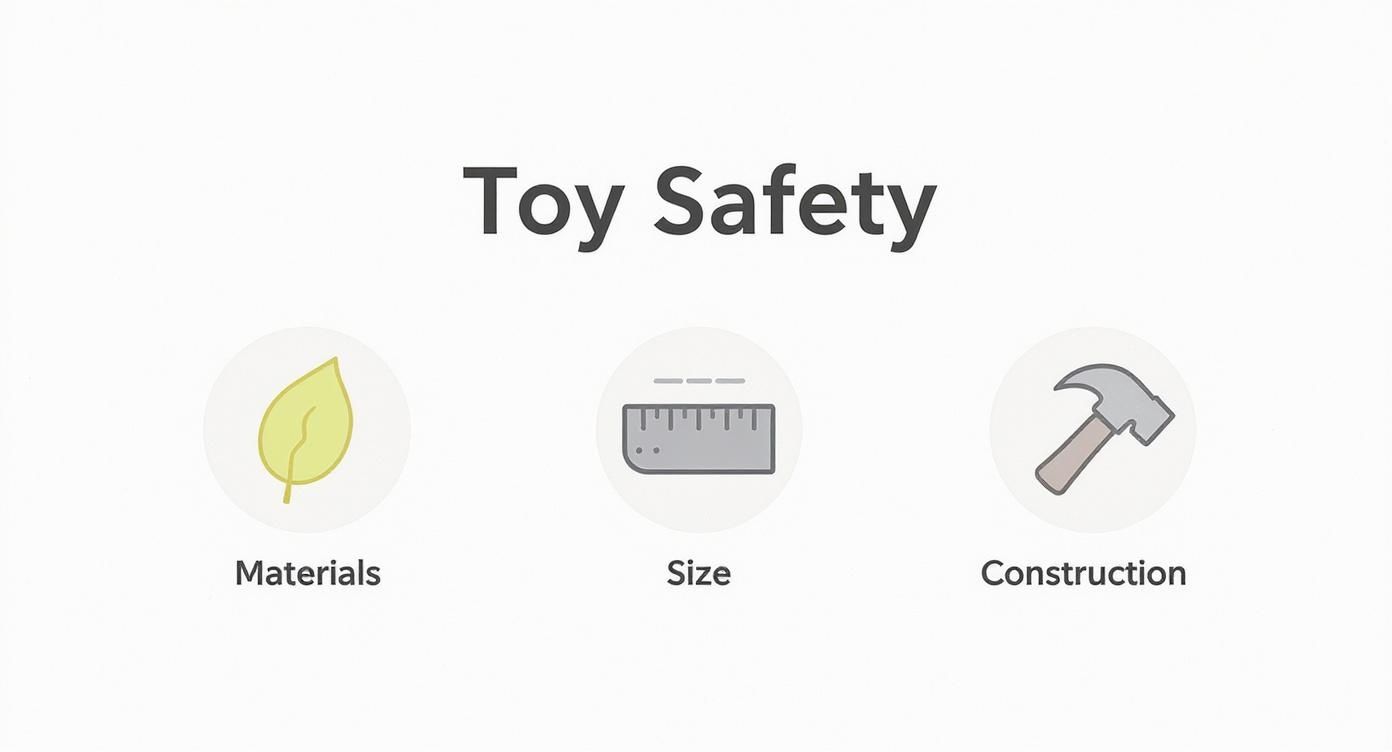
Keeping these three pillars of safety in mind will give you the confidence to pick out toys that are both fun and completely secure for your little one.
You can never start reading too early! At this age, soft, fabric books are the way to go. They often have crinkly pages, various textures to feel, and even little mirrors, turning story time into a full-on sensory experience. This early exposure helps kickstart a love for books and builds language skills as you name the pictures together.
High-contrast cards—usually in bold black, white, and primary colors—are fantastic for visual development. A six-month-old's eyesight is still coming into focus, and these simple, strong patterns are easier for them to track, which helps strengthen their vision and attention span.
Think of an activity gym as your baby's very first personal playground. It gives them a safe and engaging space for both tummy time and playing on their back. The little toys that dangle overhead encourage reaching and grasping, which does wonders for strengthening their arm, neck, and core muscles. Many mats also have built-in sensory features like mirrors, flaps, and textured patches for them to discover.
An activity gym does more than entertain; it acts as a structured environment that motivates movement. The desire to reach a dangling toy is often the spark that encourages a baby to roll over for the first time.
When looking for the perfect items, it can be really helpful to browse collections that are already sorted by age. Checking out selections of toys specifically for babies aged 0-24 months can help you quickly find options that are safe, appropriate, and designed for their developmental stage.
To help you decide where to focus your attention, here’s a quick breakdown of the main toy categories and what they offer.
| Toy Category | Primary Developmental Benefit | Key Features to Look For |
|---|---|---|
| Teethers | Soothes sore gums, encourages oral motor skills and hand-to-mouth coordination. | Food-grade silicone/natural rubber, varied textures, easy-to-grip shape, chillable. |
| Sensory Toys | Stimulates touch, hearing, and sight; teaches cause-and-effect. | Contrasting colors, different textures (bumpy, smooth, crinkly), makes noise. |
| Soft Books | Promotes early literacy, language skills, and sensory exploration. | Fabric pages, crinkly sounds, mirrors, high-contrast images, interactive elements (flaps). |
| Activity Gyms | Builds gross motor skills (reaching, rolling), strengthens core, provides visual stimulation. | Dangling toys, mirrors, comfortable mat, varied textures and sounds on the mat. |
This table shows how each type of toy plays a unique role in your baby's growth. By offering a mix of these categories, you create a rich and well-rounded play environment that supports all aspects of their development.
Creating a fantastic play space for your baby isn't about having a mountain of toys. In fact, sometimes less is more. Having a few well-chosen items can lead to deeper, more focused play. Let's talk about a couple of smart strategies—toy rotation and savvy budgeting—that help you give your baby the best toys for a 6 month old without breaking the bank or drowning in clutter.
Have you ever heard of toy rotation? It's a game-changer. The idea is simple: instead of leaving all the toys out all the time, you only make a small selection available. The rest get stored away. Then, every week or so, you swap them out.
This little trick keeps playtime feeling fresh and exciting. It stops your baby from getting overwhelmed by too many choices and, honestly, it feels like they're getting new toys all the time. A toy that was collecting dust last week can suddenly become the most captivating thing in the world. This approach encourages your little one to really explore each item, discovering all the different ways to play. Getting started is a breeze, but if you want to really master the system, check out our guide on how to organize kids' toys.
Toy rotation isn't just a tidying hack; it's a genuine developmental tool. It helps teach focus and appreciation by making novelty a regular, manageable experience instead of a constant, overwhelming flood.
You absolutely don't need to buy everything brand new. The baby toy market is massive—we're talking an estimated USD 16.43 billion in 2024—but a little smart shopping can save you a ton of money. Second-hand shops, local parent groups, and online marketplaces are gold mines for high-quality, pre-loved toys.
When you're buying second-hand, just make safety your number one priority:
You know, some of the very best sensory toys can be whipped up using things you already have at home. These simple, supervised activities can offer incredible learning moments without costing a thing.
Quick DIY Sensory Ideas:
Remember, always supervise your baby closely during any kind of DIY playtime to keep things safe and fun. And if you're looking for a great resource on picking the right toys for every stage, this month-by-month guide to choosing perfect toys for your baby is incredibly helpful.
Having the right toys for 6 month olds is a great first step, but the real magic happens when you get down on the floor and play with them. You are the secret ingredient that turns a simple toy into a powerful learning tool. You don’t need an elaborate, Pinterest-perfect setup; it’s the simple, everyday interactions that build those tiny brains and strengthen your incredible bond.
Think of yourself as your baby's first-ever playmate. When you get involved, you’re not just having fun—you’re showing them how the world works, one little interaction at a time. Every game you play helps cement the developmental milestones they're working so hard to reach, from building muscle to figuring out language.
Even the simplest toys become amazing tools for learning once you add your own engagement. By playing alongside your baby, you help them make those crucial connections between what they do and what happens next. That's the spark for cognitive growth and physical exploration.
Here are a few easy ways to make their favorite toys work even harder:
Beyond the toy box, simple interactive games are absolute gold for nurturing social and cognitive skills. The best part? They don’t require anything but you, making them perfect for any time, anywhere.
Play is often talked about as if it were a relief from serious learning. But for children, play is serious learning. At the six-month mark, play is the primary way babies make sense of their world.
Take peek-a-boo, for example. It’s so much more than a way to get a belly laugh. This timeless game actually introduces the concept of object permanence—the mind-blowing idea that you still exist even when they can't see you. It's a huge cognitive leap, taught through nothing more than a joyful, silly game.
It's completely normal to feel like you're drowning in a sea of baby products. Let's clear up some of the most common questions parents ask when picking out the perfect toys for their 6-month-old.
When it comes to baby toys, think quality, not quantity. You don’t need a mountain of plastic to keep your baby happy and engaged.
A small, thoughtfully chosen collection of 5 to 8 toys is more than enough. Focus on variety—a teether, a sensory ball, a soft book—to cover different developmental needs. To keep things fresh, try a toy rotation system. Tucking a few toys away for a week or two makes them feel brand new when they reappear, and it keeps your play space from becoming cluttered and overwhelming.
Toys that light up and sing can certainly grab a baby's attention, but they're best used sparingly. Too much electronic stimulation can sometimes be a bit much for their developing senses.
Simple, classic toys are often the real winners. They give your baby the freedom to explore, imagine, and figure things out on their own. If you do decide on an electronic toy, one with a volume control is a great feature to look for.
The best toys are often the simplest ones. They act as a blank canvas for your baby's imagination, sparking creative play instead of just passive watching.
This is a big one. Always flip over the box and look for key safety assurances. You want to see labels like non-toxic, BPA-free, phthalate-free, and lead-free.
Also, check the age recommendation, which will look something like "0+" or "6m+". In the United States, the gold standard is ASTM F963 compliance. Seeing that label means the toy has been tested and meets strict federal safety standards, giving you one less thing to worry about.




