


No products in the cart.


Free Shipping Australia-Wide

5 star customer service

Quality Tested Products

When it comes to your baby’s bath, the magic number is somewhere between 98°F and 100°F (37°C to 38°C). This isn't just a casual suggestion—it's the sweet spot that keeps your little one safe, comfortable, and happy. Nailing this temperature turns bath time from a chore into a calming ritual.
A baby's world revolves around feeling secure and warm, and the bath is a huge part of that. What feels like a relaxing hot soak to us can actually be dangerous for an infant. Their internal thermostat isn't fully developed yet, which means they can't adjust to temperature changes the way we can.
This has a couple of big implications. First, babies lose body heat much more quickly than adults. Water that feels just lukewarm to you can make them feel chilly in no time, causing them to get fussy and uncomfortable. A bath that's too cool is just as problematic as one that's too hot.
The other major piece of the puzzle is your baby's skin. It's brand new to the world—thinner, more delicate, and far more porous than ours. This makes them incredibly sensitive to the water's temperature.
The perfect bath water for a baby is one that matches their own body temperature. This simple rule prevents chilling and keeps them safe. After all, a baby's skin is 20–30% thinner than an adult's, leaving them far more vulnerable to burns or a sudden drop in body temperature. You can learn more from this helpful guide on bath water temperatures.
Water that's even a little too hot can lead to serious scalding burns in seconds. Because they're so vulnerable, getting the temperature just right is non-negotiable. That narrow 98°F to 100°F window feels perfectly warm and comforting without posing a risk. It’s designed to mimic the cozy, familiar environment of the womb, helping your baby relax instead of being startled by a sudden change.
Think of it less as a cleaning routine and more as creating a tiny, warm sanctuary for your child.
To make the whole experience a good one, think beyond just the tub. A warm bathroom helps prevent your baby from getting a chill the second they're out of the water. Keeping the room temperature in mind completes the cozy, safe environment.
Here’s a quick table to keep the key numbers straight.
This table summarizes the essential temperature guidelines for a safe and comfortable baby bath experience.
| Parameter | Recommended Temperature (°F) | Recommended Temperature (°C) | Reason |
|---|---|---|---|
| Bath Water | 98°F – 100°F | 37°C – 38°C | Matches baby's body temperature, preventing burns and chills. |
| Bathroom Air | 75°F – 80°F | 24°C – 27°C | Minimizes heat loss when baby is out of the water. |
| Home Water Heater | Max 120°F | Max 49°C | Prevents accidental scalding from the tap. |
Keeping these simple guidelines in mind will help ensure every bath is a soothing and safe experience for your baby.
We’ve all heard of the classic elbow or wrist test, a trick probably passed down from our own parents. It’s a decent gut check, but let's be honest, it’s far from a reliable measurement. Adult skin is just not as delicate as a baby’s, so what feels perfectly pleasant to you could easily be too hot for your little one.
For genuine peace of mind, you need precision. This is where a good bath thermometer becomes a new parent's best friend. It takes all the guesswork out of the equation, giving you a clear, accurate number so you can be completely confident before your baby’s toes even dip in.
Getting an accurate reading is a little more involved than just tossing the thermometer into the tub. Hot spots are a real thing, especially right where the faucet was running.
To get the real temperature of the bath:
Your goal isn't just a tub of warm water, but a consistently warm and safe environment. A reliable thermometer is your best tool for confirming the bath is holding steady within that sweet spot of 98°F to 100°F.
Following this little routine ensures the temperature on the screen is the same temperature your baby will feel from head to toe.
This infographic breaks down how the room temperature, water temperature, and your baby's overall comfort are all connected.
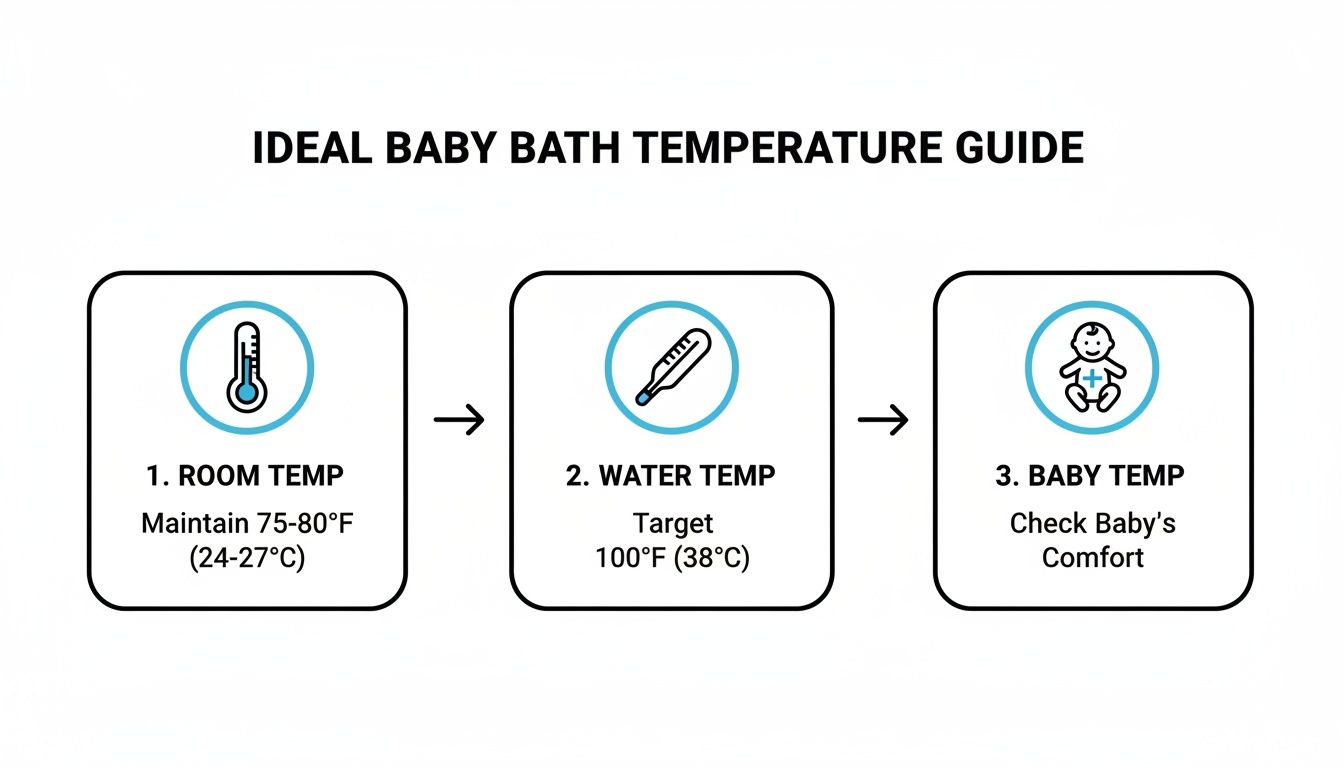
As you can see, keeping the room itself warm is the first step. Nailing the water temperature is next, and when you get both right, you have a happy, comfortable baby.
So, should you ditch the old-fashioned elbow test for good? Not at all. It still has a place, just not as your main method of measurement. Think of it as a helpful backup.
After you've used your thermometer to confirm the water is safely in the 98°F to 100°F range, go ahead and use your wrist or elbow. This actually helps you start to learn what the "right" temperature feels like. Over time, you’ll get a pretty good sense of it, but always, always let the thermometer have the final word. It’s the only way to be certain.
Getting the water temperature right is a big deal, but it's only half the battle. A truly relaxing bath time depends on the entire environment. Think about it: a perfectly warm tub in a chilly bathroom is a recipe for a fussy baby. They lose body heat the second you lift them out, and all that cozy comfort vanishes.
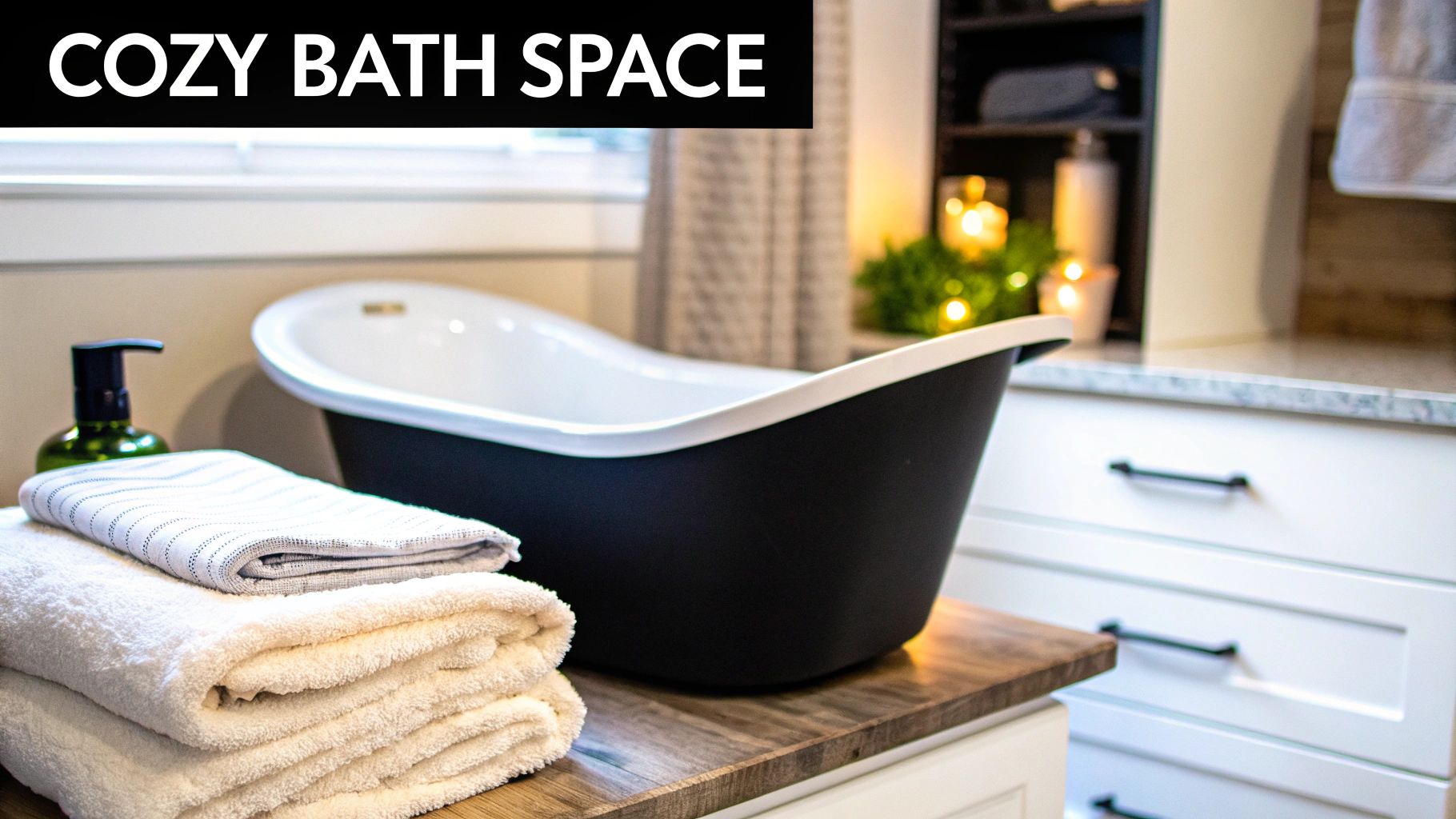
Your goal is to turn the bathroom into a little spa-like sanctuary. Before a single drop of water hits the tub, shut the door and any windows to stop drafts in their tracks. If the room feels a bit cool to you, it’s going to feel like an icebox to a wet baby. A good target is a balmy 75°F to 80°F (around 24°C to 27°C).
This one simple step makes a world of difference. It prevents that jarring, post-bath shiver and keeps your baby happy and warm from soak to snuggle.
The way you fill the tub matters just as much as the final temperature. There's a simple, crucial habit that can prevent dangerous scalding accidents.
Always, always run the cold water first, then slowly add the hot water to bring it up to temperature. This little trick keeps the surface of the tub from getting dangerously hot and prevents any pockets of scalding water from forming if your little one’s hand or foot touches it before you've mixed it all up.
Once you’ve got the right amount of water, turn off the taps completely. Then, use your hand or even a bath toy to swirl the water around really well. This gets rid of any hidden hot spots and makes sure the warmth is perfectly even throughout the tub.
A study in New Zealand emphasized the importance of the whole environment, recommending room temperatures of 26–28°C (79–82°F) to prevent heat loss. Their research also confirmed that tub baths are better than sponge baths at helping babies stay calm and maintain their body temperature. You can dig into the full research on infant bathing protocols if you'd like to learn more.
Once you've got the temperature handled, think about the vibe. Bright, glaring overhead lights can be jarring for a baby. Dimming them or using a soft night light creates a much more peaceful, relaxing ambiance.
A few other small touches can turn bath time into a truly special experience:
When you approach it this way, bath time stops being just another chore on the checklist. It becomes a cherished bonding ritual. By creating a warm, safe, and peaceful space, you set the stage for you and your baby to relax and truly enjoy these moments together.
Getting the bath temperature and the whole routine down is a huge confidence booster for new parents. Still, even with the best intentions, a few common slip-ups can easily turn a peaceful soak into a stressful situation. Knowing what these are is the best way to sidestep them and keep bath time the happy, safe ritual it should be.
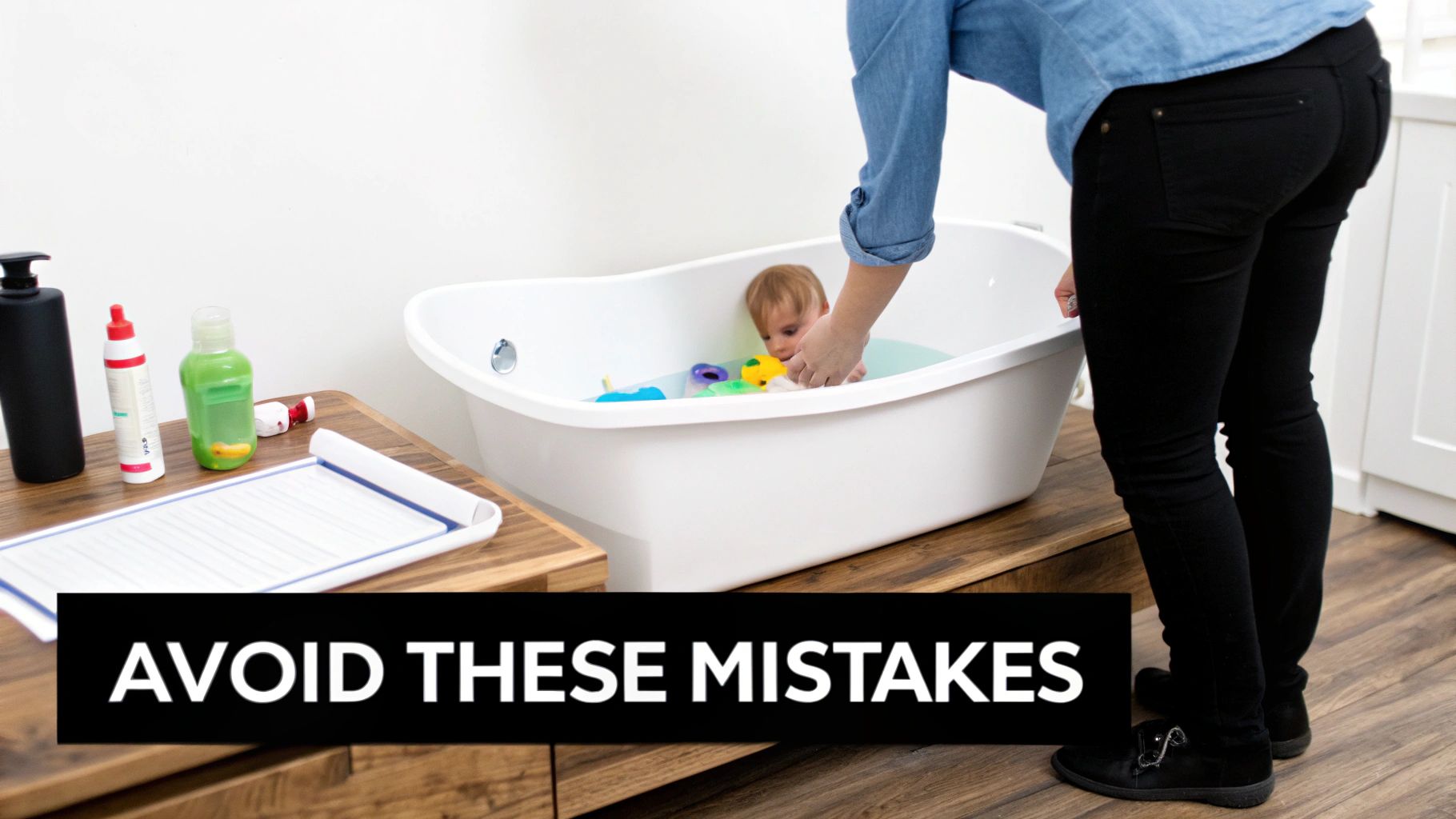
Most of these missteps happen in a split second, usually when we’re tired or distracted. By preparing ahead of time and just being aware of the risks, you can build safe habits that quickly become second nature.
It's a really tempting shortcut, I get it. The water has cooled off a bit, your baby is happily splashing, so why not just add a little more hot water?
The reason is simple but absolutely critical: you can’t control where that stream of hot water goes. It creates dangerous hot spots that can scald a baby's delicate skin in an instant. That incoming water is way hotter than the bath itself and it won't mix in evenly right away.
So, what should you do? Just end the bath. A shorter, slightly cooler bath is always, always better than a risky one. Lift your baby out, swaddle them in a warm towel, and call it a day.
It can happen to any of us. You realize you forgot the towel in the nursery or the clean diaper is just out of reach. It feels like it will only take a moment, but that one moment is all it takes for a tragedy to happen. A baby can drown silently in as little as an inch of water.
This is exactly why having everything you need within arm's reach before a single toe hits the water is non-negotiable.
The rule is simple and absolute: never, ever leave a baby unattended in the bath. Not even for a heartbeat. If you absolutely have to leave the room for any reason, take your baby with you. Just scoop them up, wrap them in a towel, and bring them along. Their safety is everything.
One of the most powerful safety measures happens long before you even turn on the tap. Most home water heaters are factory-set to a temperature that’s way too high for a baby's sensitive skin. A setting of 140°F (60°C), which is pretty common, can cause a third-degree burn in just five seconds.
This hidden danger is an easy fix. Take a minute to check your water heater and make sure it’s set no higher than 120°F (49°C). This simple adjustment provides a crucial safety buffer, dramatically reducing the risk of an accidental scalding from any faucet in your home.
It’s a one-time check that protects your entire family and gives you lasting peace of mind. Getting this setting right is a foundational step for a safe baby bath temperature every single time.
Even when you follow all the rules, bath time can still throw you a curveball. You’ve swirled the water, checked the thermometer, and it’s a perfect 99°F, but your baby is still fussy. Or maybe the water starts out feeling just right but turns chilly before you’re even done shampooing. Don't worry—these are totally normal hiccups, and the fixes are usually pretty simple.
Sometimes, the problem isn't the water temperature itself, but the change in temperature. A sudden plunge into water, even perfectly warm water, can be a shock to a baby's system. Try easing them in feet-first, giving them a moment to get used to the feeling before lowering the rest of their body in. Your calm, reassuring voice can also work wonders here.
The season can play a big role, too. During colder winter months, bathwater loses heat much, much faster. The air in the bathroom is cooler, and the tub material itself can leech warmth right out of the water. If you notice this happening, the easiest solution is just to keep bath time a little shorter.
If you've ruled out temperature shock and the room is warm, it's time to think about what else might be bothering your little one. Are they overtired or hungry? A bath right before naptime or a feeding can sometimes be overstimulating. You might find that shifting bath time to another part of the day, when your baby is usually more settled, makes all the difference.
It could also just be a personal preference. While 98°F to 100°F is the official safe range, your baby might be happier at one end of that spectrum.
The "ideal" temperature is really just a guideline. Your baby's comfort is what truly matters. They'll give you cues, so pay attention—they’ll let you know what works for them.
A bath that starts out perfectly toasty can become uncomfortably cool in just a few minutes. This happens a lot with small baby tubs that don't hold much water. This is one area where a bath in the full-sized tub has an advantage—the larger volume of water holds its heat for much longer.
If you find the water is getting chilly faster than you’d like, here are a few practical tricks I've learned to keep things warm and cozy.
By thinking ahead about these common challenges, you can easily tweak your routine to make sure every bath is a warm, happy, and soothing experience.
Even after you've got the basics down, a few questions are bound to pop up. That’s completely normal! Here are some common queries we hear from parents, answered to give you a little extra confidence for the next bath time.
When it comes to baby baths, think short and sweet. For newborns and younger infants, a bath that lasts 5 to 10 minutes is perfect. That's more than enough time to get them clean without drying out their super-delicate skin.
Keeping it brief also helps you avoid a common problem: the water getting chilly. A baby's body temperature can drop faster than you'd think as the bathwater cools. A short bath ensures they stay warm and happy from start to finish.
If you notice the water has cooled down, the best and safest thing to do is simply end the bath. I know it can be tempting to just add a little more hot water, but that's a huge safety no-go. It can create pockets of scalding water, which is incredibly dangerous for your baby.
The right move is to lift your baby out, wrap them up immediately in a warm towel, and get them cozy. A short, warm bath is always better than a longer one that ends with shivering.
Never, ever add hot water to the tub while your baby is in it. The risk of a burn from that direct stream of hot water is just too high. When in doubt, take them out.
Yes, absolutely. Think of this as your first line of defense against burns. Most water heaters are factory-set to 140°F (60°C), which can cause a third-degree burn on a baby’s skin in just a few seconds.
It's a quick fix that makes a world of difference. Go check your water heater and make sure the maximum temperature is set no higher than 120°F (49°C). This one-time adjustment is one of the single most important things you can do to keep bath time safe.
While many of us grew up with the old elbow or wrist test, it’s just not reliable enough when it comes to a baby’s safety. Our adult skin is much thicker and far less sensitive to heat than an infant's. What feels perfectly fine to you could be dangerously hot for them.
Using a good bath thermometer is the only way to be certain the water is in that "just right" zone of 98–100°F (37–38°C). It takes all the guesswork out of the equation, so you can relax knowing the temperature is perfect before your little one even dips a toe in.
Here at FindTopTrends, we're all about finding the best products and advice for every moment of your life—especially precious ones like bath time. Check out our collection of baby care essentials designed to make your daily routine safer and a whole lot easier. Visit FindTopTrends today to see what's new.




