


No products in the cart.


Free Shipping Australia-Wide

5 star customer service

Quality Tested Products

For parents who live for the outdoors, a framed hiking carrier—think the Osprey Poco or Deuter Kid Comfort series—is often the holy grail. They offer incredible support and storage for those long days on the trail. But if your adventures are more urban, a soft-structured carrier from a brand like Ergobaby or Tula might be your perfect match, nailing that sweet spot between comfort and convenience.
Let's be honest: picking a baby carrier backpack can feel like a huge deal. But it doesn't have to be. Instead of just buying another piece of baby gear, think of it as choosing the key that unlocks your family's adventures, whether that's a mountain trail or a crowded farmer's market.
The right carrier gives you your hands back, keeps your little one snug and secure, and just makes getting out the door that much easier. It’s a tool built for your comfort and your baby’s safety, letting you share the world side-by-side.
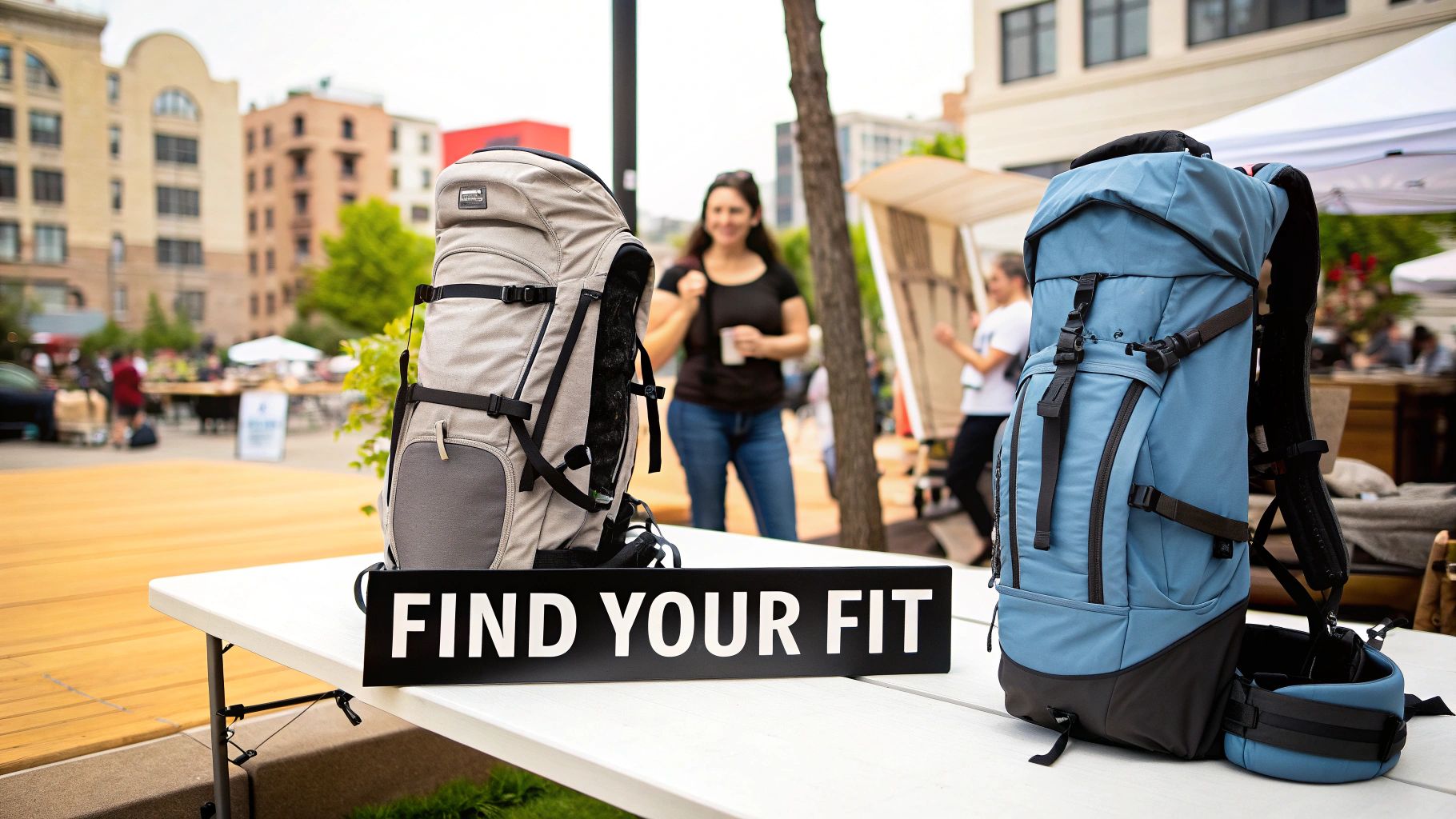
This guide is here to help you cut through the marketing fluff and get straight to what matters. We’ll start with the basics and build up to the finer points, so you can feel totally confident in your choice. The market for these carriers is booming for a reason; valued at around USD 2.26 billion in 2024, it shows just how many parents are ditching the stroller for a hands-free life. If you're curious, you can explore more about these market trends and what they mean for families on the move.
To find the carrier that truly fits your life, we'll break it down piece by piece. My goal is to walk you through it all step-by-step, so you can look at any carrier and know exactly what you're seeing. Here's a look at what's ahead:
When you start shopping for a baby carrier backpack, the options can feel overwhelming. But the first step is actually pretty simple: figure out what you'll be doing with it. It’s less about finding one magical carrier that does everything and more about picking the right tool for the job. You wouldn't take a sports car off-roading, and the same idea applies here.
Each type of carrier is built with a specific purpose in mind. We'll walk through the three main categories—framed hiking carriers, soft-structured carriers, and compact travel carriers. Understanding these will give you a solid foundation for matching a carrier's features to your family's real-life adventures.
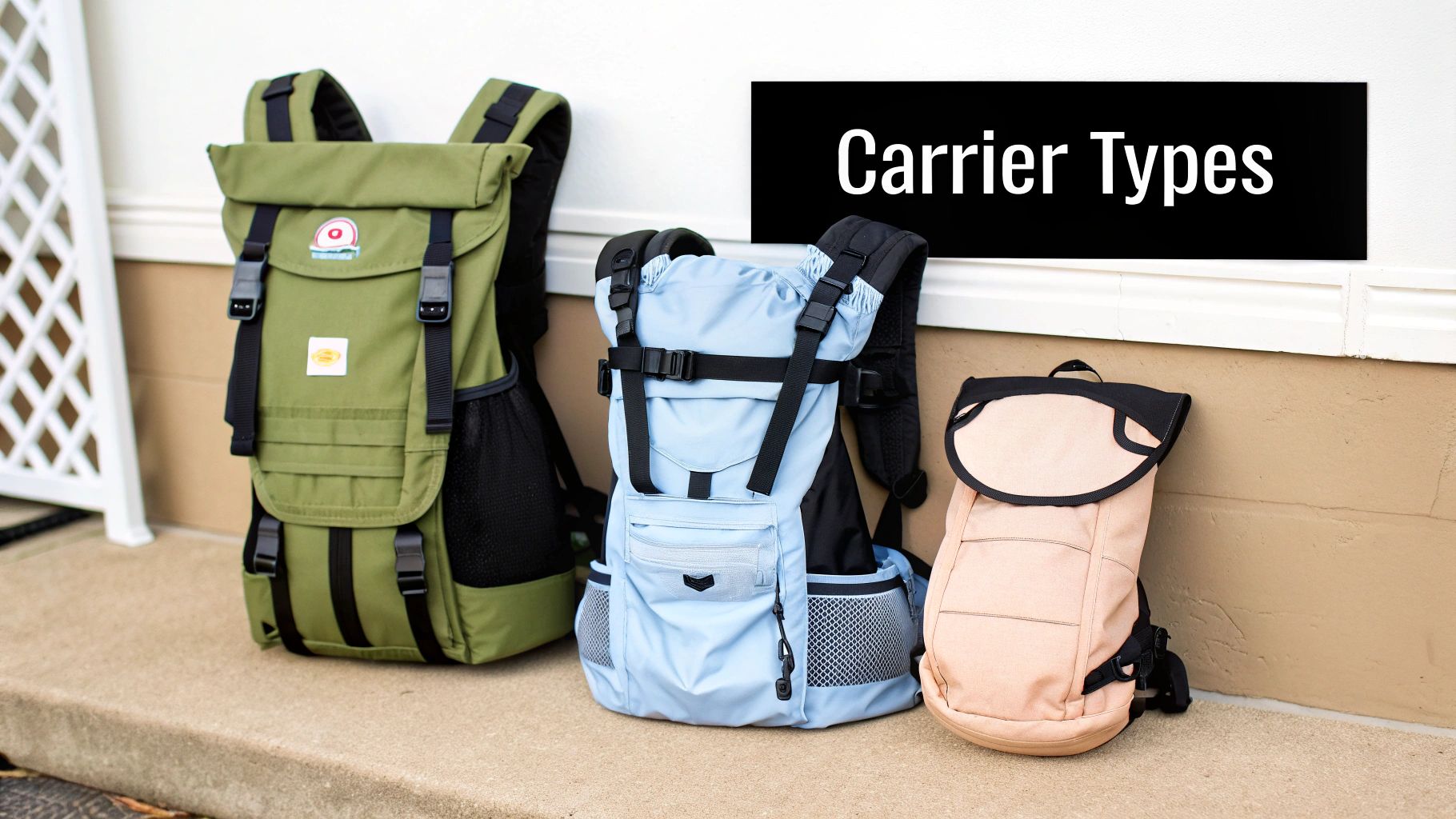
Picture this: you're gearing up for a full day on the trail. You need serious support, plenty of storage, and features that can handle the distance. This is exactly where the framed hiking carrier shines. Think of these as the heavy-duty haulers of the baby-wearing world, built around a rigid internal frame just like a serious backpacking pack.
Top-tier examples like the Deuter Kid Comfort Pro or the Osprey Poco series are engineered to transfer the bulk of your child's weight directly onto your hips. This is the secret to staying comfortable over miles of terrain. They also come loaded with trail-specific features you just won't find anywhere else.
These carriers are the undeniable champions for big outdoor adventures. Their only real downside is their bulk, which makes them impractical for a quick run to the grocery store. They are purpose-built for the trail, where all-day comfort and capacity are everything.
Now, think about your favorite, most comfortable jacket. It’s versatile, you can throw it on in a second, and it just works for almost everything you do day-to-day. That’s the soft-structured carrier (SSC) in a nutshell. They're incredibly popular for a reason—they hit that sweet spot between comfort, ease of use, and portability.
Brands like Ergobaby and Tula are masters of this category. Unlike their framed cousins, SSCs are made entirely from soft fabric, using a well-padded waistband and shoulder straps to distribute weight. They’re super intuitive, with simple buckles that let you get a secure, comfortable fit in just a minute or two.
The real magic of an SSC is its versatility. You can use it for front, hip, and back carries, which means it adapts as your child grows from a tiny newborn (often with an infant insert) all the way to a wiggly toddler.
This adaptability makes them a fantastic choice if you want one carrier that can handle it all—from navigating a crowded farmer's market to soothing a fussy baby around the house. They don't have the storage of a framed pack, but for everyday tasks, their comfort and simplicity are tough to beat.
Finally, imagine a packable rain jacket you can toss in your daypack "just in case." It's feather-light, takes up almost no room, and is a total lifesaver when you suddenly need it. That's the perfect way to think about a compact travel carrier. These minimalist carriers are designed with one goal in mind: to be as lightweight and packable as possible.
Some, like the innovative TrailMagik, are designed to attach directly to your existing hiking backpack. Others are simply ultralight fabric carriers that stuff down into their own pocket. They are the ideal solution for travel days at the airport or for those "up-down-up-down" phases toddlers go through on a walk.
They aren't built for hours of continuous comfort, but their convenience factor is off the charts when space and weight are your biggest concerns. They offer a quick, hands-free solution without the bulk of a full-sized carrier.
To help you visualize which carrier type might be the best fit, here's a quick comparison of their strengths and ideal uses.
| Carrier Type | Best For | Key Features | Typical Age/Weight Range |
|---|---|---|---|
| Framed Hiking Carrier | Long hikes, serious outdoor adventures, all-day excursions | Rigid frame, extensive storage, sunshade, advanced suspension | 6 months+ (able to sit unassisted) up to 40-50 lbs |
| Soft-Structured Carrier (SSC) | Everyday use, errands, travel, moderate walks, home use | All-fabric construction, multiple carry positions (front/hip/back) | Newborn (with insert) up to 45 lbs |
| Compact Travel Carrier | Travel, short trips, toddlers who walk but tire easily | Ultralight, highly packable, minimalist design | 6 months+ up to 50 lbs (varies greatly) |
This table should give you a starting point. Think honestly about your lifestyle—are you hitting the trails every weekend, or do you need something for city living? Your answer will point you toward the right category.
Now that you know the different types of carriers out there, let's get into the nitty-gritty. This is where we separate the good carriers from the great ones—the ones you’ll still be raving about a year from now. These aren’t just bells and whistles; they’re the core features that ensure your baby is safe and comfortable, and that you can carry them without wrecking your back.
Think of this as your personal checklist. When you're looking at a carrier, run through these points to make sure it ticks all the right boxes.
A carrier's most important job is to support your little one's developing body. The absolute number one feature to look for is an ergonomic seat that supports a hip-healthy M-position.
So, what does that mean? Picture your baby sitting in a little hammock. Their bum is lower than their knees, and their thighs are supported from one knee all the way to the other. This creates a natural "M" shape (or froggy position). It’s the same spread-squat posture they’d be in if you just picked them up and held them on your hip.
This position is crucial because it keeps all the pressure off their developing hip joints. You want to steer clear of any carrier that leaves your baby’s legs dangling straight down, as this can strain their hips and spine. The International Hip Dysplasia Institute has some fantastic resources on why this is so important.
A carrier should mimic the way you'd naturally hold your child—with wide, comprehensive support under their bottom and thighs. The goal is always that supported 'M' shape, never a narrow seat that lets their legs dangle.
Beyond the seat, here are a few other must-haves for your baby's comfort:
Let's be honest—if the carrier is a pain for you to wear, you're not going to use it. A well-designed carrier feels less like a burden and more like an extension of your body, distributing the weight so you can walk for miles without feeling it.
The single most critical feature for your own comfort is an adjustable torso length. We all have different body shapes, and this feature lets you customize the distance between the shoulder straps and the hip belt. When you get this right, the hip belt will sit perfectly on your hips, transferring up to 80% of the carrier’s weight off your shoulders and onto your body’s powerhouse muscles. It’s the difference between a pleasant hike and a miserable one.
Here are a few other things that make a big difference for the person doing the carrying:
Finally, let's talk about the official stamps of approval. Brands will often talk about their own internal safety tests, but independent, third-party certifications are what give you real peace of mind. When you're shopping, keep an eye out for these two logos on the product tag or in the online description:
Spotting these certifications means the best baby carrier backpack you're considering has been put through the wringer—tested for buckle strength, material safety, and overall structural integrity. It’s a clear sign the company didn't cut corners, giving you the confidence to get out there and explore with your little one.
Let’s be honest: a top-of-the-line baby carrier is useless if it doesn't fit right. It just ends up gathering dust in a closet. An uncomfortable carrier means an unhappy baby and an even unhappier parent with an aching back. Mastering the fit is what turns that piece of gear into a seamless, comfortable extension of your body, ready for anything.
Think of it like getting the driver's seat just right in a new car. A few simple adjustments make all the difference between a cramped, awkward drive and a journey you can actually enjoy. That's exactly what we're aiming for here—dialing in the settings until the carrier feels secure, supportive, and completely natural.
This is all about getting three things right: Fit, Comfort, and Safety.
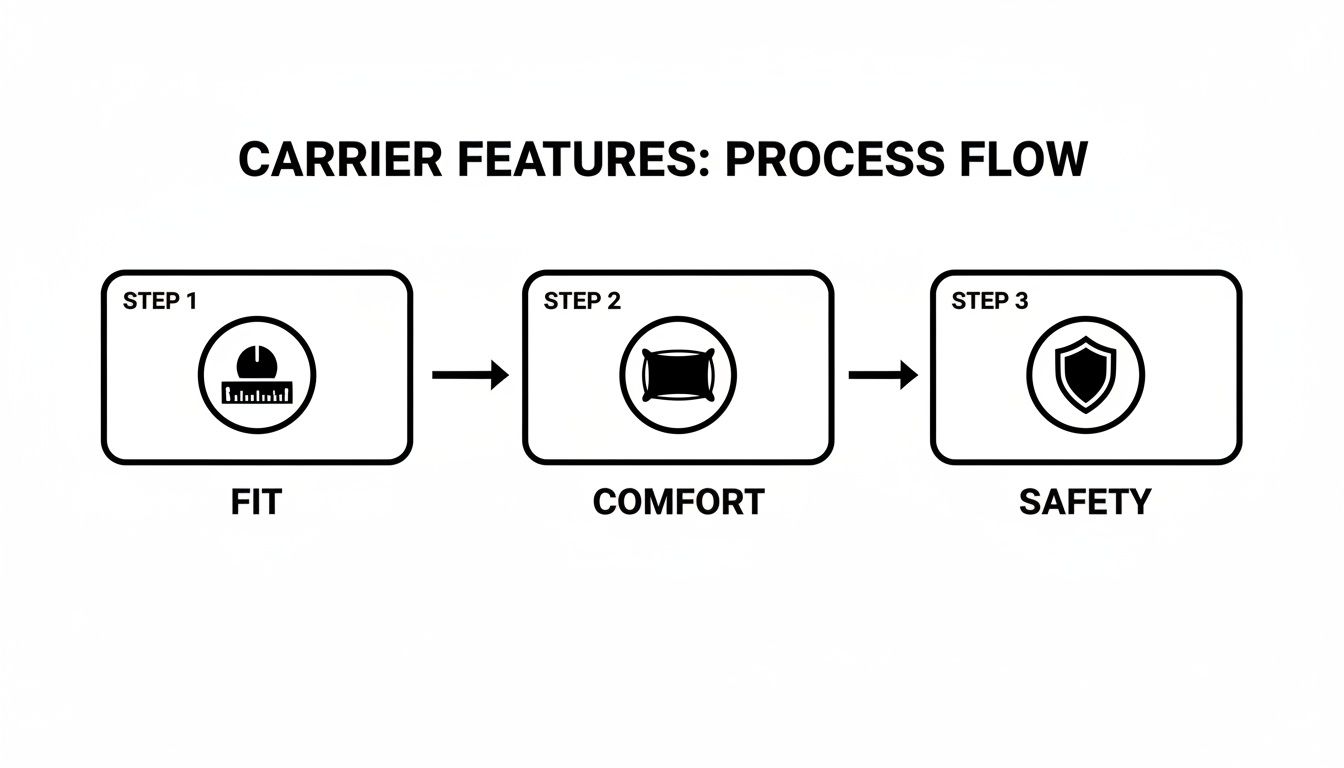
As you can see, a proper fit is the foundation for everything else. Get that right, and the comfort and safety will naturally follow.
This is where most people go wrong. They either wear the hip belt too low or don't tighten it enough. That hip belt is the real workhorse of the carrier; it’s designed to shift the bulk of the weight off your shoulders and onto your much stronger hips and legs. For it to do its job, the padded section needs to sit right on top of your hip bones.
Once it's in position, pull those straps tight. You're looking for a snug, secure feeling, much like the hip belt on a good hiking pack. There should be no sagging or slipping down. The moment you get this right, you’ll feel the weight transfer from your shoulders to your hips. It's a game-changer and the single best way to prevent the back pain that can ruin an outing.
With the hip belt locked in, it’s time to bring your baby aboard and dial in the shoulder straps. After gently placing your little one in the carrier, start pulling the shoulder straps until they're snug but not painfully digging in. The idea is to bring your baby in close and high against your chest.
A great rule of thumb is the 'close enough to kiss' standard. You should be able to easily lean your head forward and kiss the top of your baby's head. If you have to crane your neck down, the carrier is too loose, which lets them slump and puts a real strain on your back.
Next up is the chest clip (sometimes called a sternum strap). This little strap is surprisingly important. It connects the two shoulder straps and stops them from sliding off. Slide it up or down so it sits around mid-chest or armpit level, then buckle and tighten it. This helps pull the whole system together and distributes any remaining weight even more effectively.
The final, and arguably most important, step is making sure your baby is sitting in a healthy M-position. You want to see their bottom settled deep into the carrier’s seat, with their knees bent and sitting slightly higher than their hips. Their legs should look like they're squatting, supported from one knee all the way to the other, never just dangling.
This ergonomic posture is crucial for their comfort and, more importantly, for healthy hip development. It's worth taking an extra second to reach into the carrier and gently tuck their pelvis to create that perfect "M" shape.
Here are a few classic fit mistakes to watch out for:
Running through these steps only takes a minute, but it builds the confidence to get a perfect fit every single time. This little routine is your ticket to making every walk, hike, or trip to the grocery store a comfortable and safe adventure for both of you.
Alright, you've got the basics down. You know the difference between carrier types and what all those features actually do. Now comes the fun part: figuring out which one fits your life.
Think of it like buying a car. You wouldn't get a two-seater sports car for a family of five, right? The best baby carrier isn't the one with the most bells and whistles; it's the one that feels like it was made for your family's daily rhythm and grand adventures. It should make your life easier, not end up collecting dust in a closet.
Let's walk through a few common scenarios. We’ll look at three distinct lifestyles—the trailblazer, the urban explorer, and the globetrotter—to help you picture which carrier will become your go-to piece of gear.
If your idea of a perfect weekend involves dirt trails, mountain air, and a picnic with a view, you're a trailblazer. Your adventures call for gear that can go the distance, handle unpredictable weather, and carry everything you need for a day out. For you, a structured, framed hiking carrier isn't just a nice option—it's essential equipment.
These are the heavy-duty SUVs of the baby-wearing world, built specifically for performance on the trail. Their internal frames are engineered to shift your child's weight onto your hips, which is the secret to staying comfortable for hours on end. They're also loaded with features designed for the great outdoors.
For families who live to hike, a framed carrier is an investment in freedom. It lets you share the places you love with your newest family member right from the start.
Do you navigate bustling sidewalks, crowded subways, and chaotic farmers' markets? Then you're an urban explorer. Your daily landscape demands agility, speed, and something that won't take up a ton of space. A bulky framed carrier would just get in the way, which is why a versatile soft-structured carrier (SSC) is your perfect sidekick.
SSCs are the masters of everyday convenience. They're a breeze to put on, stay comfortable for hours of running errands, and are compact enough to stuff into a diaper bag when you're not using them. They hit that sweet spot between solid support and grab-and-go simplicity.
An SSC keeps you nimble. You can weave through tight grocery store aisles, hop on the bus, or soothe a fussy baby in the middle of the park, all while keeping your hands free for coffee, your phone, or another child's hand. Their adaptability is their true superpower.
It's no surprise that the market for these carriers is growing fast. As more parents embrace the ease of online shopping, they're looking for gear that fits a modern, fast-paced lifestyle. You can discover more about the growth of the backpack baby carrier industry and see how this shift reflects the needs of today's families.
If your family collects passport stamps instead of souvenirs, you're a globetrotter. Travel days are their own special kind of chaos, demanding gear that is lightweight, ridiculously packable, and airport-security-friendly. For you, the best baby carrier backpack might just be a super-lightweight, specialized travel model.
These carriers are all about minimalism. They often skip the thick padding and extra pockets, instead using technical fabrics that can be folded or rolled down to the size of a water bottle. That makes them a dream for stashing in a carry-on or daypack.
They really shine in specific travel situations:
While a travel carrier might not offer the plush, all-day comfort of a beefier model, its incredible convenience and tiny footprint make it an indispensable tool for any family on the move.
Your baby carrier backpack is more than just gear; it’s your ticket to bringing your little one along on big adventures. And just like any quality outdoor equipment, a bit of regular TLC will keep it in top shape for years to come.
Taking a few minutes for a quick clean or safety check isn't a chore—it's about peace of mind. Think of it as the quick walk-around you'd do before a long road trip. This simple routine ensures your child is safe and secure, whether you're navigating a bustling market or a quiet hiking trail.
Let's be real: between teething drool, trail dust, and the inevitable crushed snack, your carrier is going to get messy. Thankfully, cleaning most of them is a breeze. The first and most important rule? Always check the manufacturer's care tag first. Materials differ, and you don't want to accidentally damage the fabric.
For everyday grime and small spills, spot cleaning is your go-to. A soft cloth with a bit of mild soap and water can tackle most messes without needing a full-on wash. It's the perfect quick fix after a day out.
For those times when a deeper clean is non-negotiable:
Always, always air dry your carrier. Find a spot out of direct sunlight to prevent fading. A damp carrier is a breeding ground for mildew, so be patient and make sure it's bone-dry before you pack it away.
A clean carrier is a happy carrier. Regular maintenance prevents the buildup of dirt and grime that can degrade fabric and components over time, protecting your investment for years of use.
Before you even think about heading out the door, take just 60 seconds to run through this safety check. Turning this into a habit is the single best thing you can do to catch minor wear and tear before it becomes a real problem.
This quick once-over ensures the best baby carrier backpack for your family stays a safe and reliable partner for all your journeys together.
Even after wading through all the specs and features, you probably still have a few questions rattling around. That’s completely normal. Let's tackle some of the most common ones I hear from parents, so you can move forward feeling totally sure about your choice.
This is a big one, and the answer hinges on the type of carrier you're looking at. For those serious, structured hiking carriers with a metal frame, your little one needs to be a pro at holding their head and neck up. We're talking solid, no-wobble control, which typically happens around the 6-month mark. The non-negotiable rule is they must be able to sit up completely on their own.
Soft-structured carriers, on the other hand, are often more flexible. Many are designed to be used from the newborn stage, usually with a special infant insert that keeps them safe and snug. The golden rule is simple: always, always check the manufacturer’s guidelines. They'll give you the exact weight limits and developmental milestones to look for.
Quite the opposite! A good, ergonomically designed carrier is fantastic for your baby's hips, provided you know what to look for. The key is finding one that promotes a "hip-healthy" position. You'll hear experts call it the 'M' or 'froggy' position.
What does that mean? Imagine your baby's legs spread naturally around your torso, with their knees bent and sitting slightly higher than their bottom. This creates a distinct 'M' shape. This position is crucial because it supports the healthy development of their hip joints and is championed by groups like the International Hip Dysplasia Institute. Steer clear of any carrier that leaves your baby’s legs dangling straight down.
Honestly, as long as both of you are happy and comfortable. A well-designed carrier that shifts the weight onto your hips (not your shoulders) can be worn for hours without issue. The best advice is to listen to your body. If you start to feel any strain or ache, it’s break time.
Your baby will give you cues, too. If they start fussing, it might be time for a change of scenery. Taking a quick break every hour or so is a smart move for everyone to stretch, adjust, and maybe have a snack. For those all-day hikes or long travel days, a framed hiking carrier is almost always going to give you the best long-term support.
Yes, it’s definitely possible, especially in soft-structured carriers, but it usually takes a bit of practice to nail the positioning. You’ll probably need to loosen the shoulder straps a bit to bring your baby down to the right level.
The most important thing is to maintain a clear view of your baby’s face, ensuring their nose and mouth are never covered. Once they’re done feeding, you absolutely must readjust the carrier, tightening everything back up to a safe, snug fit before you get moving again. Trying to breastfeed in a rigid, framed hiking carrier while on the move isn't really practical or considered safe.
At FindTopTrends, we're dedicated to helping you find the perfect gear for your family's adventures. Explore our curated selection of top-rated baby essentials and stay ahead of the trends.




