


No products in the cart.

Free Shipping Australia-Wide

5 star customer service

Quality Tested Products

When it comes to the best teething toys, you want something safe and effective. The gold standard materials are 100% food-grade silicone or natural, untreated wood. They offer just the right amount of firm pressure and gentle texture to calm sore gums without introducing any safety worries. Simple, one-piece designs are also a huge plus, as they’re easier for tiny hands to grip and a breeze to clean.
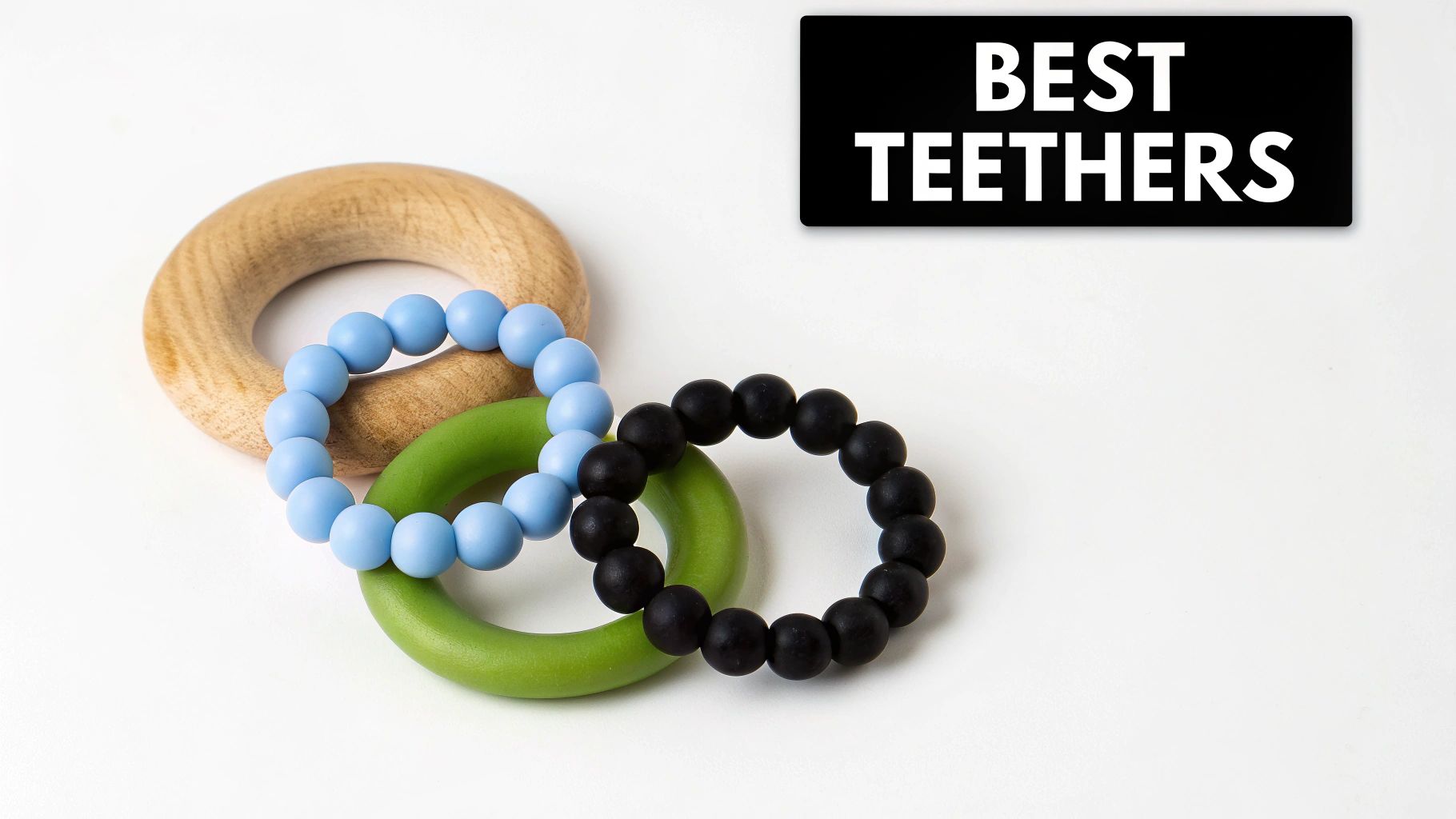
So, you’ve entered the teething phase. Welcome! That first little tooth poking through is a huge milestone, but getting there can be a wild ride of drool, crankiness, and a frantic search for anything that will bring your baby some relief.
Choosing the right teething toy is about more than just quieting the fuss. It's a decision that impacts your baby's safety, supports healthy oral development, and even provides crucial sensory stimulation.
This guide is here to cut through the confusion and give you some real confidence. We'll walk through everything from the biology of teething to how to spot a questionable product from a mile away. Consider this your go-to playbook for making smart, safe choices for your little one.
To kick things off, let's get a feel for the main players in the teething toy world. Every material has its own unique perks, and what one baby loves, another might toss aside. This quick comparison is designed to help you make a fast, informed choice based on your baby’s age and what seems to be bothering them most.
Parenting Tip: Don't put all your eggs in one basket. It’s a great idea to have a few different types of teethers on hand. One day your baby might crave a soft, squishy silicone teether, and the next they might need the firm pressure of a wooden one. Variety is your best friend.
This table gives you a simple breakdown of the most popular options you’ll come across while looking for the best teething toys.
| Toy Type | Best For (Age) | Key Benefit | Cleaning Ease |
|---|---|---|---|
| Silicone Rings | 3-12+ Months | Soft, flexible, and gentle on new gums | Very Easy (Dishwasher-safe) |
| Natural Wood | 4-12+ Months | Firm, durable pressure for stubborn teeth | Easy (Wipe with damp cloth) |
| Chilled Gel Teethers | 3-9 Months | Cooling sensation to reduce inflammation | Easy (Hand wash only) |
| Fabric/Plush | 3-6 Months | Absorbent for drool, easy to grasp | Easy (Machine washable) |
Now that you've got the basics down, you're ready for a deeper dive. We’ll explore each of these options in more detail throughout the guide, helping you pinpoint the perfect teether for every single stage of your baby's journey.
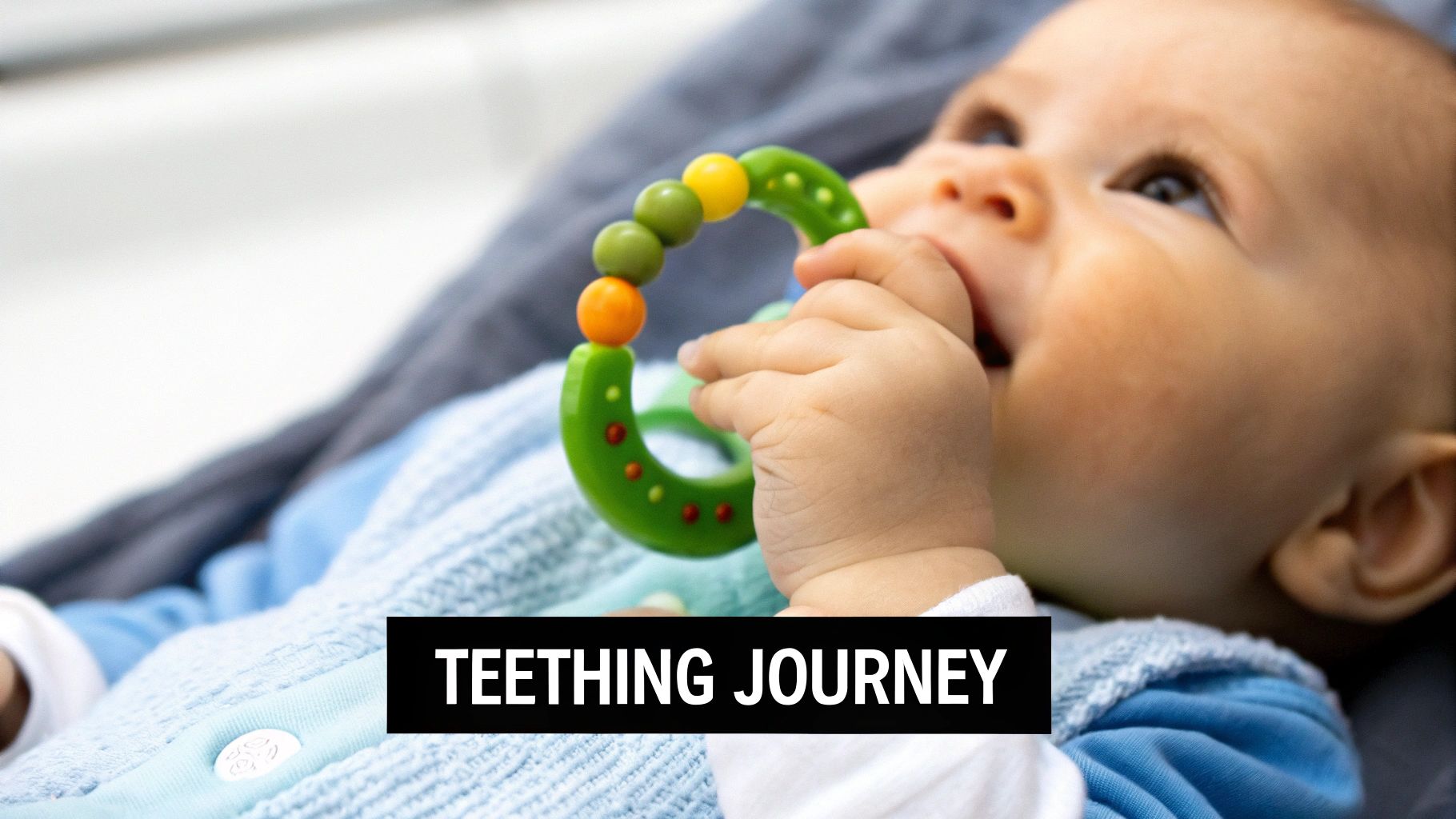
To find the right teether, you first have to get what’s going on inside your baby’s mouth. Teething isn't some illness we need to cure; it's a totally normal, if sometimes challenging, milestone. It’s just the process of those first little teeth pushing their way through the gums.
Think of it as a tiny, slow-motion eruption. As each tooth works its way to the surface, it puts pressure on the gums from underneath, causing them to get tender and inflamed. This is why your sweet, happy baby might suddenly turn into a fussy, drooling, chew-monster.
Once you understand what's driving the behavior, you can shift your perspective. You're not just trying to stop the crying; you're helping them meet a real biological need for comfort.
While every baby has their own schedule, teething usually kicks off around the six-month mark. Some start a bit earlier, some later—it’s all perfectly normal. This journey continues in waves until all 20 primary teeth are in, typically by the time they’re three years old.
Knowing what to look for can help you pinpoint when teething is the culprit behind a tough day. While symptoms vary from one baby to another, there are a few tell-tale signs.
Common Teething Signs Include:
All of this comes down to the simple fact that a hard tooth is pushing against soft, sensitive nerve endings. And that’s exactly where the best teething toys come in to save the day.
So, what’s the magic behind chewing on a firm toy? It all comes down to a simple principle: counter-pressure. When a baby bites down on a teether, the firm-but-gentle pressure they create provides a soothing, numbing sensation.
It’s the same reason you instinctively rub your elbow after bumping it on a doorframe. The new sensation of pressure helps distract your brain from the throbbing ache underneath. A good teether does the same thing for sore gums.
This is why teethers are so much more than just toys. They’re tools designed to give your baby exactly what their body is craving. By providing that steady counter-pressure, a teether helps calm inflammation and, most importantly, gives your baby a safe way to manage their own discomfort. Knowing this helps you pick a product that offers real, functional relief and makes this tough phase a little bit easier for everyone.
When you're on the hunt for the perfect teething toy, safety isn't just a nice-to-have feature—it's everything. Let's be honest, navigating the world of baby products can feel like a full-time job, with labels and claims that are often more confusing than helpful. This guide will help you cut through that noise, so you can evaluate any teether with the confidence of an expert.
The market for these little lifesavers is booming. Currently valued at $1.3 billion, the global teething toys market is expected to jump to $2.15 billion by 2033. This growth shows just how much parents are prioritizing their baby's oral health and demanding safe, effective options. You can discover more insights about the teething toy market and its trends.
With more choices than ever, it’s crucial to know exactly what makes a teether genuinely safe.
Walking down the baby aisle, you're bombarded with terms like "BPA-free" and "food-grade silicone." But what do those labels actually mean for your little one? Understanding the materials is your first line of defense.
Food-Grade Silicone: This is the gold standard for a reason. It's a non-toxic polymer without any nasty chemical fillers or byproducts, making it one of the safest materials your baby can chew on. Plus, it’s tough, hypoallergenic, and a breeze to clean.
BPA-Free: Bisphenol-A (BPA) is an industrial chemical once common in plastics. Because it's been linked to potential health issues, you should always make sure any plastic teether is explicitly labeled BPA-free. No exceptions.
Phthalate-Free: Phthalates are chemicals that make plastics more flexible. Like BPA, they’ve raised health concerns, so ensuring a product is phthalate-free is another non-negotiable safety check.
Think of it this way: choosing a teether made from these verified materials is like picking fresh, whole foods over heavily processed ones. You're giving your baby the purest, simplest option available, free from anything unnecessary.
Beyond the materials, the physical design of a teether is just as important. A poorly made toy can quickly become a hazard. Run through this quick checklist every time you're considering a new teether.
Look for One-Piece Construction: Teethers made from a single, solid piece are always the safest bet. Toys with multiple parts, like beads or other small components, can break off and create a serious choking risk.
Check the Size and Shape: The toy needs to be big enough that your baby can't swallow it, but small and light enough for their tiny hands to grip. Steer clear of teethers with long, skinny parts that could go too far back in their mouth and cause gagging.
Test for Durability: Give it a good tug and a firm squeeze. Does it feel solid and resilient? Or are there signs of cracking, tearing, or weakness? If it feels flimsy in your hands, it definitely won't survive your baby’s surprisingly strong gums.
In the search for teething relief, a few popular but genuinely dangerous trends have popped up. It’s critical to recognize and steer clear of these, no matter how many times you see them online.
Teething necklaces, bracelets, or anklets—often made of amber, wood, or silicone beads—are a major red flag. Health organizations worldwide strongly advise against them because they pose a dual threat: strangulation from the cord and choking if it breaks and the small beads come loose. On top of that, there's zero scientific proof that they actually relieve pain.
Also, be wary of gel-filled teethers that you're meant to freeze. When frozen solid, they can become rock-hard and actually bruise or damage your baby's delicate gums. A teether simply chilled in the refrigerator is much safer and works just as well.
By sticking to toys designed with safety at their core, you'll go from a worried shopper to a savvy, confident parent who knows exactly what to look for.
Picking out a teething toy isn't as simple as grabbing the cutest one off the shelf. What works wonders for a 4-month-old just learning to grasp might be totally useless—or even unsafe—for a 10-month-old sprouting molars with a much stronger bite. A baby’s abilities and needs change at lightning speed during that first year.
The real secret to finding a teether your baby will actually use is matching it to their specific developmental stage. This guide breaks it down age by age, helping you pick the best teething toys that are both soothing and perfectly suited for your little one's motor skills and teething timeline.
During these first few months of teething, your baby is just getting the hang of bringing things to their mouth. Their grip is still a work in progress, so anything lightweight and easy to hold is key. This is usually when those first two bottom teeth start pushing through, making their gums extra tender and sensitive.
The perfect teether for this age is soft, flexible, and uncomplicated. You're looking for something that offers gentle pressure without being too hard for their delicate gums.
Top Choices for This Age:
At this point, you'll want to avoid anything heavy, hard, or with a lot of complicated parts. The goal is simple: easy relief and a successful grip.
By the six-month mark, your baby's motor skills have really leveled up. They can hold onto toys more securely, pass them from one hand to the other, and their chewing is much more purposeful. This is often when the top front teeth decide to show up, and the urge to gnaw on everything gets a lot stronger.
Now is the perfect time to introduce toys with more interesting textures and shapes. Those varied surfaces not only feel amazing on their gums but also help fire up their sensory development.
A baby's mouth is one of their primary tools for learning about the world. When you introduce different textures—bumpy, smooth, ridged—you're not just soothing their gums; you're helping them build new neural connections.
You'll notice the market is full of these multi-textured options. North America alone holds a 35.2% share of the global baby teether market, driven by innovative designs with fun textures and animal shapes. In fact, toys are projected to make up 63% of the market share as parents look for products that can soothe and entertain at the same time. You can read the full research about these market trends to learn more.
This visual guide walks you through the essential safety checks for any teether, no matter your baby's age.
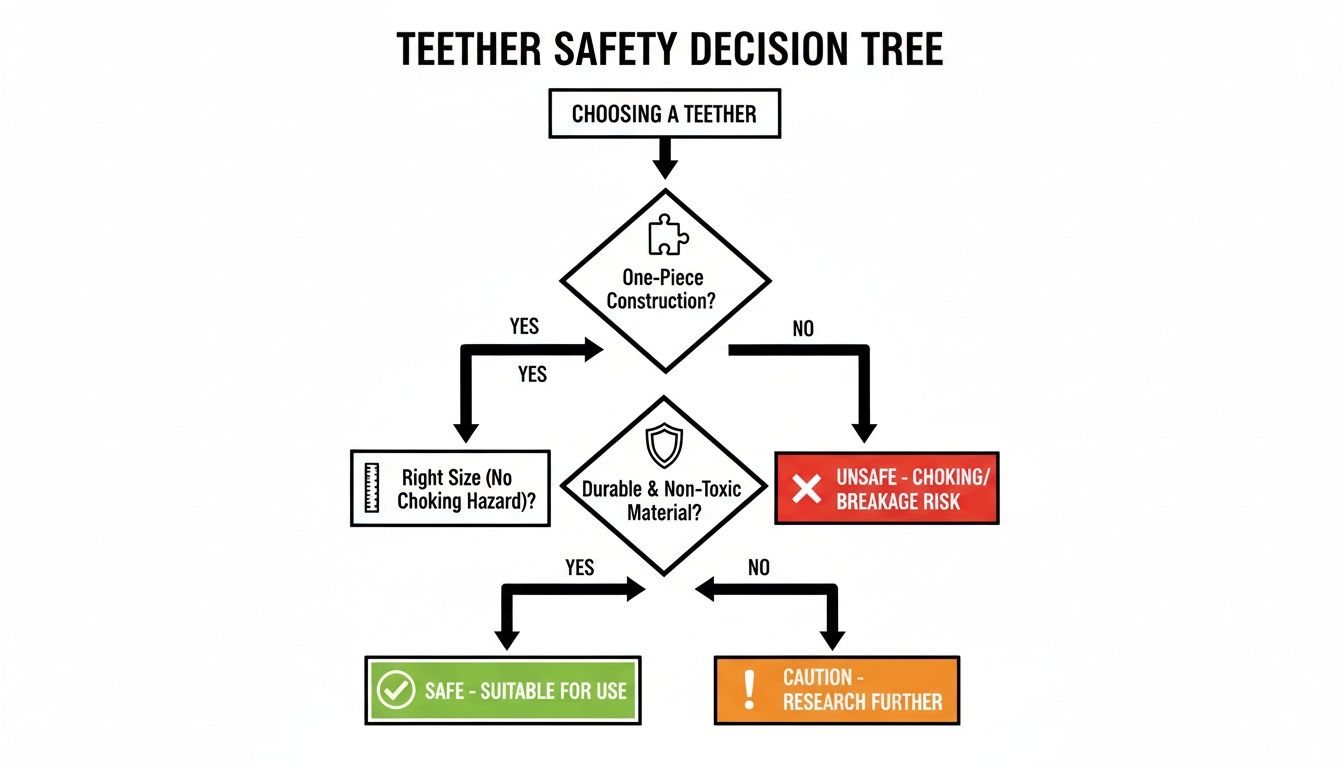
As the flowchart shows, a safe teether should always be a single, solid piece, sized correctly to prevent choking, and made from durable materials that won't break apart.
As your baby heads toward their first birthday, the teething game changes yet again. Welcome to molar-ville. These big, flat teeth erupting way in the back can be especially painful, and your standard little teething ring just won't be able to reach the real source of the problem.
Babies at this age have a much stronger grip and a surprisingly powerful bite. They need teethers that are bigger, more durable, and designed to get to those back gums.
Effective Teethers for Molars:
By matching the teether to where your baby is at developmentally, you're not just buying another toy. You're giving them a targeted tool for comfort and discovery, ensuring the best teething toys you bring home are safe, effective, and genuinely helpful.
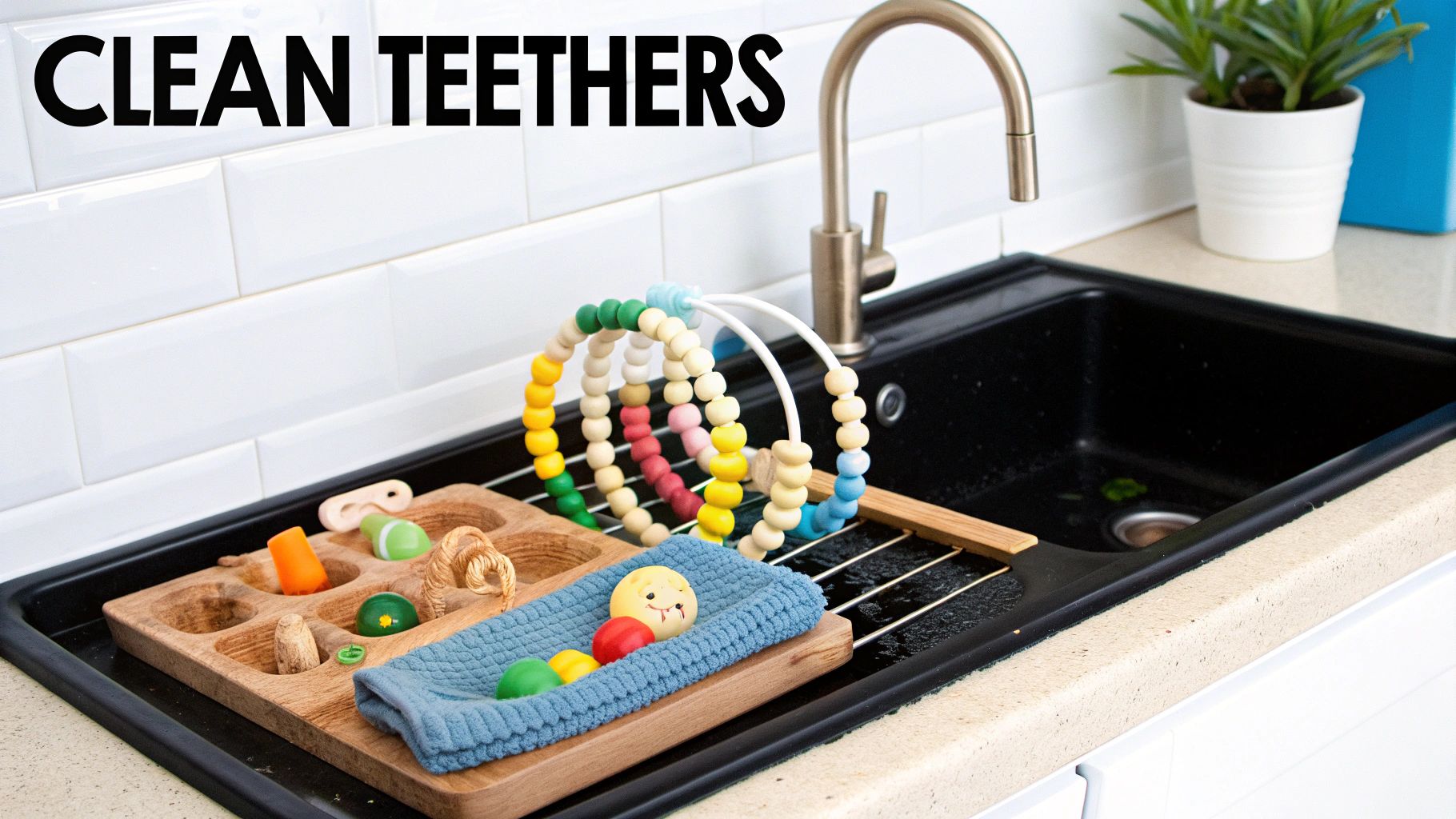
It’s a tale as old as time: you hand your baby a brand new teether, they happily gum it for a few minutes, and then… plop. It’s on the floor. This cycle is inevitable, which makes knowing how to clean these toys an absolutely essential part of your daily routine. Keeping them clean means your little one gets all the soothing relief they need, without any of the germs.
The good news? You don't need a complicated hazmat-level cleaning process. With just a few simple tricks tailored to the teether's material, you can keep their favorite soothers safe and ready for action.
Let's take the guesswork out of it. We'll walk through how to care for every kind of toy, from tough silicone rings to natural wooden ones, so you can feel confident that the best teething toys you've picked out are always sparkling clean.
Different materials need different kinds of love. Using the wrong cleaning method can easily damage a teether, causing it to crack or degrade, so it pays to know what you’re working with. Here’s a quick guide to handling the most common materials.
For Silicone and Rubber Teethers:
These are usually the most low-maintenance of the bunch. Because their surfaces are non-porous, they can handle heat and a good scrubbing, which makes sanitizing them a breeze.
For Natural Wood Teethers:
Wood is a fantastic material because it's naturally antimicrobial, but it's also very sensitive to too much water. Never, ever soak a wooden teether or run it through the dishwasher—it will swell up, warp, and crack.
For Gel-Filled and Fabric Teethers:
These types require a gentle touch. The seams on gel teethers can trap germs, and fabric can get a bit funky if it stays damp for too long.
Knowing how to clean is only half the battle; knowing when to clean is just as important. A simple, consistent schedule will make sure your baby's teethers are never gross for long.
Think of it like this: You wouldn't reuse your baby's bottle without washing it, right? The same logic applies to something that spends hours in their mouth. Consistency is everything when it comes to hygiene.
Here’s an easy routine you can stick to:
Even the toughest teether has a lifespan. You’ll want to give them a quick inspection every now and then to catch any wear and tear that could turn into a safety hazard. It’s time to toss a toy if you notice any of these red flags:
By keeping your teether collection clean and giving it a regular check-up, you can be sure that every toy you offer is not just soothing, but completely safe for your baby to enjoy.
When you're in the thick of the teething phase, it can feel like you're just trying to get through the day. We've all been there. And while every parent has the best intentions, it's surprisingly easy to make a few common mistakes along the way. Think of this not as a list of "don'ts," but as a guide to help you provide the safest and most effective relief for your little one.
Babies love the relief of something cool on their sore gums, so reaching for a chilled toy is a great instinct. The mistake many of us make, though, is popping it in the freezer. A teether that’s frozen solid is rock-hard and can actually bruise your baby’s delicate gums or, in rare cases, even cause a bit of frostbite.
The sweet spot is cool, not frozen. Just stick the teether in the refrigerator for about 30 minutes. That’s all it takes to get it to the perfect, soothing temperature without making it dangerously hard. It’s a small change that makes a huge difference.
Let’s be honest—when you find a teether your baby loves, you tend to use it constantly. It's easy to just grab it and hand it over without a second glance. But even the best teething toys don't last forever, and all that chewing eventually takes a toll.
Get into the habit of giving each teether a quick once-over before every use. It only takes a few seconds. You’re looking for:
Think of it like a pilot's pre-flight check. A quick, routine inspection makes sure everything is safe and sound before you hand it over. Those five seconds are well worth the peace of mind.
In the world of Instagram and Pinterest, you’ll find no shortage of trendy teething remedies and clever-looking products. While some might seem like brilliant solutions, many are incredibly dangerous.
Amber teething necklaces are probably the most well-known example. They’re everywhere, but major health organizations strongly warn against them because they pose a huge strangulation and choking risk. On top of that, there's zero scientific proof they do anything to relieve pain.
The same goes for DIY teething remedies or using things that weren't designed to be chewed on by a baby. When it comes to your child's safety, sticking with toys that were specifically made and tested for teething is always the smartest, safest bet.
It’s totally normal to have questions when you're in the thick of teething. Even when you feel like you've got the basics down, new little queries always pop up. Let's tackle some of the most common questions parents ask, so you can feel confident you're making the best choices for your little one.
Honestly, there isn't a magic number. But a great rule of thumb is to have 3 to 5 different teethers on hand. This little collection means you can rotate them out, which is a lifesaver when one is in the dishwasher or getting chilled in the fridge. You'll always have a clean, safe soother ready to go.
It's also smart to offer a mix of textures and shapes. Think a soft silicone ring for gentle gnawing, a firm wooden teether for more pressure, and maybe one with lots of interesting bumps. Your baby will quickly let you know which one feels best on their gums as different teeth start to push through.
Parenting Insight: Think of it as building a little "comfort toolkit." With a few different options, you're ready for anything—whether your baby needs a soft chew for sore front gums or something harder for those stubborn molars.
That's a definite no. You should never freeze most teethers until they're rock-solid. A toy frozen that hard can be way too firm for your baby's sensitive gums and could even cause bruising. We're aiming for cool relief, not a popsicle-level freeze.
The sweet spot is chilling them in the refrigerator for about 30 minutes. This gets the teether just cool enough to have that lovely numbing effect without becoming dangerously hard. Always glance at the manufacturer's instructions, though—some gel-filled toys are made for the fridge but can be damaged by the freezer.
You can let your baby use teething toys for as long as they seem to need them for comfort. Most kids will naturally move on once all their primary teeth are in, especially after those big two-year molars make their appearance. This usually happens around age two or three.
The most important thing isn't the age, but the safety. As your child gets more teeth, their bite gets a lot stronger. They might be able to chew off small pieces from softer teethers, which you definitely want to avoid.
Your Quick Safety Checklist:
No, they are not a safe choice. Leading health organizations, including the American Academy of Pediatrics, issue strong warnings against using amber teething necklaces. They present very real strangulation and choking risks. If the necklace breaks, a baby could easily swallow or inhale one of the small beads.
On top of that, there's no scientific proof backing the claims that they release any kind of pain-relieving substance. Your best bet is always to stick with teething toys that were specifically designed and tested for infant safety.
At FindTopTrends, we've done the homework for you, gathering a collection of the safest and most effective teething solutions out there. Explore our parent-approved selection of the best teething toys today and find the perfect soother for your little one's gummy grin.




