


No products in the cart.


Free Shipping Australia-Wide

5 star customer service

Quality Tested Products

A good camping packing list is more than just a piece of paper; it's your roadmap to a great trip. It’s what separates a comfortable, fun adventure from a weekend of forgetting crucial gear. By thinking through categories like shelter, your sleep system, the camp kitchen, and clothing, you can make sure nothing important gets left behind.
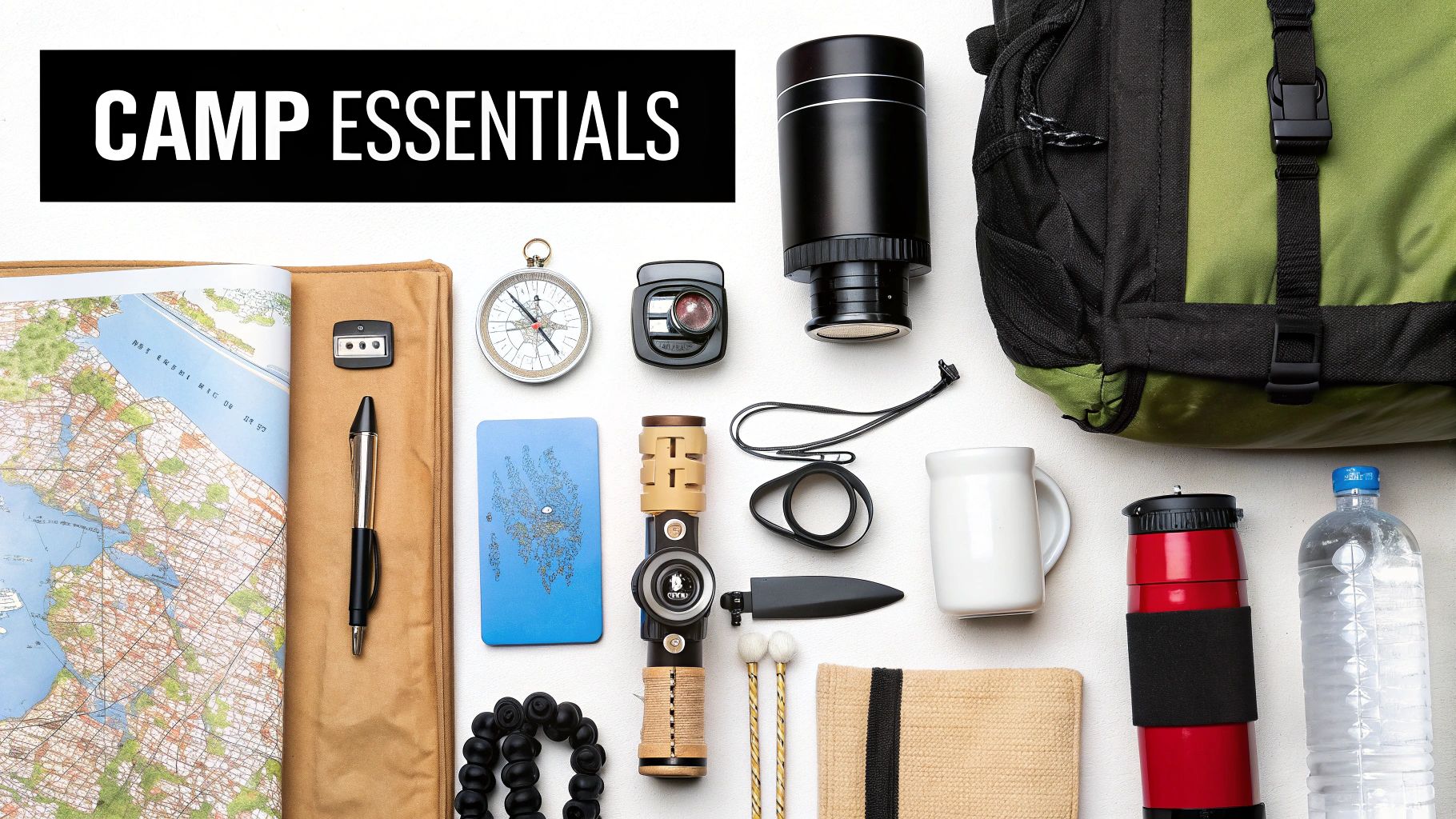
Think of this part of the guide as the bedrock for every single camping trip you take. Before you even think about packing a camp chair or a deck of cards, you have to get these basics sorted. This is the master checklist—the non-negotiables that form the core of any pack, whether you're heading out for a weekend or a week.
Camping has seen a massive surge in popularity, with over 11 million new households trying it out in recent years. It's no wonder why—it’s a fantastic way to connect with nature. With the number of campers worldwide projected to hit 80.88 million, being properly prepared is more important than ever.
Every experienced camper lives by the "Ten Essentials." This isn't just a catchy name; it's a time-tested survival system that experts agree you should have on every single outing. These items are your safety net, there to help you handle anything from a wrong turn on the trail to a sudden storm rolling in.
Here’s a look at the non-negotiables that form the foundation of any safe trip.
| Essential Item | Primary Purpose | Product Example |
|---|---|---|
| Navigation | Knowing where you are and where you're going, especially without cell service. | A physical map and compass, or a dedicated GPS device. |
| Headlamp/Flashlight | Hands-free illumination for navigating in the dark. | A reliable LED headlamp with extra batteries. |
| Sun Protection | Shielding your skin and eyes from harmful UV radiation. | Sunglasses, broad-spectrum sunscreen, and a wide-brimmed hat. |
| First-Aid Kit | Treating minor injuries, from blisters and cuts to insect bites. | A pre-assembled outdoor first-aid kit. |
| Knife/Multi-Tool | A versatile tool for gear repair, food prep, and countless other tasks. | A Leatherman or Swiss Army Knife. |
| Fire | Creating warmth, cooking food, and signaling for help in an emergency. | Waterproof matches, a lighter, and a fire starter. |
| Emergency Shelter | Critical protection from wind and rain if you're stranded unexpectedly. | A lightweight bivy sack or an emergency space blanket. |
| Extra Food | Sustenance in case your trip lasts longer than planned. | Energy bars, jerky, or other non-perishable snacks. |
| Extra Water | Staying hydrated and having a way to make more safe drinking water. | At least one extra liter of water and a water filter or purification tablets. |
| Extra Clothes | A vital insulating layer to prevent hypothermia if conditions turn cold. | A dry pair of socks and an extra fleece or puffy jacket. |
Having these ten items packed and ready gives you the confidence to handle whatever nature throws your way.
Once your safety essentials are squared away, it’s time to pack for comfort. This master list breaks down the gear that turns a patch of dirt into your home away from home.
Little comforts can make a huge difference, too. That first cup of coffee in the morning just hits different when you're outdoors, so be sure to check out some tips on the Best Coffee for Camping.
This foundational list is your starting point. In the next sections, we’ll build on it with specialized checklists for different types of camping adventures.
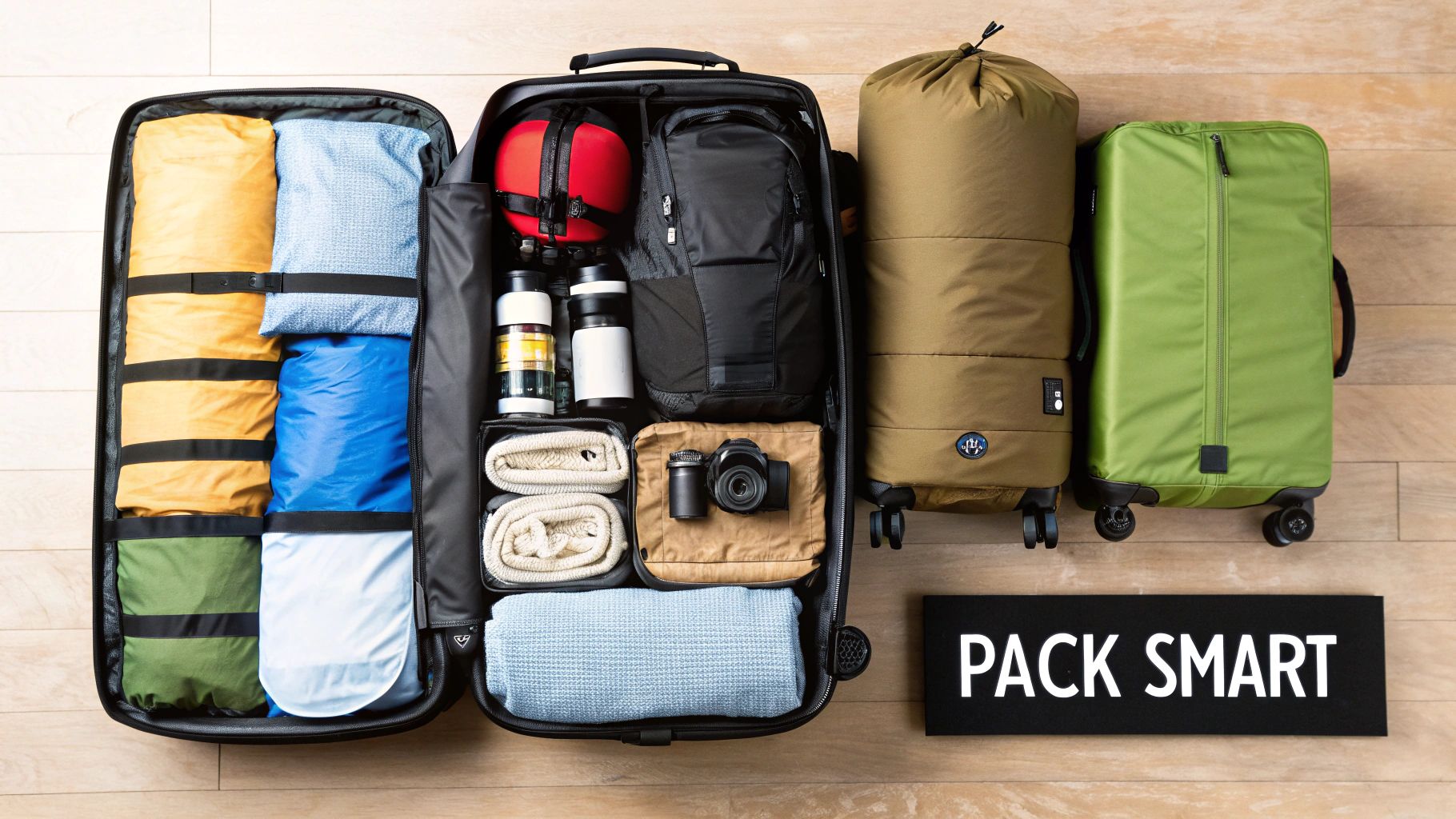
Having the right gear on your camping packing list is one thing, but knowing how to pack it is the real game-changer. The art of packing efficiently can make the difference between a frustrating arrival and a smooth, stress-free start to your trip.
Think of it like setting up your kitchen. When every utensil has its place, cooking is a breeze. The same logic applies to your campsite. A well-organized car or pack means you’re not digging for your headlamp in the dark, turning a potential headache into a simple, enjoyable process.
For anyone driving to a campsite, the golden rule is Last In, First Out (LIFO). It’s a simple concept: whatever you need first when you arrive should be the last thing you load into your car. Your tent is the perfect example—it should be right on top, not buried under a mountain of camp chairs and coolers.
This little bit of foresight is a lifesaver, especially if you pull into camp late or the weather takes a turn. By keeping your shelter and key setup gear easily accessible, you can get a dry basecamp established in minutes before you even think about unloading the rest.
Whether you're working with a car trunk or a backpack, every inch counts. A few tried-and-true techniques can shrink the volume of your gear, making your load lighter and far more manageable.
Compression Sacks Are Your Best Friend: Your sleeping bag, puffy jacket, and spare clothes are mostly filled with air. Compression sacks are brilliant for squeezing all that air out, often shrinking bulky gear to a third of its original size. It's amazing how much space this frees up.
Utilize Every Nook and Cranny: Get creative with the dead space. Stuff your camp shoes with socks. Nest your spice containers and utensils inside your cooking pots. It all adds up.
A well-packed bag is a balanced bag. Always place heavier items, like your food and water, close to your spine and centered between your shoulder blades. This creates a stable center of gravity and keeps the pack from feeling like it’s pulling you backward, which saves your back and shoulders a world of hurt.
Honestly, the easiest way to save space is just to bring less stuff. This means getting real about what you need versus what would be nice to have. Overpacking is the most common mistake I see, and it just leads to a cluttered campsite and a heavy load.
Before you toss an item into the "go" pile, ask yourself three quick questions:
This simple gut check helps you trim the fat from your packing list, ditching those "just-in-case" items that almost never leave the bag. When you focus on multi-functional, essential gear, you pack lighter, move easier, and get to enjoy a much simpler and more rewarding time outside.
If you love the idea of sleeping under the stars but aren't quite ready to give up all your creature comforts, car camping is for you. Think of it as the perfect middle ground—you get all the adventure of the outdoors with the incredible convenience of having your car as a mobile gear shed. This isn't about minimalist survival; it's about using that extra space to build a campsite that feels like a genuine home away from home.
It's no surprise that this style of camping is exploding in popularity. The global camping market, currently valued around USD 64.38 billion, is set to hit USD 92.73 billion soon. Car camping is a huge part of that, growing at a steady 5.6% clip. Why? It's simply the most accessible way for families and newcomers to get outside without feeling overwhelmed.
Your car's trunk space is your ticket to a new level of campsite luxury. The trick isn't to just throw everything you own in the back, but to be strategic about what brings the most comfort for the least hassle. A good night's sleep is the foundation of any great trip, so let's start there.
Once your sleeping situation is dialed in, you can start turning the rest of your site into a place you actually want to be.
One of the best parts of car camping is the food. You can move way beyond rehydrated chili and cook up some seriously delicious meals. With a well-stocked kitchen, you can tackle just about any recipe. For a complete rundown, our car camping packing list has you covered.
I always think of my camp kitchen just like my one at home: a prep zone, a cooking station, and a cleanup spot. I pack my gear in labeled bins for each zone. It makes finding the spatula so much faster, which means more time relaxing by the fire and less time digging through boxes.
Here’s what you need to build a five-star outdoor kitchen:
Okay, now for the fun stuff. This is the gear that takes a campsite from a functional spot to a truly relaxing outdoor oasis. These are the "wants," not the "needs," but they make all the difference.
Consider adding these upgrades to your list:
Backpacking is camping boiled down to its purest form. It’s an exercise in intentional minimalism where every single ounce you carry matters. This is where we shift gears completely from the "home-away-from-home" approach of car camping to the efficient, purpose-driven mindset of the trail. The goal is total freedom, and you buy that freedom by packing smart and packing light.
Every item on a backpacking list has to answer one simple question: "Do I really need this?" This philosophy has fueled a massive amount of innovation in the outdoor gear industry. Campers recently spent a whopping $61 billion on gear, with daily expenses jumping 21%. It just goes to show that people are willing to invest in quality lightweight equipment to make their time on the trail better.
The diagram below really highlights the difference. Car camping is a hierarchy of comfort, while backpacking is all about function.
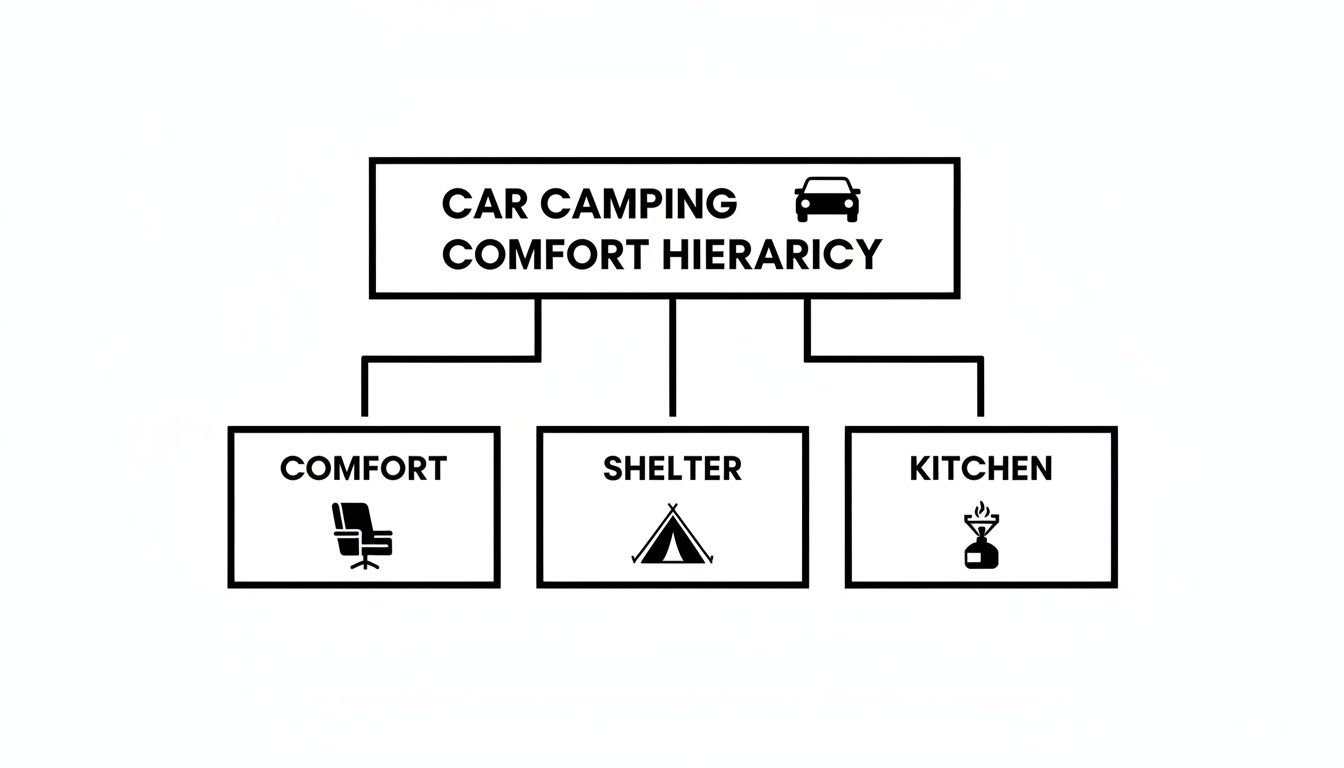
While you can bring separate kitchen, shelter, and comfort gear when the car is nearby, backpacking forces you to find lightweight, multi-use systems that cover all your bases without weighing you down.
To truly understand this shift in priorities, it helps to see the gear side-by-side. Car camping lets you bring the kitchen sink, while backpacking demands you only bring what fits on your back.
| Gear Category | Car Camping Priority (Comfort) | Backpacking Priority (Weight) |
|---|---|---|
| Shelter | Large, multi-room tent with standing height. | Ultralight, single-wall tent or tarp; often uses trekking poles for support. |
| Sleep System | Thick air mattress or cot; heavy synthetic sleeping bag. | Inflatable, insulated sleeping pad; ultralight down or synthetic quilt. |
| Kitchen | Two-burner propane stove, large cooler, cast iron pans, full utensil set. | Tiny canister stove, small titanium pot, one spork, all fitting inside the pot. |
| Furniture | Folding chairs, tables, and lanterns. | A foam sit-pad or a convenient log. |
| Clothing | Multiple outfits, cotton t-shirts, heavy jackets. | A strategic layering system with moisture-wicking and quick-drying fabrics. |
| Backpack | Not applicable; gear is transported in bins or duffel bags. | A technical pack with a specific volume (liters) and suspension system. |
As you can see, the choices you make are fundamentally different. One focuses on creating a comfortable basecamp, the other on enabling you to move freely and efficiently through the backcountry.
In the backpacking world, your pack, shelter, and sleep system are called the "Big Three." There’s a good reason for this—these three items are almost always the heaviest things in your entire setup. If you want to drop pounds from your pack fast, this is where you start.
The gold standard for a lightweight setup is a "base weight" under 10 pounds. Base weight is everything in your pack except for consumables like food, water, and fuel. Nailing your Big Three is how you get into that ultralight territory.
Forget the two-burner stove and the cooler full of ice. A backpacking kitchen is a beautiful little system of efficiency, designed to do one thing perfectly: boil water fast.
Your entire cook setup should be able to nest inside your pot. Here’s what it typically looks like:
This whole kit, combined with dehydrated or freeze-dried meals, gives you all the hot food and coffee you need with almost no weight penalty. For a much deeper dive into specific models and options, you should explore our ultimate lightweight backpacking gear list for 2025.
Out on the trail, your clothing is your climate control. Instead of packing separate outfits for every day, you pack a series of versatile layers that work together to keep you comfortable in any weather.
This system lets you constantly adapt. Hiking uphill and getting warm? Shed the mid-layer. Wind picks up at the summit? Throw the shell on. It’s the smartest way to handle the unpredictable weather you often find in the mountains, and it means you don't have to carry a bunch of redundant clothes.
True preparation isn’t about having one massive, do-it-all list. It’s about adapting. Think of your main camping checklist as the solid foundation, but every great adventure needs a few custom touches.
These specialized checklists are like "add-on" packs for your core gear. They ensure you're actually ready for the specific trip you're taking, whether you're staring down a frosty winter night or trying to keep the kids entertained all weekend. This isn't just about being comfortable—it's about being safe and smart. You wouldn't wear sandals in a snowstorm, so why bring the same exact gear on every single trip?
Let's be clear: camping in the cold is a whole different ballgame. Your main job out there is to stay warm and dry, because the stakes are so much higher than on a warm summer evening. This list is all about serious insulation, weather protection, and the right tools for a frozen world.
Bringing the kids camping is how you make memories that last a lifetime. It also means you’re packing for their unique needs, from safety and entertainment to their shorter patience spans. The goal is to keep them comfortable, engaged, and safe.
Your job is to make the outdoors feel like a magical playground, not a chore. A happy kid becomes a camper for life, so focus on the small comforts and fun things that make them feel like a part of the adventure.
Here are a few extras to toss in your bins:
When you're only gone for a couple of days, simplicity is everything. You don't need a massive setup for a quick getaway. This is all about packing smart with multi-use items so you can spend more time relaxing and less time setting up and tearing down camp.
The philosophy here is to subtract, not add. Start with your main list and be ruthless about what you can leave at home.
Even with the best checklist in hand, a few last-minute questions always seem to pop up. It's totally normal to second-guess yourself, wondering if you've missed something obvious or are about to make a classic rookie mistake.
We get it. That's why we've gathered some of the most common questions we hear from campers. Think of this as your final pre-trip briefing to smooth out any last wrinkles in your plan, so you can head out the door feeling confident and ready for adventure.
Without a doubt, the most common mistake is overpacking. New campers, driven by "what if" scenarios, tend to pack for every imaginable situation. This usually means way too much clothing and a kitchen setup that belongs in a house, not at a campsite. The result? A car packed to the gills and a ton of stuff you never even use.
The fix for clothing is simple: think in layers, not individual outfits. Instead of five bulky hoodies, pack a smart, three-part system:
This setup lets you adapt to changing weather by just adding or removing a layer, and it takes up way less space. The same idea applies to kitchen gear. You don't need a full culinary arsenal for your first few trips. A single pot, a pan, a spatula, and a few utensils are almost always plenty for making great one-pot meals.
Getting food storage right isn't just about keeping your grub fresh; it's about keeping you and the local wildlife safe. The method changes a bit depending on how you're camping, but the main goals are always temperature control and scent management.
For car campers, a good cooler is your command center. Pro tip: pre-chill it with a "sacrificial" bag of ice for an hour before you pack your food. When you load it up, put the food for your last day on the very bottom.
Here's a trick I learned years ago: freeze water bottles and use them as your ice packs. They stay frozen longer than loose ice cubes, and as they thaw, you've got cold drinking water ready to go. It's a simple, dual-purpose hack that saves space and resources.
Make sure you double-bag raw meat and keep it separate from ready-to-eat items like veggies to avoid cross-contamination. If you have the space, use one cooler for drinks (which you'll open often) and another for food to keep the food cooler for longer.
For backpackers, it’s all about locking down scents to avoid unwanted furry visitors. Repackage everything from trail mix to dehydrated meals into ziplock bags. At night, it's non-negotiable: all food and scented items (yes, even your toothpaste) must be stored in a bear canister or a properly hung bear bag at least 200 feet away from your tent.
Every seasoned camper has a few small, unassuming items they never leave home without. These aren't on most "essentials" lists, but they're the kind of things that can turn a frustrating moment into a minor inconvenience or add a surprising amount of comfort for almost no weight.
Here are a few of those little game-changers to toss in your bag:
At FindTopTrends, we know that having the right gear can make or break an adventure. We find and feature the best products out there, from high-tech gadgets to must-have outdoor essentials, so you can explore with peace of mind. Start building your perfect camping kit by exploring our collections today.




