


No products in the cart.


Free Shipping Australia-Wide

5 star customer service

Quality Tested Products

Picture this: you hit the open road with everything you need for a perfect adventure packed neatly in your car. That’s the beauty of car camping—your vehicle becomes your mobile basecamp. The absolute must-haves, what I call the car camping essentials, really boil down to four main areas: shelter, your sleep system, the camp kitchen, and campsite living.
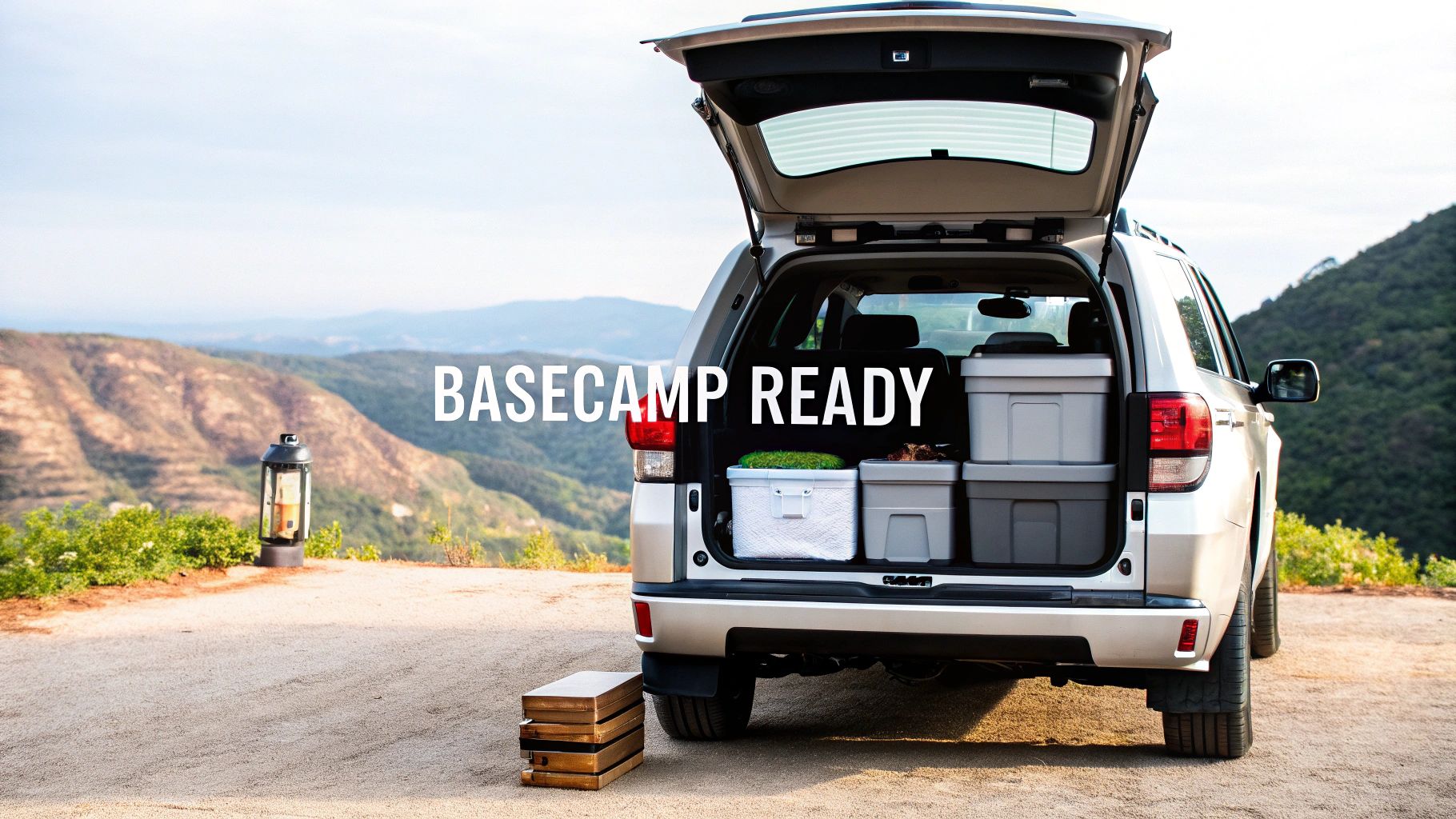
Car camping isn't about "roughing it" in the traditional sense; it’s about making the outdoors accessible and comfortable. Your car is more than just a way to get there—it’s a gear locker on wheels. This simple shift in mindset lets you bring stuff that’s all about comfort, not about being lightweight, which turns a simple night outside into a seriously relaxing getaway.
This blend of freedom and simplicity is exactly why car camping has exploded in popularity. It's the driving force behind the global camping market, which is expected to jump from USD 15.1 billion in 2025 to USD 25.8 billion by 2035. The boom comes from how affordable and easy it is to get started, making it a fantastic way for anyone to dip their toes into outdoor adventures. You can dig into the numbers in this Future Market Insights report on camping and caravanning.
Feeling overwhelmed by a packing list is normal. The trick is to break it down into functional groups. I like to think of it as setting up rooms in a mobile home—each category has a job to do, making sure you’ve got all your bases covered.
By focusing on these four pillars, you build a solid foundation. You can then add personal touches—a favorite blanket, a good book, or some string lights—to make your campsite feel like a true home away from home.
To give you a clearer picture, I've put together a quick overview of the non-negotiable items that fall into these categories.
This table breaks down the absolute must-haves for any car camping trip. Think of it as your starting point—the gear that ensures your fundamental needs for shelter, sleep, and food are met, no matter where you set up camp.
| Category | Core Items | Why It's Essential |
|---|---|---|
| Shelter & Sleep System | Tent or vehicle setup, sleeping bag, sleeping pad, pillow | Protects you from the elements and ensures a good night's rest, which is critical for enjoying your trip. |
| Camp Kitchen | Stove & fuel, cooler, cookware, water container, cleaning supplies | Allows you to prepare warm meals and store food safely, turning a campsite into a functional basecamp. |
| Campsite Living | Camp chair, headlamp/lantern, table (optional but recommended) | Creates a comfortable, well-lit space for relaxing, eating, and organizing your gear after dark. |
| Safety & Personal | First-aid kit, navigation tool, proper clothing, toiletries | Prepares you for unexpected situations, from minor scrapes to changing weather, keeping you safe and comfortable. |
Use this as a mental checklist before we dive deeper into each component and start talking about specific gear recommendations.
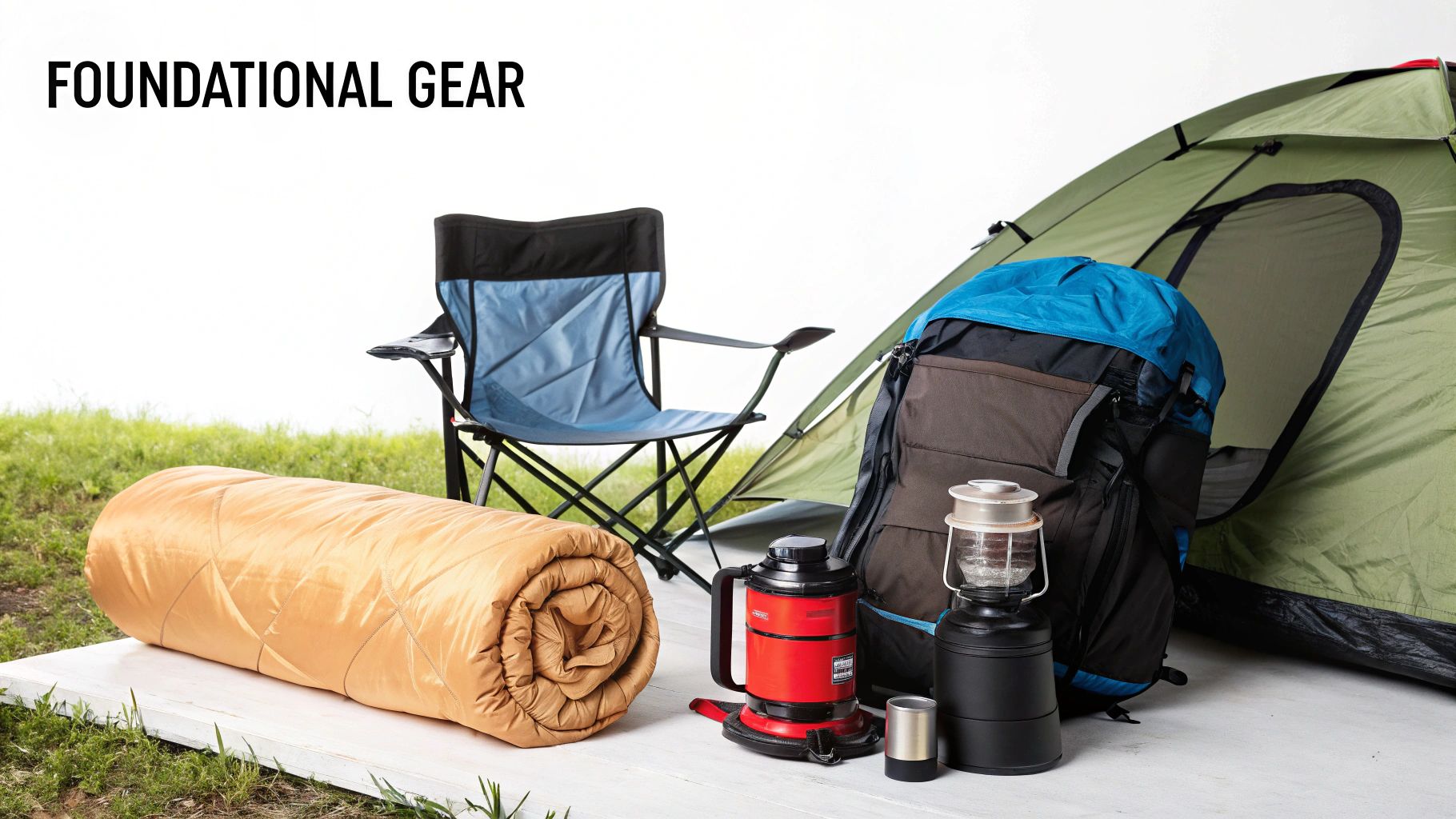
A great car camping trip really boils down to four key areas. I like to think of them as the four pillars that hold up the whole experience: shelter, sleep, kitchen, and living. Nail these, and you’ve built a solid foundation for a comfortable and fun adventure. Get one wrong, and it can throw everything else off.
After all, a fantastic shelter doesn't mean much if you're shivering all night, and a gourmet camp meal is a lot less fun when you're eating it standing in the dark. Let's break down how to get each one right.
First things first: where are you going to sleep? This is your base of operations and your protection from whatever Mother Nature decides to throw at you. You’ve really got two main paths to choose from here.
The first option is to sleep right inside your vehicle. This is my go-to for quick, stealthy trips. It’s incredibly secure from weather and critters, and the setup time is virtually zero. The trade-off is that it can feel a bit cramped, and you absolutely have to nail your ventilation strategy to avoid waking up in a damp, stuffy car.
Your other choice is a tent. A classic ground tent gives you that traditional camping feel with plenty of room to stand up and organize your gear. Or, you could go for a hybrid option like a vehicle-attached tent, which connects to your SUV's open tailgate. These give you the best of both worlds—the space of a tent with seamless access to your car's power and supplies.
The best shelter is simply the one that works for you, your vehicle, and the forecast. Don't get caught up in having the biggest, fanciest setup. Sometimes, the elegant simplicity of sleeping in your car is the smartest move.
Trust me on this: never, ever skimp on your sleep system. A good night's rest is the single most important factor in whether you have a great day or a grumpy one. Your system is a team of three items working together to keep you warm, comfortable, and ready to tackle the day.
Your sleeping bag is your first line of defense against the cold. They all come with temperature ratings (like 30°F or 15°F), but treat these as a loose guide. My rule of thumb is to always pick a bag rated for at least 10-15 degrees colder than the lowest temperature you actually expect.
Next up is the sleeping pad, and it’s just as crucial as the bag. It does two things: it cushions you from the lumpy ground and, more importantly, it insulates you from the cold seeping up from below. You can go with a basic foam pad, but self-inflating or air pads offer a game-changing level of comfort.
Finally, the pillow. A wadded-up fleece jacket will do in a pinch, but bringing a dedicated camp pillow—or even just one from your bed at home—is a small luxury that makes a massive difference.
It's no surprise that people are prioritizing comfort more and more. In the U.S., where 61.4% of camping trips are weekend jaunts, there's been a huge shift. Search interest for inflatable sleeping pads has shot up 185%, and sales of comfy, lightweight sleeping bags have more than doubled. You can dig into more of these U.S. camping market trends if you're curious.
The camp kitchen is where the morale-boosting magic happens. There's nothing quite like a hot meal after a long day of exploring, and a smart setup makes cooking a joy instead of a chore.
This last pillar is all about making your campsite a place you actually want to hang out. It’s the furniture, lighting, and power that transform a patch of dirt into your temporary living room.
A good camp chair is non-negotiable. It’s your spot for morning coffee, evening chats by the fire, and everything in between. A small portable table is a close second, giving you a clean, stable surface for food prep, games, or just setting your drink down.
Once the sun sets, good lighting is everything. A headlamp is your most essential tool, keeping your hands free for cooking or finding things in the dark. I also like to have a central lantern to cast a warm, ambient glow over the whole site. To run those lights and keep your phone charged, a power source is key. It's worth looking into portable power stations to find one that fits your needs.
Once you’ve got the core gear sorted, this is where the real fun begins. It's the smaller, thoughtful items that transform a good car camping trip into a great one. We're moving beyond pure survival now and into the details that add layers of safety, comfort, and that home-away-from-home feeling.
Think of it like this: your tent and sleeping bag are the foundation and walls of your house. But the lighting, safety gear, and personal touches? That’s what makes it feel like your home. Let’s dial in those crucial finishing touches.
The freedom of the open road is an incredible feeling, but it comes with the responsibility of being completely self-reliant. Before you even pull out of the driveway, a quick vehicle check is an absolute must.
Beyond the vehicle itself, a well-stocked first-aid kit is easily your most important piece of safety equipment. You don’t need a full-on paramedic bag—a basic kit with bandages, antiseptic wipes, pain relievers, and blister care will handle most of the common bumps and scrapes. It’s also wise to have a backup for navigation, like a paper map or a dedicated GPS device, for when you inevitably lose cell service. And for making life easier when backing into a tricky, unfamiliar campsite after dark, consider selecting the best backup camera for your vehicle.
When it comes to comfortable camping clothes, it all boils down to one word: layering. This is the secret to adapting to changing temperatures without packing half your closet.
Here’s how a simple layering system works:
And please, don't forget the other essentials! Always pack more socks than you think you need. A good hat for sun protection is non-negotiable, and a comfortable pair of shoes to slip into around camp is a lifesaver. A small toiletry bag with a toothbrush, toothpaste, biodegradable soap, and a quick-dry towel has all your hygiene basics covered.
I know, the point is to "get away from it all," but having a reliable power source has become a modern necessity for both safety and convenience. You'll need it to charge your phone for maps, power a lantern at night, or keep your camera ready for that perfect shot.
Portable power stations have been a total game-changer for car campers. They’re essentially small, silent, rechargeable generators. If you’re planning longer trips off-grid, pairing one with a portable solar panel can give you a virtually endless supply of power. This move toward easy-to-use tech makes sense; globally, 53.4% of campers now prefer vehicle-based trips, and the demand for convenient gear like this is only growing.
Having a separate power source means you never have to worry about draining your car's battery—a classic and frustrating rookie mistake. It’s less about staying online and more about being prepared.
This is your chance to inject a little personality into your setup. Creating a welcoming campsite isn't just for show; it's about making your temporary space feel truly comfortable and work for you.
A few simple items can make a world of difference:
These little touches are the final, crucial layer of your car camping essentials. They’re what complete the setup and ensure your trip isn’t just an adventure, but a genuinely relaxing and enjoyable experience.
Having all the right gear is one thing, but knowing exactly where to find it when you need it? That's the real win. A smartly organized car turns a chaotic setup into a smooth, stress-free experience, eliminating that frantic search for a headlamp as the sun goes down. Your vehicle should feel like a well-oiled basecamp on wheels.
The secret to this is a strategy I swear by: modular packing. Think of it like a set of kitchen drawers for your car. Instead of one giant junk drawer, you have separate, dedicated spaces for everything. This approach groups similar items into their own containers, creating a simple, grab-and-go system that keeps you organized.
At its core, this method just means using separate, clearly labeled bins or bags for each gear category. A few sturdy plastic totes from the hardware store are all you really need to get started. This simple trick stops small items from vanishing into the abyss and makes setting up camp unbelievably quick.
When you pull into your campsite, you don't have to tear the whole car apart. Ready to cook? Just grab the "Kitchen Bin." Time to pitch the tent? Everything you need is in the "Shelter Duffel." Trust me, it’s a total game-changer for how efficiently you can get your site up and running.
There's a whole world of stackable bins, packing cubes, and specialized containers out there. If you want to get serious about using every last inch of space, checking out different car organization accessories can spark some great ideas for your specific vehicle.
To give you a better idea of how this looks in practice, here’s a simple layout you could use.
| Bin Label | Contents | Packing Location in Vehicle |
|---|---|---|
| Kitchen Bin | Stove, fuel, pots, utensils, plates, soap, sponge | Near the back door/tailgate for easy access. |
| Pantry Bin | Non-perishable food, spices, coffee, snacks | Alongside the kitchen bin, but can be less accessible. |
| Shelter Duffel | Tent, stakes, footprint, mallet, tarp | "Last in, first out." Pack it last so you can grab it first. |
| Sleeping Bag | Sleeping bags, pillows, sleeping pads | Lighter, so it can go on top of heavier bins. |
| Personal Duffle | Clothes, toiletries, towel, book | Keep this one accessible, maybe in the back seat. |
| Safety/Utility | First-aid kit, headlamps, lantern, multi-tool, duct tape | Small bin, tuck it somewhere you can always get to it. |
This kind of system means you’re spending less time rummaging and more time enjoying the outdoors.
How you load the car is just as important as how you sort your gear. You're aiming for two things: balanced weight distribution for a safer drive and easy access to what you need, when you need it.
Always place your heaviest items—like that big cooler or your water jug—down low and as close to the center of the car as you can. This keeps your center of gravity low, which makes the car handle much better on the road. From there, you can pack lighter, bulkier things like sleeping bags and camp chairs on top and around the heavy base.
A well-packed car is like a well-stocked pantry. The items you use most often are right at the front, while less-used items are tucked away in the back. This simple logic prevents you from having to unload half your car just to make a cup of coffee.
This diagram helps visualize how your essential gear groups work together, with shelter forming the foundation for your comfort and safety.
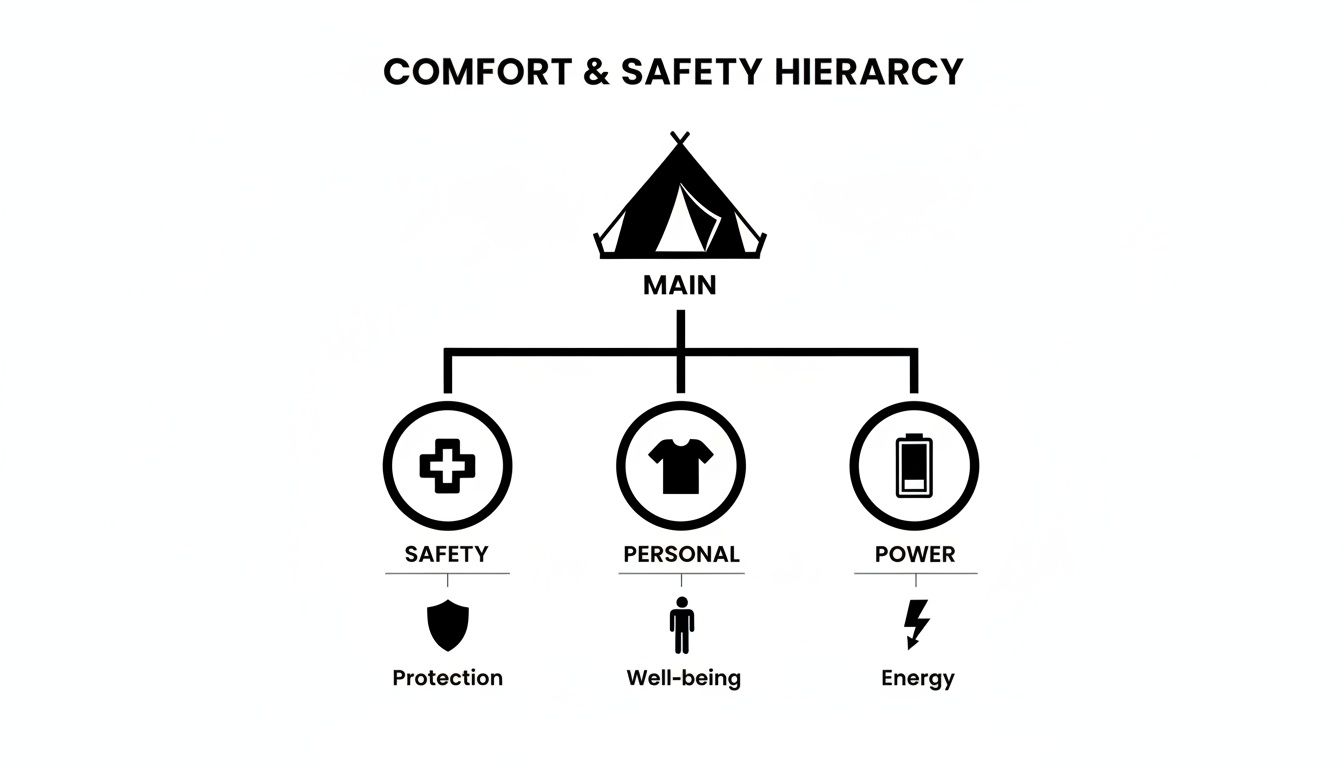
As you can see, your core safety, personal, and power items are the critical pillars that support your entire setup.
The best part about modular packing is that it works for any vehicle, whether you're in a tiny hatchback or a huge truck. The principles are the same, you just adjust the layout.
No matter what you drive, remember the golden rule: the last things you pack should be the first things you'll need. That's almost always your tent, camp chairs, and a lantern for setting up after dark. This "last in, first out" trick is the final piece of the puzzle, ensuring you go from driver to happy camper in minutes.
Packing for a car camping trip shouldn't be a game of Tetris mixed with a heavy dose of anxiety. The whole point of bringing your vehicle is the freedom it gives you, but that doesn't mean you should pack the entire garage. The real secret is to pack smart, not just heavy.
After all, not every trip is the same, so why should your packing list be? A quick weekend getaway is a world away from a week-long journey into the backcountry. When you match your gear to your trip's length, you avoid both being caught unprepared and being buried under a mountain of stuff you never touch. It just makes the whole process—from loading up to setting up—a lot smoother.
For a quick trip of 1-2 nights, the name of the game is efficiency. This list is all about the absolute must-haves that get you out the door and into the wild with as little fuss as possible. Think of this as your core kit, the foundation for any comfortable and safe short adventure.
This simple setup is perfect for spontaneous trips or for when you just want to squeeze an adventure into a busy weekend without a major production.
Once your trip stretches to three nights or more, your needs start to change. This is when you build on that Weekend Warrior foundation, adding items that help you manage resources and stay comfortable for the long haul. The focus shifts toward self-sufficiency and making your campsite a true home away from home.
These aren't necessarily luxury items; they're practical additions. A bigger, better cooler becomes critical for keeping food fresh for days, and a portable power station goes from a "nice-to-have" to a near-essential for keeping your phone and GPS charged.
This extended list transforms your campsite from a temporary stopover into a functional and comfortable basecamp for deeper exploration. It’s about sustaining your comfort and safety over a longer period.
Here’s what to add for those longer journeys:
Getting into car camping doesn’t have to drain your bank account. You can assemble a fantastic and functional kit by focusing on affordable, versatile gear. The goal is to find multi-purpose items that deliver real value without skimping on the essentials: shelter, sleep, and cooking.
Honestly, the barrier to entry is way lower than most people think. You can start with things you already have at home—a skillet, blankets, pillows—and slowly upgrade gear as you figure out what you truly need and use. Our comprehensive car camping packing list has even more ideas for gearing up without going broke.
Here are some smart moves for a beginner on a budget:
No matter how many trips you've been on, questions always pop up. Sometimes it's the basics that trip us up before we even leave the driveway, and other times it's the little details that can make or break a night in the wild.
We've been there. So, we've rounded up the most common questions we hear from both first-timers and seasoned campers. Let's get them answered so you can pack up and head out with total confidence.
Honestly? The best car for the job is almost always the one you already have. It's easy to get caught up thinking you need a massive SUV or a custom-built van, but the truth is, even a compact sedan can be an amazing basecamp with a little creativity.
The secret isn't about having the most cubic feet; it's about reliability and smart organization. I'd take a well-packed Prius over a chaotic, disorganized 4Runner any day. Focus on using modular bins to keep gear tidy and consider a simple roof rack if you need to haul bulky items like chairs or a big cooler.
Don't let your car be an excuse not to go. The whole point of car camping is making adventure accessible. Smart packing will always beat a bigger vehicle.
Finding a great spot is half the adventure. If you're just starting out or simply want the convenience of amenities, you can't go wrong with designated campgrounds in state and national parks. They're the safest, most reliable option, usually offering bathrooms, running water, and clearly marked sites.
If you're after something a bit more rugged and free, look into dispersed camping on Bureau of Land Management (BLM) and National Forest lands. Just be sure to check the specific rules for the area you're visiting, as they can change from one forest to another. Apps like The Dyrt and iOverlander are fantastic resources for locating spots and reading real-world reviews from other campers on everything from road conditions to cell service.
No, you should never sleep in a car that's completely sealed shut. Without any airflow, carbon dioxide can build up to unsafe levels. You’ll also wake up to a stuffy, condensation-covered interior, which is just plain uncomfortable.
The fix is easy: crack at least two windows on opposite sides of the vehicle to create a nice cross-breeze. To keep bugs from crashing your party, grab a set of inexpensive mesh window screens. They just slip right over your door frames, letting fresh air in while keeping mosquitos out. It’s a simple trick for a safe and much more pleasant night's sleep.
Keeping your gear charged up is simpler than ever these days. For a weekend trip where you just need to keep your phone alive for photos and navigation, a simple portable power bank is often all you need.
But if you're running more power-hungry gear—like a laptop, a portable fridge, or lights for the whole campsite—a portable power station is a game-changer. You can juice it up at home, charge it from your car’s 12V outlet while you drive, or even hook it up to solar panels for endless off-grid power. It gives you all the electricity you need without ever having to worry about draining your car's battery.
At FindTopTrends, we hand-pick the best gear to make your adventures easier and more affordable. Check out our latest collection of outdoor and travel essentials to round out your car camping kit. Shop now at FindTopTrends.




